ReStory: Chill Electronics Repairs Beginner’s Guide and Strategy Tips
When I first loaded up ReStory: Chill Electronics Repairs, I expected another relaxing simulator where I would casually tighten a few screws, replace a battery, and call it a day. A couple of hours later, I realized I had completely underestimated it.
Sure, it’s cozy. The mid-2000s Tokyo atmosphere is fantastic, the soundtrack is relaxing, and repairing old electronics is surprisingly satisfying. But beneath that peaceful presentation is a management game that quietly punishes careless decisions. I learned that lesson the hard way after wasting money on unnecessary replacement parts, missing important conversations, and nearly running my tiny repair shop into bankruptcy before the end of my first week.
If you’re just getting started, here are the things that genuinely helped me enjoy the game more while making my workshop much more profitable.
Why ReStory Feels Different From Other Shop Simulators
A lot of simulator games focus almost entirely on making money.
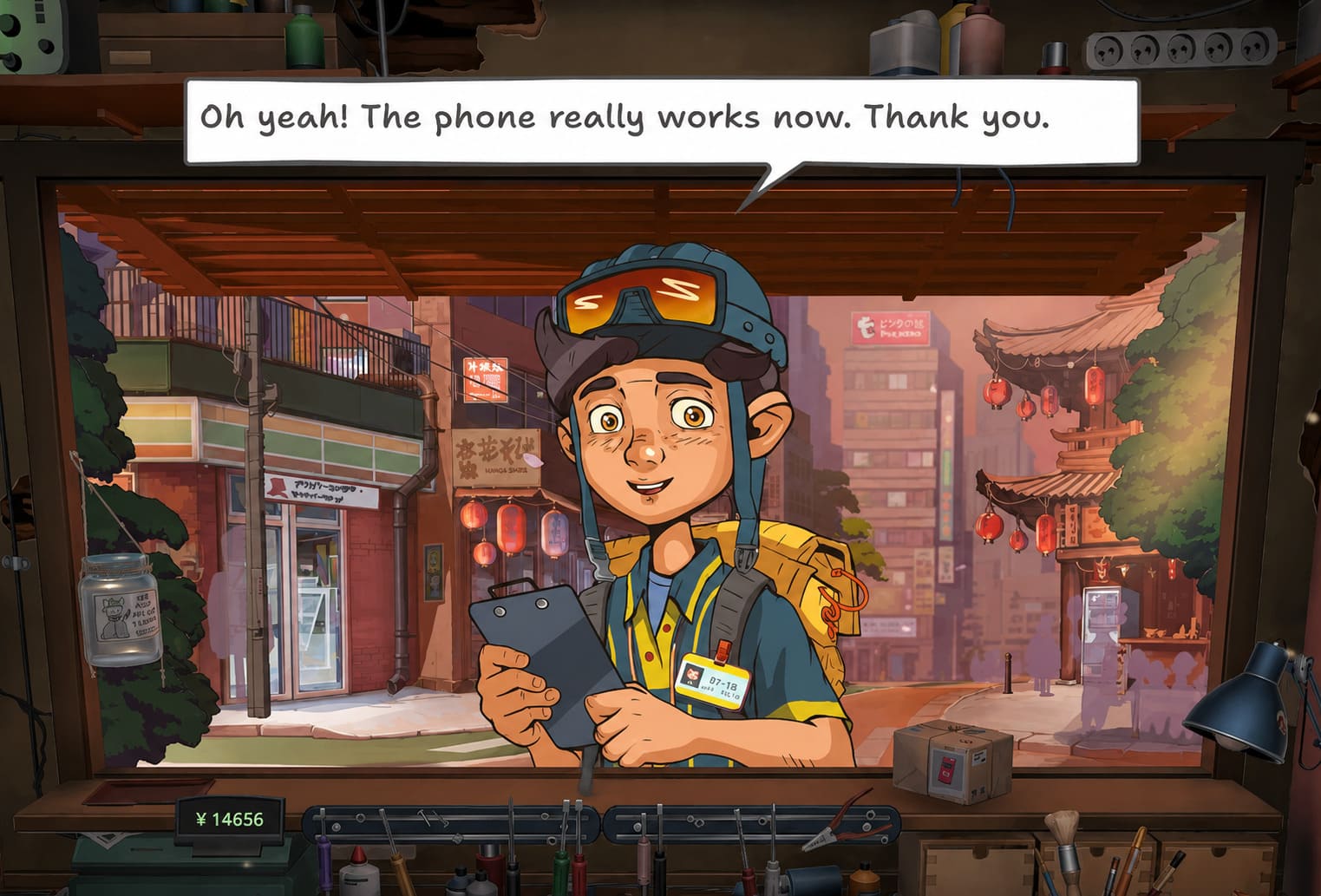
ReStory certainly has that element, but it also wants you to care about the people walking through your front door. Every customer has a story, and sometimes those stories become just as important as fixing the gadget sitting on your workbench.
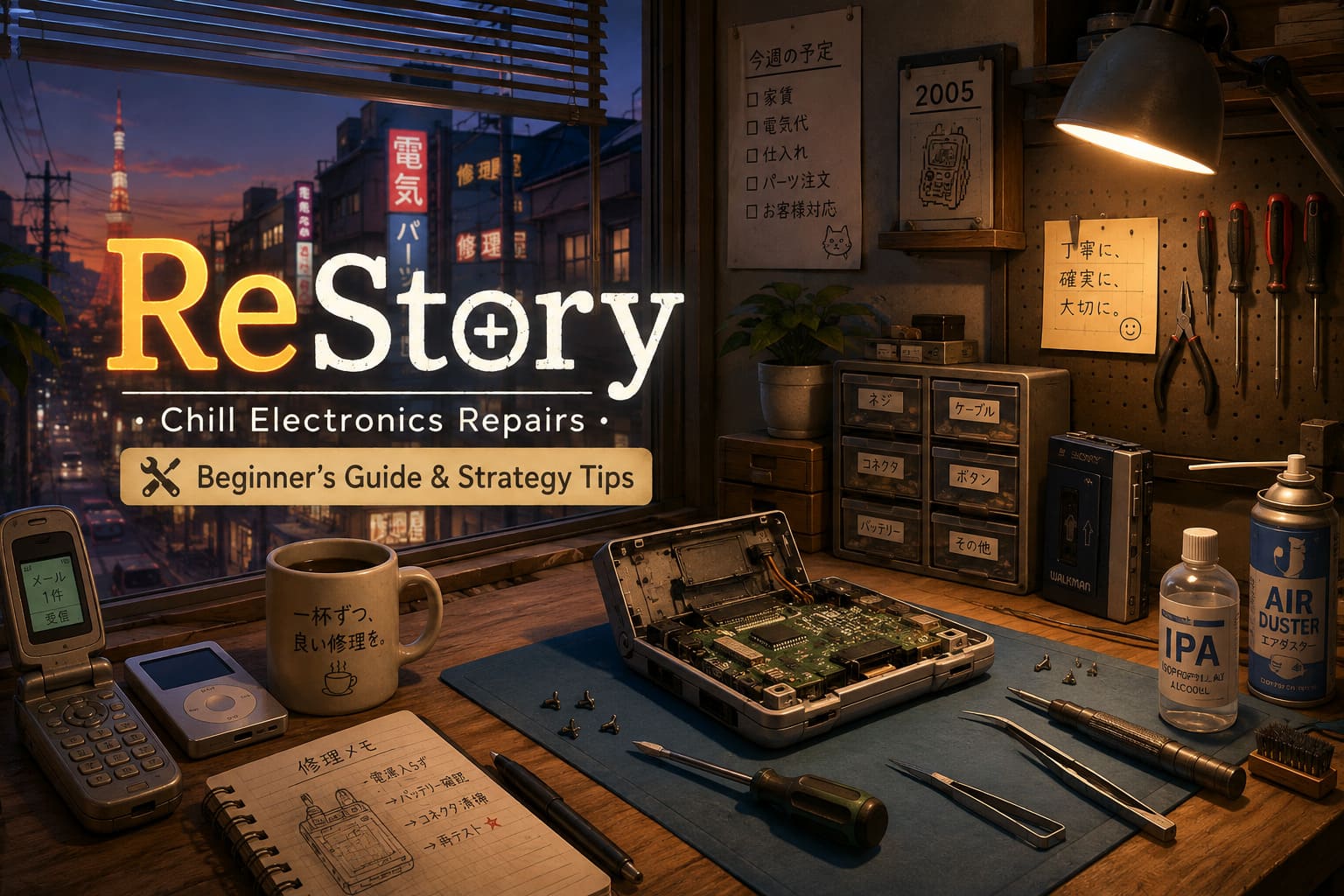
Instead of rushing through repair orders, I found myself slowing down, reading dialogue carefully, and paying attention to details that initially seemed unimportant. More than once, those conversations unlocked better opportunities later.
The result is a game that mixes three different systems surprisingly well:
- Hands-on electronics repair
- Business management
- Story-driven decision making
Ignoring any one of those usually creates problems somewhere else.
Learn the Daily Routine Before Expanding
One mistake I made early was accepting almost every repair request that appeared.
It sounds like the fastest way to make money, but it actually created chaos.
Soon my desk was covered with half-disassembled devices while replacement parts were still somewhere in the mail. Bills kept arriving, customers were waiting, and my cash balance started disappearing.
Eventually I settled into a much better routine.
My typical workflow looks like this:
| Step | What I Do |
|---|---|
| Morning | Accept new repair jobs. |
| Inspection | Diagnose every device before ordering anything. |
| Shopping | Combine all required parts into one purchase. |
| Repair | Finish repairs after parts arrive. |
| Delivery | Return completed devices immediately. |
That simple change saved both time and money.
Don’t Assume Every Device Needs New Parts
This became one of my favorite mechanics.
At first I immediately searched for replacement components whenever something looked broken.
Big mistake.
Quite a few electronics simply arrive filthy after years of neglect.
Before spending any money, I now always check for:
- Dust buildup.
- Dirty contacts.
- Oxidized connectors.
- Loose cables.
- Battery corrosion.
A careful cleaning with the proper tools often fixes issues that initially look far more serious.
It feels rewarding because every successful repair without buying extra components means pure profit.
Organization Matters More Than You Think
I didn’t expect storage management to become such a huge part of the experience.
When your shop begins filling with consoles, phones, music players, cameras, and spare parts, clutter quickly becomes your biggest enemy.
I eventually organized everything into separate areas.
| Storage Area | Purpose |
|---|---|
| Incoming Repairs | Devices waiting for diagnosis. |
| Parts Shelf | New replacement components. |
| Repair Bench | Current project only. |
| Finished Jobs | Ready for customer pickup. |
| Cleaning Tools | Frequently used equipment. |
Keeping everything separated made repairs noticeably faster.
It also reduced the number of times I accidentally forgot what I was working on.
Buy Smarter Instead of Buying Faster
Shipping fees quietly eat away at your profits.
During my first few in-game days, I ordered parts one repair at a time.
It seemed convenient.
It absolutely wasn’t.
Once I started diagnosing several jobs before opening the in-game marketplace, I realized I could combine almost every order into one shipment.
That one adjustment noticeably improved my finances.
If your workshop is barely surviving financially, this is probably the easiest habit to change.
Take Your Time During Repairs
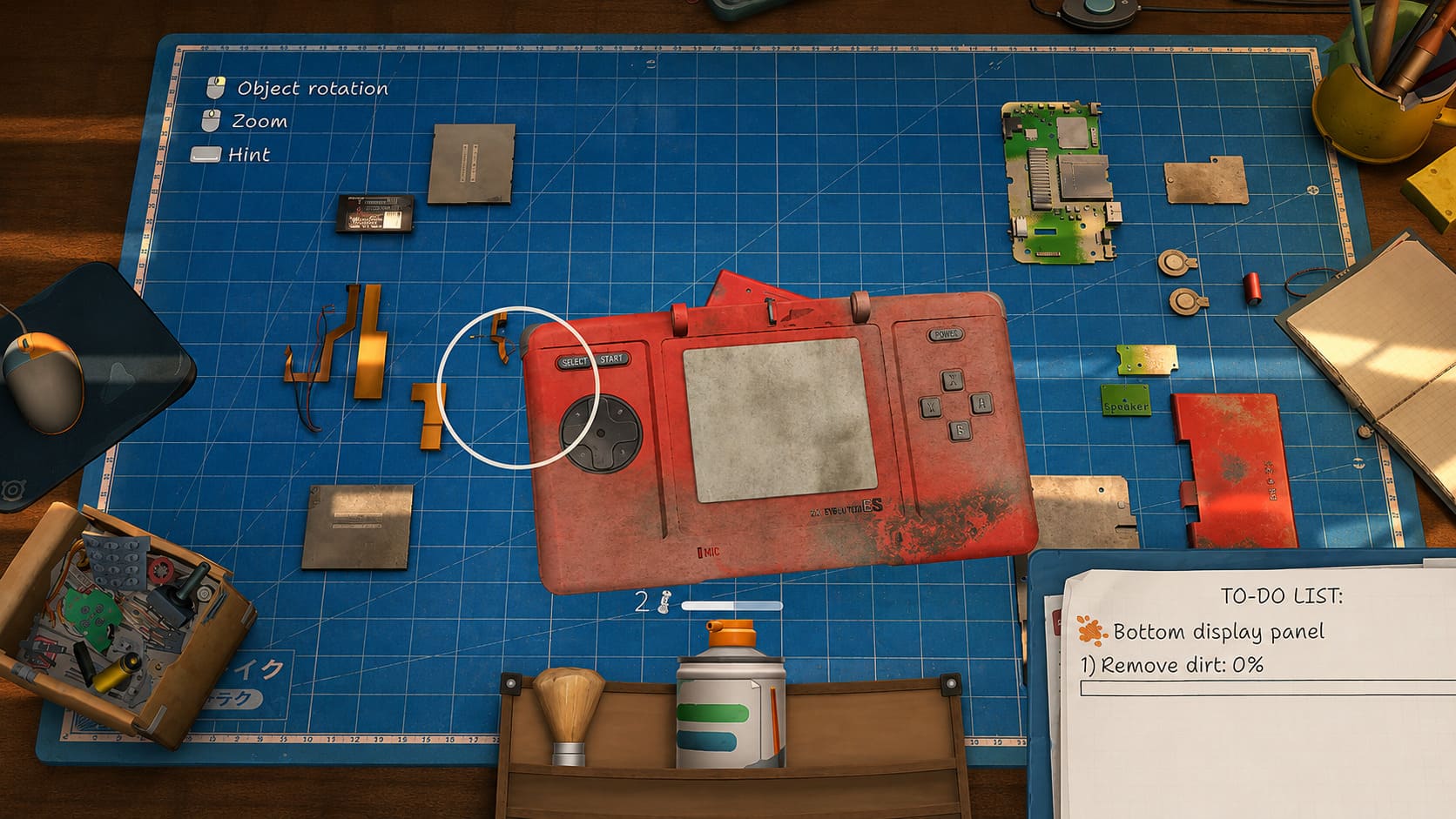
The repair system is surprisingly detailed.
Opening older electronics isn’t simply clicking a repair button.
You’ll regularly use:
- Precision screwdrivers.
- Plastic opening tools.
- Tweezers.
- Soldering equipment.
- Compressed air.
- Cleaning alcohol.
The biggest advice I can give is simple:
Never rush.
I learned to remember where every screw came from, especially when taking apart larger devices with multiple internal layers.
Missing one tiny connector can force you to disassemble the entire device again during the final diagnostic test.
That’s frustrating enough that you usually only make that mistake once.
Upgrades Worth Prioritizing
The game eventually lets you improve both your shop and your equipment.
Some upgrades look nice but don’t actually help your business very much early on.
If you’re trying to maximize profits, I’d focus on practical improvements first.
| Priority | Recommended Upgrade | Why It Helps |
|---|---|---|
| ★★★★★ | Better Diagnostic Equipment | Faster problem identification. |
| ★★★★★ | Improved Shipping Options | Less downtime waiting for parts. |
| ★★★★☆ | Additional Storage | Cleaner workspace. |
| ★★★☆☆ | Better Workbench | More comfortable workflow. |
| ★★☆☆☆ | Decorative Furniture | Mostly cosmetic during the early game. |
Once your finances become stable, decorating the workshop becomes much more enjoyable.
Don’t Ignore Customer Conversations
This surprised me more than anything.
I originally skipped through dialogue because I wanted to repair more devices.
That turned out to be a mistake.
Customers frequently hint at hidden details that aren’t immediately obvious.
Sometimes they misunderstand what’s actually wrong with their electronics.
Other times they’re hiding something completely unrelated to the repair.
Several conversations eventually lead to meaningful choices that can influence your reputation and even change how later events unfold.
After realizing that, I started treating every conversation almost like a detective investigation.
Managing Money Is Harder Than It Looks
ReStory does a good job of making small expenses feel meaningful.
You’re constantly balancing:
- Rent.
- Utility bills.
- Inventory costs.
- Shipping fees.
- Equipment upgrades.
Early in the game it’s very tempting to spend everything you’ve earned on shiny new tools.
I almost did exactly that.
Fortunately I realized rent was due the next day.
Since then I’ve tried keeping a financial buffer instead of spending every available coin.
That simple habit removed a lot of unnecessary stress.
Small Habits That Saved Me Hours
Some of the biggest improvements came from tiny changes in how I approached repairs.
Here are the habits I’d recommend to every new player:
- Run diagnostics before opening the case.
- Clean dirty hardware before replacing expensive parts.
- Order multiple components together whenever possible.
- Keep repair projects organized on separate shelves.
- Talk to every customer, even if you’re busy.
- Leave emergency money for bills before buying upgrades.
None of these are complicated.
Together, though, they make the early game dramatically smoother.
My Biggest Beginner Mistakes
Looking back, these are the errors that slowed my progress the most.
| Mistake | Better Solution |
|---|---|
| Ordering parts immediately. | Diagnose everything first. |
| Ignoring cleaning. | Always clean before replacing. |
| Spending all available cash. | Save money for recurring expenses. |
| Skipping dialogue. | Listen carefully to every customer. |
| Accepting too many jobs. | Finish current repairs before expanding. |
Avoiding even half of these mistakes makes the opening hours much less stressful.
Chill Electronics Repairs & Steam Deals 2026: Where to Download Full Games Safely
Final Thoughts
What impressed me most about ReStory: Chill Electronics Repairs wasn’t the repair mechanics alone—it was how naturally everything fits together. The satisfying process of restoring old gadgets, the challenge of keeping a tiny business afloat, and the stories behind the customers all reinforce one another in a way that kept me playing “just one more day” far longer than I expected.
If I could give one piece of advice to new players, it would be this: don’t rush. This isn’t a game that rewards speed above all else. It rewards observation, patience, and thoughtful planning. Spend a little extra time diagnosing problems, organize your workspace before it becomes a mess, and treat every customer conversation as something worth paying attention to.
Once those habits become second nature, your repair shop starts running smoothly, profits become much more consistent, and the mystery surrounding the workshop slowly unfolds in a way that makes every successful repair feel even more rewarding. Whether you’re here for the relaxing atmosphere, the satisfying restoration mechanics, or the branching narrative, ReStory offers one of the most enjoyable cozy management experiences I’ve played in quite a while.