Town to City Gridless Building Guide: How I Finally Learned to Build Living Cities
I’ve sunk way too many hours into city builders over the years, but Town to City hit different. Maybe it’s the gridless system, maybe it’s the way your town slowly starts feeling like a living Mediterranean postcard, or maybe it’s just the fact that nothing ever really behaves “perfectly.”
As someone who usually tries to optimize everything into cold efficiency, this game forced me to loosen up—and honestly, that’s where it gets good.
This isn’t one of those sterile “perfect layout guides.” This is more like what I wish someone told me before I bulldozed half my first town in frustration.
Let’s talk about how to actually build something that looks beautiful and doesn’t collapse economically three hours later.
Town to City Farming Guide: Unlocking the Global Stockpile System and Fixing Your Economy
Why Gridless Building Changes Everything
The first thing that throws people off in Town to City is the freedom. No squares. No strict alignment. Just roads, houses, and your questionable sense of urban planning.
At first, I thought I could “wing it.” I couldn’t.
What I learned quickly is that gridless doesn’t mean structureless—it just means the structure is invisible. You’re still building systems, just not in a rigid checkerboard.
Once I stopped trying to force symmetry, the game started clicking.
Roads Are the Backbone of Your Economy
I used to treat roads like aesthetic glue. That was a mistake.
In reality, roads are your logistics backbone. If they’re messy, your entire economy starts bleeding efficiency.
Here’s how I approach it now:
- Use freeform roads for natural geography like rivers, cliffs, and coastlines
- Use line tools for controlled expansion corridors
- Reserve wide decorative roads for central districts only
What changed everything for me was thinking in layers. Main arteries handle commerce flow, secondary roads manage residential access, and tiny paths exist purely for immersion and detail.
Once you separate those mentally, your town stops feeling chaotic.
Town to City Research Center Guide: RP Optimization and Progression Strategy
The Mini-Hub Strategy That Actually Works
This is probably the most important concept I learned the hard way.
Instead of building one giant capital, I now build multiple self-contained micro-neighborhoods.
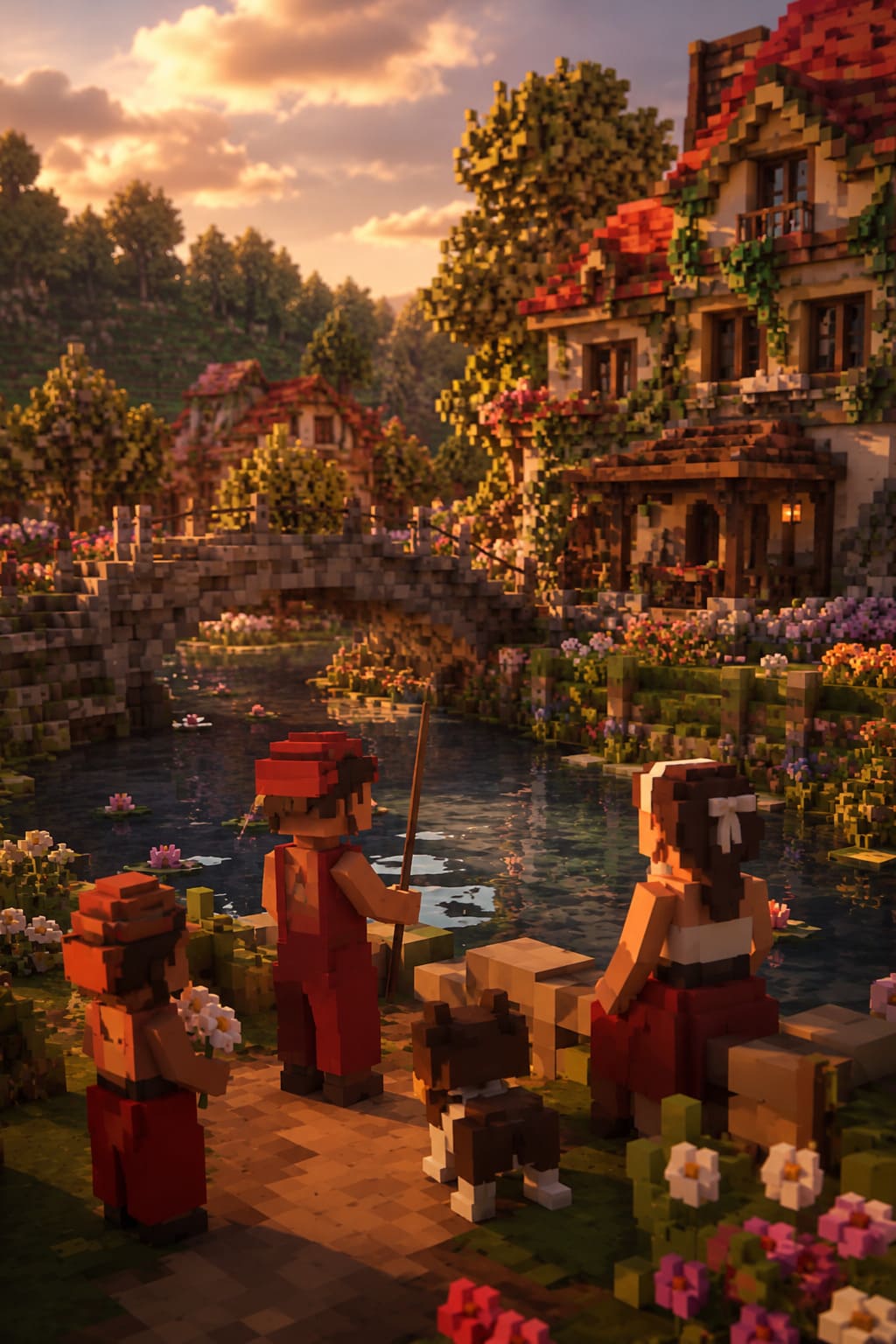
Each hub contains a small ecosystem:
- One food source like a bakery or stall network
- One or two service buildings
- Ten to twenty houses maximum
- A plaza or small communal space
It sounds restrictive, but it actually scales better.
The biggest mistake I made early on was creating a mega market district. Everything broke. Citizens walked too far, satisfaction dropped, and warehouses couldn’t keep up.
Mini-hubs fix that instantly.
Warehouses Decide Whether Your City Feels Alive
This is the hidden system most players underestimate.
If warehouse placement is wrong, your city feels sluggish even when everything technically works.
My rule now is simple: warehouses should always sit between production and consumption zones, not at the edge of the map.
Simple layout logic
| Component | Best Placement Strategy |
|---|---|
| Warehouse | Between farms and markets |
| Markets | Near residential hubs |
| Farms | Outer terrain zones |
| Luxury goods | Central districts only |
Once I started clustering warehouses closer to demand zones, I noticed fewer “why is nothing being delivered?” moments.
Manual Service Connections Change Everything
This mechanic is underrated and a bit hidden.
When you manually assign which houses get serviced by which buildings, you’re basically defining your city’s social structure.
I didn’t use it at first. Big mistake.
Now I actively separate my city like this:
- Basic houses receive basic food and services
- Artisan homes get upgraded services and better aesthetics
- Wealthier homes are assigned to luxury-focused buildings only
It prevents overlap chaos and stops high-value buildings from wasting resources on low-tier needs.
Think of it as zoning, but alive.
Decoration Is Not Optional
This game pretends decoration is optional. It’s not.
My first stable city only happened after I started treating decoration like infrastructure.
Things that matter more than they should:
- Street lamps along main roads
- Trees placed near homes
- Small plazas between districts
- Random benches that somehow boost happiness more than logic suggests
Artisan citizens especially care about environment quality. If their neighborhood feels empty, they will complain no matter how much food is available.
So I stopped asking “does this look good?” and started asking “would anyone want to live here?”
Planning Growth Before It Breaks Your City
Population milestones are where most cities collapse.
You hit a threshold, unlock new systems, expand rapidly, and suddenly everything stops working.
I learned to always prepare before growth spikes:
- Leave empty space near residential zones
- Pre-build additional food capacity
- Upgrade roads before expansion triggers
- Add warehouse buffer capacity early
Expansion is not about speed. It’s about not breaking under pressure.
Bad City vs Stable City
| Feature | Unstable Early City | Stable Late City |
|---|---|---|
| Road Design | Chaotic spaghetti layout | Layered transport hierarchy |
| Housing | Single dense cluster | Distributed mini-hubs |
| Logistics | Overloaded warehouses | Balanced supply chains |
| Happiness | Constant fluctuations | Stable baseline above 60% |
| Expansion | Reactive and messy | Planned and controlled |
The difference isn’t skill—it’s structure and patience.
Final Thoughts
If there’s one thing I wish I understood earlier, it’s this: Town to City doesn’t reward perfection—it rewards rhythm.
Your city is supposed to feel like it evolved naturally, not like it was engineered in a spreadsheet. The gridless system pushes you toward organic thinking whether you realize it or not.
Once I stopped forcing structure and started building believable neighborhoods, everything improved—efficiency, happiness, and even how the city looked.
Now I don’t try to build perfect cities anymore.
I build living ones.
And weirdly enough, they work better that way.