Bridge Building in City Builder Games: A Gamer’s Perspective
When you spend enough time in city-building games, your perspective shifts in a weird but fascinating way. Rivers stop being decorative scenery and start becoming obstacles that demand solutions.
Empty land stops being “peaceful space” and starts being “potential efficiency zones.” That’s exactly how bridge building begins to feel once you’ve played enough games like Town to City and other modern city builders that focus on organic expansion and infrastructure growth.
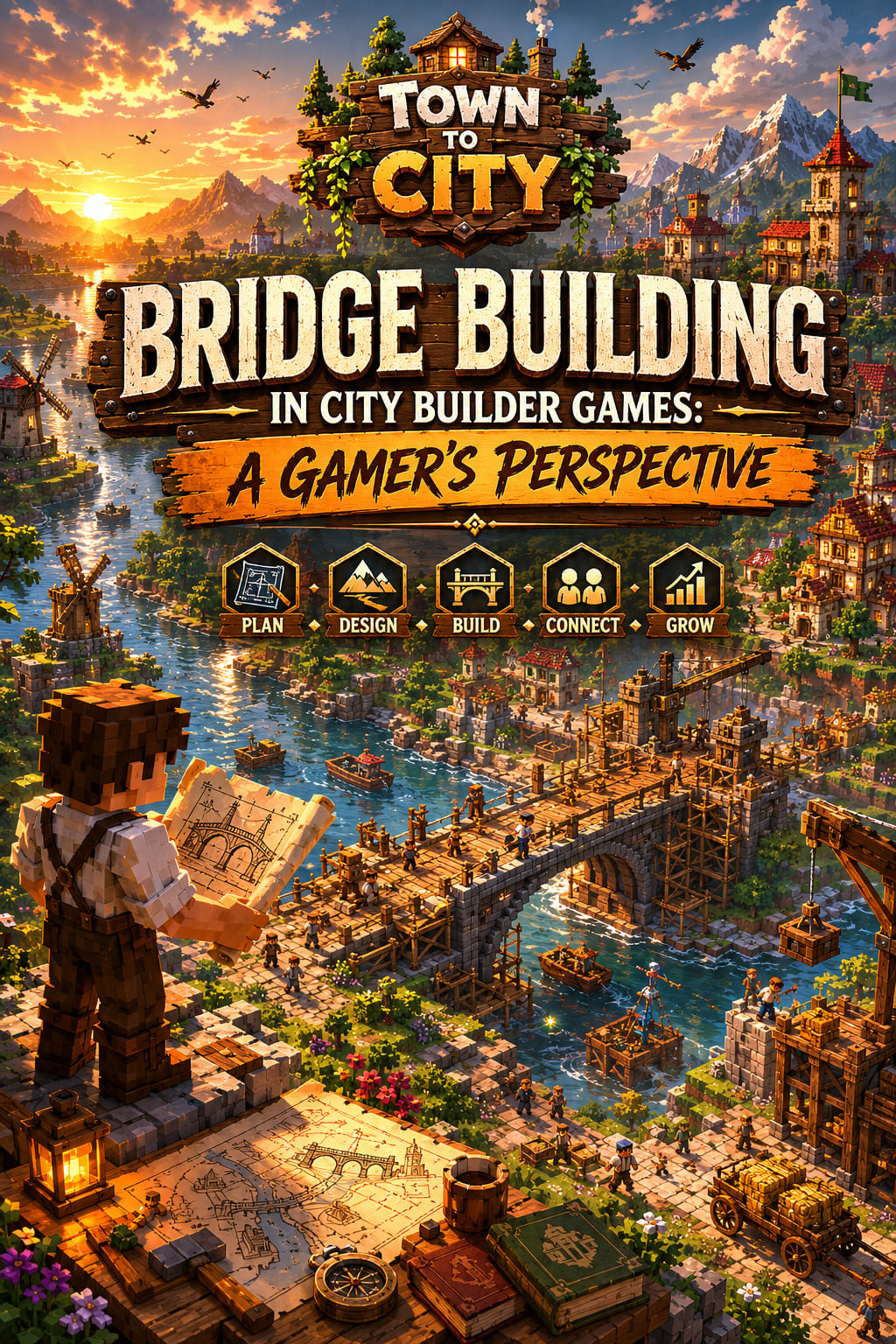
From a gamer’s perspective, bridges are not just visual additions or simple connectors between two points. They are turning points in gameplay complexity.
They mark the moment your settlement stops being a loose collection of buildings and becomes a system that has to function under pressure. That shift is where casual building ends and strategic thinking begins.
Town to City Gridless Building Guide: How I Finally Learned to Build Living Cities
When Expansion Becomes a Problem Instead of a Dream
Every city builder has this moment where things start to break down. Citizens are walking too far, production chains slow down, and the map suddenly feels too small even if it technically isn’t. The funny part is that nothing changes in the game’s rules—you just reach the limits of your own planning.
This is where bridge construction becomes unavoidable. It’s not about aesthetics anymore. It’s about removing friction from your city’s movement systems. A river that once looked peaceful now represents inefficiency. A valley becomes wasted potential. And suddenly, building a bridge feels less like decoration and more like damage control.
Feasibility Thinking: The Gamer Version of Planning
Games rarely call it “feasibility analysis,” but every experienced player does it instinctively. You pause, zoom out, and start mentally simulating how your citizens move through the map. You observe traffic flow, identify bottlenecks, and try to predict what will break in the next expansion phase.
In simple terms, you are already doing urban planning without realizing it. You’re not just placing a bridge—you’re predicting how your entire economy will react to it.
Town to City Farming Guide: Unlocking the Global Stockpile System and Fixing Your Economy
Real-world concept vs gameplay mindset
In real engineering, feasibility involves traffic studies and long-term projections. In games, it looks like watching NPCs take unnecessarily long routes and deciding that you personally will fix their suffering.
Terrain: The Silent Enemy of Every Builder
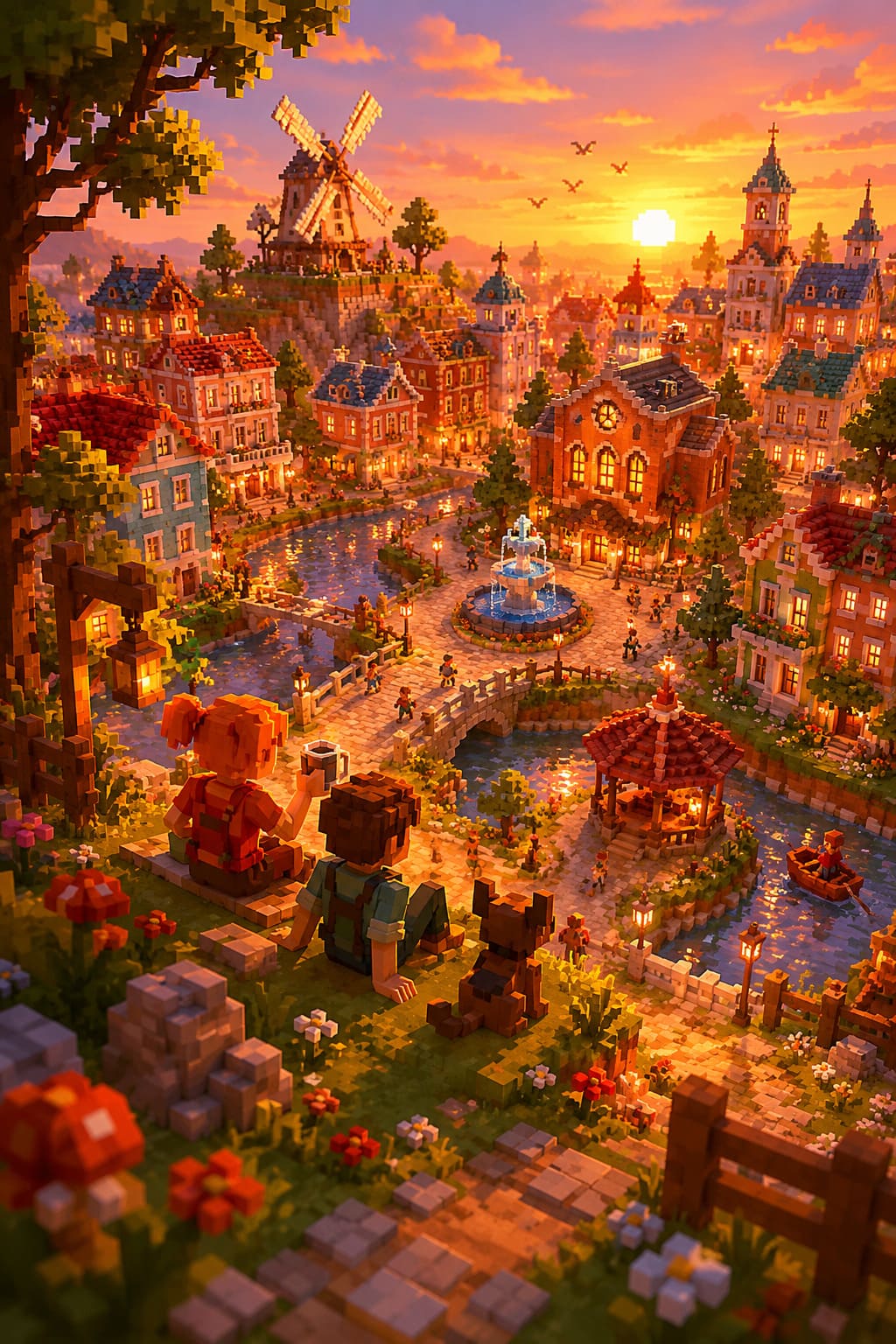
Terrain is one of the most underestimated design challenges in city-building games. It looks harmless until you try to place something important on it. Suddenly, slopes become restrictions, rivers become barriers, and half your plan becomes invalid.
Players quickly learn that flat land equals control, while uneven terrain equals compromise. Even without technical knowledge, gamers develop an instinct for reading maps like engineers. You start to recognize where expansion will be smooth and where the game will fight you every step of the way.
Invisible Rules: Progression, Unlocks, and Limitations
Every city builder has hidden structure behind the freedom. You might feel like you’re in full control, but progression systems quietly guide your decisions. Bridges are often locked behind upgrades, research systems, or city development milestones.
This creates a unique gameplay dynamic. You know what you want to build, but the game makes you earn it first. It turns infrastructure into a reward instead of a tool, which makes every unlock feel meaningful.
Design Phase: Where Strategy Actually Begins
Once you finally unlock bridge building, the tone of the game changes again. Now you are not just reacting to problems—you are actively designing solutions. This is where optimization becomes more important than aesthetics.
You start weighing options like cost efficiency, span length, traffic volume, and future expansion potential. Even though the interface is simple, the decision-making becomes increasingly complex.
Common bridge choices in gameplay
Players usually progress through similar patterns when selecting bridge types:
- – Early game: basic and cheap structures just to connect zones
- – Mid game: balanced designs that support growing traffic
- – Late game: large-scale infrastructure built for maximum efficiency and expansion
Construction Phase: The Most Satisfying Moment
Building the bridge is usually the most visually and emotionally rewarding part of the process. Once placed, the game instantly transforms how your city functions. Paths shorten, districts connect, and previously isolated areas become active parts of your economy.
This moment is powerful because it provides immediate feedback. You don’t just see progress—you feel it in how your entire system reacts.
After Construction: The Real Game Begins
Many players think bridge building is the goal, but in reality it’s just the beginning of a new phase. Once connectivity improves, new problems emerge. Traffic congestion shifts to new areas, production chains rebalance, and previously stable systems become overloaded.
This is where city builders become deeply strategic. You are no longer building individual structures—you are managing a living network of interconnected systems that constantly react to your decisions.
Infrastructure Impact Breakdown
| Phase | Player Perception | Actual System Impact |
|---|---|---|
| Planning | Choosing where to place a bridge | Designing future city efficiency |
| Terrain Check | Trying to find valid placement | Negotiating map limitations |
| Unlocking | Progressing through tech or levels | Expanding gameplay systems |
| Construction | Watching structure build | Removing movement bottlenecks |
| Optimization | Fixing traffic issues | Managing global logistics balance |
Why Bridge Building Feels So Rewarding
The real reason bridges feel so satisfying in city-building games is control. A bridge is not just a structure—it is a solution that changes how the entire map behaves. It unlocks new territory, improves efficiency, and often reshapes the entire economic system of your city.
Unlike most buildings that simply improve numbers or output, bridges change geography. That is a much deeper form of impact, and it’s why players remember them so clearly.
Final Thoughts: Why I Keep Building Them Anyway
After spending too much time in city builders, one truth becomes obvious. A poorly placed bridge can create more problems than it solves, but a well-placed one can completely transform your city’s efficiency and structure.
From a gamer’s perspective, bridge building is one of the most interesting mechanics because it blends creativity with consequence. You are given freedom, but that freedom always has long-term effects. And that balance between expression and responsibility is what keeps these games engaging for so long.
In the end, bridges are not just part of the city. They are decisions that define how the city grows, adapts, and survives.