Voidling Bound Skill Tree Guide: Ultimate Research Points Distribution & Meta Builds (2026)
Since its launch in 2026, Voidling Bound has become one of those rare games that completely consumed my free time. On the surface, it looks like another creature-collecting adventure mixed with third-person action combat. After dozens of hours, however, it becomes clear that the real game starts when you begin shaping your Voidlings through the Cerebrum system.
One mistake I see many new players make is trying to create balanced creatures that can do a little bit of everything. That approach works during the opening planets, but once the Lesion corruption intensifies and Abyss difficulty starts scaling aggressively, versatility quickly turns into weakness.
In my experience, the strongest Voidlings are specialists. Whether you choose poison, burn, melee aggression, or survivability, your Research Points should support a single goal rather than being spread across multiple unrelated upgrades.
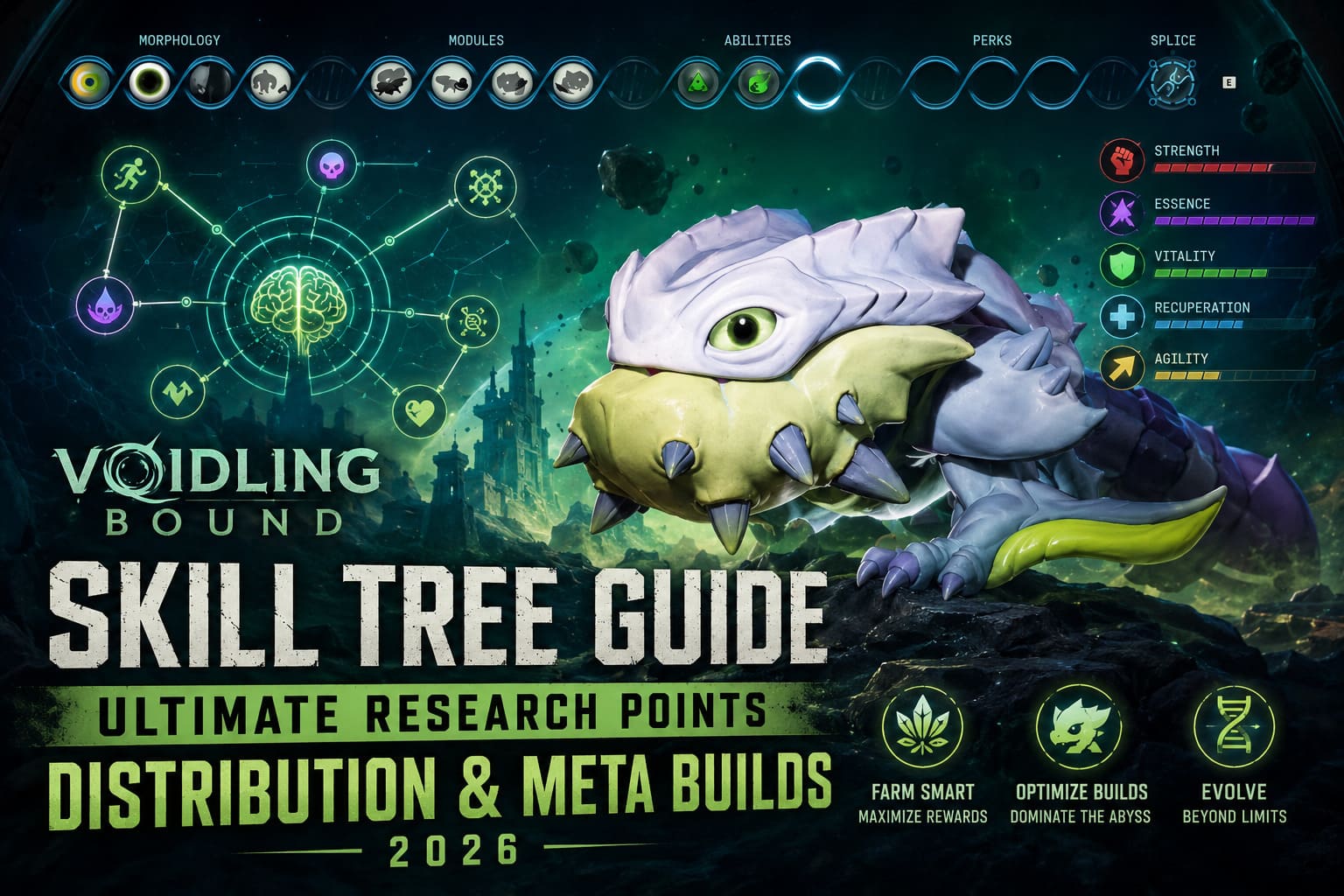
This guide covers how I approach Research Point farming, which skill tree branches provide the most value, and the two builds that have consistently carried me through difficult endgame content.
Why Research Points Matter More Than Almost Anything Else
Research Points are essentially the fuel behind long-term progression. While gear, mutations, and creature levels all matter, the Cerebrum tree permanently improves how your Voidlings function.
The sooner you develop an efficient farming routine, the faster your entire roster becomes stronger.
My Preferred Research Point Farming Methods
- Prioritize Flower Pods and Research Depots
One of the biggest time-saving tricks is avoiding unnecessary fights when farming.
Instead of clearing every enemy group on a map, I usually rush directly toward large resource structures. Flower Pods and Research Depots often provide better rewards per minute than standard combat encounters.
- Hatch and Release Extra Voidlings
This method feels strange at first, but it is extremely effective.
Many common species generate valuable Research Point rewards when released. If I hatch a creature that doesn’t fit my current team composition, I often convert it directly into progression currency.
This approach becomes especially rewarding when rare variants begin appearing.
- Build Around Automatic Resource Collection
Loot can easily disappear into visual chaos during larger fights.
Unlocking collection-focused passive upgrades dramatically improves farming efficiency because you spend less time running around gathering resources and more time fighting.
Over the course of a long session, that convenience adds up to a surprisingly large amount of additional progression.
The Stats I Focus On First
Before discussing the skill tree itself, it’s important to understand the foundation underneath every build.
I generally avoid splitting points evenly across all attributes.
Core Attributes Overview
| Stat | What It Improves | Best For |
|---|---|---|
| Strength | Physical damage output | Melee attackers |
| Essence | Elemental and status damage | Poison, Plasma, Burn builds |
| Vitality | Maximum health | Tanks and brawlers |
| Recuperation | Regeneration and recovery | Sustain-focused setups |
| Agility | Mobility and cooldown efficiency | Fast aggressive builds |
My personal recommendation is simple:
Choose one primary offensive stat and one defensive stat.
Trying to maximize everything usually results in mediocre performance across the board.
Skill Tree Priorities That Always Feel Worth It
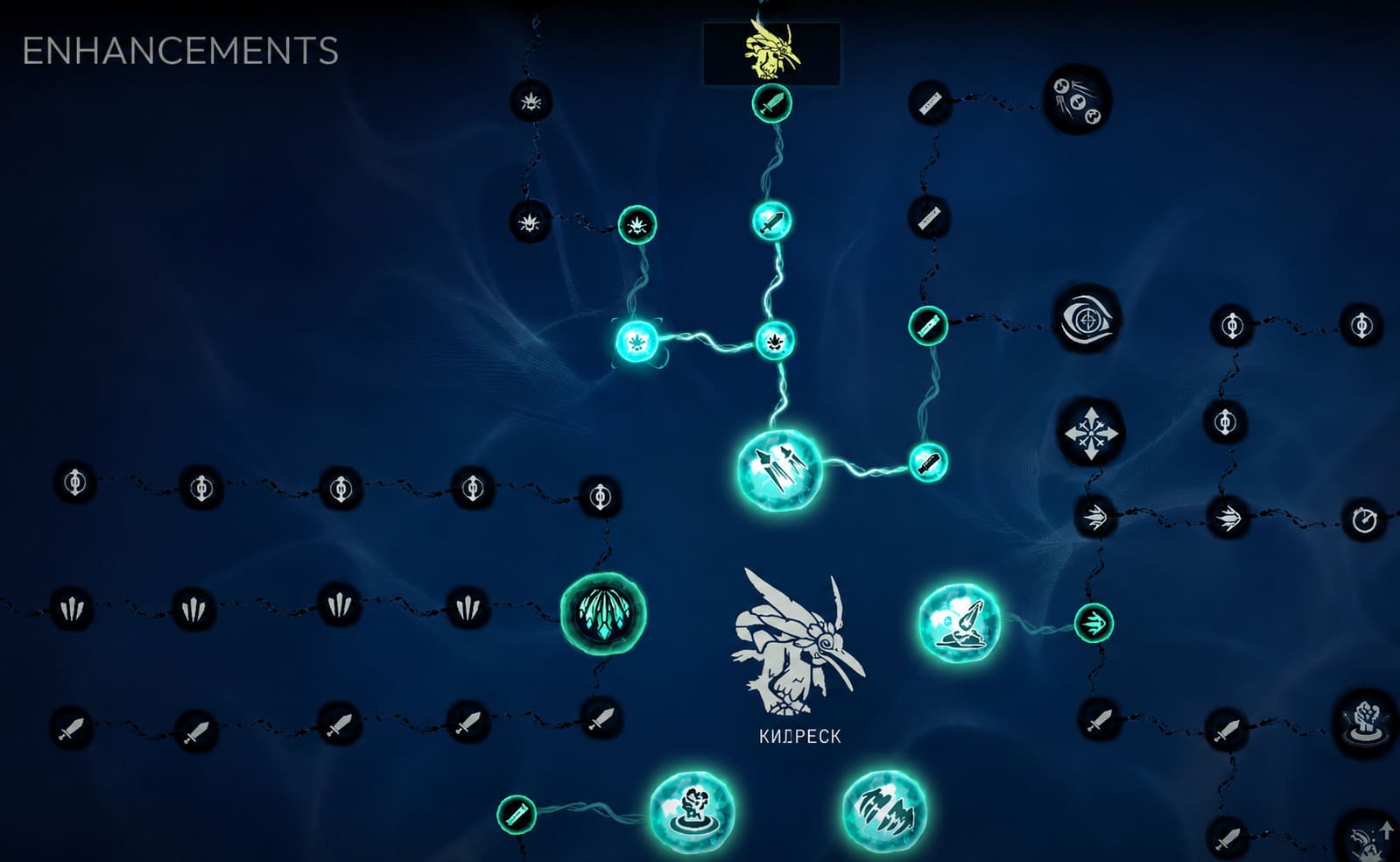
The Cerebrum tree is huge, but not every node provides equal value.
Some upgrades offer small numerical increases, while others completely transform how a Voidling performs.
Movement Nodes Come First
If there’s one lesson I learned after repeatedly dying in Abyss runs, it’s this:
Mobility is survival.
No amount of damage matters if you’re constantly getting hit.
The first nodes I typically invest in are:
- Dash cooldown reductions
- Movement speed bonuses
- Positioning enhancements
- Evasion-related upgrades
These improvements remain useful from early game all the way into high-level endgame content.
Commit to One Element
Another common mistake is mixing multiple elemental paths.
If your Voidling naturally excels with poison, invest heavily into poison enhancements.
If it specializes in fire damage, maximize burn-related upgrades.
Specialization creates powerful synergies that simply cannot be replicated through balanced builds.
The strongest elemental investments usually include:
- Status application chance
- Damage-over-time improvements
- Element-specific scaling bonuses
- Cooldown reductions for key attacks
Once these systems start interacting with each other, damage output increases dramatically.
The Most Valuable Passive Nodes
While flashy active abilities attract attention, many of the strongest upgrades are hidden among passive branches.
These nodes often determine whether a build merely survives or becomes nearly unstoppable.
Healing Amplification Effects
Healing-focused passives scale exceptionally well in long fights.
Whenever I find a build capable of applying bleed, poison, or burn consistently, I immediately look for passives that convert those effects into survivability.
The difference becomes obvious during Abyss encounters where incoming damage remains constant.
Damage-to-Healing Conversion
This category consistently feels overpowered.
Turning offensive pressure into defensive sustain creates a positive feedback loop:
- More damage creates more healing
- More healing allows aggressive play
- Aggressive play generates more damage
Once the cycle begins, some builds become surprisingly difficult to kill.
My Favorite Endgame Build: Toxic Control Specialist
If I had to recommend a single build for players entering difficult content, this would probably be my choice.
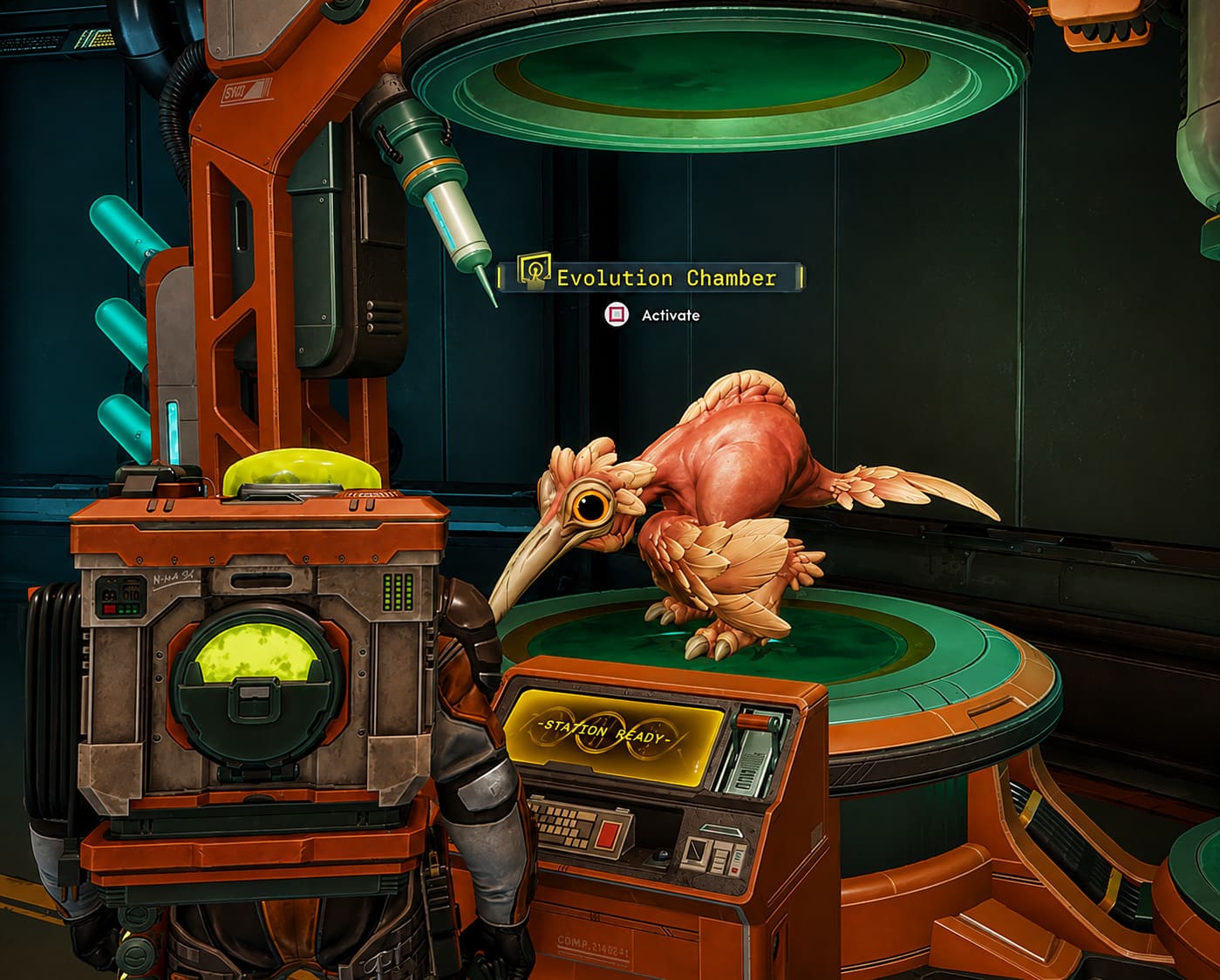
Build Focus
Species Type: Toxic-oriented ranged Voidling
Stat Distribution
| Attribute | Priority |
|---|---|
| Essence | Very High |
| Agility | High |
| Vitality | Medium |
| Recuperation | Medium |
| Strength | Low |
Why It Works
The build revolves around constant poison application combined with exceptional battlefield control.
Instead of charging directly into danger, you create space, spread damage-over-time effects, and let enemies slowly collapse while maintaining a safe distance.
The best part is that many poison-related passives naturally support survivability.
As your status effects spread, your health recovery remains remarkably consistent.
For players who enjoy tactical gameplay rather than reckless aggression, this setup feels incredibly rewarding.
My Favorite Melee Build: Pyro Berserker
For players who prefer jumping directly into combat, this is where things get fun.
Build Focus
Species Type: Fire and Plasma hybrid brawler
Stat Distribution
| Attribute | Priority |
|---|---|
| Vitality | Very High |
| Strength | High |
| Essence | High |
| Recuperation | Medium |
| Agility | Medium |
Why It Works
This build embraces chaos.
The goal is simple:
- Dive into large enemy groups.
- Apply burn effects rapidly.
- Trigger healing from fire-based passives.
- Stay alive through constant regeneration.
The combination of burn damage, area attacks, and healing interactions creates a surprisingly durable frontline fighter.
It feels risky at first, but once the passive synergies come online, survivability increases dramatically.
Few things in Voidling Bound are as satisfying as watching entire enemy packs burn while your health bar refuses to move.
Voidling Bound Breeding Guide: Can You Breed Spliced Creatures?
Build Mistakes I Regret Making
After experimenting with dozens of different setups, several mistakes stand out.
Avoid These Common Errors
- Investing equally in every attribute.
- Mixing too many elemental paths.
- Ignoring mobility upgrades.
- Prioritizing damage over survivability too early.
- Spending Research Points on skills that don’t support your main strategy.
Every strong build I have played followed a clear identity.
Every weak build tried to do everything.
Voidling Bound Mutant Genes and DNA Collection Guide: Farming Strategies
Final Thoughts
If there’s one piece of advice I’d give to every Voidling Bound player, it’s this: commit to a plan.
The Cerebrum tree rewards specialization far more than flexibility. Whether you choose poison control, burn-based sustain, high-speed assassins, or tanky bruisers, the best results come from stacking synergies that amplify one another.
Research Points are limited, especially during the early and mid-game, so every investment should move your build toward a specific goal.
Personally, I still prefer poison-focused ranged setups because they offer excellent survivability and safe damage output. However, the Pyro Berserker remains one of the most entertaining builds I’ve played in any creature-collecting ARPG.
As the community continues discovering new interactions and hidden combinations, the meta will certainly evolve. For now, though, focused specialization, strong mobility, and efficient healing mechanics remain the foundation of almost every successful endgame build in Voidling Bound.