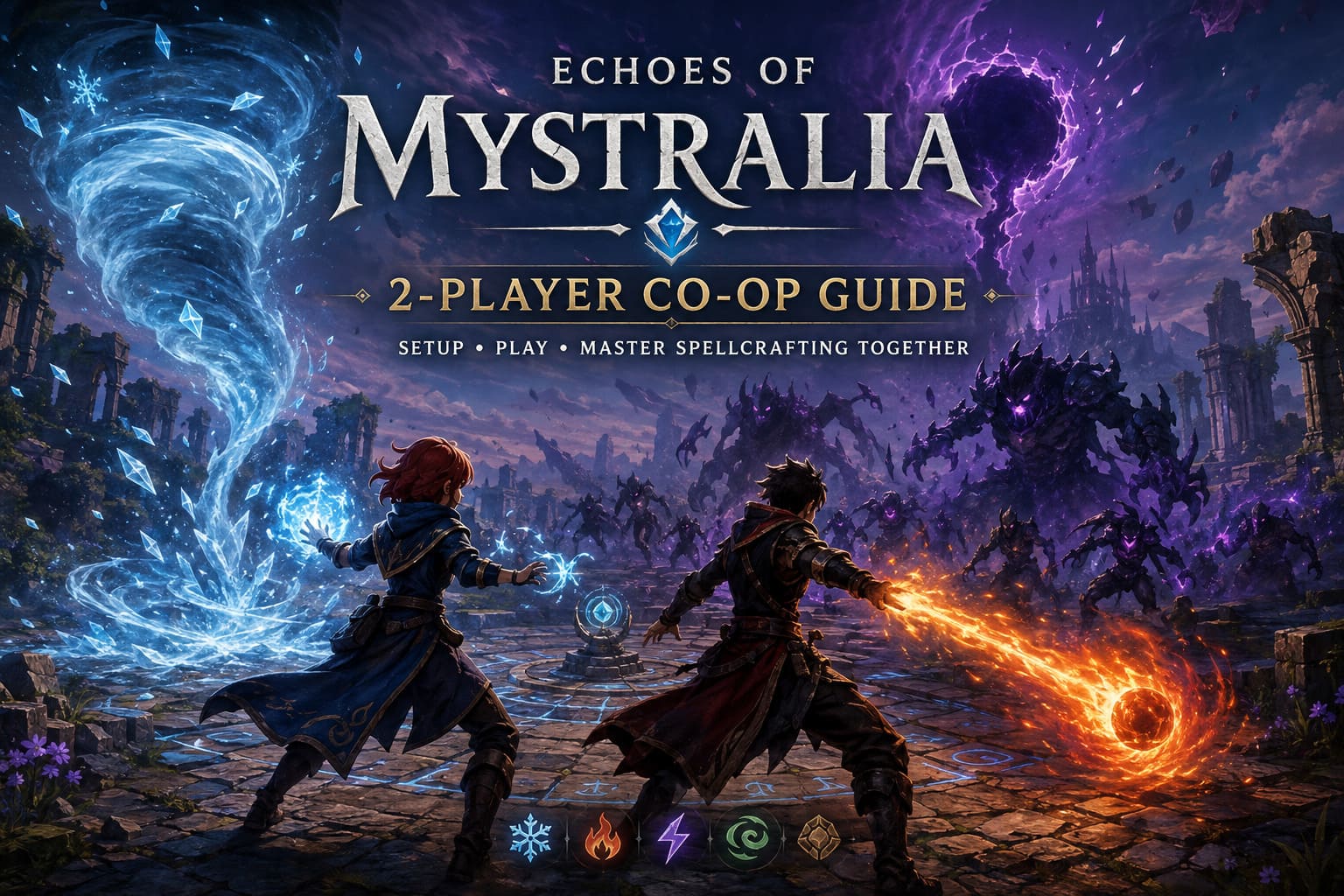
Echoes of Mystralia 2-Player Co-Op Guide: How to Setup, Play, and Master Spellcrafting Together
The magical world of Mystralia has returned with the highly anticipated release of Echoes of Mystralia in 2026. Developed by Borealys Games, this action-heavy spellcrafting ARPG roguelite feels like a major evolution of its single-player predecessor, Mages of Mystralia. The original game’s granular spell-building system was already one of its biggest strengths, but Echoes of Mystralia takes that concept and throws it into a faster, more dangerous roguelite structure. You step into the role of a Watcher, fight through corrupted versions of Mystralia, and attempt to defend the Cycle of Memories from a world-devouring Rift.
One of the biggest talking points among players in 2026 is the addition of 2-player cooperative gameplay. Mystralia can be a brutal place when you are dealing with the Shadows of the Past alone, but bringing another player completely changes the rhythm of a run. Suddenly, crowd control, positioning, elemental combinations, revives, and build choices become shared problems. And honestly, this is where Echoes of Mystralia becomes much more interesting for me. The spellcrafting system was already fun in solo play, but watching two players build around each other’s abilities creates the kind of controlled chaos that makes a roguelite run memorable.
This guide covers everything you need to know about Echoes of Mystralia 2-player co-op, from setting up an online session to managing progression, choosing complementary builds, and surviving the tougher encounters. We will also look at some of the strongest cooperative spell combinations and explain how to turn two separate Watchers into one extremely dangerous magical team.
Section 1: How to Set Up and Connect 2-Player Online Co-Op
Before you and a friend start throwing freezing tornadoes, electrical storms, and flaming projectiles across the battlefield, there are a few things you need to understand about the game’s multiplayer structure. Echoes of Mystralia uses a straightforward host-and-join system that works through the player’s platform friend network, making it relatively painless to get another Watcher into your game.
Step-by-Step Connection Guide
- Complete the Prologue: Both players need to finish the opening tutorial sequence and reach the Azimuth Temple for the first time. Cooperative features remain unavailable until the game introduces the core Watcher’s Heart mechanics.
- Enter the Azimuth Temple Menu: Once you are inside the central hub, open the pause menu and look for the Multiplayer or Co-Op Session option.
- Host a Session: The player with the more stable connection should generally host. Set the lobby to Friends Only or Invite Only if you want to keep the session private.
- Invite Your Partner: Use the available platform or Steam interface to invite your friend. The second player can also use the Join Friend option to locate an active session.
- Check Your Loadouts: Once your partner arrives in the Azimuth Temple, take a moment to compare active spell forms, equipment, and planned builds. When both players are ready, step onto the central Rift plate to begin selecting a run.
That final preparation step is easy to overlook, but it can make a surprisingly big difference. If one player is building around crowd control while the other is preparing a high-damage glass cannon, you want to know that before the first room starts throwing enemies at you. Good co-op runs usually begin with a quick conversation rather than immediately jumping into the Rift.
Common Co-Op Connection Problems
As with practically every online game, connection problems can occasionally get in the way. Early community discussions have highlighted a few issues worth checking if a friend cannot join or the session becomes unstable.
- Check Game Versions: Make sure both players are running the same client version. A new hotfix on one machine can temporarily interfere with multiplayer compatibility.
- Check Platform Restrictions: Review your platform’s multiplayer and friend permissions if invitations are not appearing correctly.
- Try Steam Remote Play Together: If traditional matchmaking is giving you trouble, Remote Play Together can provide another way to experience cooperative play, particularly when only one player owns the game or when network routing becomes problematic.
My advice is simple: if a connection problem appears immediately after an update, don’t spend an hour changing random settings. First check whether both players are running exactly the same version. A surprising number of multiplayer headaches come down to that.
Section 2: Co-Op Progression and Shared Economy
One of the more important things to understand in Echoes of Mystralia co-op is the difference between permanent progression and resources collected during a run. Because this is a roguelite, the game constantly asks you to balance short-term power with long-term progression. Playing with another person makes that economy more interesting because you have two builds competing for attention, even when you are ultimately working toward the same goal.
The Lotus System and Hub Progression
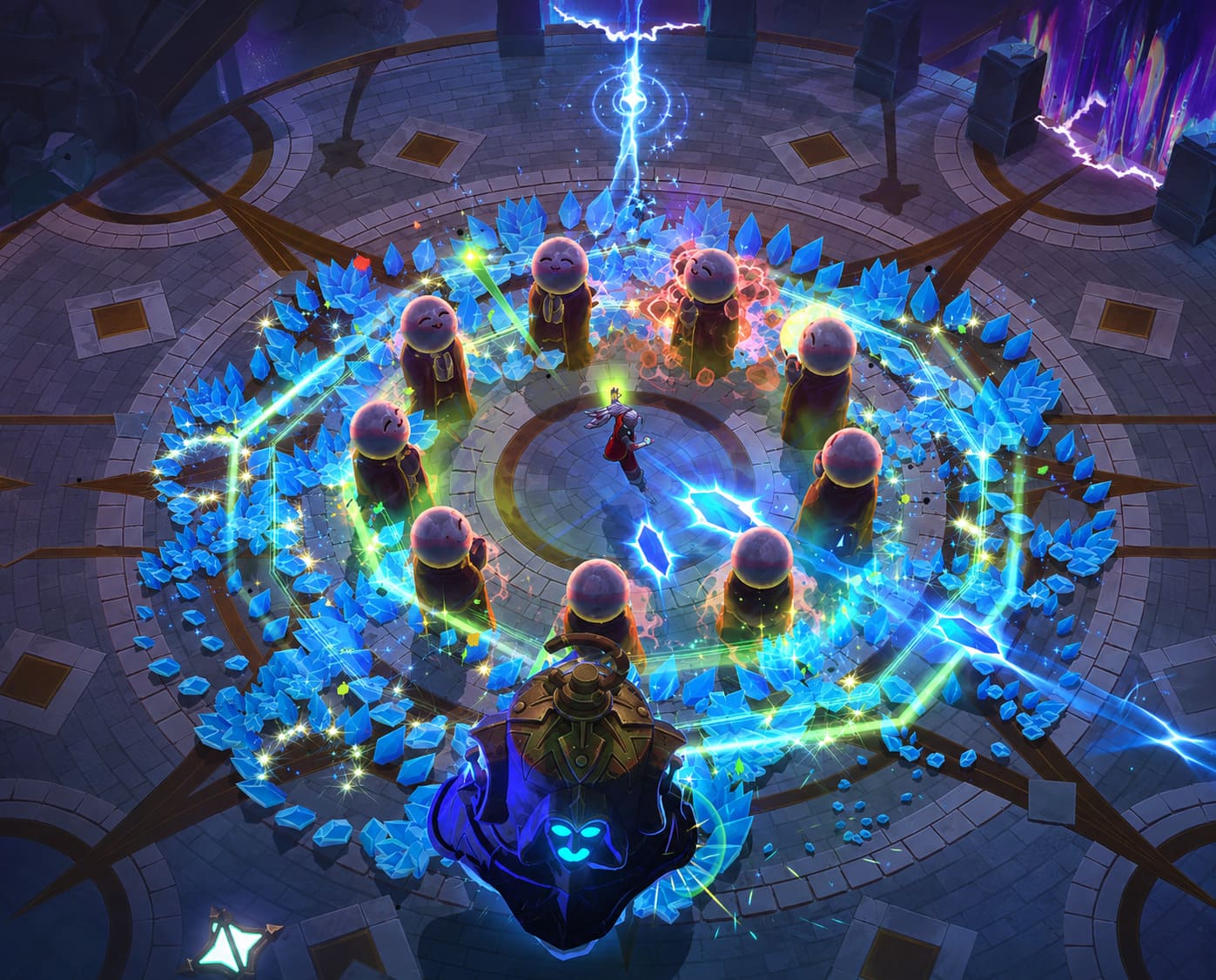
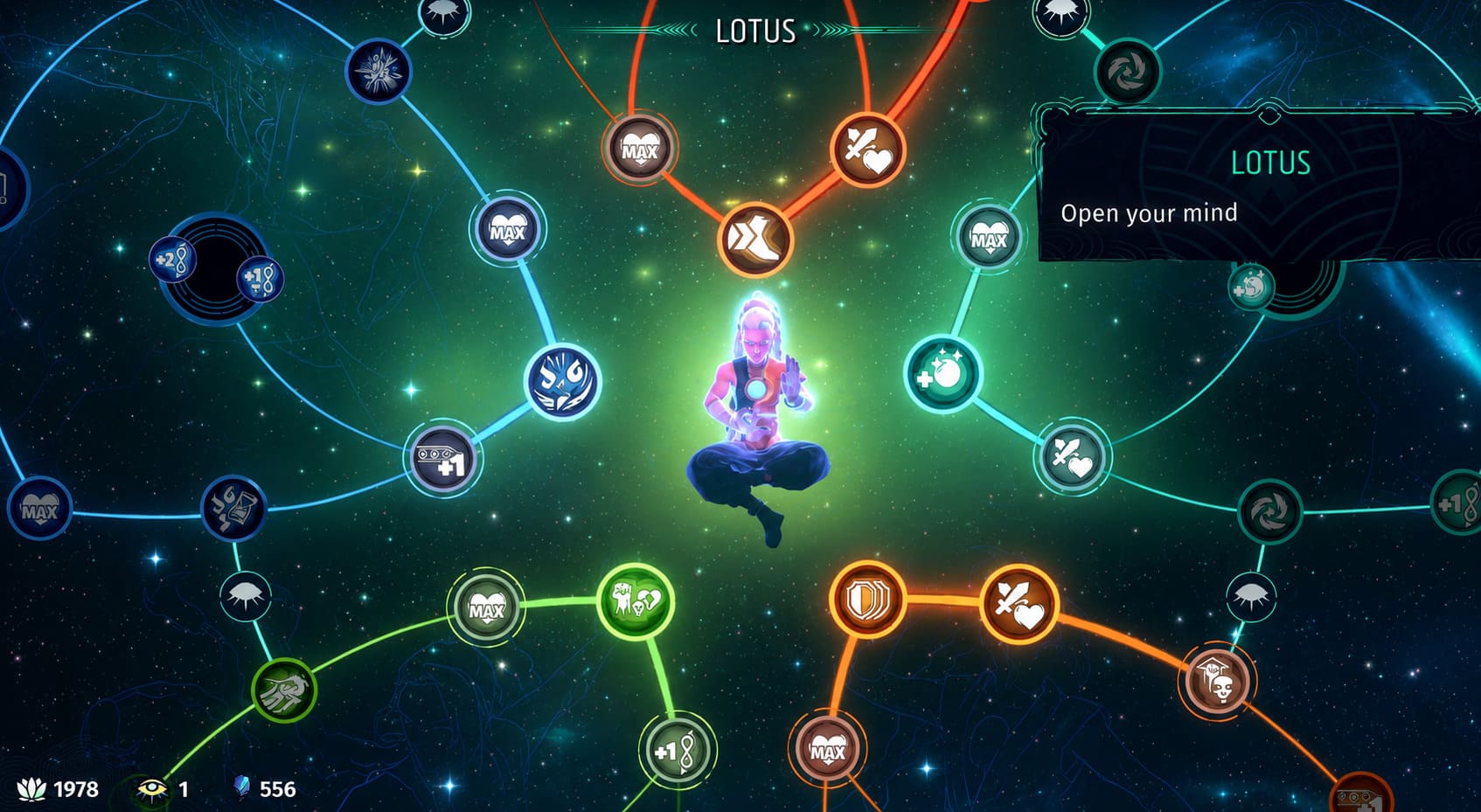
The permanent progression loop is built around The Lotus, a mystical upgrade system located within the Azimuth Temple. This is where your Watcher becomes stronger over multiple runs, allowing you to gradually build a character that better fits your preferred playstyle.
- Independent Upgrades: Meta-progression currencies and permanent rewards obtained through cooperative runs can be used by the individual players for their own progression. You are not forced to fight your teammate over every permanent upgrade.
- Tailored Builds: Each player can specialize independently. One Watcher might invest heavily in defensive upgrades and survivability, while the other focuses on critical damage, elemental effects, and aggressive spell scaling.
This separation is one of the smartest parts of the co-op structure. You don’t need two identical characters. In fact, you probably shouldn’t have them. The best teams are built around different strengths that cover each other’s weaknesses.
In-Run Economy: Gold, Chests, and Relics
Things become more complicated once you enter a live run. Temporary resources, altar upgrades, and Relics can influence your build dramatically, so communication matters.
| Resource | How It Works | Co-Op Priority |
|---|---|---|
| Permanent Currencies | Used for long-term progression through the Lotus system. | Support each player’s individual build. |
| In-Run Gold | Used for temporary purchases and upgrades during a run. | Coordinate spending instead of wasting resources. |
| Temporary Shards | Provide additional options during the current run. | Spend according to the team’s immediate needs. |
| Relics | Powerful items that can strongly influence a build. | Assign them to the player who benefits most. |
| Memories | Modify and expand spell behavior. | Use them to reinforce complementary builds. |
Relic distribution deserves special attention. If your teammate is running a dedicated fire build and you pick up a Relic that dramatically improves fire damage just because it looks powerful, you’re potentially wasting the team’s overall potential. Talk before picking up major upgrades. It takes a few seconds and can make the next several rooms much easier.
Section 3: Mastering Collaborative Spellcrafting
This is the part of Echoes of Mystralia that I find the most exciting. The game’s spellcrafting system gives you an enormous amount of freedom to change how your abilities behave. Through the Watcher’s Heart, you can combine core spells with Memories and modifiers to create abilities that barely resemble their original forms.
In solo play, the challenge is creating one character capable of dealing with almost everything. In co-op, you don’t need to solve every problem yourself. You can build two halves of the same machine.
Understanding the Core Elements
- Fire: Excellent for raw damage and stacking damage-over-time effects such as Burn.
- Ice: Focused on crowd control, freezing enemies and creating opportunities for powerful follow-up attacks.
- Wind: Useful for movement, knockbacks, enemy grouping, and battlefield manipulation.
- Earth: Strong defensive options, protective effects, resistance, and heavy impact attacks.
- Electricity: Particularly effective against groups, with fast damage and chain effects that can jump between nearby targets.
The real fun starts when you stop thinking about these elements as isolated categories. Ice doesn’t have to be the damage dealer. Wind doesn’t have to be purely defensive. Earth doesn’t have to mean standing still. Your Memories can dramatically change what each spell is capable of, which is why experimentation is so rewarding.
Section 4: Three Powerful Co-Op Build Concepts
1. Freeze & Shatter
This is probably the most immediately satisfying combination for players who love watching an entire room collapse in seconds.
Player 1 — Crowd Controller: Build around an Ice-modified vortex or freezing tornado. The goal is to lock down as many Shadows of the Past as possible and keep them grouped together.
Player 2 — Executioner: Use a high-piercing Fire or Earth projectile with heavy damage multipliers. Once the enemies are frozen, follow up with the strongest available attacks and take advantage of the resulting shatter damage.
The important part is timing. Don’t fire your biggest attack before the enemies are properly controlled. Let Player 1 establish the setup, then unload everything at once.
2. Tesla Coil Magnet
This build is all about turning enemy positioning into a weapon.
Player 1: Create a Wind spell capable of pulling enemies toward a central point. The goal is to turn a chaotic room full of enemies into one convenient target cluster.
Player 2: Build around Electricity, focusing on chain effects, duration, and repeated hits. Once the enemies are packed together, the electrical attacks can bounce between targets and maintain pressure across the entire group.
It sounds simple, but this combination can become ridiculous when both builds are properly optimized. The Wind player isn’t really doing less damage. They’re setting up the conditions that allow the second player’s damage to become much more efficient.
3. The Unstoppable Juggernaut
This is the setup I would recommend to players who are still learning the game or struggling with difficult boss encounters.
Player 1: Focus heavily on Earth-based defensive abilities, protective effects, resistance, and tools that can draw enemy attention.
Player 2: Go for a high-risk damage build focused on Fire, beams, or other powerful ranged attacks.
The basic idea is straightforward: one player creates breathing room while the other exploits it. Against bosses, this can make a huge difference because the damage-focused player can concentrate on positioning and spell timing instead of constantly worrying about every incoming attack.
Section 5: Advanced Co-Op Combat Tactics
Once you reach Elite encounters and Guardians, simply having two players is no longer enough. Enemy health and aggression can increase, and careless positioning can quickly turn a promising run into a disaster.
Managing Aggro
One of the most useful co-op skills is knowing when to deliberately take the boss’s attention away from your teammate.
If your partner is low on health or needs time to reposition, step forward and start applying pressure. Use movement-heavy abilities and circle the arena rather than standing directly in front of the boss. The objective isn’t necessarily to kill it immediately. Sometimes your job is simply to keep the boss busy for five or ten seconds.
That small window can save an entire run.
Reviving a Fallen Teammate
When a player goes down, the surviving Watcher has to decide whether a revive attempt is worth the risk. Running straight toward a boss to revive someone is usually a bad idea.
Wait for a safe opening. Many bosses have recovery animations after large attacks, creating a brief opportunity to start the revive sequence. Use that window instead of trying to force a rescue while the boss is actively attacking.
The revive itself leaves you vulnerable, so positioning matters. If possible, lure the boss away first, create distance, and then begin the revive.
Section 6: Rifted Echoes, Hidden Puzzles, and Two-Player Secrets
Not every cooperative encounter is about killing things as quickly as possible. During your runs, you can encounter Rifted Echoes and environmental puzzles hidden along procedurally generated paths.
Some of these puzzles involve symbols or elemental triggers that require two different effects to be activated at roughly the same time. This is where having a second player becomes more than just extra firepower.
Read the symbols on the floor, identify which elements they require, and coordinate your casts. If one player is responsible for Ice and the other for Electricity, for example, don’t randomly throw abilities at every symbol. Establish who activates which trigger first.
Successful puzzle solutions can lead to high-tier Relics, rare Memories, and rewards that are difficult or impossible to obtain through ordinary combat encounters. These moments also give co-op runs a nice change of pace. After ten minutes of fighting through monsters, solving a puzzle together can feel surprisingly refreshing.
My Take on Echoes of Mystralia Co-Op
The addition of 2-player co-op is more than a checkbox on the feature list. It actually makes sense with the game’s spellcrafting philosophy. Echoes of Mystralia is built around experimentation, and having another player beside you creates another layer of experimentation that simply isn’t possible in solo play.
What I like most is that the strongest teams aren’t necessarily the two players with the highest individual damage numbers. They are the players who understand how their abilities interact. A mediocre damage build can suddenly become incredible when another player consistently groups enemies, freezes them, strips their defenses, or keeps them occupied.
There is also something genuinely satisfying about seeing a plan come together. You freeze a group, your teammate launches a massive projectile, enemies explode, and suddenly the entire room is empty. Moments like that are exactly why cooperative roguelites work so well.
That said, co-op does require communication. If both players chase damage, ignore positioning, grab every Relic they see, and build completely independently, the extra player can sometimes feel more like another problem than an advantage. Echoes of Mystralia rewards players who actually play as a team.
Final Thoughts: Two Watchers Are Better Than One
Echoes of Mystralia takes the spell-building foundation of its predecessor and pushes it into a much more chaotic roguelite environment. The addition of 2-player co-op makes that system even more interesting because you no longer have to create one perfect character capable of handling every situation.
Instead, you can specialize.
One player can control the battlefield while the other destroys everything caught inside it. One can absorb pressure while the other builds an absurd glass cannon. One can manipulate enemy positioning while the other turns that positioning into a chain-reaction massacre.
That is where the best Echoes of Mystralia co-op builds come from: not simply stacking two powerful characters together, but creating a relationship between their abilities.
So grab a friend, finish the prologue, head into the Azimuth Temple, compare your builds, and start experimenting. Don’t be afraid to try combinations that look strange on paper. The Watcher’s Heart is designed for that kind of experimentation, and some of the strongest strategies may come from interactions you haven’t even considered yet.
In Mystralia, teamwork isn’t just about surviving longer. It’s about turning two spellcasters into one ridiculous magical engine.