The Blood of Dawnwalker Strategy Guide: 30-Day Time Skip Mechanics and Boss Skip Tactics Explained
I’ve been following The Blood of Dawnwalker since the early previews, and honestly, I didn’t expect it to mess with my head this much. On paper it sounds like another dark fantasy open-world RPG—vampires, plague-ridden medieval Europe, moral choices, the usual stuff.
But after digging into how the 30-day system actually works, it’s pretty clear this isn’t built like a traditional RPG at all. It plays more like a strategic resource management game disguised as an open-world adventure. And once that clicks, everything—from questing to exploration—feels completely different.
Let’s break it down the way I wish someone had explained it before I went in expecting “just another Witcher-like.”
The Core Idea: Time Is Not a Clock, It’s Currency
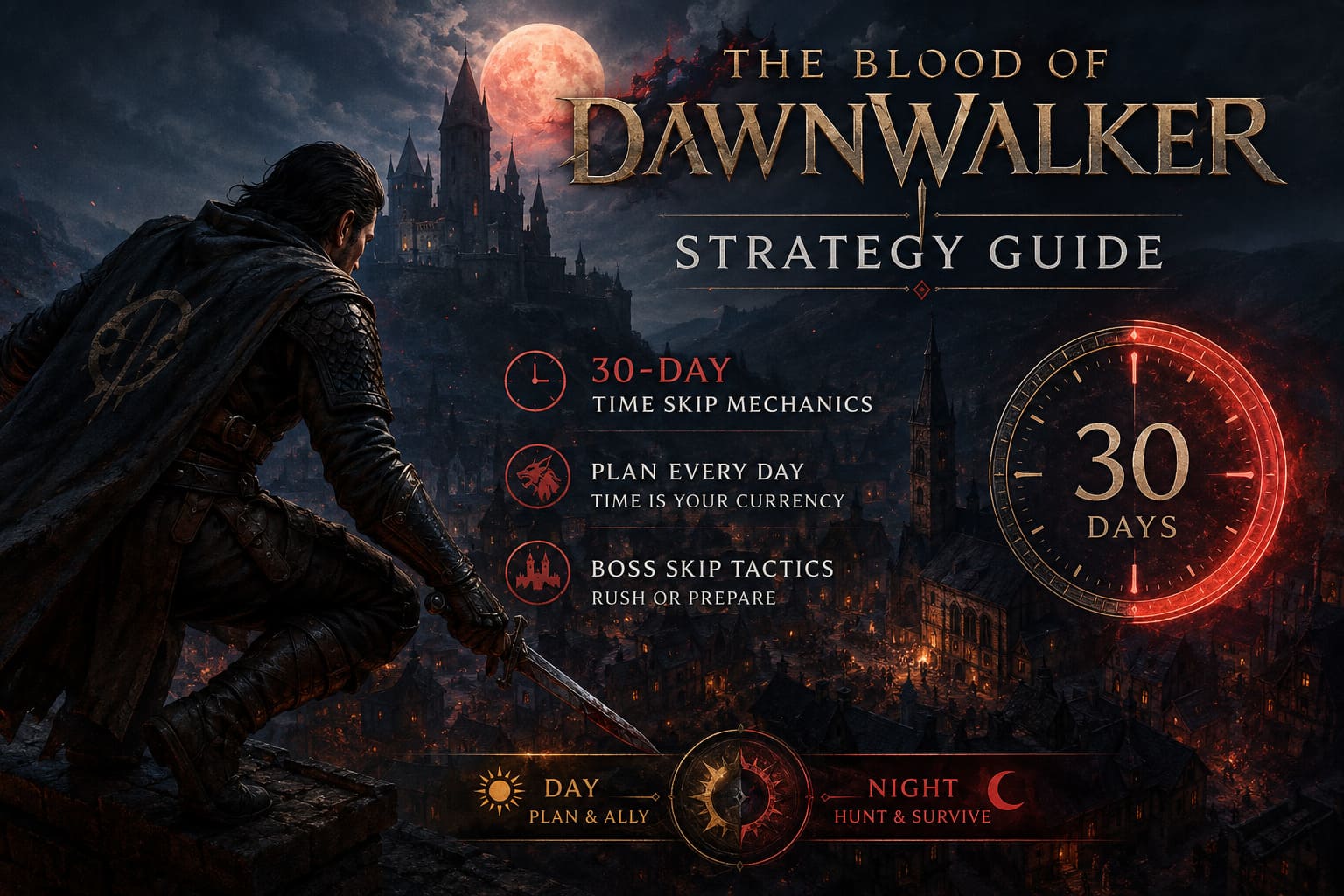
The biggest mental shift in The Blood of Dawnwalker is accepting that time is not something you “experience”—it’s something you spend.
You’re given:
- 30 in-game days and nights
- Roughly 480 total time units
- A ticking narrative pressure: your family’s survival
And here’s the twist that changes everything:
You don’t lose time by walking around or exploring. You lose it when you commit to actions.
That means you can freely roam, scout, and observe the world—but the moment you say “yes” to a quest, that’s when the system charges you.
It feels less like Skyrim and more like planning turns in a strategy RPG where every decision has a cost.
The “Fake Freedom” That Actually Works
At first, I thought the game was pretending to be open while secretly funneling you forward. But after a few hours, I started to respect how intentional it is.
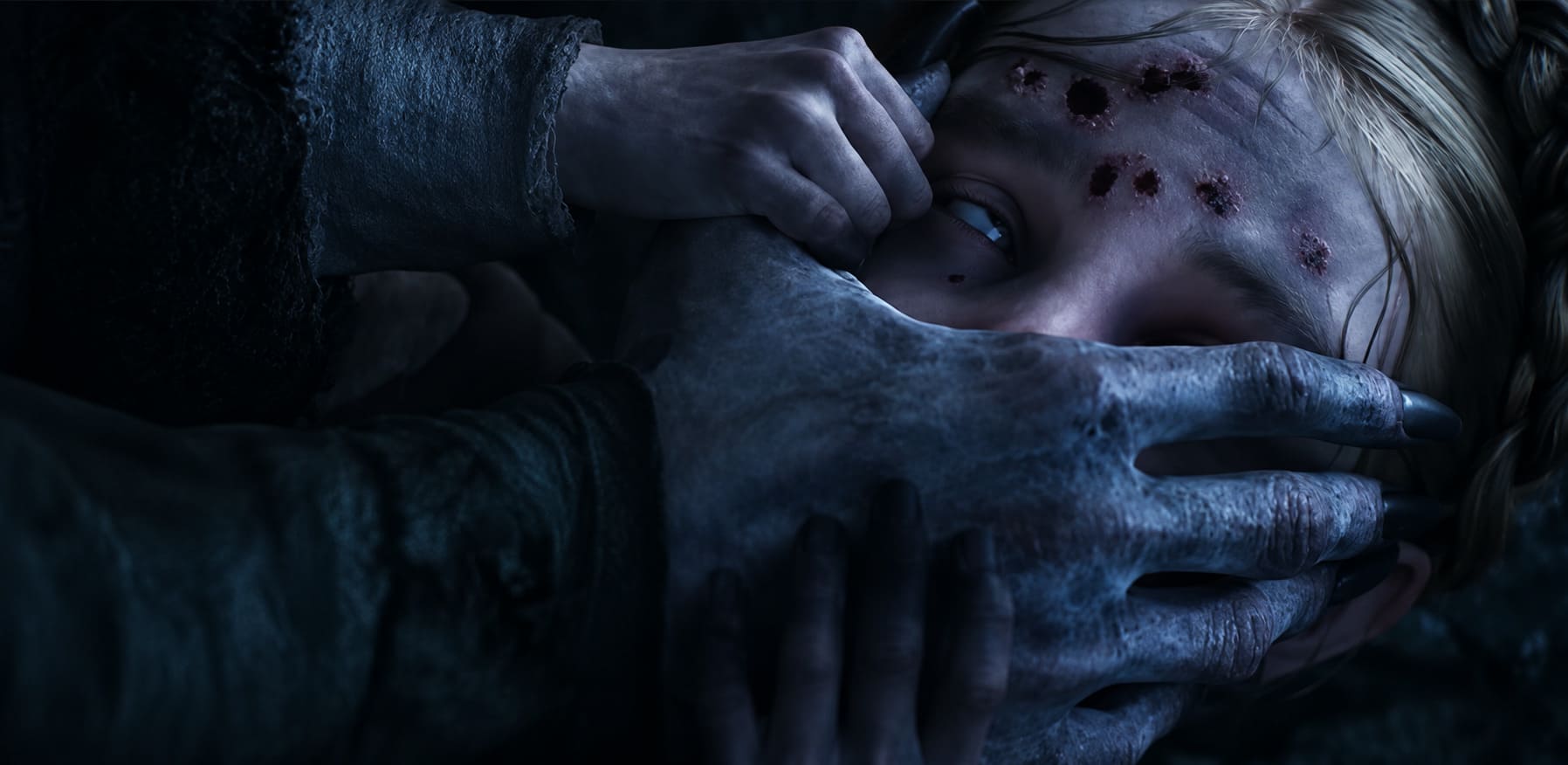
What You Can Do Freely
- Explore entire regions
- Talk to NPCs
- Scout enemy camps
- Collect lore and secrets
What Actually Costs Time
- Completing quests
- Advancing storylines
- Intervening in events
- Major decisions
This creates a weird psychological effect: you feel free, but you’re constantly aware that commitment is permanent currency loss.
And that’s where the tension lives.
The Real Strategy Game: You Can’t Do Everything (And That’s the Point)
This is where a lot of players will either love or hate the system.
There is no “100% run” in a single playthrough.
You physically cannot:
- Save every village
- Complete every side story
- Fully upgrade every path
- Keep every NPC alive
Because time doesn’t pause for your curiosity.
If you delay a quest too long, the world moves on without you. Sometimes that means:
- NPCs die
- Entire questlines collapse
- Regions shift politically
It’s harsh, but also weirdly immersive. The world doesn’t wait for the protagonist to finish looting every chest.
The Final Boss Skip Problem (And Why It’s Genius)
One of the most controversial systems is the ability to rush the final boss extremely early.
Yes—you can technically storm Brencis’ stronghold within the first few in-game days.
And it’s not a hidden exploit. It’s intentional design.
It creates three obvious approaches:
| Strategy | Description | Risk Level |
|---|---|---|
| Early Rush | Go straight to the final boss under-leveled | Extremely High |
| Balanced Run | Mix upgrades with key alliances | Medium |
| Completion Route | Build full world support before ending | High Time Cost |
The early rush is brutally hard, but it creates an interesting tension: Do you protect your family quickly, or prepare properly and risk running out of time?
It’s one of those systems that sounds broken until you realize it’s actually the point of the design.
Day vs Night: Two Different Games in One Character
Coen’s dual nature as a Dawnwalker is where things get really interesting.
You’re essentially playing two versions of the same character depending on time of day.
☀️ Daytime (Human Mode)
This is your “planning and survival” phase:
- Sword combat
- Parrying and blocking
- Political interactions
- Trading and crafting alliances
It feels grounded, tactical, and slower.
🌙 Nighttime (Vampire Mode)
This is where the game turns into something else entirely:
- Wall-running and vertical traversal
- Shadow teleport movement
- Wolf transformation for speed and stealth
- Enhanced combat brutality
But there’s a catch.
The Bloodlust System forces constant feeding. Ignore it, and Coen loses control, attacking nearby NPCs automatically.
And that’s not just a gameplay punishment—it’s a narrative disaster waiting to happen. You can accidentally kill:
- Quest givers
- Blacksmiths
- Entire story arcs
It turns your power fantasy into a liability management system.
What I Learned After a Few Hours (The Hard Way)
After experimenting with different approaches, I started noticing patterns that matter way more than raw combat skill.
1. Time Efficiency Beats Combat Mastery
You can be amazing at fighting and still fail the story if you waste time on low-value quests.
2. Information Is More Valuable Than Loot
Scouting areas without committing time is often better than finishing side quests too early.
3. Night Exploration Is a Trap (Early Game)
It’s tempting, but bloodlust management makes it risky before you unlock proper control tools.
4. Allies Matter More Than Gear
Political progression often unlocks stronger advantages than weapon upgrades.
The Real Meta: Planning, Not Grinding
If I had to describe the “meta” of The Blood of Dawnwalker, it’s this:
You’re not building a character. You’re building a timeline.
Every decision is about sequencing:
- What do I do first?
- What can I safely ignore?
- What will permanently disappear if I delay it?
That’s why completionist instincts actually work against you here. The game rewards discipline over curiosity, which is rare in modern open-world design.
Where the Game Might Divide Players
Let’s be real: this system won’t land for everyone.
Players Who Will Love It
- Strategy RPG fans
- People who enjoy consequences
- Roleplay-focused players
- Anyone tired of endless checklist open worlds
Players Who Might Struggle
- Completionists
- Exploration-first players
- Power grinders
- Casual “wander and relax” players
It’s not a comfort game. It’s a pressure system.
The Blood of Dawnwalker Full Story Plot Explained: Ending and Lore Breakdown
Final Thoughts: Stressful, Smart, and Surprisingly Addictive
After spending time with The Blood of Dawnwalker, I stopped thinking of it as an RPG in the traditional sense.
It’s closer to:
- A time economy simulator
- A narrative strategy game
- A consequence-driven sandbox
And weirdly, that makes it more memorable than most open worlds I’ve played recently.
The 30-day structure forces you to accept something most games avoid:
You will not see everything. And that’s okay—because your choices define your version of the story.
It’s stressful, sometimes punishing, but also refreshing in a way I didn’t expect.
I’m not even sure I’d call it “fun” in the usual sense.
But I definitely can’t stop thinking about it.
If this is the direction Rebel Wolves is going long-term, we might be looking at one of the boldest design shifts in modern RPGs.
And honestly? I kind of respect the audacity.