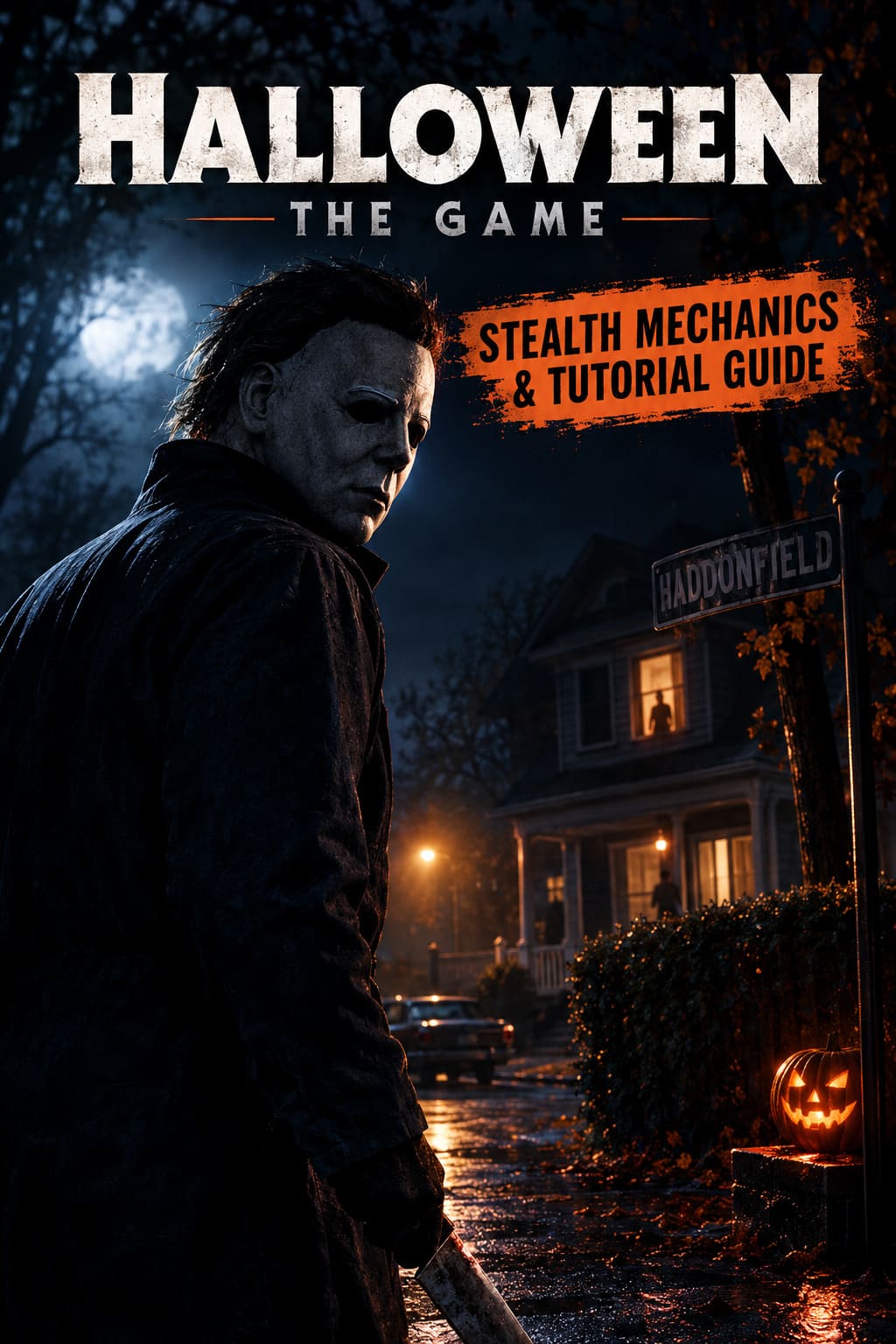
Halloween The Game: The Shape Stealth Mechanics & Tutorial Guide (2026)
There are plenty of asymmetrical horror games where the killer’s game plan is basically: find someone, chase them, hit them, repeat.
Halloween: The Game feels different when you step into the boots of The Shape.
At least, that’s how I think Michael Myers is supposed to be played.
The whole appeal of this character has never been that he sprints around like a maniac. It’s the opposite. Michael walks. He watches. He disappears behind a house, waits in the darkness, and somehow seems to be standing in exactly the wrong place when you turn around.
That philosophy is baked into Halloween: The Game. The Shape becomes much more dangerous when you stop treating him like a traditional multiplayer killer and start thinking like a horror director.
You are not simply hunting survivors.
You are controlling what they think is happening.
And once you understand that, the stalking mechanics, Bloodlust system, Shape Jump and Haddonfield’s environment start fitting together surprisingly well.
The Shape Is Stronger When You Slow Down
The first mistake I see players making with The Shape is trying to get kills immediately.
Don’t.
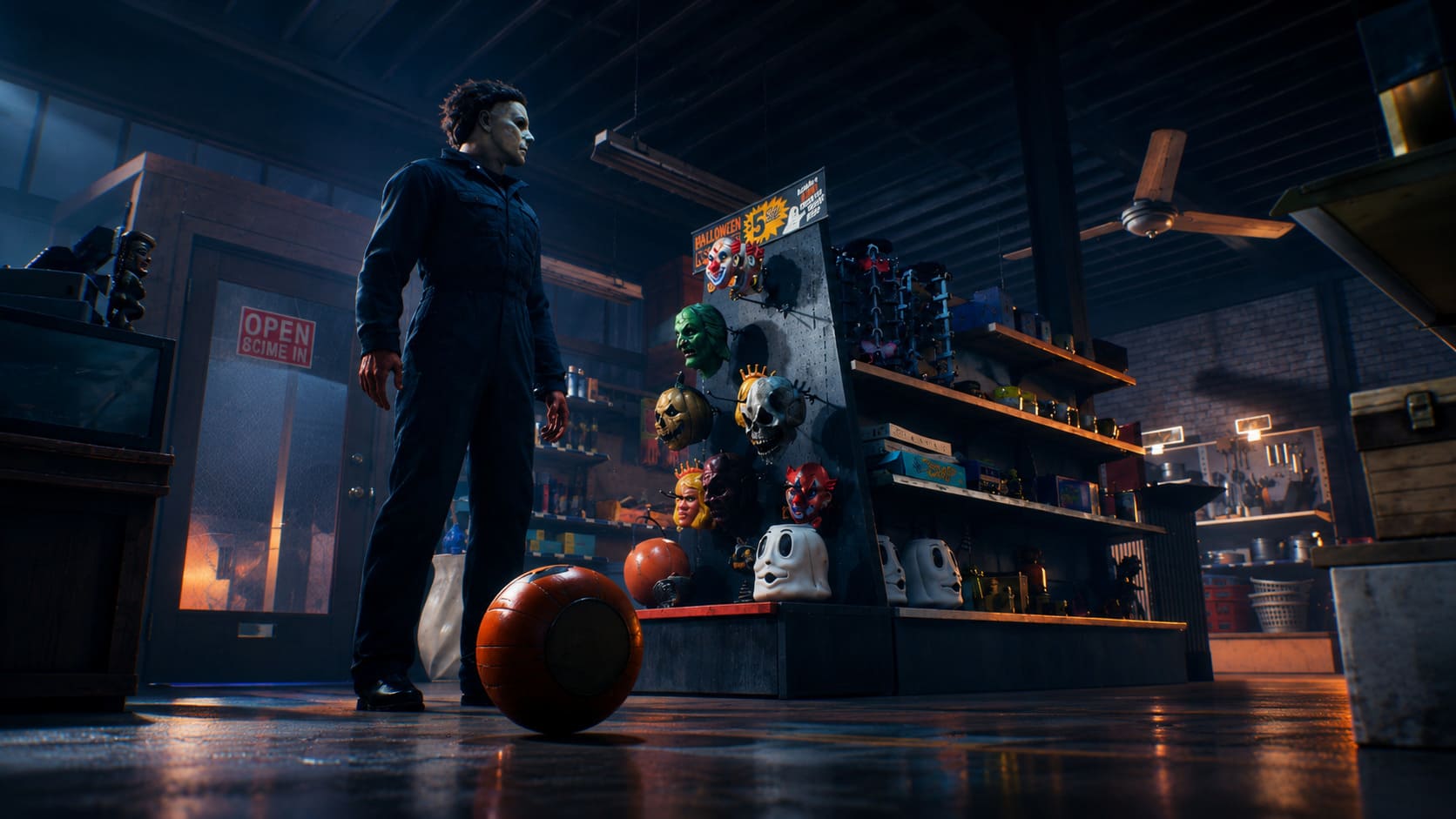
The early part of a match is where Michael feels deliberately restrained. You’re quieter, less threatening and don’t have the same offensive potential you’ll eventually unlock. Instead of seeing that as a weakness, treat it as your preparation phase.
Your biggest priority should be building Bloodlust through Stalking while learning where the survivors are moving.
When you activate Stalk, The Shape slows down and focuses his attention on nearby targets. The longer you maintain a clean line of sight, and the closer you are without being detected, the faster your meter develops.
This creates a fantastic little risk-versus-reward game.
Stay too far away and you’re safe, but progress is slower. Walk right up to someone and you’re asking them to spot you. The sweet spot is somewhere in between.
Personally, I think medium-distance stalking is where The Shape feels most like Michael Myers.
A hedge between you and a survivor. A dark window across the street. A greenhouse. A doorway where your silhouette is barely visible.
Those situations are much more satisfying than simply walking straight toward somebody.
Understanding The Shape’s Bloodlust Levels
The exact balance of his power changes as Bloodlust develops, but the basic idea is simple: the longer you play the patient game, the more dangerous Michael becomes.
| Bloodlust Level | Main Role | Best Use |
|---|---|---|
| Tier I | Silent Hunter | Tracking and surveillance |
| Tier II | Active Stalker | Chasing and pressure |
| Tier III | The Boogeyman | Finishing targets and breaking defenses |
Tier I is particularly interesting because it encourages you to think about positioning rather than damage.
There is little reason to announce yourself when nobody knows where you are.
Tier II is where things become more comfortable. You gain stronger movement and attack potential while still retaining some of that stealth identity.
Then there is Tier III.
This is where the match can suddenly feel like a scene from a slasher movie.
The Shape becomes far more aggressive, his presence is harder to ignore, and survivors who were previously comfortable can suddenly find themselves running for their lives.
The important part is knowing when to spend that advantage.
Don’t activate your strongest state just because the meter is full. Sometimes the threat of Michael becoming stronger is more valuable than immediately showing survivors exactly what he can do.
Shape Jump Is More Than a Teleport
The Shape Jump mechanic might be my favorite part of this entire kit.
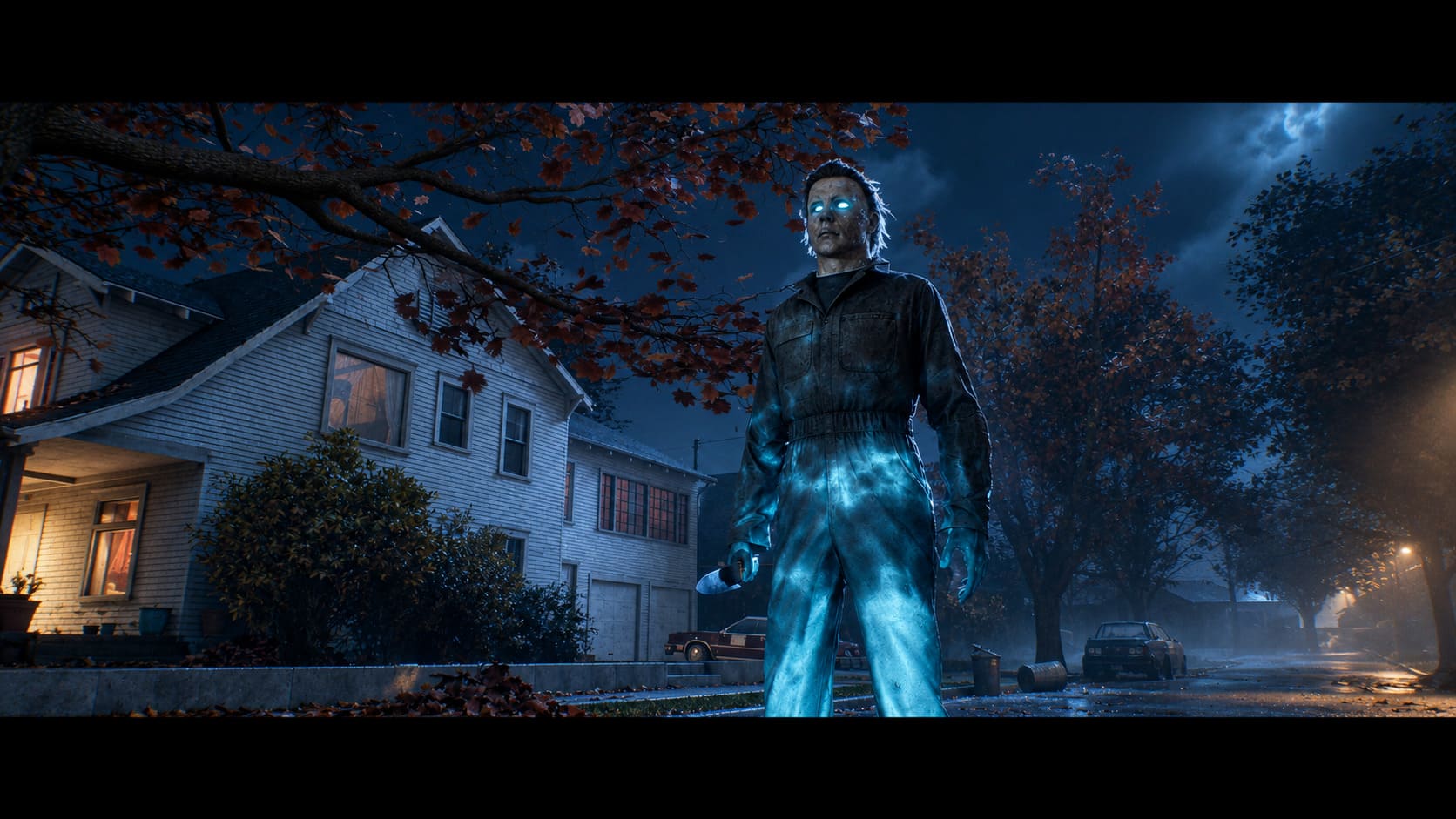
On paper, it sounds like another teleport ability. In practice, it’s much more interesting because it depends on darkness, broken sightlines and survivor awareness.
The basic idea is that The Shape can disappear from a concealed position and reposition himself into another suitable dark area.
But there is a catch.
Survivor awareness matters.
If you’re trying to transition while you’re being directly watched, the ability becomes much less useful. That means you can’t simply press a button and appear anywhere you want.
You have to create the opportunity first.
This is why experienced Shape players should constantly be asking themselves:
“What can the survivor see right now?”
Not what you can see.
What they can see.
That distinction is huge.
Use Shape Jump to Predict Movement
Imagine a survivor is looping a house.
They run through the backyard, enter a side door, circle through the kitchen and head toward the front entrance. The obvious response is to chase them around the same route.
That’s exactly what I’d avoid.
Break their line of sight.
Step into darkness.
Then use Shape Jump to reposition near the route they are most likely to take next.
Now you’re not chasing the survivor.
You’re waiting for them to chase themselves into you.
That is the kind of gameplay that makes The Shape genuinely scary.
Haddonfield Is Basically Another Ability
One of the biggest things I would tell new players is to stop thinking of the map as scenery.
Haddonfield is part of your toolkit.
Houses, windows, hedges, basements, staircases, darkness and power systems all contribute to how The Shape controls an encounter.
If you’re standing in the middle of an illuminated street, you’ve already given away a major advantage.
If you’re hidden beside a house with a clean view into the living room, suddenly the same area becomes incredibly valuable.
Darkness Matters
The Shape’s stealth mechanics become considerably stronger when you understand the difference between being hidden and merely being out of sight.
Dark rooms, thick vegetation and environmental cover can help conceal your presence while allowing you to monitor survivors.
This creates some genuinely creepy situations.
A survivor walks past a hedge.
You don’t move.
They continue toward the next house.
You wait.
Then they turn around.
And Michael is gone.
That is exactly the kind of psychological pressure this character should create.
Cutting the Power Can Change the Entire Encounter
Power and fuse systems are another useful part of the Shape’s environmental game.
If you can shut down electricity in an important house or section of the map, you aren’t simply making things darker.
You’re changing how survivors navigate.
Suddenly they may need flashlights. They may investigate the fuse box. They may hesitate before entering rooms.
And hesitation is exactly what Michael wants.
I wouldn’t recommend cutting power randomly, though.
Do it when the darkness gives you a tactical advantage.
If survivors are already somewhere else, turning off a house you’ve abandoned doesn’t accomplish much. If they’re inside searching for an objective, however, suddenly the same action can create a perfect ambush opportunity.
My Favorite Single-Player Training Route
The single-player sandbox is worth spending time in before jumping into serious multiplayer matches.
Rather than treating it like something you complete once and forget, use it as a laboratory for The Shape.
Start outside the house and approach from the side instead of walking directly down the street.
Use hedges and shadows to remain concealed.
Once you locate your first target, practice stalking without getting greedy. Learn how long you can remain nearby before the AI reacts.
After building some Bloodlust, move around the perimeter and experiment with environmental interactions.
The fuse box is especially useful because it lets you see how AI behavior changes when the house suddenly becomes dark.
Then try different entry points.
Kitchen window.
Basement.
Back door.
Staircase.
Don’t immediately attack the first target you see. Watch where the other civilians go.
Eventually, you’ll start noticing predictable patterns in their movement.
That’s when you should experiment with Shape Jump.
Try breaking line of sight from the staircase and repositioning into another dark section of the house. The goal isn’t simply to complete the tutorial.
The goal is to learn how to disappear.
Once you can reliably predict where an AI target is going to move, you’ll have developed a skill that transfers directly into multiplayer.
Multiplayer: Stop Chasing the Same Survivor
This is probably the most important multiplayer tip I can give.
You don’t have to finish every chase.
In fact, constantly committing to the same survivor can be one of the easiest ways to lose control of a match.
Imagine one survivor spots you and immediately runs into a strong loop. You follow them. They vault a window. You follow. They drop another obstacle. You keep following.
Meanwhile, three other players are completing objectives somewhere else.
That’s a terrible trade.
Sometimes the correct move is simply to walk away.
Return to stealth.
Find another survivor.
Build more pressure.
This is where The Shape’s low-visibility gameplay becomes extremely useful. Survivors can become increasingly paranoid when they don’t know which teammate Michael is actually targeting.
The best teams will communicate your position constantly.
So give them conflicting information.
Appear briefly in one area, disappear, then attack somewhere completely different.
Flashlights, Firecrackers and Other Problems
Survivors aren’t helpless.
Flashlights and distractions can interfere with your stalking and force you out of carefully prepared positions. If you know someone is trying to blind you, avoid giving them the perfect angle.
Turn toward a wall.
Look upward.
Move behind cover.
Don’t stubbornly stand in the open just because you’re halfway through a Bloodlust gain.
Survival comes before a few seconds of meter progress.
And remember that survivors can use your predictable behavior against you.
If you always retreat to the same hiding place after being spotted, eventually they’ll start checking it.
The Shape needs to remain unpredictable.
Don’t Ignore Closets
Closets and cabinets deserve more attention than they usually receive.
When survivors hear your presence, hiding inside an enclosed space can look like a safe option. But these interactions can become a trap for them.
Watch the environment.
A moving door.
A strange sound.
A survivor disappearing immediately after entering a room.
These tiny details can tell you more than a giant on-screen indicator ever could.
Rather than blindly searching every closet, use the surrounding information to decide whether someone is likely hiding there.
That keeps your pressure efficient and prevents you from wasting time.
Halloween: The Game (2026) – Best Michael Myers Meta Abilities and Loadout Guide
The Best Shape Players Think Like Horror Directors
The biggest lesson here is that The Shape isn’t really about raw aggression.
He’s about information.
Where is the survivor?
What can they see?
Where are they trying to go?
What happens if the lights go out?
Can I make them investigate a sound?
Can I disappear before they understand where I went?
Can I approach from somewhere they aren’t expecting?
Those questions are much more important than simply asking how quickly you can land another hit.
And that’s why I think The Shape has the potential to be one of the most satisfying killers to master in Halloween: The Game.
The strongest players won’t necessarily be the ones who move the fastest.
They’ll be the ones who make survivors feel watched even when Michael isn’t there.
How to Fix Halloween: The Game Black Screen on Launch – Troubleshooting Guide 2026
Final Thoughts
After looking at how all these mechanics fit together, my biggest takeaway is simple: play Michael Myers like Michael Myers.
Don’t sprint around Haddonfield looking for the next victim.
Watch.
Wait.
Manipulate the darkness.
Build Bloodlust.
Break line of sight.
Use Shape Jump when survivors think they’re safe.
And when you finally decide to attack, make it count.
The Shape is at his best when the survivor realizes what’s happening a second too late.
That’s the fantasy behind Halloween: The Game, and if you lean into the stealth mechanics instead of treating Michael like a conventional killer, the entire experience becomes much more tense and rewarding.
Patience isn’t just a useful strategy for The Shape. It’s the weapon.