Best JDM Street Racing Builds in Forza Horizon 6 (Ultimate Tuning Guide)
When I first jumped into Forza Horizon 6, I honestly didn’t expect the Japanese map to feel this alive. Neon highways, tight Tokyo-style intersections, mountain roads that punish every mistake — it’s easily one of the most enjoyable playgrounds the series has ever delivered. And if there’s one thing I quickly learned, it’s this: stock cars don’t survive here.
Street racing in FH6 is a completely different beast compared to clean circuit racing. You’re dealing with traffic, unpredictable braking zones, narrow lanes, and constant speed changes. That means tuning isn’t optional — it’s everything.
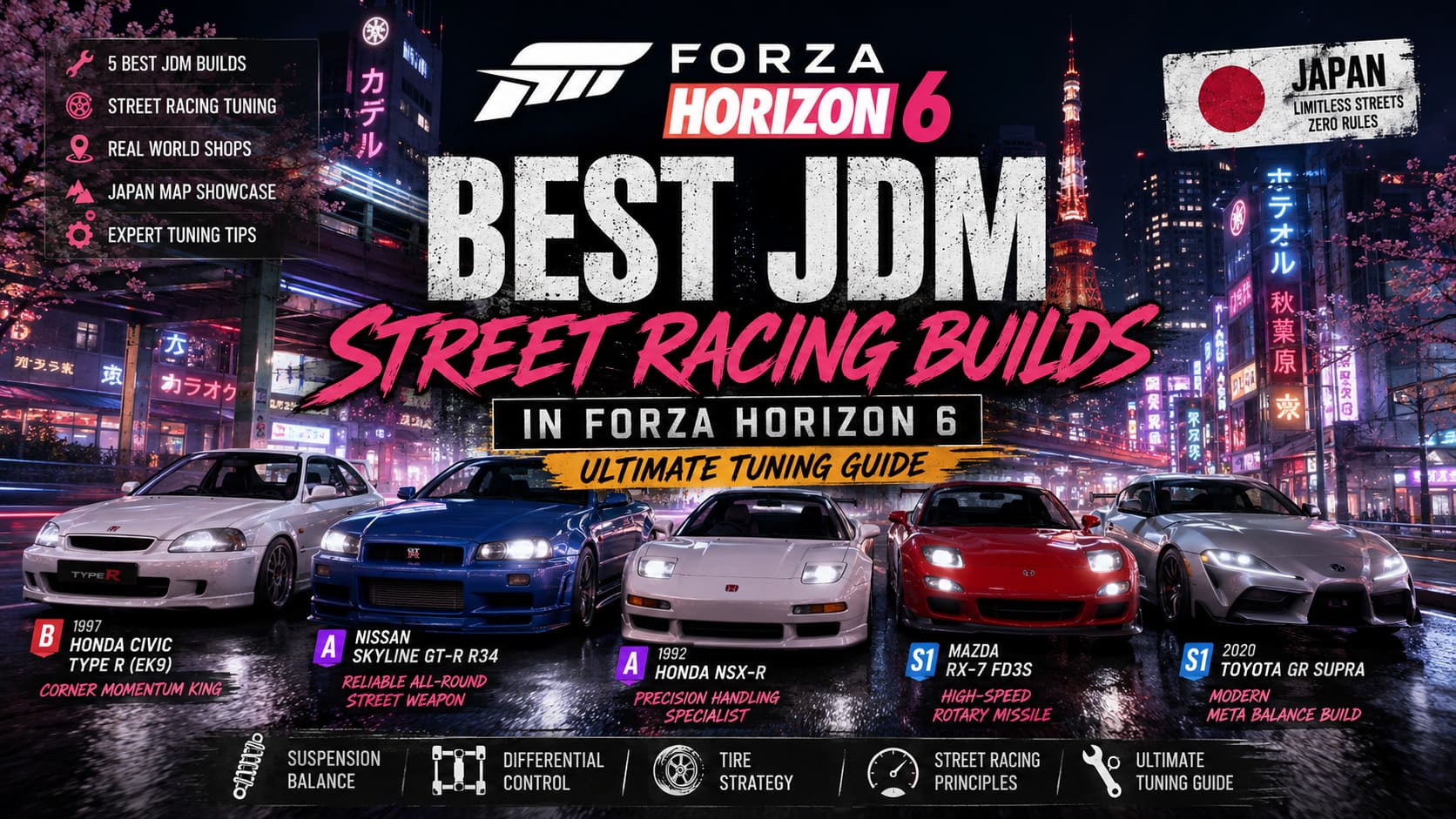
Over time, experimenting with community setups and my own trial-and-error builds, I ended up settling on a few JDM favorites that consistently outperform everything else in their classes.
Below is my personal breakdown of the best JDM street racing builds in Forza Horizon 6, written from the perspective of someone who actually enjoys pushing these cars through chaos rather than just chasing leaderboard times.
Forza Horizon 6 Aftermarket Cars Guide: How to Spawn and Unlock All Rare Vehicles
Best JDM Street Racing Builds in Forza Horizon 6
B-Class: 1997 Honda Civic Type R (EK9) — Corner Momentum King
There’s something almost unfair about how effective the EK9 is in lower-class racing. It’s light, responsive, and when tuned right, it becomes a corner-devouring machine that feels glued to the road.
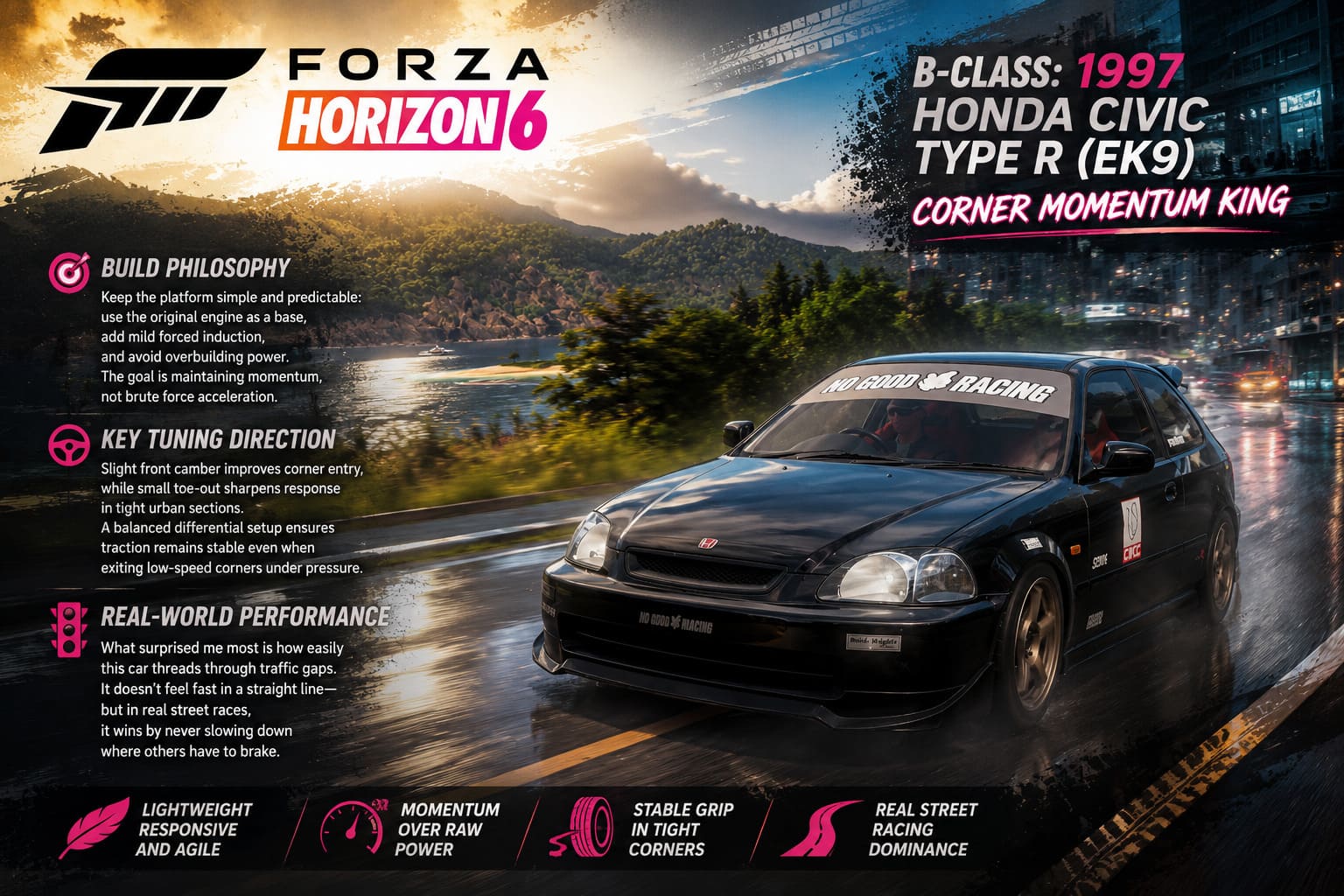
Instead of chasing extreme horsepower, I found the EK9 works best when you focus on clean power delivery and grip stability.
Build philosophy
Keep the platform simple and predictable: use the original engine as a base, add mild forced induction, and avoid overbuilding power. The goal is maintaining momentum, not brute force acceleration.
Forza Horizon 6 Time Attack Guide: Best Circuits, Car Builds, and Pro Driving Lines
Key tuning direction
Slight front camber improves corner entry, while small toe-out sharpens response in tight urban sections. A balanced differential setup ensures traction remains stable even when exiting low-speed corners under pressure.
What surprised me most is how easily this car threads through traffic gaps. It doesn’t feel fast in a straight line — but in real street races, it wins by never slowing down where others have to brake.
A-Class: Nissan Skyline GT-R R34 — Reliable All-Round Street Weapon
If there’s one car that feels like a safety net in competitive lobbies, it’s the R34. It’s not just fast — it’s consistent. And in street racing, consistency often beats raw speed.
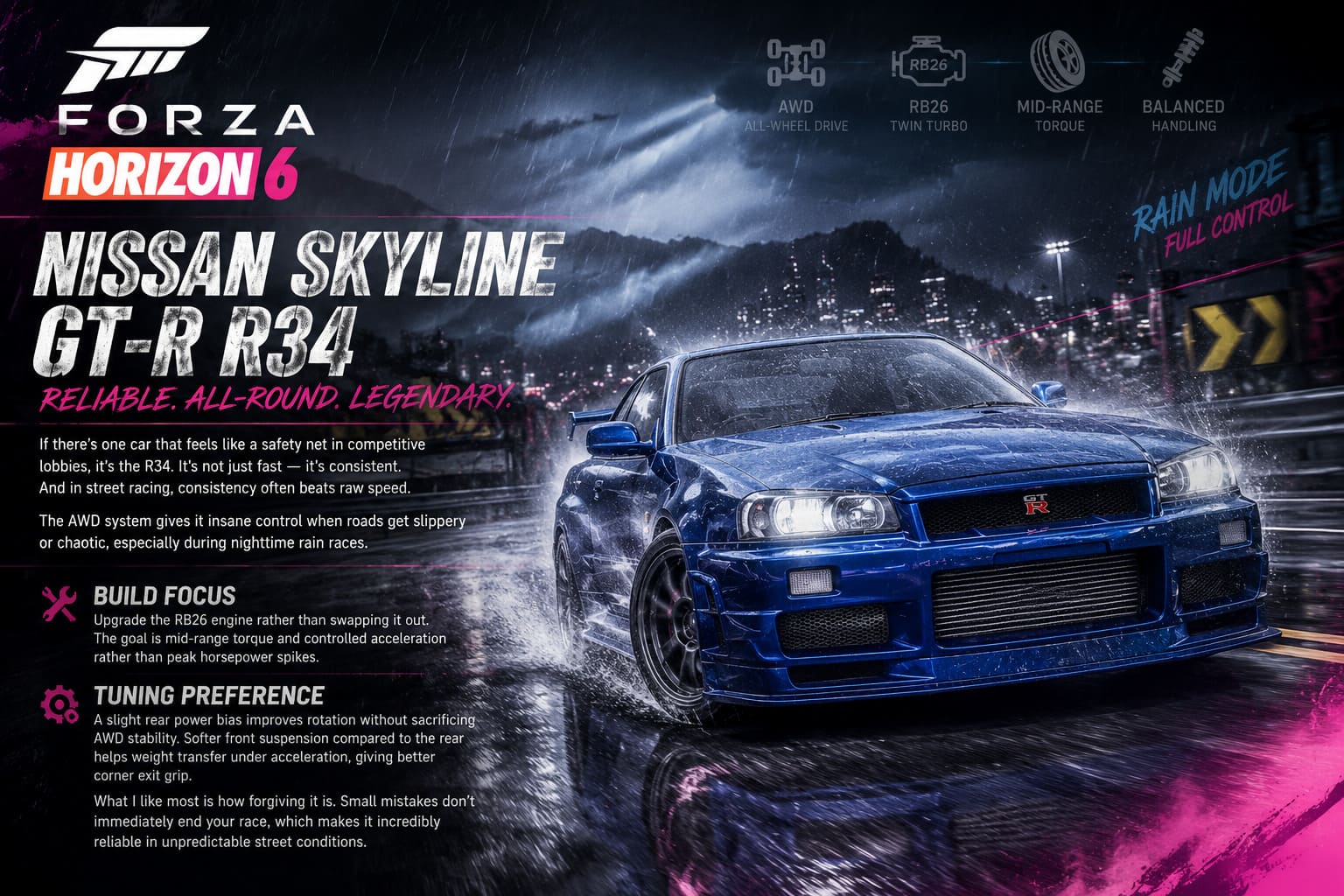
The AWD system gives it insane control when roads get slippery or chaotic, especially during nighttime rain races.
Build focus
Upgrade the RB26 engine rather than swapping it out. The goal is mid-range torque and controlled acceleration rather than peak horsepower spikes.
Tuning preference
A slight rear power bias improves rotation without sacrificing AWD stability. Softer front suspension compared to the rear helps weight transfer under acceleration, giving better corner exit grip.
What I like most is how forgiving it is. Small mistakes don’t immediately end your race, which makes it incredibly reliable in unpredictable street conditions.
A-Class: Honda NSX-R (1992) — Precision Handling Specialist
This is the car I use when I want pure driving satisfaction rather than brute force wins. The NSX-R feels like it was built specifically for tight urban racing circuits.
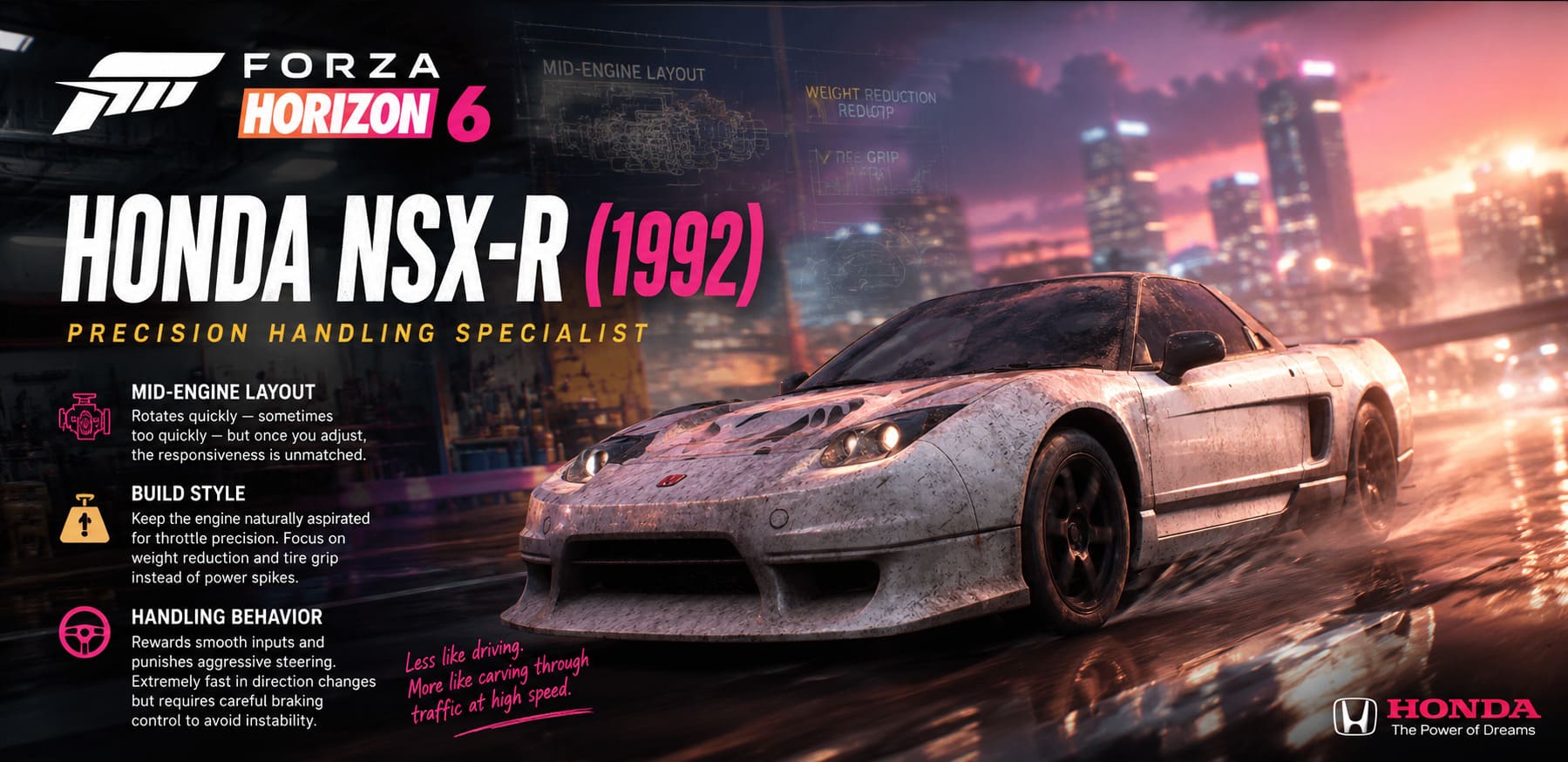
Mid-engine layout means it rotates quickly — sometimes too quickly — but once you adjust, the responsiveness is unmatched.
Build style
Keep the engine naturally aspirated for throttle precision. Focus heavily on weight reduction and tire grip instead of power spikes.
Handling behavior
The NSX-R rewards smooth inputs and punishes aggressive steering. It is extremely fast in direction changes but requires careful braking control to avoid instability.
In skilled hands, it feels less like driving and more like carving through traffic at high speed.
S1-Class: Mazda RX-7 FD3S — High-Speed Rotary Missile
When races shift to highways and long straights, the RX-7 becomes absolutely lethal. The rotary engine screams at high RPM, making it one of the most exciting cars in the game.
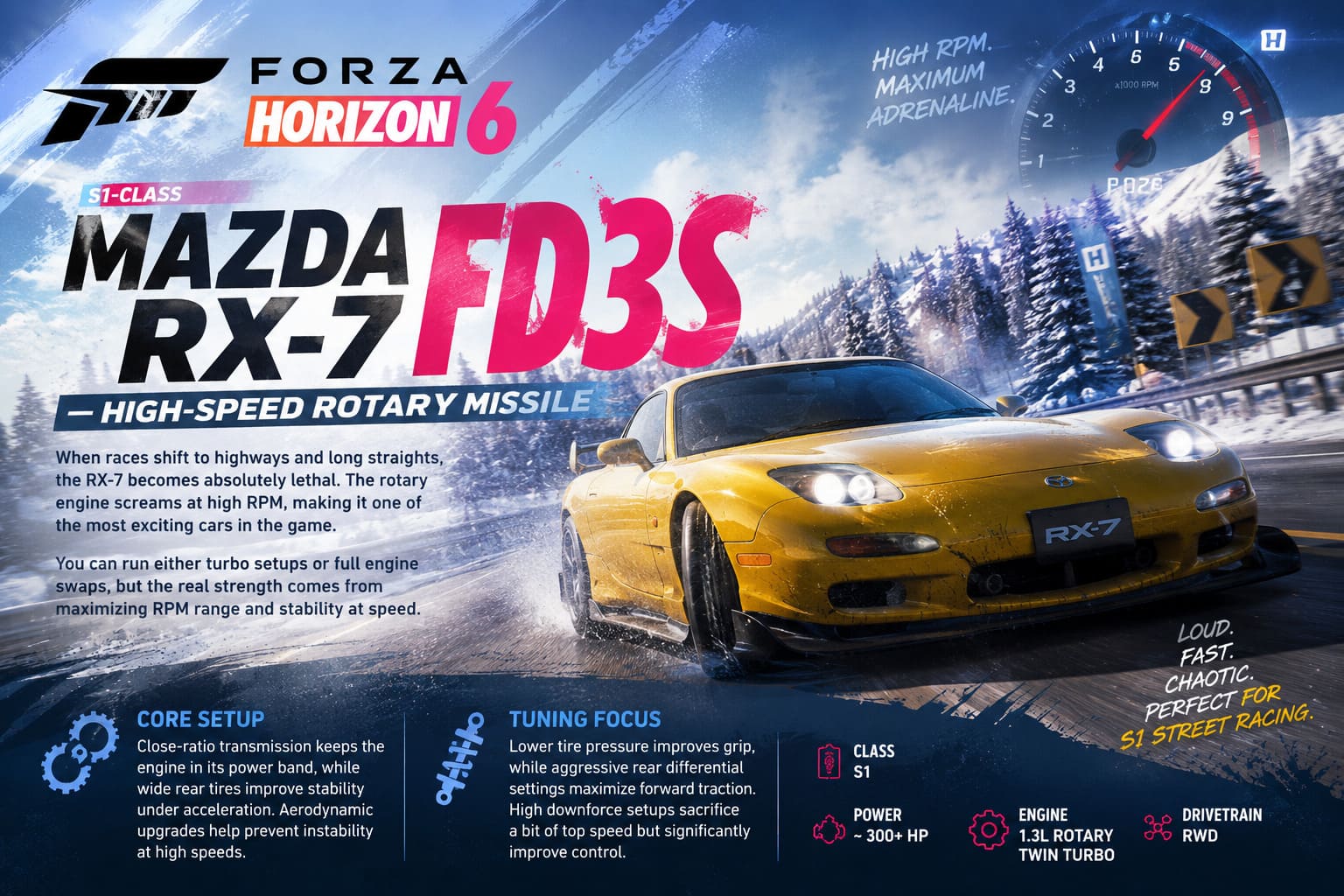
You can run either turbo setups or full engine swaps, but the real strength comes from maximizing RPM range and stability at speed.
Core setup
Close-ratio transmission keeps the engine in its power band, while wide rear tires improve stability under acceleration. Aerodynamic upgrades help prevent instability at high speeds.
Tuning focus
Lower tire pressure improves grip, while aggressive rear differential settings maximize forward traction. High downforce setups sacrifice a bit of top speed but significantly improve control.
This car is loud, fast, and chaotic — but that’s exactly what makes it perfect for S1 street racing.
S1-Class: Toyota GR Supra (2020) — Modern Meta Balance Build
If I had to pick one modern JDM build that just works everywhere, it would be the GR Supra. It doesn’t have the raw personality of older cars, but it delivers pure efficiency.
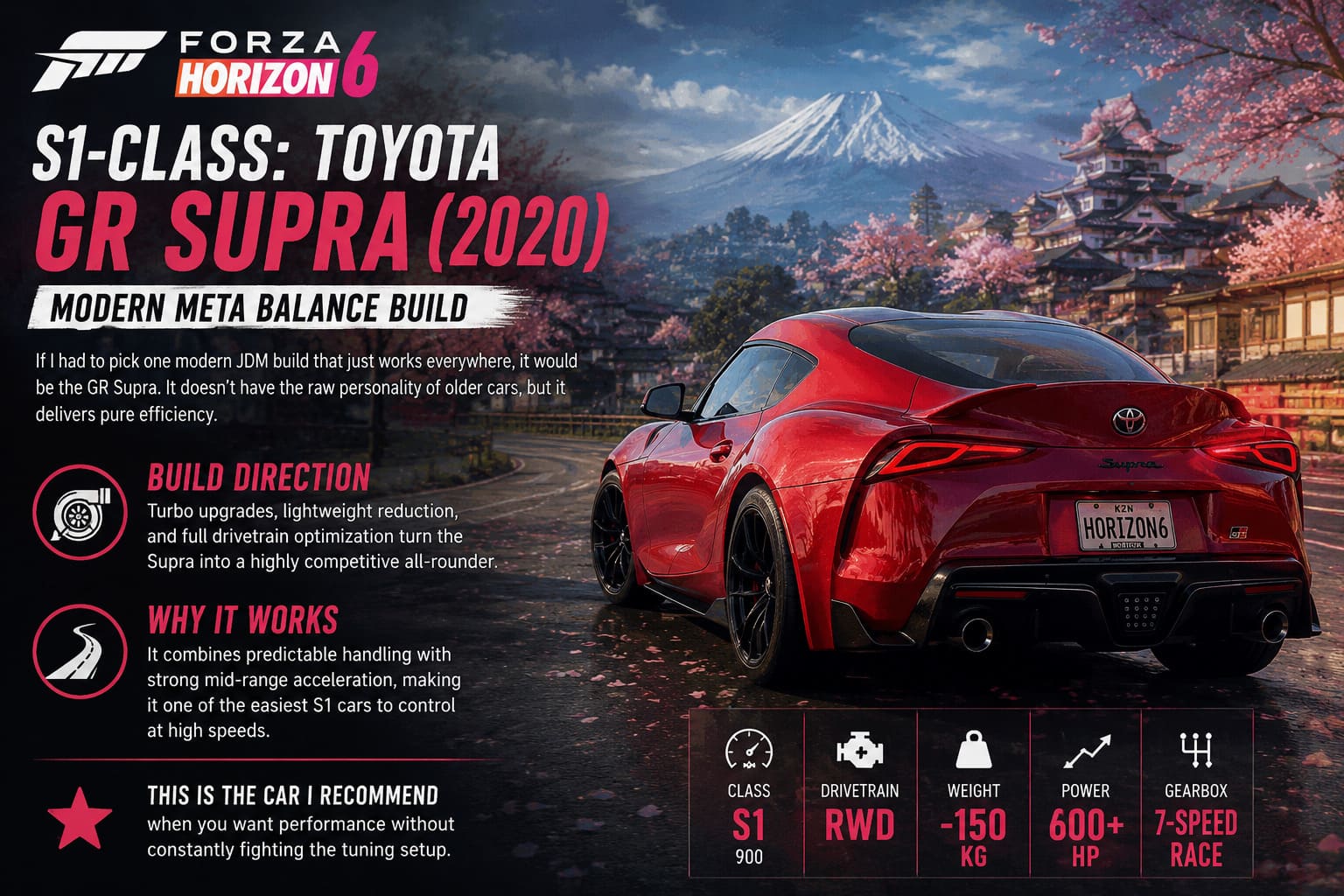
Build direction
Turbo upgrades, lightweight reduction, and full drivetrain optimization turn the Supra into a highly competitive all-rounder.
Why it works
It combines predictable handling with strong mid-range acceleration, making it one of the easiest S1 cars to control at high speeds.
This is the car I recommend when you want performance without constantly fighting the tuning setup.
Street Racing Tuning Principles That Matter
Suspension balance
Street surfaces are inconsistent. Too stiff and you lose grip instantly over bumps, too soft and stability disappears in corners. Slightly softer-than-track setups work best overall.
Differential control
Most builds fail here. A moderate rear-biased setup usually provides the best balance between acceleration and control out of corners.
Tire strategy
Street racing is about consistency, not peak grip. Slightly lower tire pressure helps maintain traction across uneven surfaces and sudden directional changes.
Final Thoughts
What makes Forza Horizon 6 special isn’t just the map or the cars — it’s how much personality each build can have when tuned properly. JDM cars in particular feel alive in this environment. Some dominate through precision, others through controlled chaos, but all of them reward players who take time to understand street racing mechanics.
For me, the EK9 is the perfect technical weapon, the R34 is the reliable all-rounder, the NSX-R is pure skill expression, the RX-7 is highway madness, and the GR Supra is modern competitive balance.
If you build them right, you’re not just racing anymore — you’re adapting to the streets themselves.