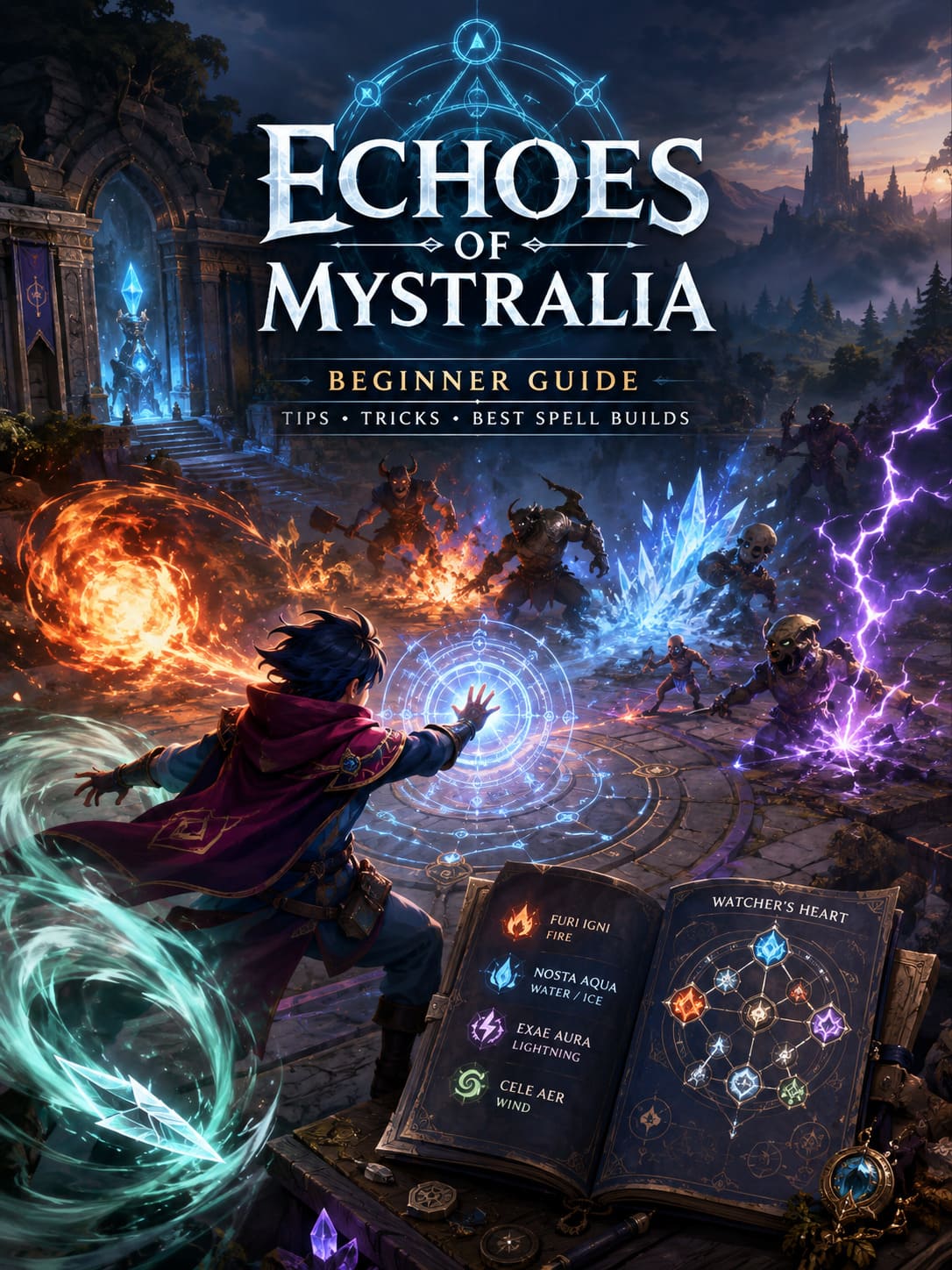
Echoes of Mystralia Beginner Guide: Tips, Tricks, and Best Spell Builds to Master the Loop
If you are starting Echoes of Mystralia for the first time, there is a good chance your first few runs are going to feel a little chaotic. Mine certainly did.
At first glance, Borealys Games’ new action roguelite looks familiar. You have fast top-down combat, randomly changing runs, temporary upgrades, permanent progression, bosses, and a hub waiting for you after every failed attempt. But the spellcrafting system completely changes how you approach the genre. You are not simply collecting better attacks. You are building the attacks themselves.
That distinction is incredibly important.
The game comes from the same universe as Mages of Mystralia, but Echoes of Mystralia takes the old spellcrafting concept and pushes it into a much faster action-RPG structure. Borealys describes it as a spellcrafting action-RPG roguelite where players create and evolve their own spells while choosing their route through Mystralia.
And honestly, that is where most beginners make their first mistake.
They try to find the “best spell” instead of learning how to make a spell work.
So, if you’re just getting started, here are the things I would focus on before worrying about perfect builds, boss strategies, or complicated theorycrafting.
Don’t Treat Every Run Like a Failed Attempt
The biggest mental adjustment in Echoes of Mystralia is understanding what a roguelite run actually means.
You are expected to lose.
A failed run is not wasted time. Every attempt teaches you something about enemies, spell combinations, movement, room layouts, rewards, and the progression systems waiting back at the hub.
You begin from the Azimuth Temple, which serves as your main safe area between adventures. From there, you head back into Mystralia, choose your route, collect temporary upgrades and Memories, and gradually create a build capable of handling increasingly dangerous encounters.
The important thing is not simply reaching the next boss.
It is learning why your current build succeeded or failed.
If you died because your damage was too low, that is useful information. If you had incredible damage but could not survive two projectile attacks, that is useful information too.
I would actually recommend resisting the temptation to restart a run immediately after making a bad spell. Keep playing for a while. Sometimes a seemingly terrible combination becomes surprisingly strong once you find the right trigger or modifier.
Your First Real Goal: Understand the Watcher’s Heart
The Watcher’s Heart is where Echoes of Mystralia starts becoming something special.
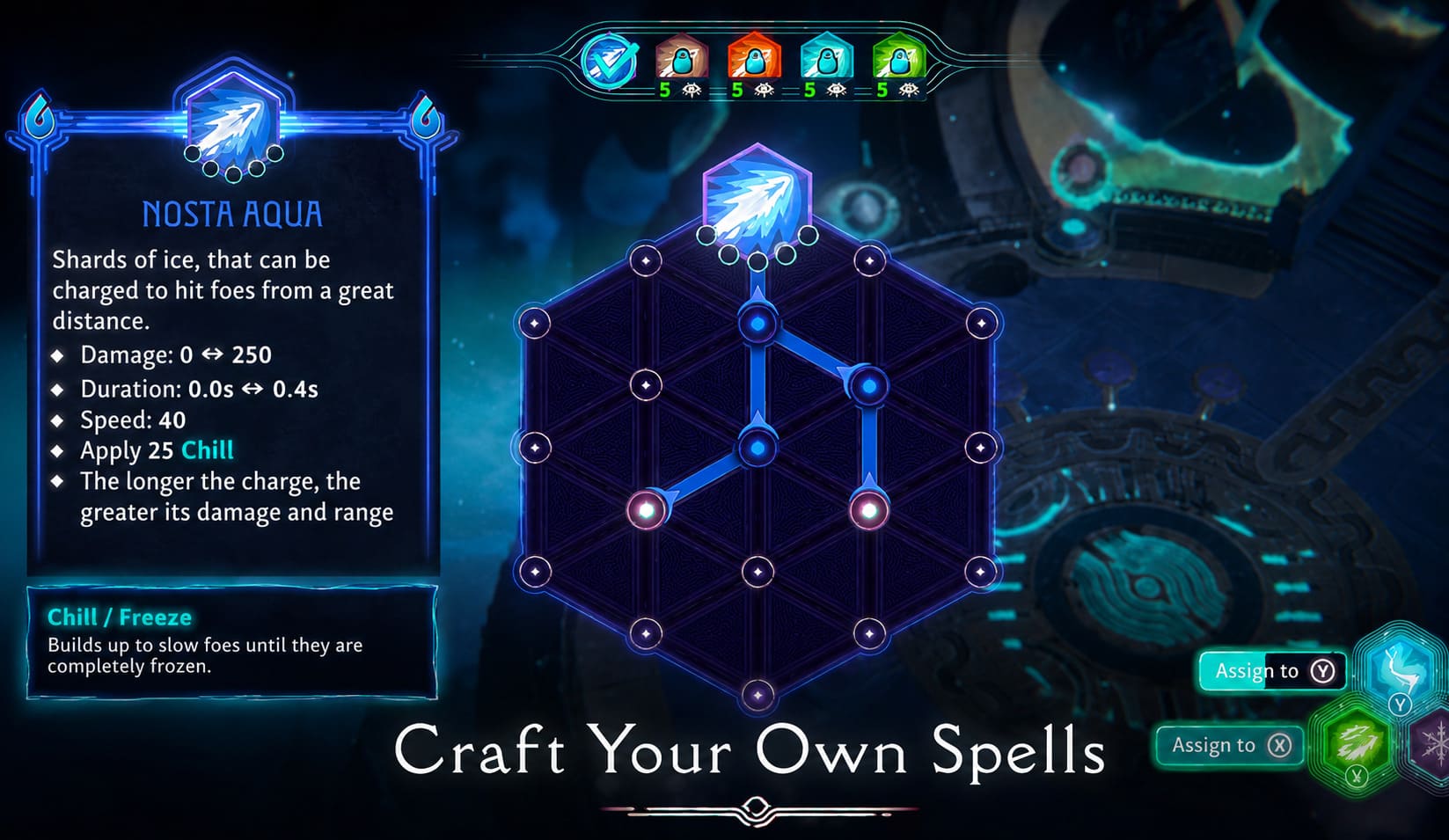
Instead of choosing from a simple list of abilities, you construct your spells by connecting different Memories and modifiers. The game’s spellcrafting system allows Memories to be combined, modified, enhanced, and reordered to create radically different spells.
This is why the system can look intimidating during your first hours.
Do not worry about understanding everything immediately.
Start with one simple question:
What do I want this spell to accomplish?
Maybe you want a projectile that clears weak enemies. Maybe you want a reliable single-target attack for elites. Maybe you want something that freezes enemies so you can safely reposition.
Once you have the purpose, the individual Memories make much more sense.
Spellcrafting Basics
| Build Goal | What To Prioritize | Why It Works |
|---|---|---|
| Room Clearing | Area effects + triggers | Handles groups efficiently |
| Boss Damage | Consistent hits + damage modifiers | Reliable against single targets |
| Crowd Control | Chill + repeated effects | Gives you more time to react |
| Mobility | Wind effects + movement bonuses | Helps avoid dangerous attacks |
| Chain Damage | Lightning + multiple-hit triggers | Excellent against clustered enemies |
The most important thing I learned is that ordering matters.
Don’t just throw powerful Memories into every available slot. Look at how the components connect and what actually activates each effect.
A modifier in the wrong position can make an otherwise fantastic idea feel completely useless.
Move things around.
Test the spell.
Move them again.
This game practically encourages experimentation.
Learn the Four Elements Before Chasing Meta Builds
You will eventually create ridiculous combinations, but I strongly recommend learning the basic elemental identities first.
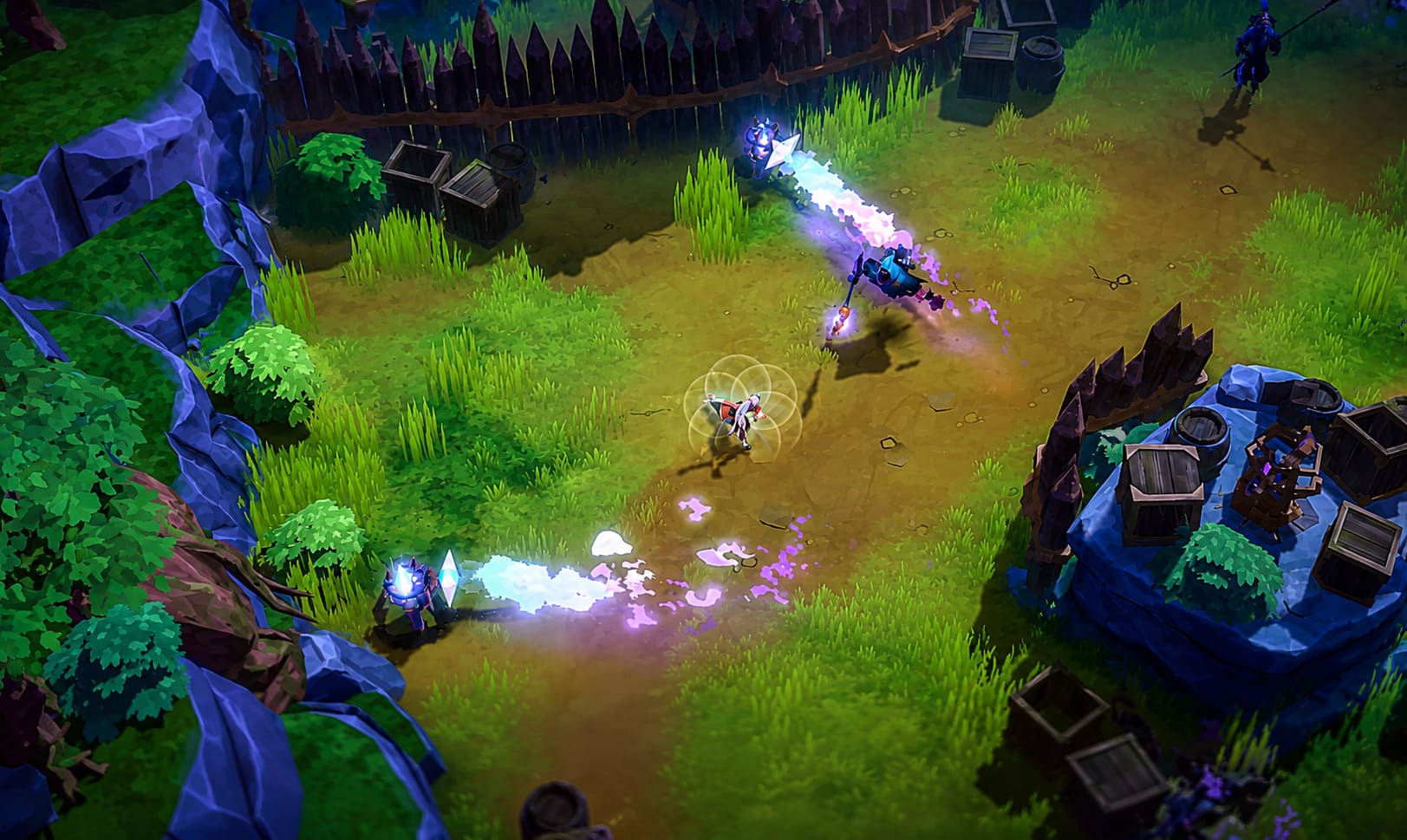
Furi Igni — Fire
Fire is the element I would recommend to players who simply want to see health bars disappear.
Furi Igni focuses on direct damage and Burn, making it particularly comfortable against tougher enemies that survive the initial hit.
The obvious temptation is to stack as much damage as possible.
I think that is a trap.
Burn-based setups become much more interesting when you start thinking about what happens after an enemy has already been ignited. If another effect rewards you for damaging burning targets, suddenly the whole build has a purpose beyond “more fire damage.”
That is the mindset you want.
Nosta Aqua — Water and Ice
Nosta Aqua is probably the most beginner-friendly element for players struggling with survival.
Chill slows enemies down, which sounds simple, but in a fast action roguelite, slowing something down can be more valuable than increasing your damage by a few percent.
The charge mechanic also gives you an interesting choice between quick attacks and more powerful releases.
If you’re constantly getting overwhelmed, I would experiment with Aqua before trying to force a glass-cannon build.
Sometimes the best damage increase is simply having enough time to land another attack.
Exae Aura — Lightning
Lightning is where things start getting spicy.
Exae Aura is built around speed, chaining, and aggressive casting. Static can spread pressure across groups, making Lightning especially satisfying when enemies bunch together.
But there is a catch: Overflow.
If you spam Lightning without paying attention to its internal limitations, you can find yourself temporarily unable to rely on the very spell you were using to survive.
That creates a nice rhythm.
Cast aggressively.
Back off.
Use another spell.
Return to Lightning.
Don’t treat every ability like something that needs to be spammed continuously.
Cele Aer — Wind
Wind is probably my favorite element for experimenting with unusual builds.
Cele Aer has strong utility because its projectile can pierce enemies, but its return mechanic changes how you think about timing.
You can’t simply throw it away and immediately launch another.
Instead, you have to position yourself around the projectile’s movement.
That makes Wind feel different from the other elements. It rewards players who understand spacing rather than simply maximizing damage numbers.
And once you start combining Wind with triggers, things get ridiculous.
The Best Beginner Strategy: Build Around a Mechanic, Not an Element
This is probably the single most useful piece of advice I can give.
Don’t think:
“I’m doing a Fire build.”
Think:
“I’m building around Burn.”
Those are two very different approaches.
The same applies to Chill, Static, piercing, explosions, repeated hits, or other mechanics.
Once you identify the mechanic you want to exploit, start looking for Memories and Relics that support it.
For example, imagine you have a projectile that hits multiple enemies. Instead of simply adding another damage modifier, you could attach an effect that activates whenever the projectile hits something.
Now one spell can become a delivery system for another effect.
That is where Echoes of Mystralia gets really fun.
You can create something that looks completely harmless on paper and then suddenly watch an entire group of enemies disappear because several effects activated in sequence.
Triggers Are Where the Crazy Builds Begin
Triggers deserve special attention because they fundamentally change how your spells behave.
A simple attack is predictable.
A trigger-based attack is a machine.
For example, you could create a Wind projectile that pierces enemies and then activates a Fire effect whenever it connects.
Now your Wind spell is not just a projectile.
It is effectively a delivery mechanism for another spell.
You can take that idea even further by introducing simultaneous effects or detonations.
The goal isn’t necessarily to create the most complicated spell possible. In fact, overly complicated spells can sometimes become harder to use than simple ones.
The best spell is the one you can actually control during combat.
That sounds obvious, but it is incredibly easy to forget when the game gives you so many possible combinations.
Don’t Ignore Relics Just Because Your Build Is Already Good
Relics are another place where beginners can become too stubborn.
Let’s say you have spent ten minutes building an excellent Lightning setup.
Then you find a Relic that massively benefits Fire.
Should you ignore it because you’re already committed?
Not necessarily.
One of the strongest habits you can develop is adapting your build around the opportunities the current run gives you.
The design of Echoes of Mystralia revolves around evolving spells, equipment, tactics, and progression throughout your adventures.
That means your initial build is not a contract.
It is a starting point.
If the game hands you three excellent Relics that support a completely different strategy, experiment.
Some of my favorite roguelite moments are when a run accidentally turns into something I never intended to build.
The Lotus Is More Important Than You Think
When you return to the Azimuth Temple after a failed run, don’t just jump straight back into another attempt.
Check your permanent progression.
The Lotus represents the long-term side of your character development, giving you ways to improve future runs rather than simply making the current run stronger.
For new players, I would prioritize survivability and consistency over chasing maximum theoretical damage.
My Early Lotus Priorities
- Movement and mobility: Being able to reposition quickly is extremely valuable.
- Defensive upgrades: Extra protection gives you more room to learn enemy patterns.
- Starting resources: Early purchasing power can make the opening section of a run much smoother.
- General consistency: Anything that helps you reach later encounters more reliably is worth considering.
This is one of those systems where a boring upgrade can secretly be better than a flashy one.
A small defensive bonus might not look exciting in the menu.
But if it lets you survive one extra mistake against a boss, it can be worth far more than a tiny increase to your damage.
Combat Tips That Will Save Your Runs
1. Keep Moving
Seriously.
Don’t stand still unless you have a very good reason.
Echoes of Mystralia is built around fast combat, and enemy attacks are designed to punish players who become comfortable in one position.
Your movement is part of your defense.
2. Learn Enemy Attack Signals
Bosses and stronger enemies usually give you visual information before their most dangerous attacks.
Watch the floor.
Watch their animations.
Watch projectile patterns.
Once you learn these signals, combat becomes much less about panic and much more about anticipation.
3. Don’t Waste Your Defensive Options
A common beginner mistake is using every ability the moment it becomes available.
Then a dangerous attack arrives and suddenly everything is unavailable.
Try to keep at least one reliable option ready for emergencies.
This becomes particularly important when using mechanics that can force your spell into downtime.
4. Think About Positioning Before Casting
This is especially important with Wind.
Don’t just ask where the enemy is.
Ask where the enemy will be when your spell finishes its movement.
Once you start thinking this way, Cele Aer becomes much easier to use.
5. Break Things
Yes, even the boring-looking objects.
Environmental objects can provide useful resources and occasionally help you stretch a run a little further.
It takes almost no effort to check them, so make it a habit.
Three Beginner-Friendly Build Ideas
You don’t need a perfect meta build immediately. I would start with something understandable and expand from there.
| Build | Core Idea | Difficulty | Best For |
|---|---|---|---|
| Burning Pressure | Fire + Burn-focused effects | Easy | Consistent damage |
| Frozen Control | Aqua + Chill + area effects | Easy | Safer room clearing |
| Storm Chain | Lightning + chaining triggers | Medium | Aggressive players |
| Wind Detonation | Piercing Wind + trigger explosions | Medium | Positioning enthusiasts |
My personal recommendation for a first serious experiment would be Frozen Control.
It isn’t necessarily the highest-damage setup, but slowing enemies gives you time to learn the game’s movement, attack patterns, and spellcrafting system.
Once you feel comfortable, move toward hybrid builds.
The Triple-Element Idea Is Where Things Get Interesting
Eventually, you will probably start mixing elements instead of building around only one.
This is where the system really begins to show its potential.
A Wind effect can help you hit multiple targets.
Lightning can chain between them.
Ice can slow or control them.
Suddenly, each part of the build is doing a different job.
That’s much more interesting than simply stacking three versions of the same damage modifier.
Think of your spell like a team.
One component starts the interaction.
Another spreads it.
Another provides control.
And another delivers the payoff.
When those pieces work together, the numbers become almost secondary.
Echoes of Mystralia Lore & Story Explained: Deep History and Rift Mechanics Analysis
Don’t Chase the Perfect Build Too Early
This is something I wish more players were told when starting roguelites.
Your first ten runs aren’t supposed to look like a late-game build guide.
You’re learning.
You are learning which enemies you hate fighting. Which spells feel comfortable. Which triggers make sense to you. Which upgrades actually improve your survivability.
And yes, you’re also learning which combinations are complete garbage.
That’s part of the fun.
Echoes of Mystralia is at its best when you stop asking, “What is the strongest spell?” and start asking, “What ridiculous thing can I make this spell do?”
That is the game’s real hook.
Echoes of Mystralia Best Spell Combinations Guide: Overpowered Builds to Destroy Your Foes
Final Thoughts
Echoes of Mystralia has the kind of spellcrafting system that can easily become overwhelming if you try to understand everything at once. But once the basic pieces click, the complexity becomes the fun rather than the obstacle.
Start simple.
Learn the four elements.
Pay attention to how Memories connect.
Experiment with triggers.
Choose Relics that actually support your current strategy.
And most importantly, adapt when a run gives you something unexpected.
The game is built around experimentation, evolving spells, changing paths, and permanent progression, so there is little reason to force yourself into one rigid strategy.
Personally, I think that’s what makes Echoes of Mystralia stand out among modern roguelites. The best moments aren’t necessarily the ones where you walk into a room with a perfectly optimized build.
They’re the moments when you accidentally create a spell that works far better than it has any right to.
You throw it once.
Everything explodes.
You just stare at the screen for a second.
Then you immediately open the Watcher’s Heart because you want to make it even more ridiculous.
That’s the loop. And that’s exactly where Echoes of Mystralia gets addictive.