The God Slayer Xbox Series X Release Date, Gameplay, and Latest Rumors
If you have been following The God Slayer since its original reveal, the Xbox situation is probably one of the more interesting parts of the game’s development. Pathea Games is taking a surprisingly big swing here. The studio is best known for My Time at Portia and My Time at Sandrock, two very different games from the dark, aggressive action RPG that The God Slayer is shaping up to be.
The game first appeared in 2023 as part of Sony’s PlayStation China Hero Project, which naturally led many players to assume that it would be tied closely to the PlayStation ecosystem. That assumption has changed. Xbox Series X and Xbox Series S versions are planned alongside PlayStation 5 and PC, and from what has been shown so far, Xbox players should not have to wait for a later port.
For me, that is one of the more encouraging aspects of The God Slayer. A project this ambitious needs as many players as possible, especially when Pathea is moving so far outside its comfort zone. The bigger question now is whether the studio can actually deliver on the enormous promises being made around combat, exploration, elemental abilities, and the world itself.
Genigods Nezha Release Date, Steam Launch Window, and Gameplay Details
The God Slayer Xbox Release Date: When Could It Launch?
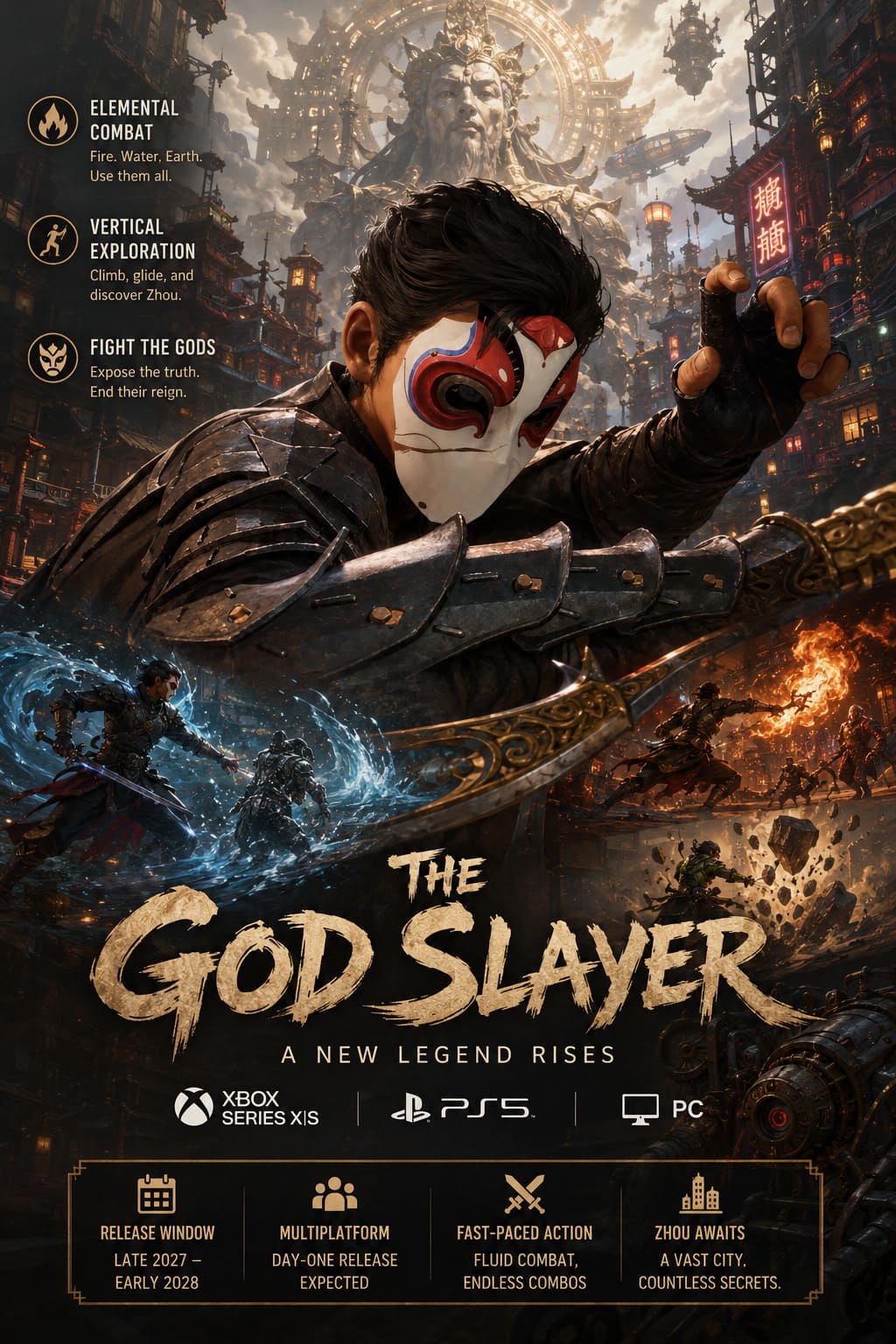
There is still no exact release date for The God Slayer. Pathea Games has been targeting a broad late 2027 or early 2028 window, which means Xbox players still have a fairly long wait ahead of them.
That delay does not surprise me. The God Slayer has clearly grown considerably compared with the project shown during its initial reveal. Building a large open-world action RPG with detailed environments, interconnected systems, cinematic presentation, and fast combat is a completely different challenge from producing a smaller-scale simulation game.
A 2027 or 2028 launch would also give Pathea more time to polish the Xbox Series X|S versions alongside the PC and PS5 editions. Personally, I would rather see the studio take the extra time than release a game with unstable performance simply because the original release target was getting too close.
| Platform | Expected Availability | Current Status |
|---|---|---|
| Xbox Series X | Day-one release expected | In Development |
| Xbox Series S | Planned | In Development |
| PlayStation 5 | Day-one release expected | In Development |
| PC | Day-one release expected | In Development |
There is also an important detail here: the Xbox release is not expected to be a delayed version. The current information points toward a simultaneous multi-platform launch, which is particularly good news for Xbox owners who were initially worried that the PlayStation China Hero Project connection might prevent the game from reaching Microsoft’s consoles.
Why The Xbox Version Is Such a Big Deal
The PlayStation China Hero Project association created some understandable confusion. Sony has supported the project, but that does not automatically mean The God Slayer has to remain a PlayStation-exclusive game.
Pathea is handling the Xbox and PC side of the project itself, which opens the door for the game to reach a much larger audience. That makes sense from a business perspective as well. A huge open-world RPG requires substantial development resources, and limiting such a game to one console ecosystem would leave a lot of potential players on the table.
For Xbox owners, the important takeaway is simple: there is no reason at this point to assume that The God Slayer will skip Xbox Series X or arrive months after the other versions.
A Completely Different Side of Pathea Games
The first thing that caught my attention about The God Slayer was just how different it looks from Pathea’s previous work.
My Time at Portia and My Time at Sandrock are built around crafting, exploration, relationships, building, and a much more relaxed rhythm. The God Slayer goes in almost the opposite direction. It has a much darker atmosphere, brutal enemies, intense melee combat, supernatural abilities, and a massive city that feels designed around vertical exploration.
That change could easily have gone wrong. Developers sometimes jump into a new genre and end up making something that feels like a collection of popular ideas without a strong identity of its own. The God Slayer, at least from the material shown so far, has one advantage: its Eastern mythology and steampunk setting give it a visual identity that is difficult to confuse with a generic fantasy RPG.
Zhou Is One of the Game’s Biggest Attractions
The game takes place in Zhou, a gigantic metropolis inspired by Chinese architecture and the mountainous urban landscape associated with Chongqing.
This is not supposed to be a traditional fantasy kingdom filled with castles and medieval villages. Zhou is a dense, vertical city where enormous structures, industrial machinery, waterways, neon lighting, and traditional Eastern influences exist side by side.
That verticality could become one of The God Slayer’s strongest features. Instead of treating the open world as a giant flat map that you simply run across, Pathea appears to be designing the city around climbing and movement. Buildings, elevated pathways, towers, streets, rivers, and hidden locations all contribute to a world that looks considerably more layered than the average open-world RPG.
And honestly, this is where I think the game could separate itself from its competition. A great open world is not necessarily about size. It is about giving the player reasons to look up, turn around, climb somewhere strange, or investigate a location that was not placed directly on the main path.
The Story Is Built Around the God Fall
The central conflict revolves around powerful beings known as the Celestials.
Humanity is forced to cultivate Qi, a form of life energy that is eventually harvested and sent to the realm of the gods. The Celestials use this energy to maintain their power and extend their existence, effectively turning humanity into a resource.
The story follows Cheng, a young warrior whose family is killed during an event known as the God Fall. After losing everything, Cheng becomes involved with the Society of the Fallen Star, an underground resistance group determined to destroy the system controlled by the Celestials.
It is a pretty straightforward revenge setup on paper, but the idea of Qi gives the conflict more substance than simply ‘hero hates gods.’ The entire world is built around an oppressive cycle, and Cheng’s abilities are directly connected to the same energy that the Celestials exploit.
That connection should give the story some interesting opportunities if Pathea actually takes the time to explore it rather than using the lore purely as an excuse for bigger boss fights.
Elemental Combat Could Be the Real Star
The most exciting part of The God Slayer for me is easily its elemental combat.
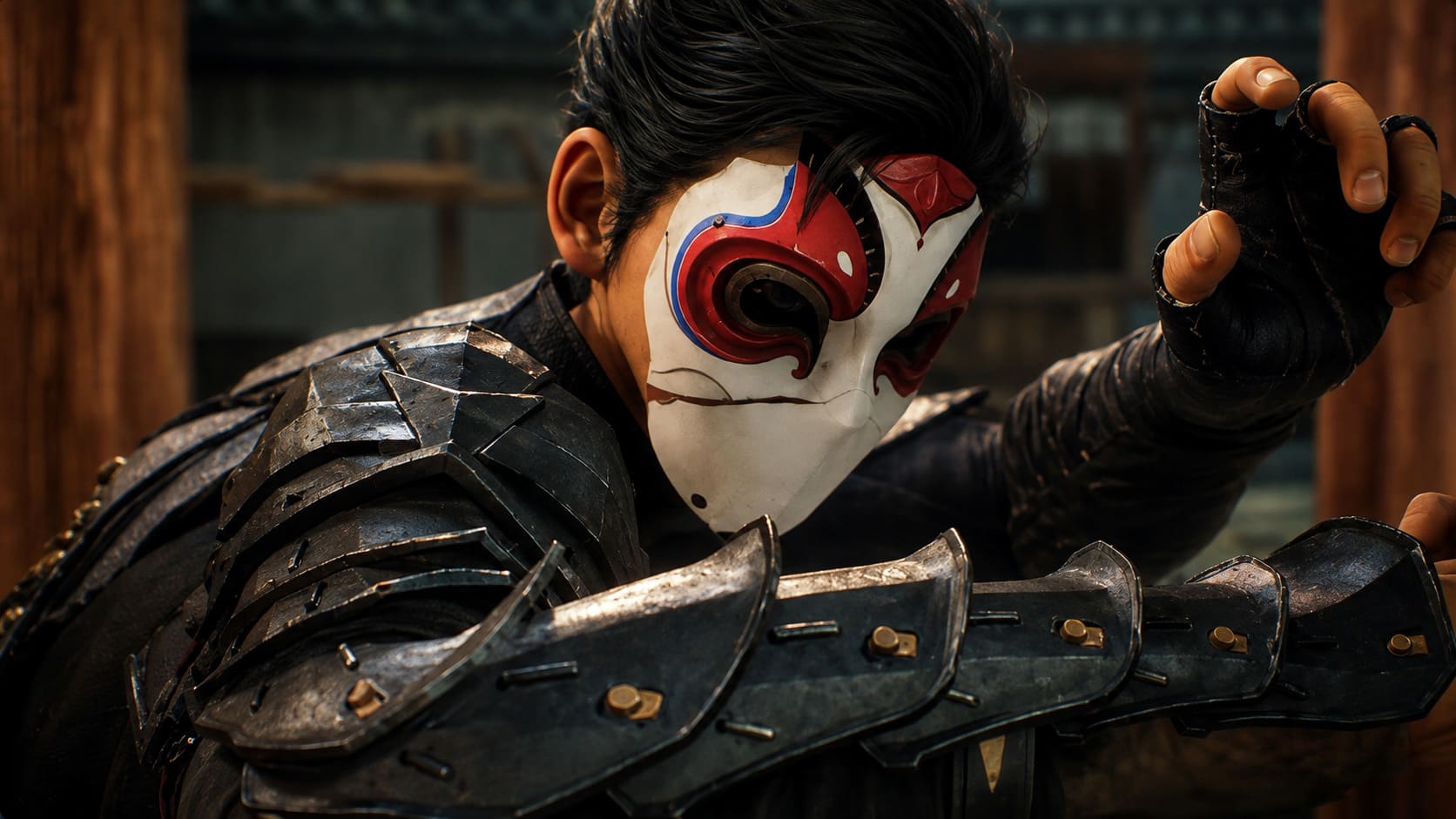
Cheng is an Elemancer, allowing him to manipulate different elements and combine them with his physical attacks. This is not presented as a basic spell system where you equip fire, press a button, and watch an enemy lose health.
The elements are supposed to interact with the environment and with each other.
- Fire can burn wooden structures, vegetation, and certain defenses.
- Water can extinguish flames or freeze enemies.
- Boiling water can generate steam that obscures enemy vision.
- Earth can create barriers capable of blocking incoming attacks and projectiles.
This is the sort of mechanic that sounds great in a trailer but needs to feel natural during actual gameplay. If Pathea manages to make elemental manipulation useful in combat, traversal, puzzles, and exploration without constantly forcing the player to stop and select a specific ability, it could become the game’s defining feature.
I also like that The God Slayer does not appear to be chasing the Souls-like formula. The combat shown so far looks faster and more aggressive, with an emphasis on mobility, parries, combos, and changing abilities during fights.
That distinction matters. There are already plenty of difficult action RPGs where the entire experience revolves around learning attack patterns and dying repeatedly. The God Slayer seems more interested in making the player feel powerful and creative.
Exploration Looks Just as Important as Fighting
Elemental abilities are also tied to movement around Zhou.
Cheng can use his powers and Qi-based abilities to move through the city at high speed, reach elevated locations, and scale parts of the environment. That gives exploration a much more active feel than simply following roads between objectives.
The vertical design could also make hidden areas considerably more interesting. A rooftop that looks inaccessible from street level might become reachable after learning a new ability, while a blocked passage could potentially be opened through elemental interaction.
This is exactly the type of progression I prefer in open-world games. Give me a reason to remember a strange location instead of simply putting a collectible marker on the map and calling it exploration.
Will The God Slayer Be on Xbox Game Pass?
This is one area where Xbox players should keep their expectations under control.
There is currently no confirmed announcement that The God Slayer will launch on Xbox Game Pass. Considering the apparent scale of the project, I would expect a conventional premium release unless Microsoft and Pathea announce a partnership closer to launch.
That does not mean Game Pass is impossible. Deals can happen relatively late in a game’s marketing cycle, and Microsoft’s interest in working with studios from Asia is well established. Still, I would not buy into Game Pass rumors until there is an official announcement.
Xbox Series X Performance Expectations
The Xbox Series X version should have plenty of hardware to work with, especially considering the game’s focus on fast combat and a large seamless city.
A performance-focused mode targeting 60 FPS would make the most sense for The God Slayer. Fast elemental attacks, parries, movement, and enemy encounters simply feel better when the frame rate is stable. A quality-oriented mode could instead prioritize visual fidelity, higher resolution, lighting effects, and ray tracing.
The city itself should also benefit from the Xbox Series X’s fast storage. A world built around vertical movement and dense environments needs to avoid constantly interrupting the player with loading screens.
I would personally choose the performance mode without much hesitation. A gorgeous open-world game is nice, but when I’m fighting a massive enemy while switching between elemental powers, I want responsive controls before anything else.
What Could Make or Break The God Slayer
There is a lot to like here, but I am not ready to assume The God Slayer will automatically be a hit.
The biggest concern is scope. Pathea is attempting to create a large action RPG with an elaborate city, elemental combat, cinematic storytelling, vertical exploration, RPG progression, and multi-platform support. Every one of those systems needs to work, and they also need to work together.
The other major question is combat depth. Fast animations and flashy elemental effects look fantastic in trailers, but they only become meaningful when the player has interesting decisions to make. If every encounter eventually turns into the same combo followed by the same elemental attack, the novelty will disappear quickly.
On the other hand, if the elements genuinely change how you approach enemies and the environment, The God Slayer could become one of the more distinctive action RPGs coming to Xbox.
My Take on The God Slayer
After seeing what Pathea is attempting, I am more interested in The God Slayer than I expected to be. The studio has stepped far outside the comfort zone established by My Time at Portia and My Time at Sandrock, and that alone makes the project worth watching.
The Eastern steampunk setting is probably its strongest visual hook, but the elemental system is what will ultimately decide whether the game is memorable. I want those powers to matter beyond combat. I want fire, water, earth, and other abilities to affect how I explore Zhou, solve problems, reach hidden locations, and approach enemies.
The Xbox Series X version is particularly interesting because the game seems designed for hardware capable of handling a dense open world while maintaining responsive combat. If Pathea can keep performance stable and deliver on the systems shown in its gameplay reveals, The God Slayer could end up being a surprisingly strong addition to the Xbox action RPG lineup.
For now, though, I would keep one foot on the hype brake. The expected late 2027 or early 2028 window gives Pathea plenty of time to prove that the ambitious ideas actually work together. I am definitely keeping an eye on it, because this is one of those games that could either become an excellent surprise or serve as a reminder that impressive trailers are much easier to make than great open-world RPGs.