Starseeker Astroneer Expeditions Review: Gameplay Mechanics, Price, and Release Guide for Steam, Xbox, and PS5
When I first heard that Starseeker: Astroneer Expeditions was moving away from the classic Astroneer sandbox formula, I was skeptical. As someone who spent hundreds of hours digging tunnels, building ridiculous planetary highways, and getting hopelessly lost underground in the original Astroneer, I wasn’t sure I wanted a more structured experience.
After diving deep into the new Early Access version, I can confidently say this isn’t simply Astroneer 2. It’s a completely different beast.
Instead of giving players endless freedom and isolation, Starseeker throws squads into intense expeditions where every second matters. Oxygen becomes your enemy, extraction becomes your obsession, and teamwork becomes the difference between success and watching your entire run collapse in spectacular fashion.
The result is one of the most entertaining cooperative sci-fi games I’ve played this year.
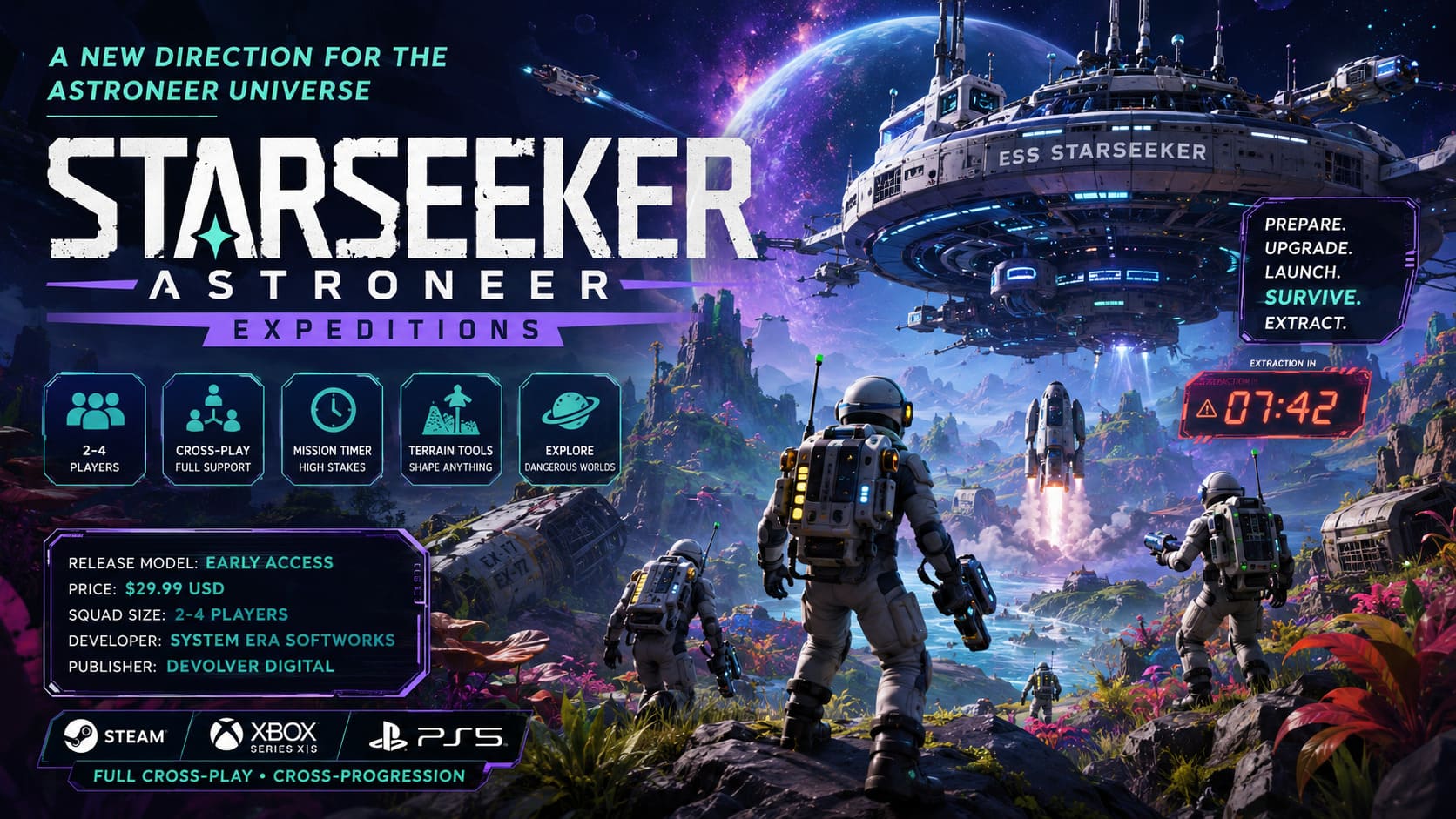
A New Direction for the Astroneer Universe
The biggest surprise is how aggressively System Era Softworks has reimagined the gameplay loop.
The original Astroneer was all about patience. You landed on a planet, gathered resources, expanded your base, and slowly unlocked new technologies at your own pace.
Starseeker takes the opposite approach.
Every mission feels like a high-stakes space operation. You’re constantly balancing exploration, resource gathering, mission objectives, and the terrifying realization that your oxygen reserves are disappearing faster than expected.
That pressure creates some genuinely memorable moments.
One minute your team is celebrating a rare discovery. Five minutes later everyone is desperately sprinting across a hostile alien landscape while yelling directions over voice chat and praying the extraction shuttle is still within reach.
That’s where the game shines.
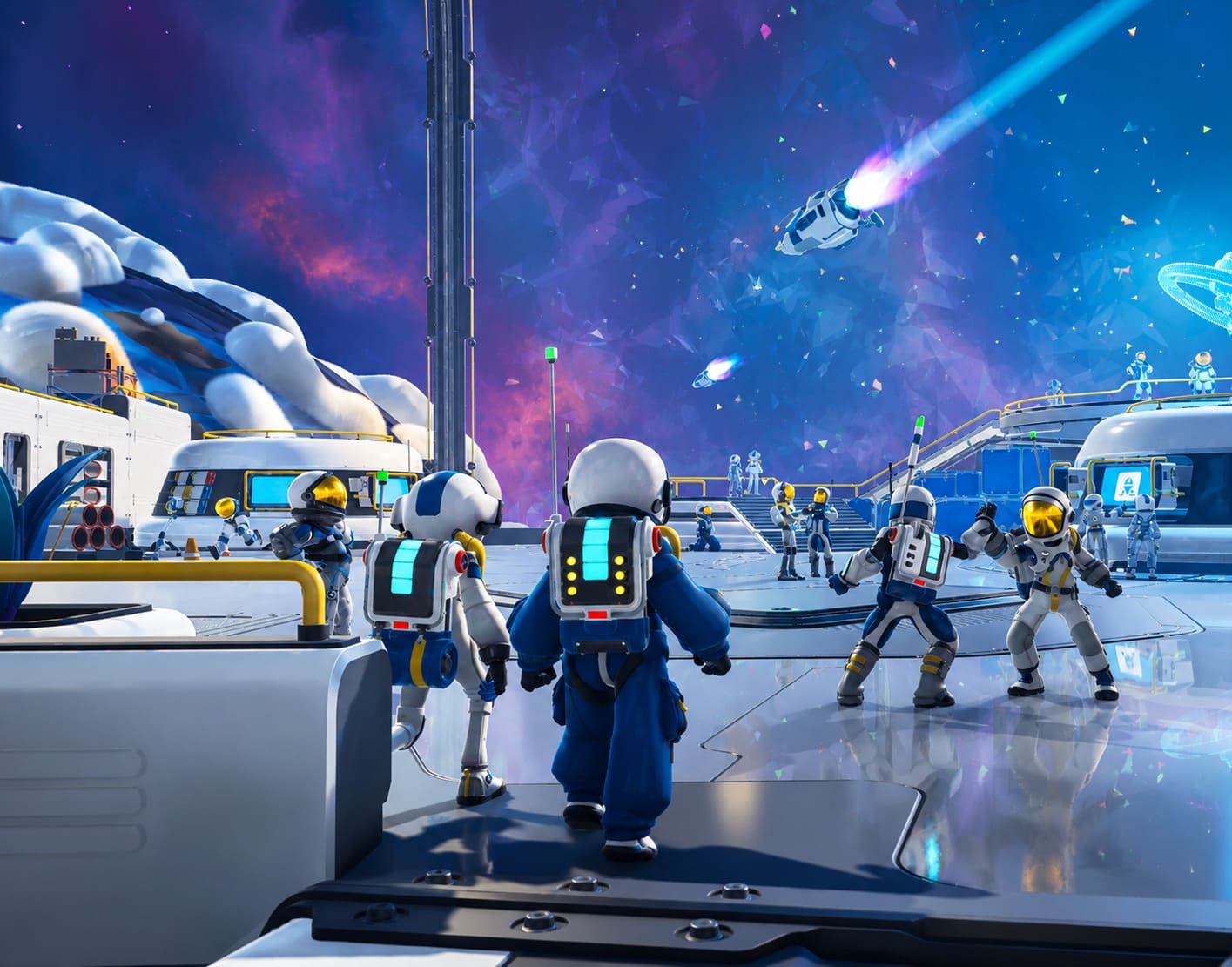
The ESS Starseeker Is More Than Just a Lobby
Most extraction-style games treat their hub areas as simple menu screens.
The ESS Starseeker feels alive.
This massive orbital station acts as the central gathering point for every expedition. Players can:
- Form teams of up to four explorers
- Trade resources
- Upgrade equipment
- Unlock new technologies
- Interact with station personnel
- Prepare specialized loadouts
What I particularly enjoyed is the game’s refusal to take itself too seriously.
While there are practical upgrades and advanced tools to purchase, players can also spend resources on purely ridiculous items that exist for fun. It’s a reminder that despite the danger and tension, the developers haven’t forgotten the playful spirit that made Astroneer popular in the first place.
The Mission Timer Changes Everything
The most controversial addition is undoubtedly the expedition timer.
The moment your squad lands on a planet, the countdown begins.
Some players will love this.
Others will absolutely hate it.
Personally, I think it’s brilliant.
The timer instantly transforms exploration into decision-making. Every cave you enter, every strange signal you investigate, and every piece of loot you collect carries a cost.
Should your squad continue exploring?
Should you head back immediately?
Can you risk checking one more structure before extraction?
Those questions constantly create tension.
Unlike many survival games where danger eventually becomes routine, Starseeker keeps the pressure high throughout every mission.
Planetary Exploration Feels Fantastic
The first available world, Tephra, immediately demonstrates the game’s strengths.
Visually, the planet is gorgeous.
Dense jungles, alien coastlines, mysterious wetlands, and abandoned industrial ruins create a setting that constantly encourages exploration.
What impressed me most wasn’t the graphics.
It was the environmental storytelling.
The remains of previous expeditions are scattered across the landscape. Crashed equipment, ruined facilities, and forgotten technologies create a sense of history that gives the world genuine personality.
Instead of simply collecting resources, players feel like they’re uncovering the aftermath of a failed colonization effort.
That narrative layer adds weight to every discovery.
Terrain Manipulation Remains the Star of the Show
Thankfully, System Era didn’t abandon the mechanic that made Astroneer special.
Terrain deformation is still incredible.
Players can reshape landscapes almost at will.
Need to cross a canyon?
Build a bridge.
Need elevation?
Create a ramp.
Found a hidden cave system?
Dig your way inside.
What makes this feature even better in Starseeker is its interaction with mobility systems.
The combination of terrain tools, gliding, swimming, and fast movement creates endless opportunities for creative problem-solving.
I’ve already seen players constructing launch ramps to catapult themselves across valleys and shave precious seconds off their extraction routes.
Those moments generate exactly the kind of player-created stories that keep multiplayer games alive for years.
Combat Finally Joins the Equation
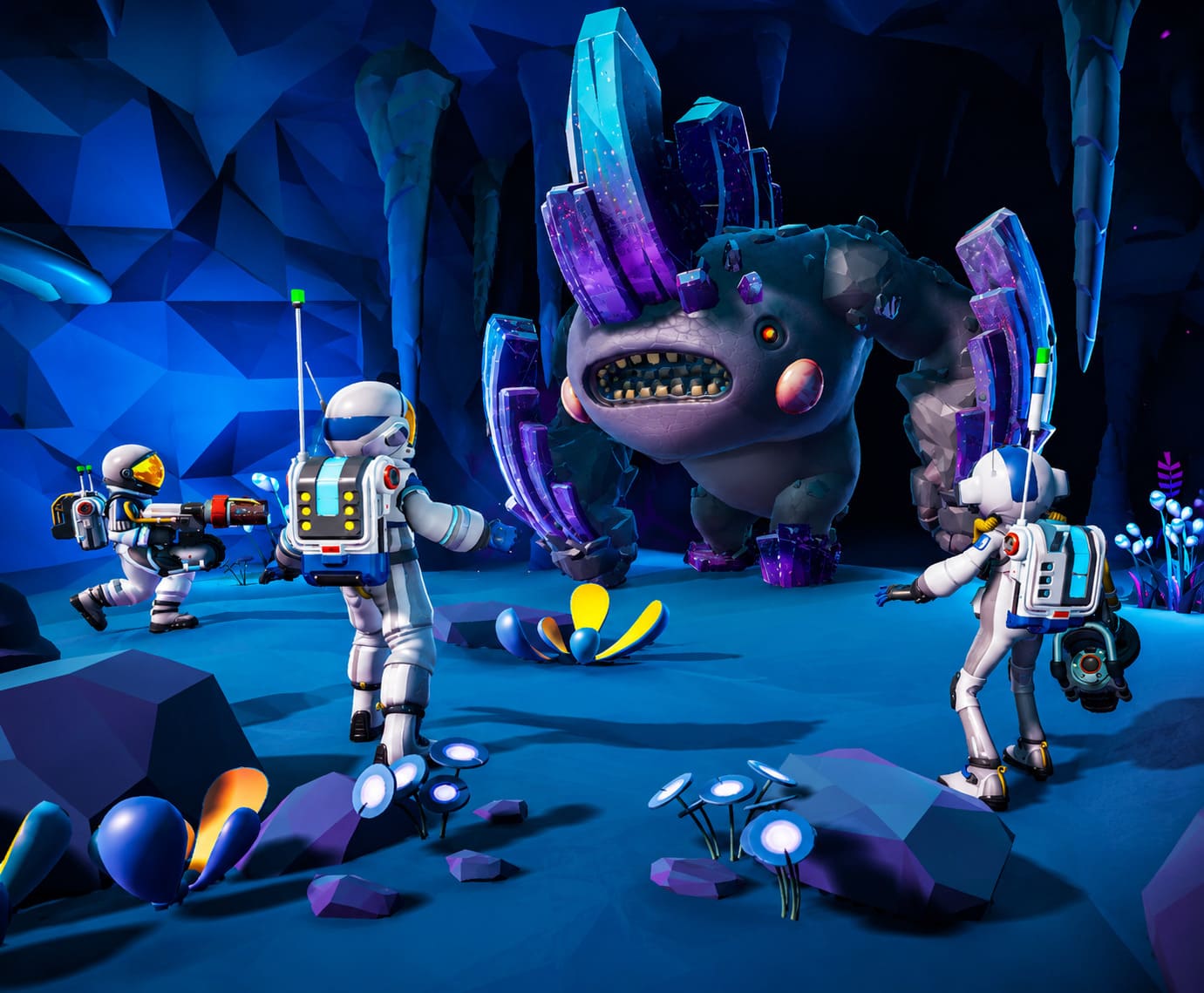
Combat is probably the biggest departure from the original game.
Traditional gunplay isn’t the focus.
Instead, encounters revolve around teamwork, gadgets, positioning, and environmental interactions.
Alien creatures actively defend territories, dangerous flora creates hazards, and certain areas become increasingly difficult as missions progress.
The combat won’t replace dedicated action games.
It doesn’t need to.
Its purpose is to create additional obstacles during expeditions, and it succeeds.
Fighting while trying to conserve oxygen and complete objectives simultaneously creates plenty of chaos.
Good chaos.
The kind that leads to hilarious stories afterward.
Progression Feels Meaningful
One issue many co-op games struggle with is maintaining long-term motivation.
Starseeker handles progression surprisingly well.
Players earn faction reputation, unlock advanced technologies, gain access to more dangerous regions, and discover increasingly complex planetary challenges.
Higher-level zones aren’t simply harder.
They’re genuinely different.
Environmental threats become more severe, puzzle complexity increases, and enemy encounters demand stronger team coordination.
This creates a satisfying sense of advancement without making early content irrelevant.
Platform Availability and Pricing
The pricing strategy deserves praise.
In an era where live-service games often launch with multiple premium currencies, battle passes, and cosmetic stores, Starseeker keeps things refreshingly simple.
| Feature | Details |
|---|---|
| Release Model | Early Access |
| Price | $29.99 USD |
| Developer | System Era Softworks |
| Publisher | Devolver Digital |
| Squad Size | 2-4 Players |
| Cross-Play | Full Support |
The developers have stated that future content updates are included in the purchase price, which immediately increases the game’s value proposition.
For players considering jumping in early, that’s a significant advantage.
Cross-Play Is a Huge Win
Modern multiplayer games live or die based on accessibility.
Thankfully, Starseeker launches with complete cross-platform support.
Steam players can team up with friends on Xbox Series X|S and PlayStation 5 without restrictions.
Even better, cross-progression allows players to continue their progress across multiple platforms.
This might sound like a standard feature in 2026, but plenty of major releases still struggle with seamless integration.
System Era deserves credit for getting this right from day one.
The Biggest Concern
Not everything is perfect.
Some longtime Astroneer fans may struggle with the removal of permanent planetary base building.
The original game allowed players to create sprawling industrial complexes that evolved over dozens of hours.
Starseeker shifts progression toward the ESS Starseeker hub instead.
Personally, I understand the design decision.
The expedition structure depends on mobility and repeatable mission loops.
Still, players who loved building giant planetary settlements may feel that something important has been lost.
Whether that’s a dealbreaker depends entirely on what you enjoyed most about Astroneer.
SpaceCraft Shiro Games: How to Scan and Identify Unknown Resources (Complete Guide)
Final Verdict
Starseeker: Astroneer Expeditions doesn’t try to recreate the original Astroneer experience.
It takes the DNA of that universe and rebuilds it into something faster, riskier, and significantly more cooperative.
The expedition-based structure delivers constant excitement. Terrain manipulation remains exceptional. Exploration feels rewarding. Cross-play support removes barriers between friends. Most importantly, the game creates unforgettable multiplayer moments almost every session.
Is it perfect?
No.
Some sandbox purists will miss unrestricted base building and slower progression.
But if you’re looking for a cooperative sci-fi adventure packed with tension, discovery, and chaotic extraction runs, Starseeker is shaping up to be one of the strongest Early Access releases of 2026.
Score: 8.8/10
A bold reinvention that successfully transforms Astroneer’s relaxed sandbox formula into an addictive co-op expedition experience without losing the charm that made the universe special in the first place.