SpaceCraft Shiro Games: How to Scan and Identify Unknown Resources (Complete Guide)
When I first landed on an unknown planet in SpaceCraft, I made the same mistake many new players make: I assumed every shiny rock was worth mining. A few hours later, I had wasted valuable fuel, overloaded my storage systems, and nearly destroyed part of my early base because I ignored a hazardous deposit that looked completely harmless.
That experience taught me one important lesson — in SpaceCraft, scanning is not just another optional mechanic. It is the backbone of exploration, progression, and long-term survival.
Unlike many survival and crafting games where resources instantly reveal themselves, SpaceCraft takes a deeper and more rewarding approach. Every new world hides secrets beneath layers of environmental interference, forcing players to actively investigate what they discover before turning it into profit.
After dozens of hours exploring hostile planets, asteroid belts, and dangerous volcanic regions, I’ve come to appreciate how much depth the scanning system adds to the game. If you’re struggling with unidentified deposits or simply want to optimize your exploration routine, this guide covers everything you need to know.
Why Resource Scanning Matters More Than You Think
At first glance, scanning may seem like a slow process that delays mining. In reality, it saves enormous amounts of time and resources.
Many deposits in SpaceCraft contain hidden properties that are impossible to identify visually. Two nodes might look nearly identical while having completely different yields, extraction requirements, or hazard levels.
A proper scan helps you determine:

- Resource quality
- Extraction efficiency
- Mining equipment requirements
- Environmental risks
- Long-term profitability
Skipping this step can lead to damaged equipment, wasted energy, or even dangerous chain reactions inside your production network.
The deeper you travel into the galaxy, the more important these scans become.
Understanding the Two Main Scanning Methods
One thing SpaceCraft does exceptionally well is separating exploration into multiple layers.
Orbital Surveying
Before landing, orbital scanning gives players a broad overview of the region.
These surveys help identify:
- High-density resource zones
- Geological anomalies
- Atmospheric disturbances
- Potential colony locations
Think of orbital scans as your strategic planning tool. They won’t reveal every detail, but they’ll tell you where it’s worth investigating further.
Surface-Level Analysis
Once you’re on the ground, detailed scans become available through handheld devices and drone systems.
This is where the real work begins.
Surface analysis allows players to inspect individual deposits and discover:
- Material composition
- Purity levels
- Structural integrity
- Hidden hazards
In my experience, this stage is where most valuable discoveries happen.
Early Equipment You Should Upgrade Immediately
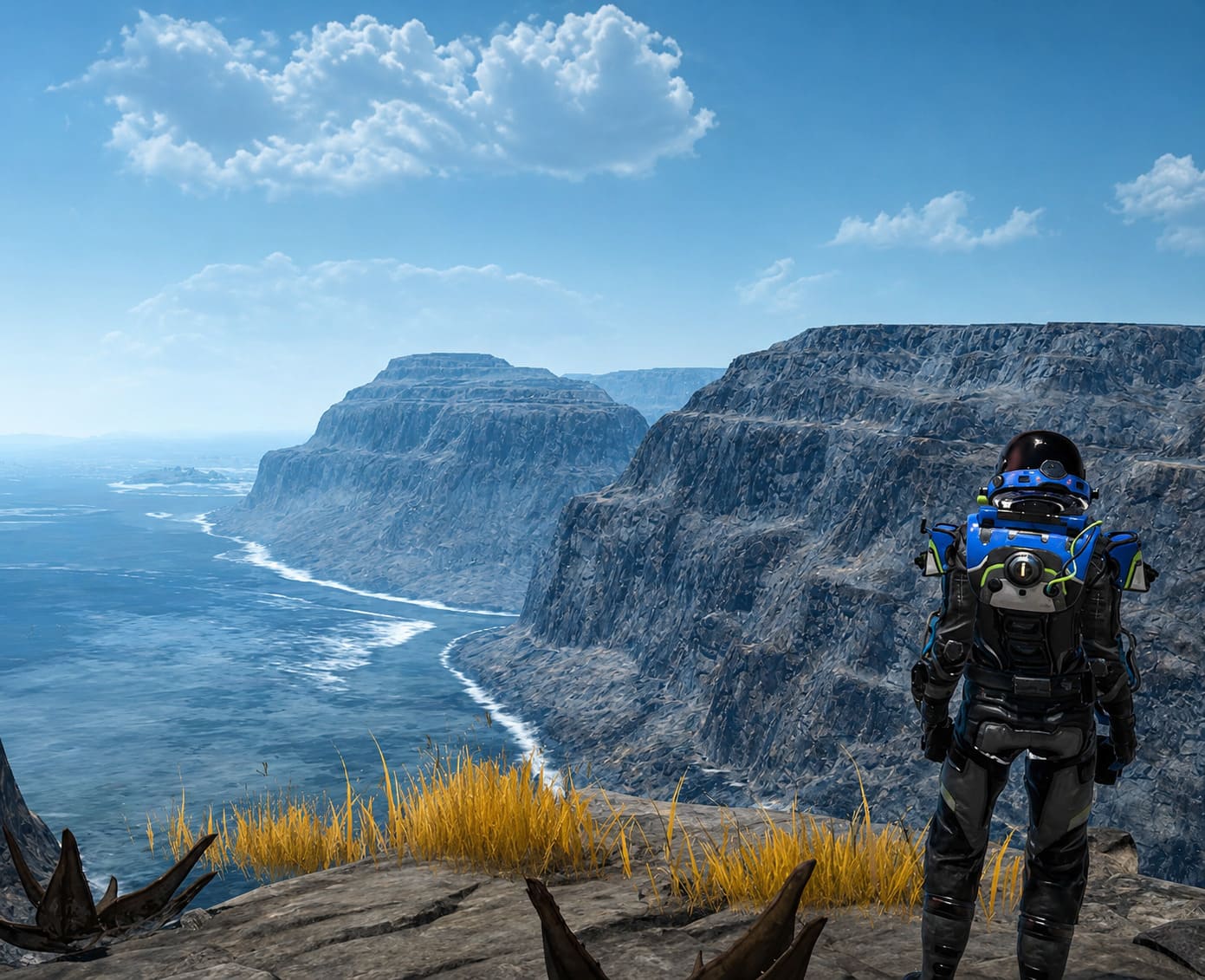
The starter scanner works, but only barely.
During the opening hours, you’ll rely on the basic scanning device included with your landing equipment. It can identify common materials without much trouble, but more advanced resources often appear as unidentified signals.
If you’re looking for the best early investments, focus on upgrading your scanning capabilities before expanding your mining operation.
Recommended Priorities
- Signal Clarification Systems
- Deep Geological Sensors
- Scout Drone Technology
- Environmental Shielding
- Advanced Data Processing Modules
Many players rush toward mining upgrades, but better scanners often provide a larger return on investment because they help locate richer deposits.
My Personal Scanning Workflow
Over time, I developed a routine that consistently produces good results.
Whenever I discover an unknown resource node, I follow the same process.
Step 1: Evaluate the Environment
Before activating any scanner, I check nearby conditions.
Warning signs include:
- Radiation spikes
- Extreme temperatures
- Toxic gas emissions
- Electromagnetic disturbances
Ignoring these indicators can turn a simple scan into a disaster.
Step 2: Begin a Full Spectrum Analysis
After confirming the area is relatively safe, I activate the scanner and maintain focus on the target.
The analysis process typically evaluates:
- Molecular density
- Element classification
- Isotope patterns
Maintaining a stable lock is important. Losing focus forces the scan to restart, which can become frustrating during dangerous expeditions.
Step 3: Complete Signal Calibration Events
Rare resources often trigger a calibration challenge.
Some players dislike this feature, but I actually enjoy it.
Successfully matching signal patterns usually rewards you with additional information and can reveal nearby deposits of the same material.
This often transforms a single discovery into an entire mining opportunity.
Step 4: Read the Results Carefully
Many players rush straight to mining after the scan finishes.
That’s a mistake.
The report contains critical information that directly affects profitability.
The Three Statistics That Matter Most

| Attribute | Why It Matters |
|---|---|
| Purity Rating | Determines resource yield and refining efficiency |
| Structural Hardness | Indicates required mining equipment strength |
| Hazard Level | Reveals transportation and storage risks |
I always prioritize high-purity deposits whenever possible because the long-term production benefits are substantial.
Resource Tiers Explained
As players move farther away from their starting region, resource complexity increases dramatically.
The game effectively divides materials into several progression stages.
Common Materials
These include basic industrial resources such as metals, minerals, and simple compounds.
Advantages:
- Easy identification
- Minimal risk
- Basic processing requirements
Perfect for early colony development.
Advanced Exotic Materials
Mid-game resources introduce new challenges.
These deposits frequently require:
- Better scanners
- Specialized drills
- Enhanced refining systems
Although more demanding, they often become the backbone of advanced manufacturing chains.
High-End Quantum Resources
This is where SpaceCraft becomes truly interesting.
These rare materials can interfere with standard sensors and frequently require dedicated stabilization technology before they can even be analyzed.
Discovering one of these deposits always feels like a major achievement.
Building an Automated Scanning Network
Manual exploration is fun, but eventually your colony grows beyond what one player can manage alone.
Automation becomes essential.
The most effective setup I’ve used combines three systems:
- Long-range survey towers
- AI management consoles
- Scout drone fleets
Once connected, the entire process becomes largely self-sustaining.
Survey stations detect anomalies.
Drones investigate.
Data uploads automatically.
Mining units receive updated coordinates.
The result is a constantly expanding resource database that requires very little supervision.
For large colonies, this is arguably one of the most important infrastructure investments in the game.
SpaceCraft Shipbuilding Guide: How to Build Your First Starship from Scratch
Common Scanning Problems and How to Fix Them
Even experienced players encounter issues.
Here are some of the most frequent problems I’ve seen.
Scan Stuck Near Completion
If progress stops at the final percentage, environmental interference is usually the culprit.
Check for:
- Magnetic disturbances
- Alien structures
- Geological anomalies
Removing or bypassing these obstacles often resolves the issue.
Resource Disappears After Scanning
This usually indicates instability.
Some volatile deposits react poorly to aggressive scanning methods.
Using improved shielding technology greatly reduces the risk.
Hidden Deposit Cannot Be Found
Sometimes the scan detects a resource pocket that doesn’t appear on the surface.
In most cases, the deposit exists underground.
Switching to subsurface scanning modes can reveal cave systems, aquifers, or deep mineral veins hidden beneath the terrain.
SpaceCraft Credits Guide: Best Early Contracts to Pay Off Your Ship Debt Fast
Final Thoughts
One of the reasons I’ve become such a fan of SpaceCraft is how rewarding exploration feels. Every planet offers mysteries, and every successful scan can lead to a major breakthrough for your colony.
The scanning system isn’t merely a way to reveal resources—it creates meaningful decision-making. You constantly weigh risk versus reward, deciding whether a strange signal is worth investigating or whether it’s better to conserve supplies and move on.
Players who invest early in scanning technology will almost always outperform those who focus solely on mining equipment. Better information leads to better decisions, and in SpaceCraft, information is often the most valuable resource of all.
If there’s one piece of advice I’d give to new explorers, it’s simple: don’t rush past unknown signals. Some of the rarest and most profitable discoveries in the game begin with a single scan.