Lost Castle 2 1.0 Full Release Review: A Veteran Gamer’s Honest Take on Endgame, Builds, and Chaos
After years of playing roguelites, beat ’em ups, and co-op dungeon crawlers, it becomes pretty easy to spot when a sequel is just “more of the same” versus when it actually evolves.
Lost Castle 2 in its full 1.0 release sits somewhere rare in between: it keeps the chaotic energy of the original, but finally adds enough structure and depth to feel like a real long-term game rather than just a fun distraction.
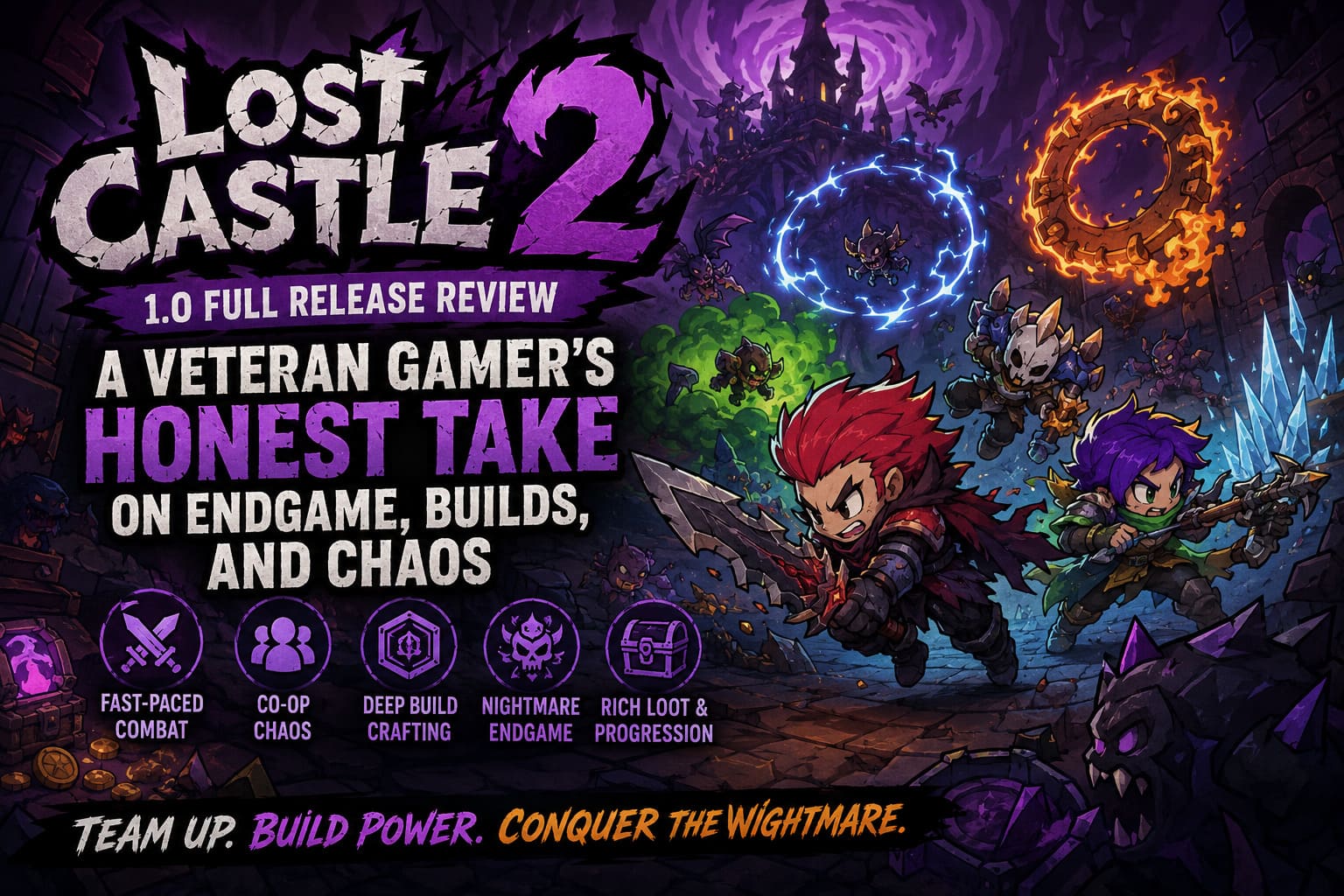
This is not a perfect release, but it is one of the more interesting indie action games I’ve played recently, especially in co-op.
First Impressions: Controlled Chaos Instead of Pure Randomness
The most noticeable change compared to Early Access is how much more cohesive everything feels. The core combat is still fast, messy, and heavily reaction-based, but now it actually feels designed rather than improvised.
Combat responsiveness is improved, enemy patterns are more readable, and co-op interactions feel less like accidental chaos and more like intentional synergy.
What stood out immediately:
- Smoother and more readable combat flow
- Better enemy scaling and encounter structure
- Stronger co-op synergy between builds
- Progression systems that finally feel purposeful
It finally feels like the developers knew what kind of game they were building.
Endgame Content: The Game Finally Has Teeth
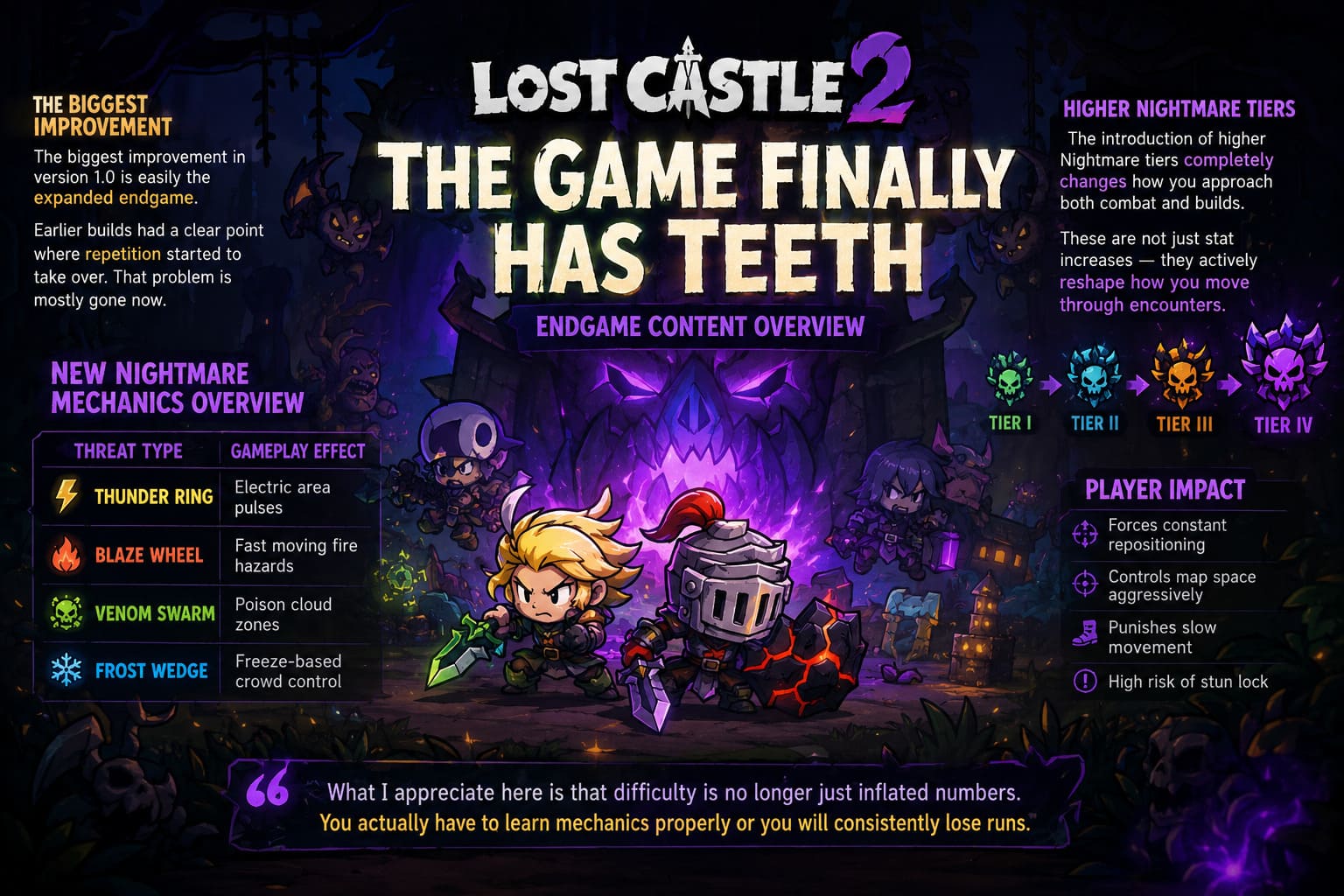
The biggest improvement in version 1.0 is easily the expanded endgame. Earlier builds had a clear point where repetition started to take over. That problem is mostly gone now.
The introduction of higher Nightmare tiers completely changes how you approach both combat and builds. These are not just stat increases — they actively reshape how you move through encounters.
New Nightmare Mechanics Overview
| Threat Type | Gameplay Effect | Player Impact |
|---|---|---|
| Thunder Ring | Electric area pulses | Forces constant repositioning |
| Blaze Wheel | Fast moving fire hazards | Controls map space aggressively |
| Venom Swarm | Poison cloud zones | Punishes slow movement |
| Frost Wedge | Freeze-based crowd control | High risk of stun lock |
What I appreciate here is that difficulty is no longer just inflated numbers. You actually have to learn mechanics properly or you will consistently lose runs.
Build System: Where the Game Finally Gets Addictive
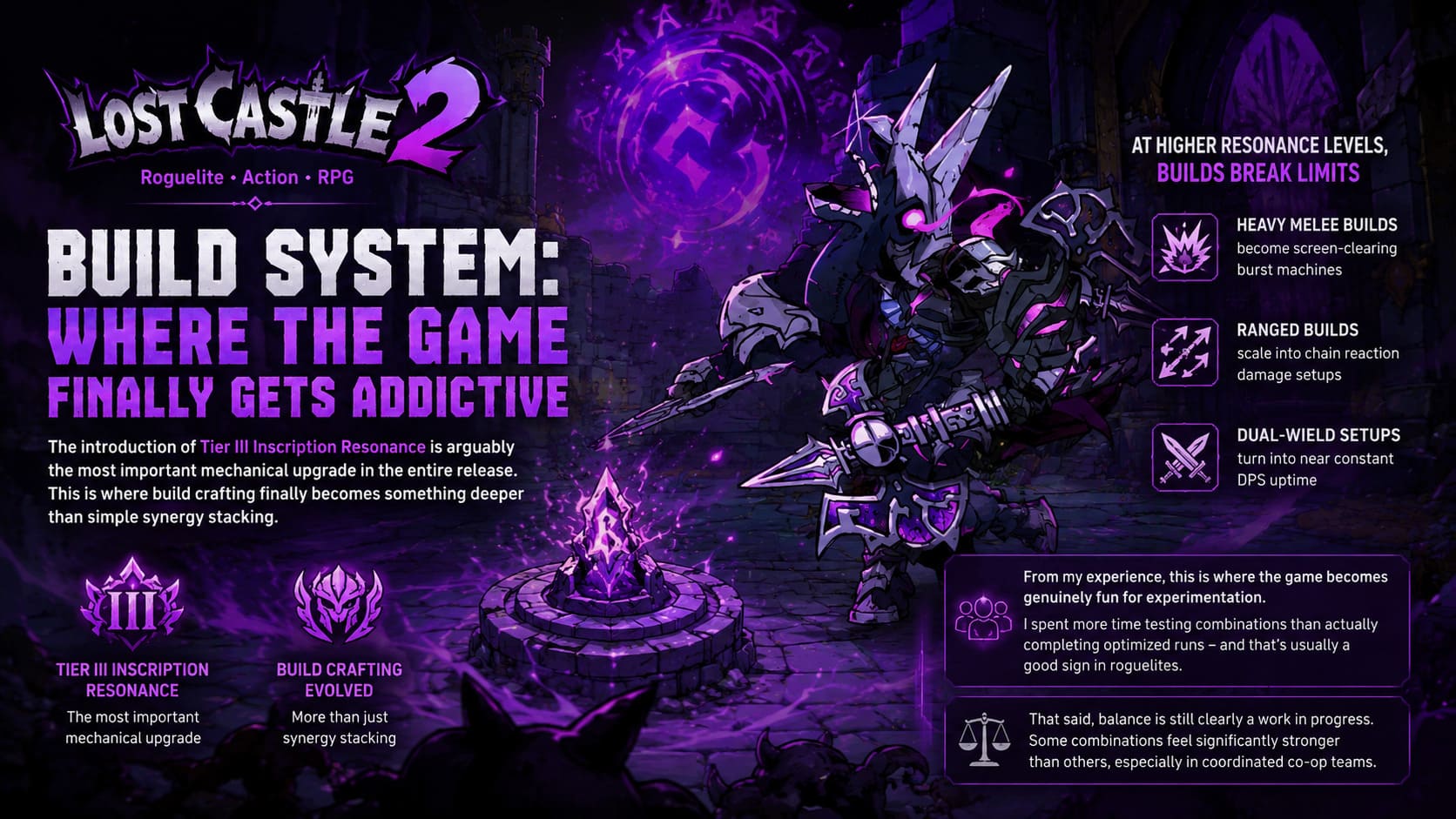
The introduction of Tier III Inscription Resonance is arguably the most important mechanical upgrade in the entire release. This is where build crafting finally becomes something deeper than simple synergy stacking.
At higher resonance levels, builds start to break away from normal constraints and become highly specialized power spikes.
Examples of how this changes gameplay:
- Heavy melee builds become screen-clearing burst machines
- Ranged builds scale into chain reaction damage setups
- Dual-wield setups turn into near constant DPS uptime
From my experience, this is where the game becomes genuinely fun for experimentation. I spent more time testing combinations than actually completing optimized runs — and that’s usually a good sign in roguelites.
That said, balance is still clearly a work in progress. Some combinations feel significantly stronger than others, especially in coordinated co-op teams.
Loot Expansion: More Variety, More Experimentation
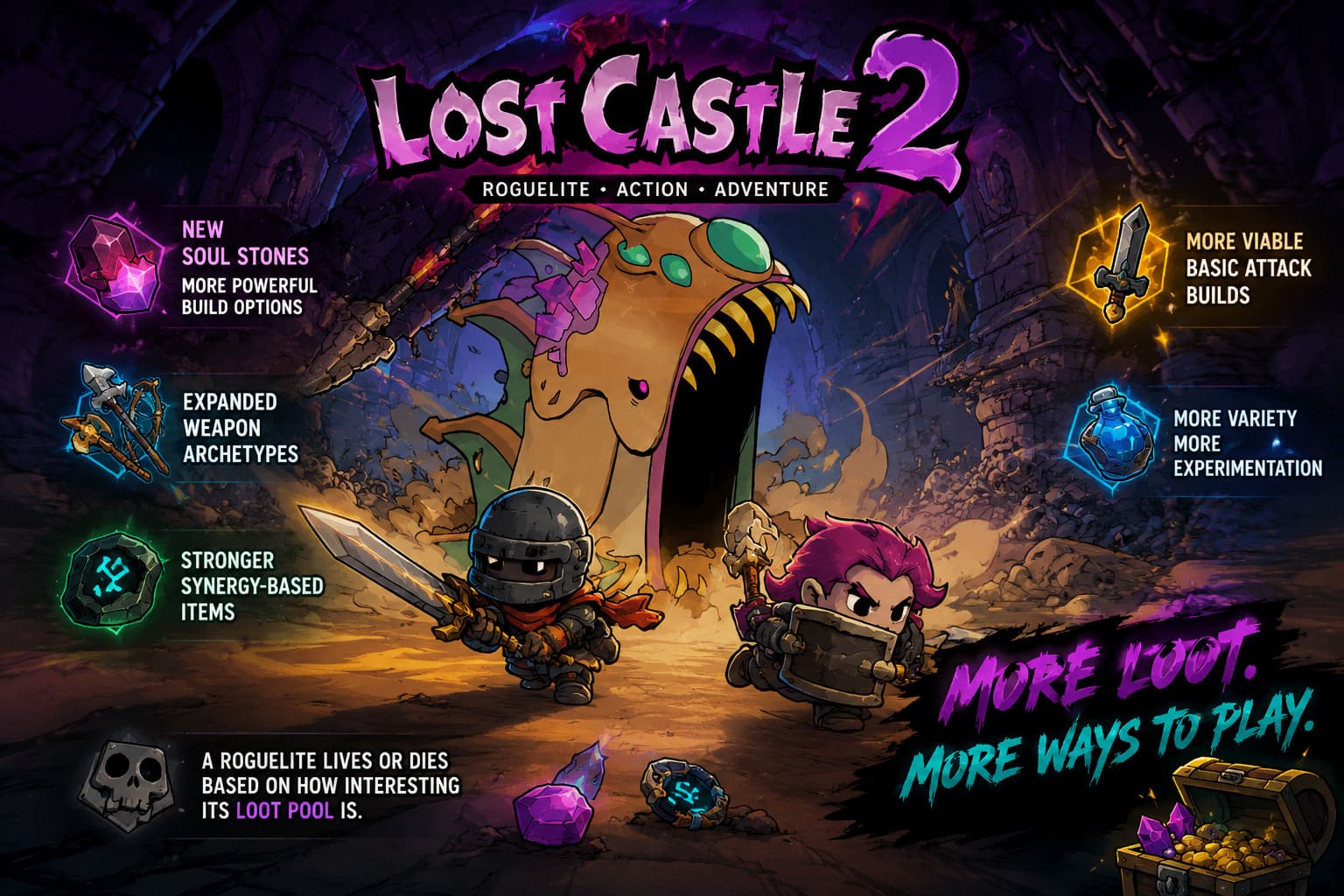
A roguelite lives or dies based on how interesting its loot pool is, and here the 1.0 version does a solid job expanding options.
The addition of new Soul Stones, weapons, and passive items gives builds more flexibility, especially for basic attack-focused playstyles that were previously underpowered.
Notable improvements include:
- More viable basic attack builds
- Expanded weapon archetypes
- Stronger synergy-based items
However, RNG still plays a strong role in how consistent a run feels. Sometimes you simply don’t get the synergy pieces you need, and that can decide the outcome early.
Camp Progression: Quietly One of the Best Changes
The revamped camp system doesn’t look like a major feature on paper, but in practice it dramatically improves long-term engagement.
Upgrades now feel meaningful, visual progression is clearer, and the overall structure makes runs feel like part of a larger progression loop instead of isolated attempts.
The addition of camp customization also adds a surprisingly strong sense of ownership. It’s not gameplay-changing, but it improves motivation to keep playing.
Onboarding and Progression Flow
One of the weaker points of earlier versions was how overwhelming the systems felt at the start. That has been significantly improved in the full release.
The game now introduces mechanics gradually through structured unlocks and quests, which makes the learning curve much smoother without removing depth.
This is especially important for a game with this many overlapping systems.
Community Reaction vs Actual Experience
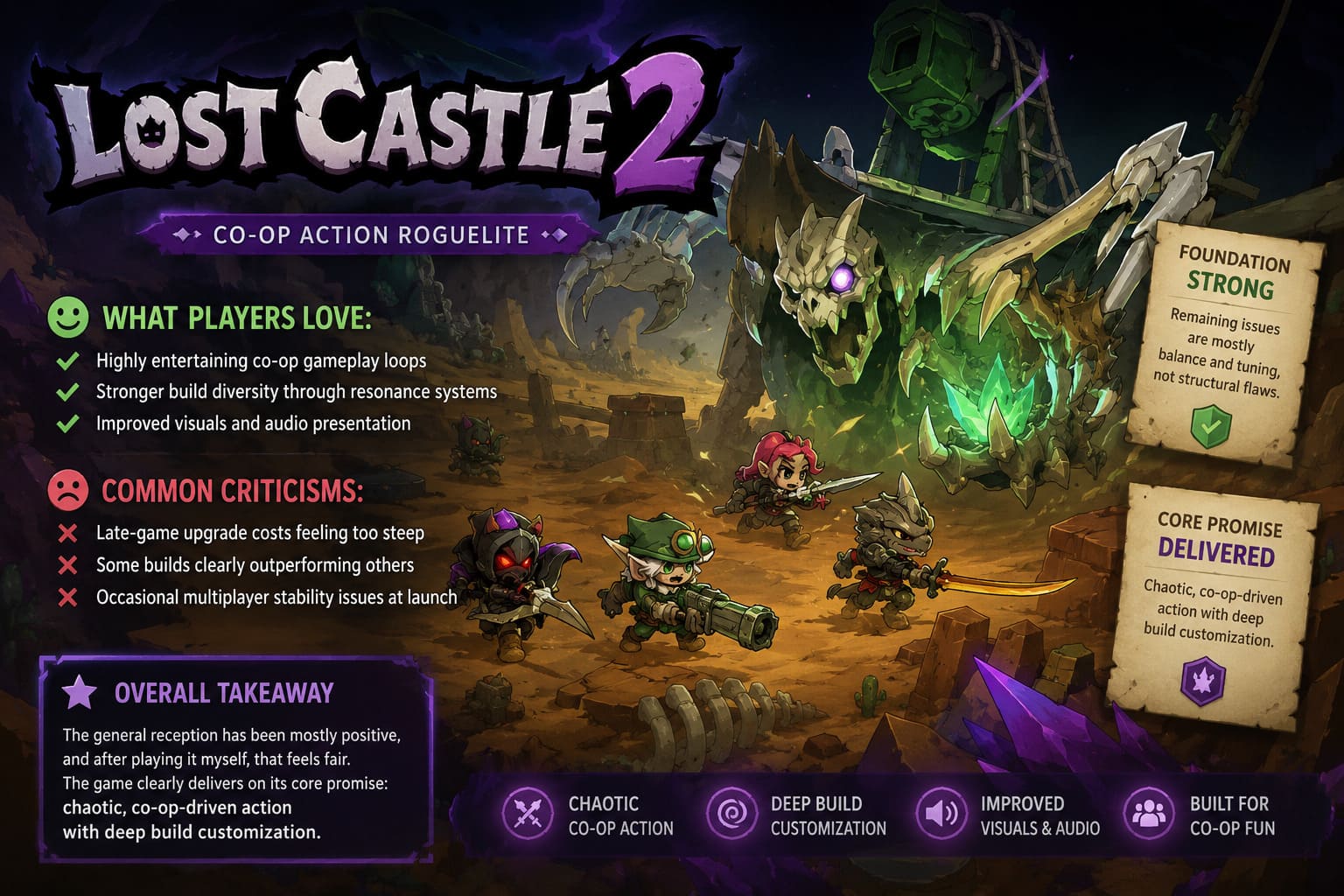
The general reception has been mostly positive, and after playing it myself, that feels fair. The game clearly delivers on its core promise: chaotic, co-op-driven action with deep build customization.
What players are enjoying most:
- Highly entertaining co-op gameplay loops
- Stronger build diversity through resonance systems
- Improved visuals and audio presentation
Common criticisms include:
- Late-game upgrade costs feeling too steep
- Some builds clearly outperforming others
- Occasional multiplayer stability issues at launch
From my perspective, the foundation is strong — the remaining issues are mostly balance and tuning, not structural flaws.
Final Verdict: Worth Playing, Especially in Co-op
Lost Castle 2 1.0 is not a flawless game, but it is a meaningful improvement over its Early Access state and a solid entry in the modern roguelite space.
It succeeds most where it matters: combat feel, build experimentation, and co-op chaos. It fails slightly in long-term balance and RNG consistency, but those are fixable issues.
If you enjoy games that reward experimentation, fast reactions, and multiplayer chaos, this is absolutely worth playing — especially with friends.
Quick Summary
| Category | Rating |
|---|---|
| Combat | Excellent |
| Build Depth | Very Strong |
| Endgame | Strong |
| Co-op Experience | Excellent |
| Balance | Moderate |