Darksiders Lore Explained Before Darksiders 4
If you’ve played through the Darksiders series more than once, you start to realize something important: this isn’t just a simple action franchise about angels and demons.
It’s a layered cosmic mythology built across multiple timelines, perspectives, and character arcs that slowly connect into something much larger than any single game.
Revisiting it years later as a gamer gives a different perspective. What once felt like straightforward apocalyptic storytelling now feels like a carefully constructed puzzle where every entry reveals another piece of a controlled, unstable universe.
Darksiders War Lore Explained: The First Horseman Story
The Core Concept: Balance as a Ruthless Law
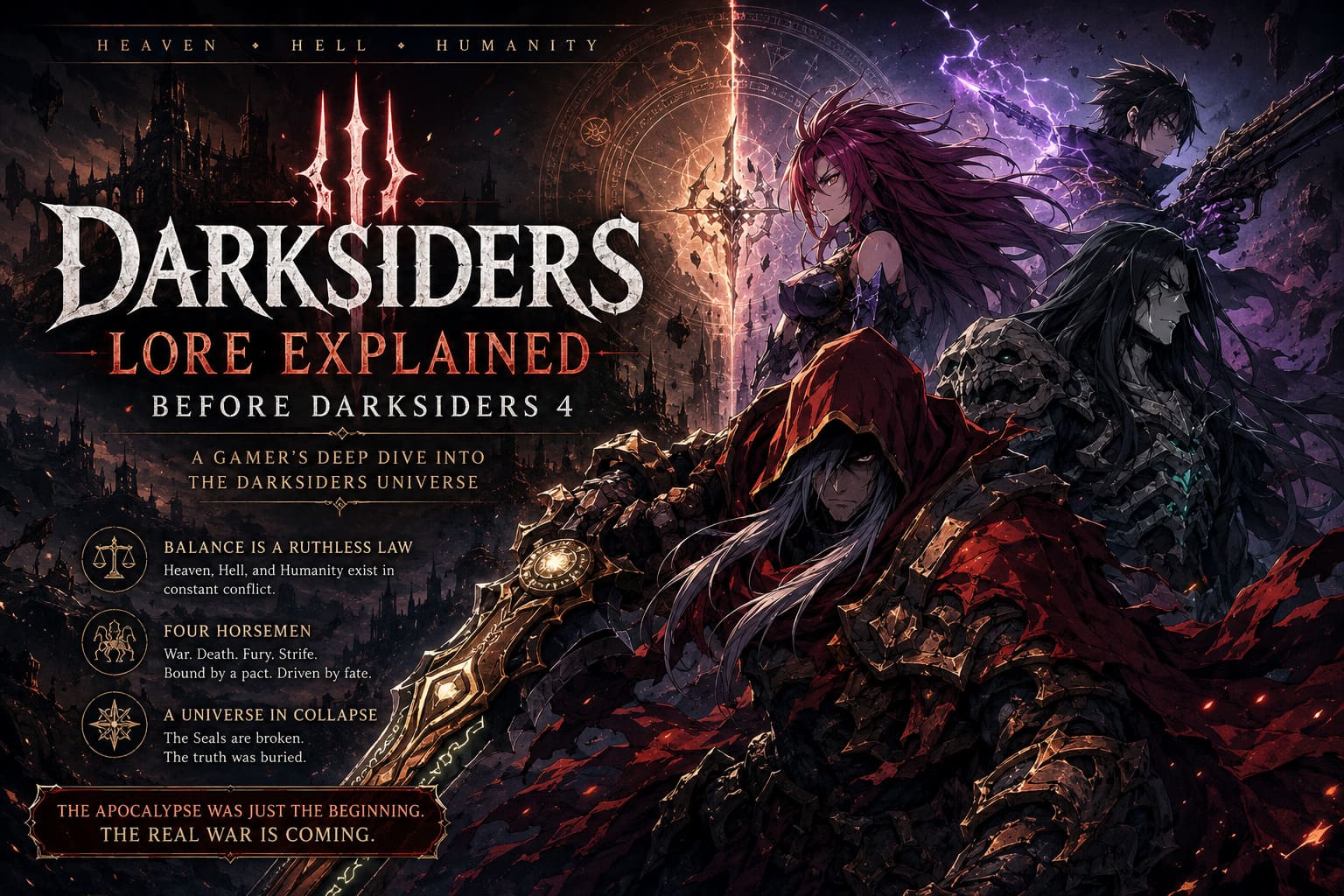
At the center of the Darksiders universe is the idea of Balance. Heaven and Hell are not moral opposites in a traditional sense, but competing systems of power. Humanity exists between them as an unpredictable variable that neither side fully controls.
The Four Horsemen are the enforcers of this Balance, but as the series progresses, they begin to feel less like divine agents and more like tools slowly becoming aware of how they are being used.
The Three Kingdoms of Existence
The world of Darksiders is divided into three main realms that define everything that happens in the story.
- Heaven: Order, structure, and strict hierarchy
- Hell: Chaos, ambition, and internal conflict
- Humanity: Weak individually but powerful in potential
What makes this structure interesting is that neither Heaven nor Hell truly prioritizes humanity’s survival. Humans are more like a test case in a larger cosmic experiment that is constantly being manipulated.
Why the Darksiders PS5 Upgrade Isn’t Free – A Gamer’s Honest Breakdown
The Nephilim and the Birth of the Horsemen
Before the modern structure of the universe stabilized, there were the Nephilim. Created from both angelic and demonic essence, they became an uncontrollable race of conquerors who destroyed worlds without restraint.
Eventually, four Nephilim turned against their own kind:
- War
- Death
- Fury
- Strife
These four made a pact with the Charred Council and wiped out their own race in exchange for becoming the Horsemen of the Balance. This act defines the moral foundation of the entire franchise, where even “necessary” actions come with devastating consequences.
The Charred Council and Hidden Control
The Charred Council presents itself as neutral, but over time it becomes clear that neutrality is just a disguise for control. They manipulate events, deceive the Horsemen, and enforce Balance in ways that serve their own interpretation of order.
This becomes especially obvious during the events leading to the premature apocalypse, where their decisions directly contribute to global destruction.
The Seven Seals and the Collapse of Order
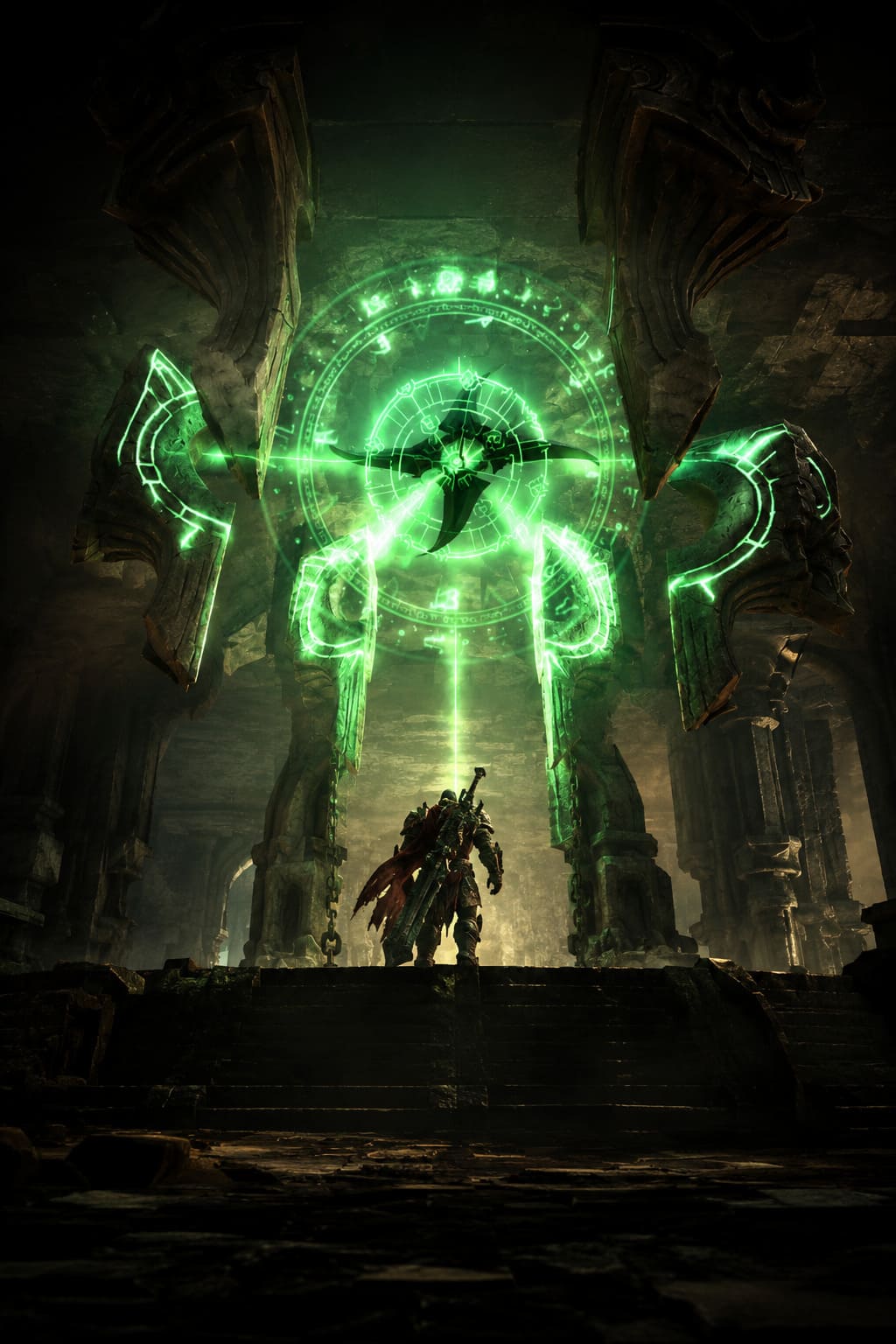
The Seven Seals were created to prevent Heaven and Hell from going to war before humanity was ready. However, fear and political manipulation within Heaven led to their premature breaking.
This triggered a chain reaction that resulted in:
- Full-scale war between Heaven and Hell
- The destruction of human civilization
- War being blamed for the catastrophe
- The fragmentation of the Horsemen
This moment is the true turning point of the entire franchise, shifting the story from controlled conflict into chaotic collapse.
Where Each Horseman Stands
War
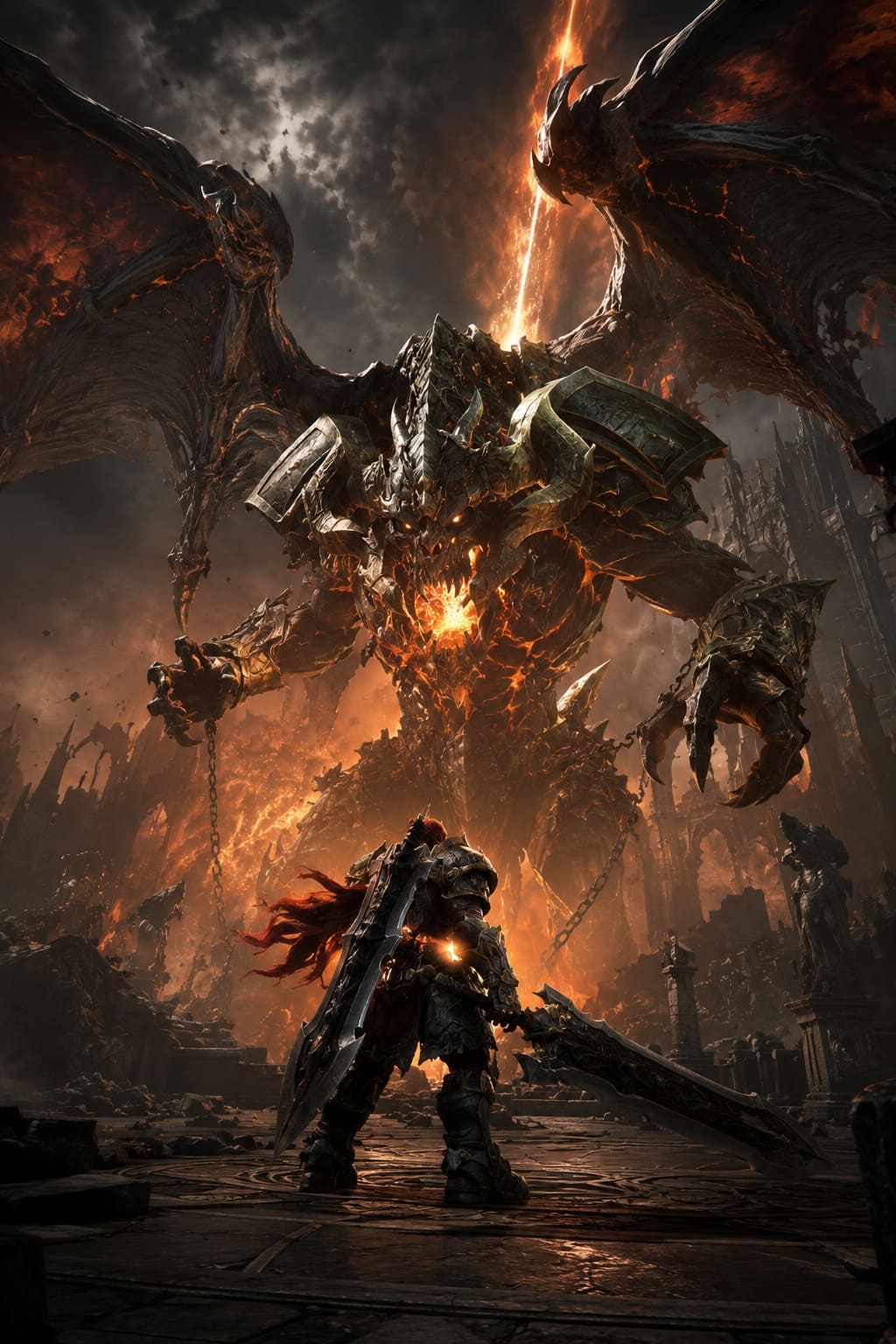
War is betrayed and imprisoned by the Charred Council, later freed after uncovering the truth. His journey transforms him from a blind enforcer into a force of rebellion against cosmic manipulation.
Death
Death seeks to restore humanity and clear War’s name. His journey ultimately leads to sacrifice, as he chooses humanity over the survival of his own extinct race.
Fury
Fury begins as a weapon of the Council but eventually rejects their authority after discovering their manipulation. She becomes a protector of the remaining human survivors.
Strife
Strife remains the most mysterious Horseman, operating in the shadows. His actions suggest deeper knowledge of the system, making him a key wildcard in the future of the story.
Game Timeline Overview
| Game | Main Focus | Story Role |
|---|---|---|
| Darksiders 1 | War | Fall and redemption of War after betrayal |
| Darksiders 2 | Death | Sacrifice to restore humanity |
| Darksiders 3 | Fury | Rebellion against the Charred Council |
| Darksiders Genesis | War & Strife | Early missions and hidden conspiracy setup |
The State of the Universe Before Darksiders 4
At this point in the timeline, the universe is unstable on every level. The Horsemen are no longer fully controlled by the Charred Council, Heaven and Hell are weakened and unpredictable, and humanity has been partially restored but remains vulnerable.
The Charred Council itself has been exposed as deeply flawed, and Lucifer continues to operate in the background, suggesting that the real endgame has not yet begun.
Why Darksiders Still Works Today
What makes Darksiders stand out is how it slowly shifts your understanding of authority. At first, you believe in Balance as justice. Later, you realize it is just another form of control disguised as order.
This transformation of perspective is what gives the series its lasting impact, especially for players who follow the entire timeline instead of just one game.
Conclusion
Darksiders is not just a story about apocalypse events. It is a story about systems of control, betrayal, and the slow awakening of characters who were never meant to question their role in the universe.
As the series moves toward Darksiders 4, everything is positioned for a larger conflict where the Horsemen are no longer servants of Balance, but potential authors of a new one.