Darksiders War Lore Explained: The First Horseman Story
When I first played Darksiders, I expected a straightforward hack-and-slash game with a cool apocalyptic skin. What I didn’t expect was a surprisingly layered mythological world built around politics, betrayal, and a protagonist who feels less like a hero and more like a consequence of cosmic failure.
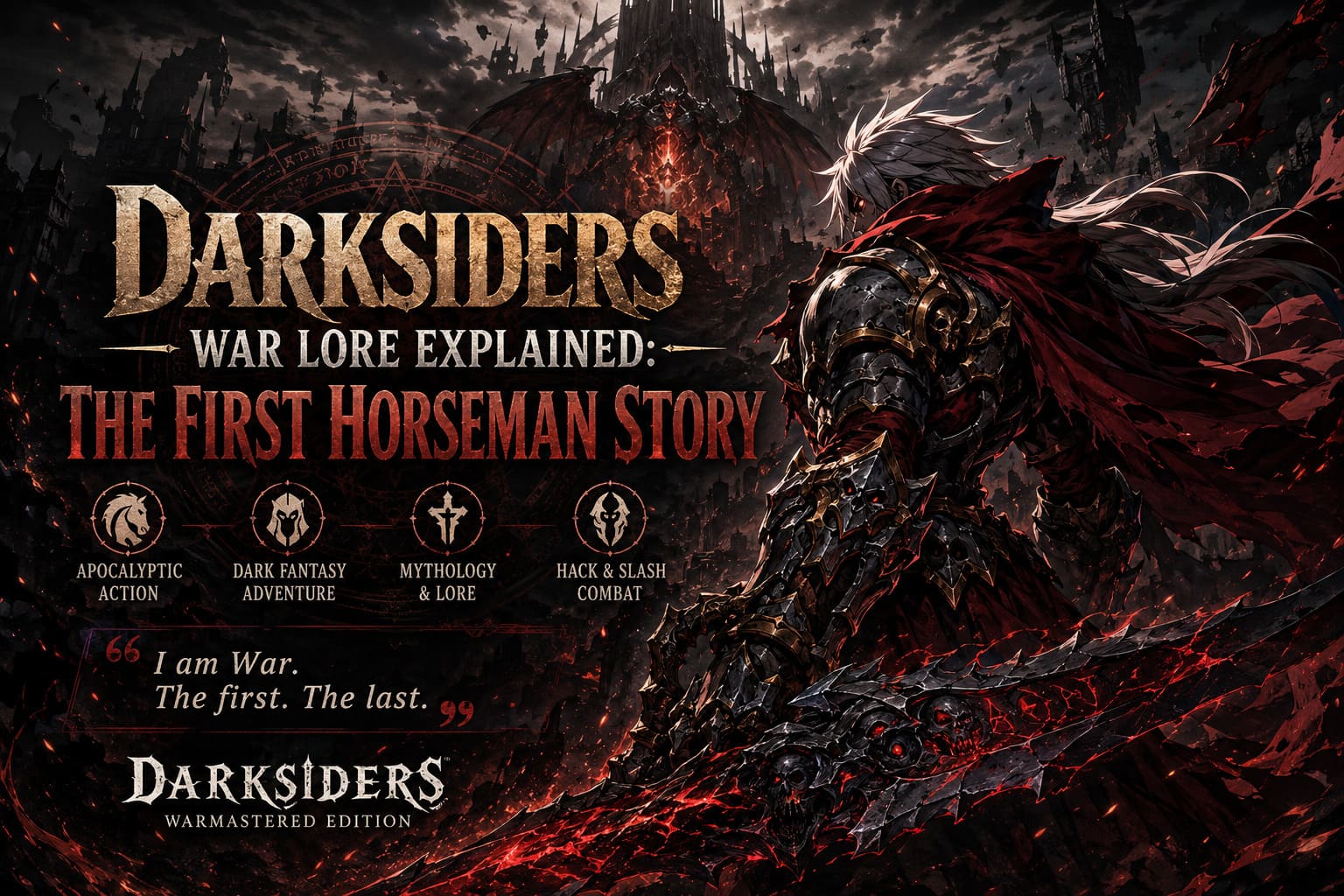
War, the First Horseman of the Apocalypse, is introduced as an unstoppable force of destruction. But the longer you follow his journey, the clearer it becomes that he is not simply a brute warrior. He is a disciplined soldier trapped inside a system that never truly gave him a choice.
Why the Darksiders PS5 Upgrade Isn’t Free – A Gamer’s Honest Breakdown
The Nephilim Origin – The Beginning of the Cycle
Before War became one of the Four Horsemen, he was a Nephilim. This race was created through a fusion of angelic and demonic essence, resulting in beings designed for overwhelming power but cursed with instability and violence.
The Nephilim, led by Absalom, quickly became a universal threat. They did not build civilizations—they destroyed them. Their expansion across worlds felt less like conquest and more like an unstoppable biological imperative.
Eventually, four of them broke away from the collective destruction:
- War
- Death
- Fury
- Strife
These four made a pact with the Charred Council, agreeing to eliminate their own kind in exchange for power and purpose. This decision is important because it frames War’s entire identity: he was never born into heroism, only into necessity.
Darksiders Warmastered Edition PS5 Photo Mode Review and Virtual Photography Experience
War’s Personality – Discipline Over Emotion
War is often misunderstood at first glance. He looks like a typical fantasy juggernaut—armored, silent, and overwhelming. But his personality is defined not by rage, but by control.
He follows a strict internal code built on duty and balance. Violence, for War, is not entertainment or rage—it is function. This makes him fundamentally different from many action game protagonists who rely on emotional impulses.
His core traits can be summarized as:
- Absolute commitment to duty
- Minimal emotional expression
- Controlled aggression in combat
- Strong sense of honor even in chaos
Compared to his siblings, War is the most rigid. Where others adapt emotionally or strategically, he remains consistent, almost unchanging, which becomes both his strength and his vulnerability.
The Setup – A War That Was Never His
The central conflict of the story begins with manipulation at a cosmic scale. The balance between Heaven and Hell is supposedly governed by the Seven Seals, which regulate when the Horsemen are allowed to intervene.
But that system is already compromised.
Key figures from Heaven and Hell conspire to trigger an early apocalypse, breaking several seals and forcing a premature war on Earth. The intention is control, not balance.
War is then summoned under false pretenses. He arrives expecting to enforce order, but instead finds a collapsing world already consumed by chaos.
What makes this twist effective is that War is not reacting to evil—he is reacting to manipulation layered on top of an already broken system.
The Fall of Earth – Survival and Fragmented Truths
After being stripped of his full power, War is forced to navigate a ruined Earth. This section of the game shifts from cosmic war narrative into grounded survival storytelling.
He forms unstable alliances with beings who each have their own agendas:
- Samael, a demon with hidden motives
- Ulthane, a Maker who represents grounded resilience
- Vulgrim, a merchant driven entirely by opportunism
These alliances are not emotional bonds—they are tactical necessities. War does not trust easily, and the world gives him no reason to.
What stands out here is how consistent War remains. Even when everything around him collapses, his identity does not fracture. He adapts tactically, not emotionally.
The Truth About Abaddon – The Tragedy of the Destroyer
One of the most impactful reveals is that Abaddon becomes the Destroyer. However, this transformation is not simple villainy. It is collapse under pressure.
Abaddon’s fall represents a broader theme of the story: even those who believe they are acting for order can become agents of destruction when they abandon accountability.
This twist reframes the conflict entirely. It is no longer Heaven versus Hell or good versus evil. It becomes a chain of failed decisions that spiral into catastrophe.
War, in this context, is not an executioner of evil. He is an enforcer of consequences.
The Seventh Seal – Death as Activation
The final act revolves around the breaking of the Seventh Seal. War’s death is not an ending, but a trigger mechanism that restores his full identity as a Horseman.
This moment redefines everything that came before it. His journey is not about gaining power, but about reclaiming his true role after being used as a pawn.
Once revived, War is no longer constrained by manipulation. The system that controlled him is effectively broken.
Key Outcome of the Ending
The conclusion delivers three major shifts:
- War regains his full cosmic power
- The manipulation of the Charred Council is exposed
- The Four Horsemen are fully reactivated as a unit
This is not a traditional “happy ending.” It is a transition into a larger, more dangerous conflict.
Combat Identity – How Gameplay Reflects Lore
War’s combat style is one of the most consistent examples of gameplay reflecting narrative identity.
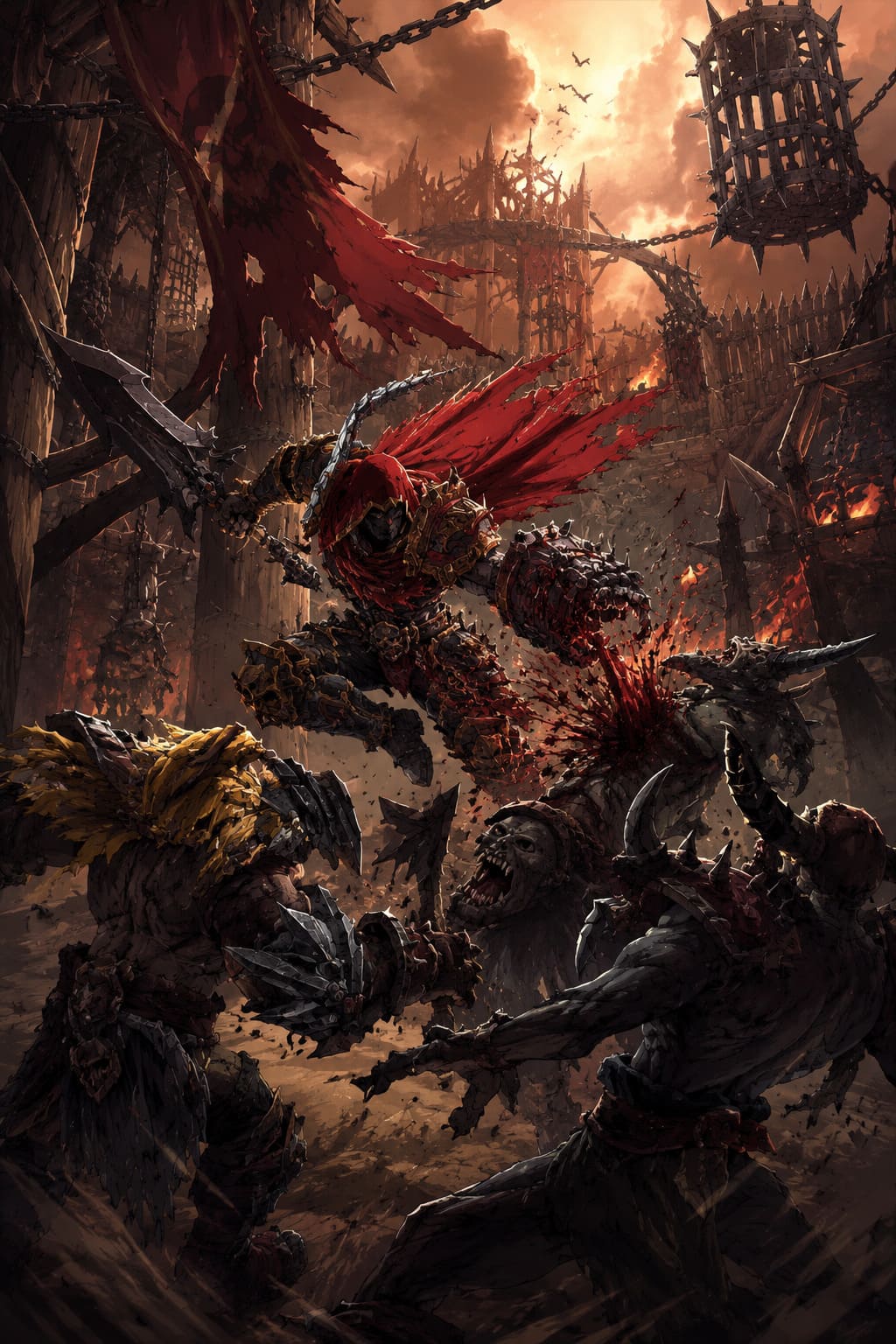
He is not designed for speed or finesse. He is designed for impact and endurance. Every movement feels heavy, deliberate, and consequential.
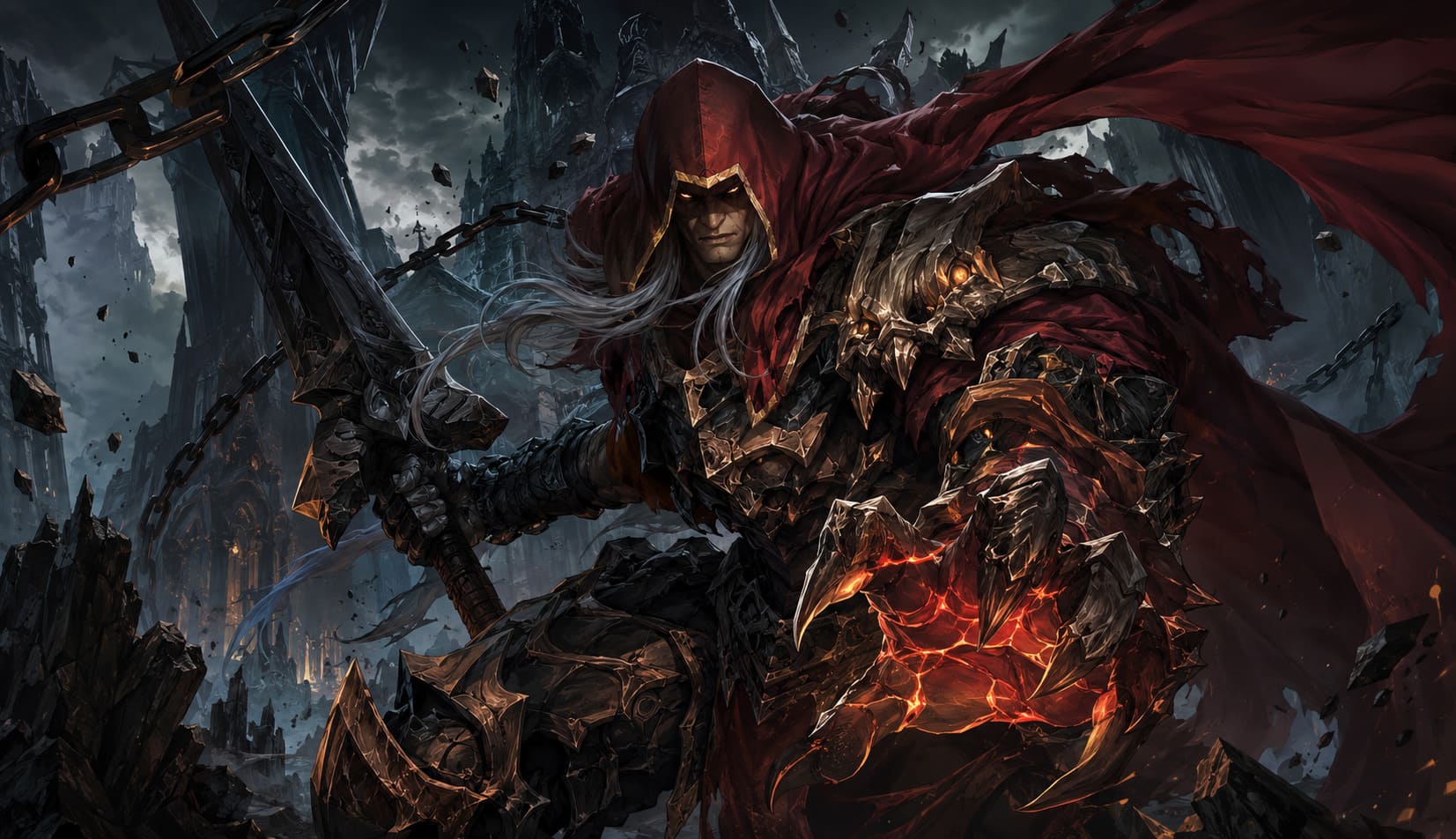
His primary weapon, Chaoseater, reinforces this identity. It is not just a sword—it is a symbolic extension of destruction feeding on destruction.
Core Abilities Overview
| Ability | Description |
|---|---|
| Blade Geyser | Area attack that controls space and punishes groups of enemies |
| Stoneskin | Temporary defensive boost that increases survivability |
| Immolation | Burning aura that damages nearby enemies |
| Chaos Form | Full transformation into a powerful destructive entity |
These abilities reinforce the idea that War does not avoid conflict—he absorbs it and overwhelms it.
Final Interpretation – What War Really Represents
After finishing the story and reflecting on it as someone who has played many similar games, War stands out not because he is the strongest character, but because he is the most controlled one.
He represents a system of violence that believes itself to be justified, only to discover it has been manipulated from the beginning.
His arc is not about becoming a hero. It is about realizing he was always a tool in someone else’s definition of order.
By the end of the story, War is no longer just a soldier following commands. He becomes an independent force operating in a corrupted universe where truth is fragmented and morality is political.
Conclusion
Darksiders succeeds not because it reinvents action gameplay, but because it builds a mythological framework where every character believes they are maintaining balance while actively destroying it.
War’s journey is ultimately about clarity through destruction. He begins as an enforcer of systems he does not question and ends as a being who understands those systems were never stable to begin with.
That shift is what makes his story still relevant to players who appreciate darker, more thoughtful fantasy worlds.