Forsaken Realms Vahrin’s Call Story Ending Explained: Full Plot Summary
When I first jumped into Forsaken Realms: Vahrin’s Call, I expected another indie action RPG with satisfying combat, some decent exploration, and a few memorable boss fights. What I didn’t expect was a surprisingly bleak story that slowly shifts from a medieval civil war into something far darker and more unsettling.
Unlike many modern RPGs that constantly throw dialogue choices and multiple endings at the player, Vahrin’s Call keeps things focused. The narrative is linear, but that actually works in its favor. Instead of asking you to shape the world, it asks you to survive it.
After finishing the campaign, I found myself thinking less about the loot I collected and more about what happened to the world of Leyda. Here’s my full breakdown of the story, the ending, and why I think Titan Roc created one of the most memorable indie fantasy worlds in recent years.
A World Built Around Extremes
One of the first things that grabbed my attention wasn’t the combat—it was the setting.
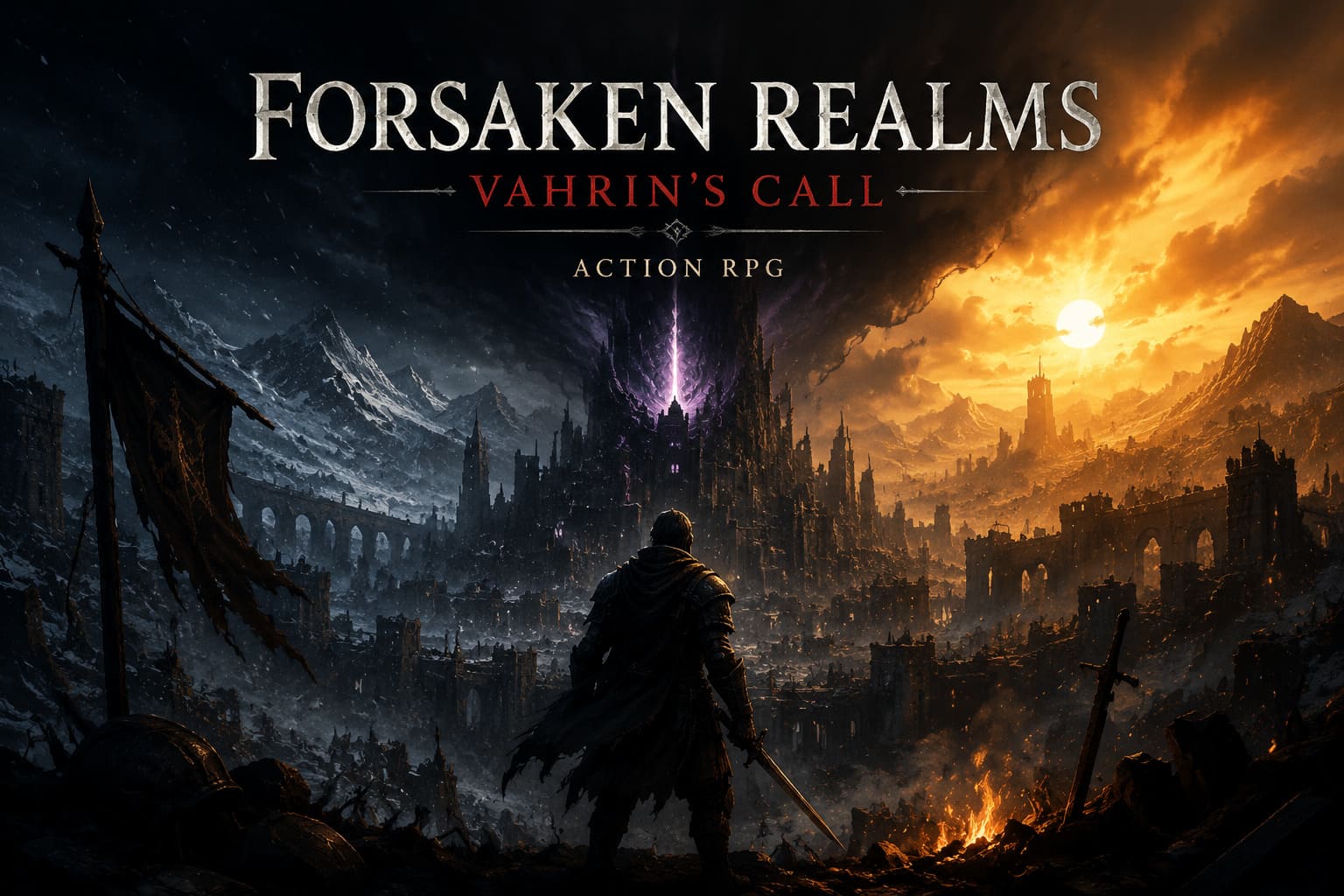
Leyda isn’t your typical fantasy continent. The planet itself is divided into impossible extremes. One side exists in permanent freezing darkness while the opposite side burns beneath an endless scorching sun. Civilization only survives inside relatively narrow regions caught between those two deadly environments.
That simple concept immediately gives the world its own identity.
The game takes place inside the Vale of Vahrin, a region that once represented stability and prosperity. Unfortunately, its greatest strength also becomes its greatest weakness. Beneath the city lies an enormous underground network hiding secrets that should never have been disturbed.
Instead of relying on hundreds of pages of exposition, the game lets environmental storytelling do much of the work. Broken statues, abandoned streets, collapsed fortifications and forgotten tombs constantly remind you that this wasn’t always a ruined kingdom.
The Fall of Vahrin Was Never Just About Monsters
At first glance, it seems like everything begins with the invasion of the insect-like Khraiax.
The creatures erupt from beneath the city and overwhelm its defenses, forcing neighboring kingdoms to unite under the Combined Order of Humankind. Led by King Aldous Symme, humanity launches a massive military campaign to save Vahrin before the infestation spreads across Leyda.
Initially, it looks like victory is within reach.
The Khraiax are gradually pushed back, and Symme personally leads an expedition into the underground vaults to destroy them forever.
That decision changes everything.
Rather than finding the source of the swarm, the army awakens something ancient hiding even deeper below the city. Within moments the royal expedition is destroyed, the king is killed, and panic spreads throughout the allied forces.
Instead of standing together, every nation chooses self-preservation.
They retreat.
They abandon Vahrin.
Personally, I think this is where the story becomes much stronger than many fantasy games. The real enemy isn’t only the monsters—it’s fear. Watching supposedly united kingdoms immediately collapse into selfish survival feels surprisingly believable.
You Aren’t a Legendary Hero
One detail I genuinely appreciated is how the game introduces its protagonist.
You’re not the chosen one.
You’re not royalty.
Nobody knows your name.
You’re simply a mercenary looking for another contract.
That decision makes the early hours feel grounded. Your character arrives expecting easy money from a desperate city, only to discover that almost everything has already fallen apart.
The famous “Vahrin’s Call” isn’t a prophecy.
It’s basically a desperate bounty notice asking anyone willing to fight to save what’s left.
That premise immediately gives your actions more weight because every victory has to be earned.
Corruption Becomes the Bigger Threat
As the story progresses, another problem emerges.
The surviving defenders are no longer fighting only monsters.
They’re fighting each other.
A military faction known as the Snatchers completely abandons its duty to protect civilians. Under the leadership of Carban, they seize food supplies, occupy strategic districts, rob survivors and transform into organized warlords.
What I liked here is that Carban isn’t written as a cartoon villain.
Yes, he’s ruthless.
Yes, he commits terrible crimes.
But the story slowly reveals that desperation and outside influence helped push him toward darkness.
That makes him considerably more interesting than another generic bandit leader.
Why Carban Matters More Than You Expect
For much of the campaign Carban appears to be the primary antagonist.
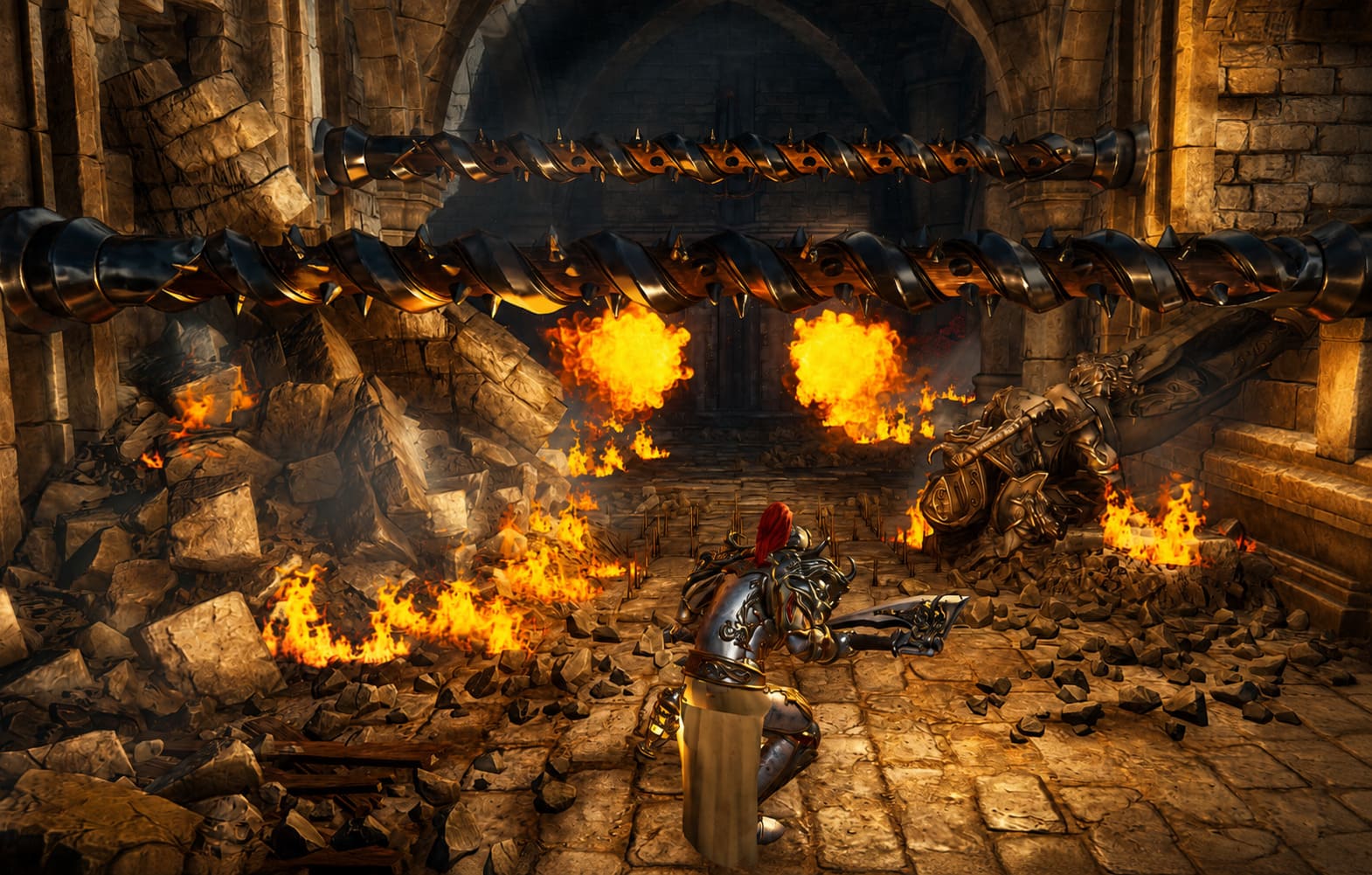
You dismantle his operations piece by piece:
- Destroy hidden Snatcher camps.
- Liberate occupied districts.
- Reopen supply routes.
- Rescue trapped civilians.
- Break the blockade surrounding the city gates.
Eventually you defeat his army, but Carban escapes underground before justice can catch him.
At first, this feels like a predictable RPG setup.
In reality, it’s the moment the game changes genres.
The medieval war story slowly transforms into cosmic horror.
The Underground Completely Changes the Tone
Everything beneath Vahrin feels different.
- Ancient crystal caverns replace ordinary dungeons.
- Forgotten burial chambers replace castles.
- The soundtrack becomes quieter.
- Enemy designs become increasingly disturbing.
Instead of simply fighting insects, you begin uncovering evidence that the Khraiax were only symptoms of something vastly older.
This ancient force seeks to expand the eternal darkness consuming the edges of Leyda until every remaining civilization disappears.
That revelation completely recontextualizes everything you’ve experienced earlier in the campaign.
Carban’s Final Transformation
Eventually the player catches Carban deep beneath the royal palace.
By this point he has fully surrendered himself to the mysterious shadow.
Rather than ruling Vahrin, he has become nothing more than a vessel carrying its power.
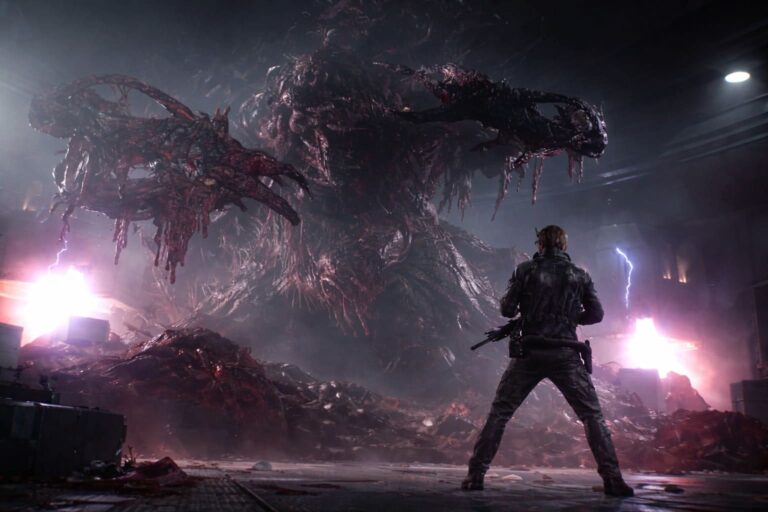
The boss fight perfectly reflects that transformation.
Instead of relying on one combat style, players are encouraged to combine swords, ranged weapons, traps, alchemy and magic. It ends up being one of the game’s strongest encounters because every phase introduces new mechanics without feeling unfair.
Ironically, defeating Carban doesn’t solve the real problem.
It makes everything worse.
His death finally breaks the ancient seal imprisoning the darkness.
The Ending Explained
The final chapters become a desperate race against time.
The remaining defenders understand that defeating armies no longer matters.
If the breach beneath Vahrin remains open, the darkness threatening Leyda will continue spreading until the entire valley disappears.
The mercenary ultimately succeeds by channeling the last remnants of ancient magic to reseal the underground rupture.
Technically, the mission succeeds.
Practically, almost everyone loses.
| Story Element | Final Outcome |
|---|---|
| The Shadow | Sealed once again beneath Vahrin. |
| Carban | Defeated after becoming the Shadow’s vessel. |
| The Khraiax | The invasion is effectively brought to an end. |
| King Aldous Symme | Dead before the player’s journey even begins. |
| The Monarchy | Completely destroyed. |
| The City of Vahrin | Saved from total annihilation but reduced to ruins. |
| The Mercenary | Survives as the unlikely savior of the Vale. |
What I appreciate most is that the game refuses to celebrate victory.
- No grand festivals.
- No restored kingdom.
- No triumphant coronation.
- Only silence.
Forsaken Realms Vahrin’s Call Release Time, Steam Price, and Complete Launch Guide (2026)
Why the Ending Feels Different
Many fantasy RPGs reward players with hope.
Vahrin’s Call rewards players with survival.
There’s a huge difference.
The city still exists, but barely.
Thousands are dead.
The royal bloodline has ended.
The allied kingdoms never return.
Nobody promises a brighter future.
The only person left standing is the mercenary who originally came looking for payment.
That ending perfectly reinforces one of the game’s central ideas:
Sometimes saving the world simply means preventing it from becoming even worse.
I honestly found that refreshing because it avoids the predictable “everything is fixed” conclusion.
My Personal Thoughts
As someone who enjoys darker fantasy RPGs, I think Titan Roc understood something many larger studios forget.
Not every story needs multiple endings.
Not every protagonist needs to become a king.
Sometimes the strongest ending is the quietest one.
The protagonist never stops being a mercenary at heart. Even after saving the Vale, they collect the remaining reward hidden inside the ruined treasury before walking away.
That final image says everything.
Heroes don’t always seek glory.
Sometimes they simply finish the job.
Final Verdict
Forsaken Realms: Vahrin’s Call surprised me far more than I expected. While its combat and exploration certainly deserve praise, the narrative is what stayed with me after the credits rolled.
The gradual shift from political collapse to ancient cosmic horror never feels forced. Carban’s descent into darkness mirrors the collapse of Vahrin itself, and the bleak finale perfectly matches the harsh world that Titan Roc spent dozens of hours building.
If you’re expecting a branching RPG full of radically different endings, this isn’t that kind of experience. But if you enjoy dark fantasy stories where sacrifice matters, victories come at an enormous price, and the world remains scarred long after the final boss falls, Vahrin’s Call absolutely delivers.
For me, the ending isn’t memorable because it offers hope. It’s memorable because it understands that sometimes surviving the darkness is the greatest victory anyone can realistically achieve.