Is DragonSword: Awakening Still a Gacha Game? Full 2026 Gameplay and Monetization Review
When I first heard that DragonSword: Awakening had abandoned its free-to-play gacha model, I honestly thought it sounded too good to be true. We’ve seen plenty of ambitious online RPGs collapse after rough launches, publisher disputes, or monetization disasters. Almost none of them get a genuine second chance.
DragonSword: Awakening is one of those rare exceptions.
What started life as a live-service title built around character banners and premium currency has been rebuilt into something completely different—a premium action RPG that rewards exploration, combat mastery, and progression instead of your credit card.
After spending dozens of hours exploring Orbis, experimenting with different party combinations, and following the game’s dramatic development story from beginning to end, it’s safe to say this isn’t simply a re-release with a different price tag. It feels like an entirely different philosophy.
If you’re wondering whether DragonSword: Awakening is still a gacha game in 2026, the answer couldn’t be clearer.
No. Not anymore.
A Comeback Almost Nobody Expected
Few projects have experienced a development story quite like this one.
DragonSword originally arrived in South Korea as a traditional free-to-play RPG. Everything about its design pointed toward the familiar formula: live-service updates, online infrastructure, premium currencies, and character acquisition through randomized systems.
The gameplay itself impressed players almost immediately. Combat felt fast, responsive, and surprisingly technical compared to many games in the genre. Unfortunately, strong mechanics weren’t enough to save it.
Poor marketing, unfortunate release timing, backend problems, and growing tension between developer Hound13 and publisher Webzen quickly pushed the project into dangerous territory.
Things escalated rapidly.
Only weeks after launch, Hound13 announced the termination of its publishing agreement, claiming major contractual violations and unpaid obligations. Webzen responded with legal action, disabled payment systems, processed refunds, and attempted to prevent the developer from moving the project elsewhere.
For many players, it looked like another promising RPG had reached its end before it ever had a chance to grow.
Instead, Hound13 made one of the boldest decisions I’ve seen from an independent studio.
Rather than abandoning the IP, they completely reimagined it.
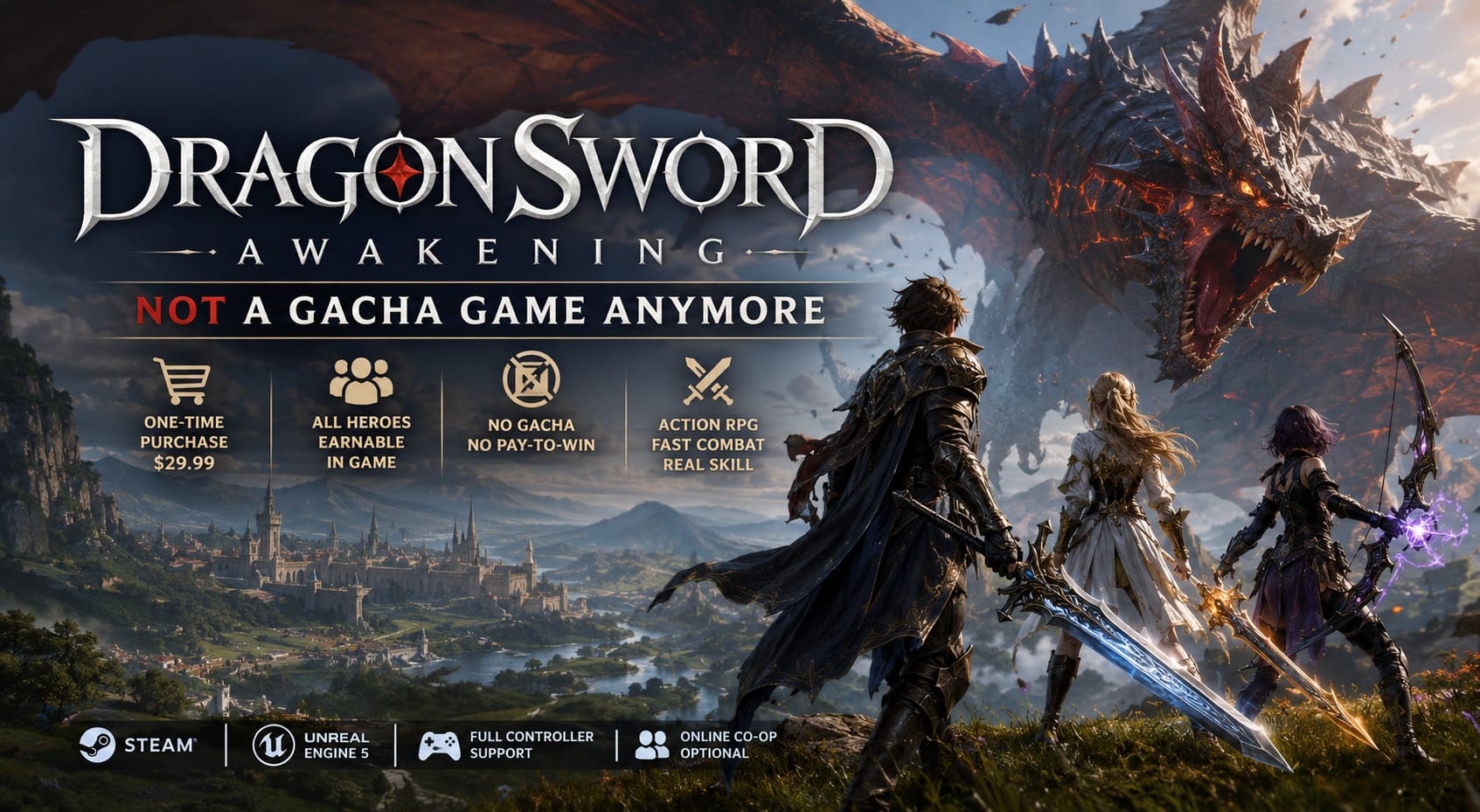
The game returned under the new title DragonSword: Awakening, removed its live-service structure, eliminated every gacha mechanic, and launched globally as a standalone premium release on Steam.
That transformation alone deserves recognition.
DragonSword: Awakening Is No Longer a Gacha Game
This is probably the biggest question players continue asking throughout 2026.
The monetization system has been rebuilt from scratch.
Instead of encouraging endless spending through randomized banners, DragonSword: Awakening follows a straightforward buy-to-play model.
Once you purchase the game, every major gameplay system becomes available through normal progression.
Here’s what changed:
- One-time purchase instead of free-to-play.
- No character banners.
- No weapon banners.
- No premium summon currency.
- No energy restrictions.
- No pay-to-win progression.
For anyone burned out by modern mobile RPG monetization, this feels incredibly refreshing.
You simply buy the game and start playing.
That’s becoming surprisingly rare.
Monetization Breakdown
| Feature | Current System |
|---|---|
| Base Price | $29.99 |
| Character Gacha | ❌ Removed |
| Weapon Gacha | ❌ Removed |
| Battle Pass | ❌ None |
| Energy System | ❌ None |
| Cosmetic DLC | ✅ Optional |
| Offline Play | ✅ Supported |
| Paid Power Boosts | ❌ None |
The optional DLC strategy is exactly what I’d hoped to see.
Instead of selling stronger characters, Hound13 focuses on cosmetics, digital artbooks, soundtracks, and special appearance packs.
Nothing sold separately provides gameplay advantages.
That distinction matters.
Every Hero Can Be Earned Naturally
One of my biggest frustrations with traditional gacha games has always been seeing incredible characters locked behind impossible odds.
DragonSword: Awakening throws that entire idea away.
The launch roster includes 19 playable heroes, and every one of them can be recruited through gameplay.
- Complete story chapters.
- Finish dedicated character side quests.
- Collect the Nameless Soul crafting resource.
- Farm dungeons and explore hidden areas.
It gives every unlock genuine value because it actually feels earned.
You’re rewarded for learning the game instead of opening your wallet.
Combat Is Where DragonSword Truly Shines
The biggest surprise wasn’t the monetization.
It was how satisfying the combat became once the game stopped revolving around live-service mechanics.
Hound13’s experience developing Dragon Nest becomes obvious within minutes.
Everything feels built around movement, timing, and stylish execution.
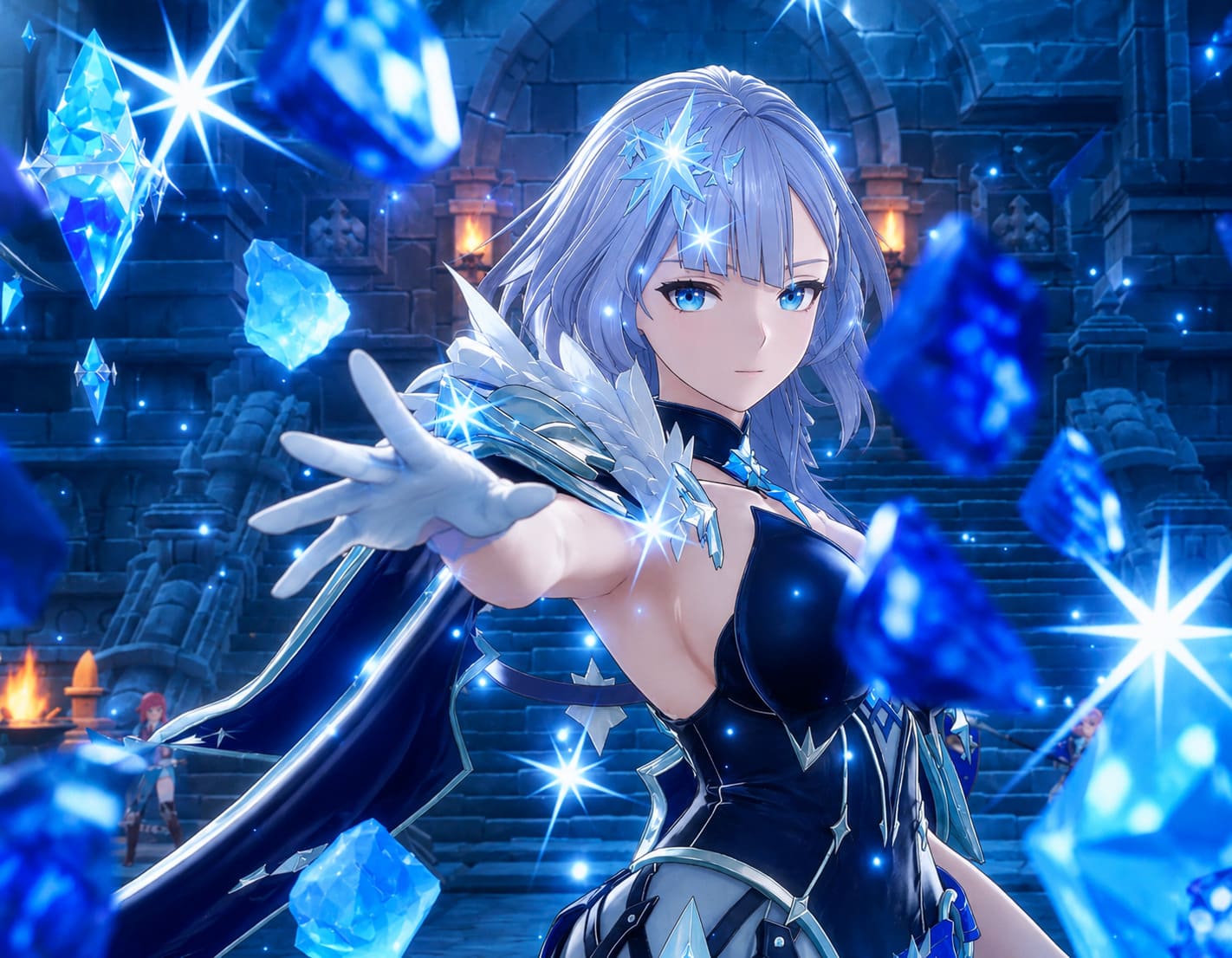
Instead of controlling a single hero, you assemble a three-character squad and freely swap between them during combat.
This isn’t just switching to refresh cooldowns.
Every swap becomes part of your combo.
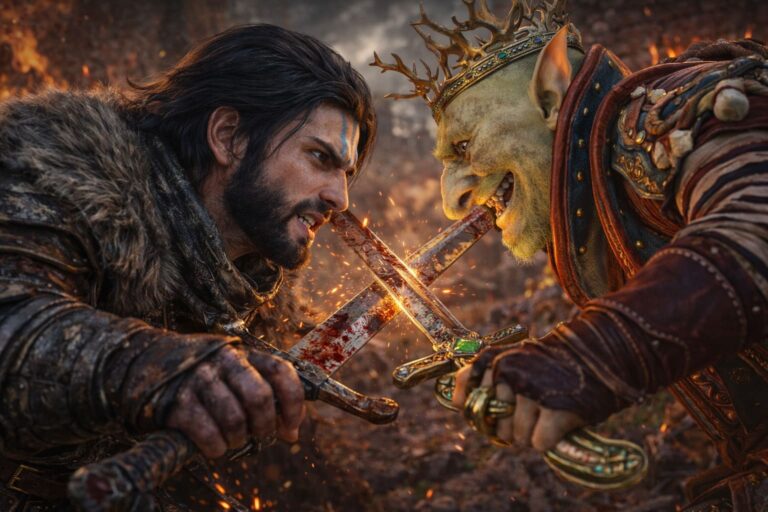
Landing attacks with one hero before seamlessly transitioning into another creates incredibly fluid chains that keep enemies airborne while multiplying damage.
Once you understand the rhythm, battles become almost hypnotic.
It’s one of those combat systems where experimentation constantly rewards you.
Breaking Enemy Defenses Feels Fantastic
Boss fights aren’t simply health bars waiting to disappear.
Most powerful enemies possess a posture or Super Armor gauge.
The objective isn’t only dealing damage.
Different heroes specialize in inflicting elemental effects or breaking enemy stability.
Once that posture finally collapses, you have a short opportunity to unleash devastating combo finishers with another party member.
Those moments produce some of the game’s most cinematic sequences.
Instead of button mashing, encounters reward planning and proper team composition.
That’s something many action RPGs struggle to accomplish.
Giant Monster Battles Add Extra Variety
Another feature I didn’t expect to enjoy this much is climbing massive enemies.
Certain bosses allow characters to physically scale their bodies after being staggered.
Reaching weak points while hanging onto enormous monsters creates encounters that feel far more dynamic than standing on the ground swinging endlessly.
It’s clearly inspired by several classic action games, yet it fits naturally into DragonSword’s combat design.
Those vertical battles easily became some of my favorite moments throughout the campaign.
Building Your Perfect Team
With nineteen heroes already available—and more promised through free updates—party customization runs surprisingly deep.
Every character offers:
- Unique weapons.
- Exclusive combo routes.
- Individual progression trees.
- Different elemental strengths.
- Specialized combat roles.
Some excel at posture breaking.
Others dominate aerial combat.
A few become devastating finishers once enemies are vulnerable.
Mixing these strengths together becomes one of the most addictive parts of progression.
No two players are likely to build identical teams.
Exploring Orbis
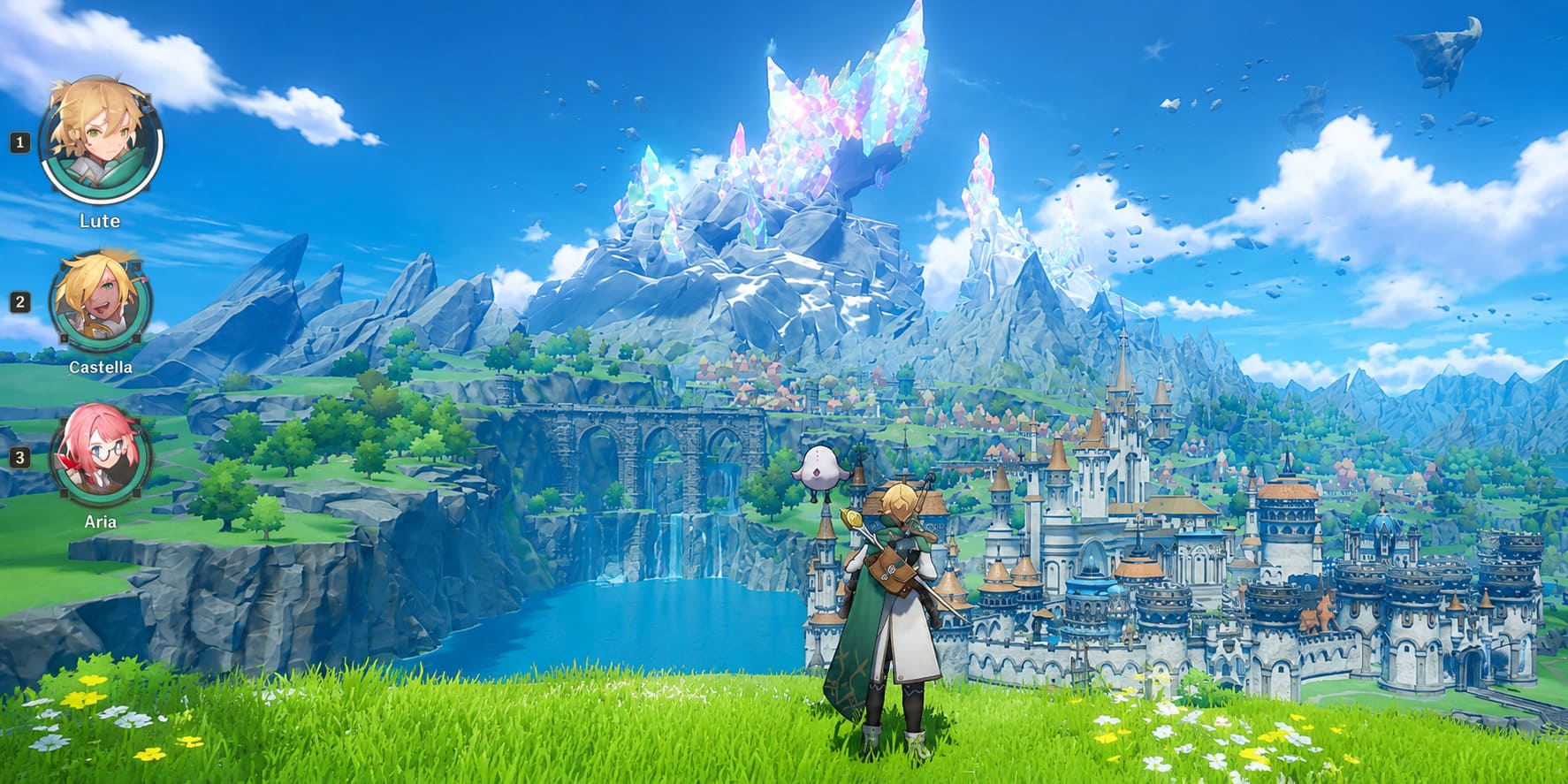
Outside combat, Orbis delivers a colorful fantasy world powered by Unreal Engine 5.
Large grasslands, forgotten ruins, towering cliffs, forests, underground dungeons, and lively villages give exploration plenty of visual variety.
You travel primarily as Lute, a young mercenary gathering legendary warriors before an ancient dragon threat returns to consume the continent.
The world certainly looks impressive.
Lighting, weather effects, and environmental detail frequently make the game feel far more expensive than its asking price.
You Can Still See Its Mobile Origins
DragonSword: Awakening isn’t perfect.
Anyone expecting a completely handcrafted RPG similar to The Witcher 3 or Elden Ring will probably notice traces of its earlier design.
Some resource gathering loops feel repetitive.
Crafting systems occasionally stretch progression longer than necessary.
Certain regions rely on familiar open-world activities that clearly originated during its live-service development.
None of these issues ruin the experience.
They’re simply reminders that this game lived an entirely different life before becoming a premium release.
Personally, I found the combat engaging enough that these weaker moments never overstayed their welcome.
PC Features Worth Mentioning
The transition away from mobile hardware also brought welcome technical improvements.
- Full controller support.
- Extensive graphics settings.
- Adjustable camera sensitivity.
- Custom key bindings.
- Improved lock-on targeting.
- Better movement and jump responsiveness.
Performance is noticeably stronger than early demonstrations suggested.
The developers clearly invested significant time polishing the PC version before release.
An additional bonus is optional cooperative play.
Although DragonSword: Awakening is fundamentally designed as a single-player RPG, friends can still join together for exploration and dungeon content without forcing online dependency.
That’s a nice balance.
How to Fix Tears of Metal Co-Op Connection Error on Xbox Game Pass (2026 Guide)
Final Verdict: Is DragonSword: Awakening Worth Buying?
Honestly, yes.
Not because it’s flawless.
Because it’s surprisingly honest.
Modern RPGs increasingly chase recurring revenue through battle passes, premium currencies, daily login systems, and endless monetization layers.
DragonSword: Awakening walks away from all of that.
You purchase the game once.
You unlock heroes through gameplay.
You improve because you become better at combat—not because you spent money.
That philosophy alone makes it stand out in today’s market.
The story behind its development almost feels unbelievable, yet the final product proves the gamble paid off.
There are still remnants of its mobile DNA scattered throughout exploration and progression, but they’re overshadowed by excellent combat, satisfying character building, strong technical improvements, and a monetization model that actually respects players.
If you’re searching for an anime-inspired action RPG with flashy tag-team mechanics, rewarding boss encounters, meaningful progression, and absolutely no gacha pressure, DragonSword: Awakening deserves a place on your Steam wishlist—or your library if you’re ready to jump in.
Sometimes games survive impossible odds.
Very few come back better than before.
DragonSword: Awakening managed exactly that.