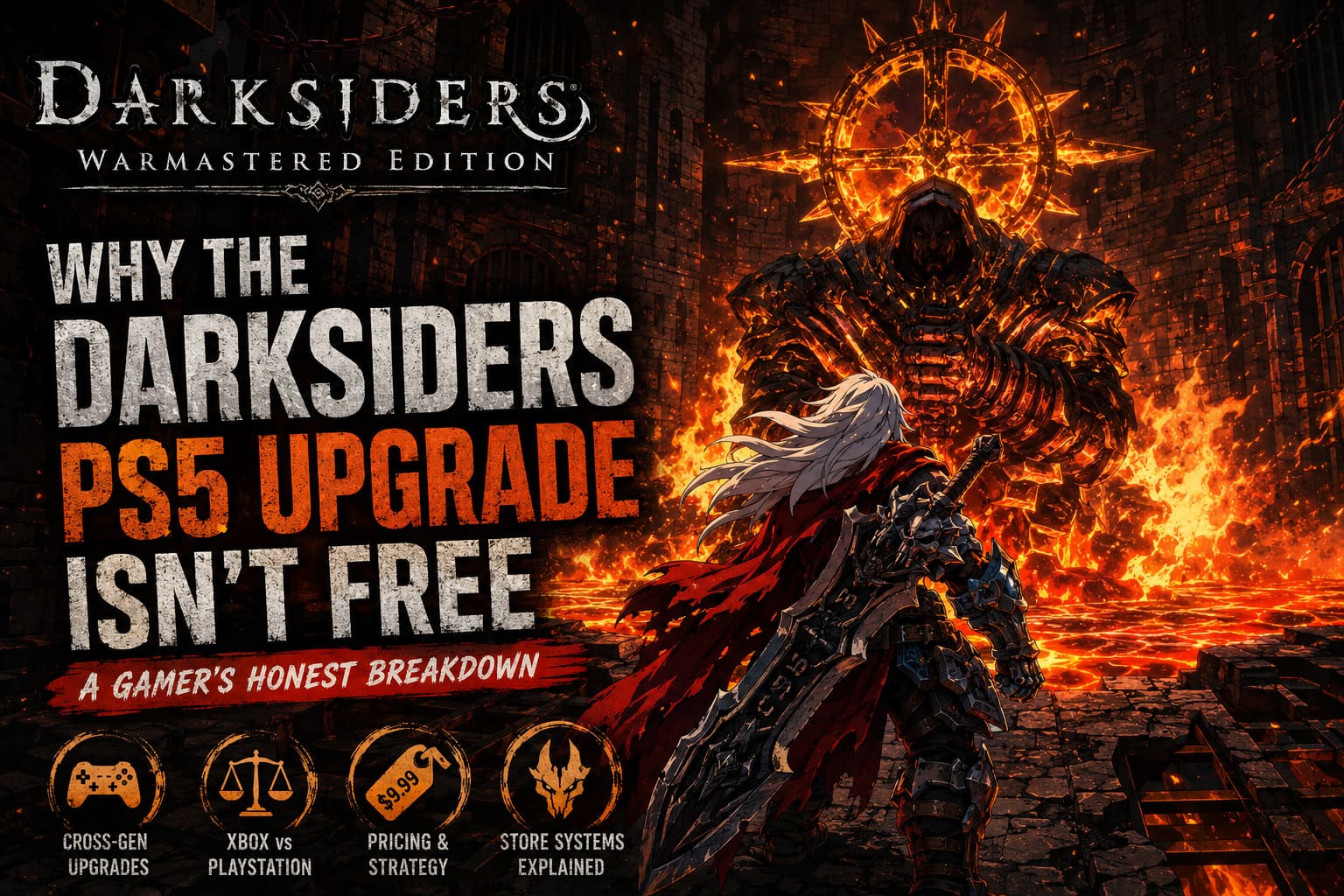
Why the Darksiders PS5 Upgrade Isn’t Free – A Gamer’s Honest Breakdown
If you’ve been playing games across multiple console generations, you’ve probably noticed a recurring pattern: sometimes upgrades feel generous and seamless, and sometimes they feel like you’re paying twice for something you already own.
The PS5 upgrade situation for Darksiders is one of those cases that sparked a lot of confusion, especially among PlayStation players who expected parity with Xbox.
After years of switching between platforms, replaying older titles, and watching how publishers handle cross-gen transitions, this situation isn’t just “Sony vs Microsoft.”
It’s a mix of pricing strategy, storefront structure, and publisher decisions that shape the final user experience in very different ways.
Darksiders Warmastered Edition PS5 Photo Mode Review and Virtual Photography Experience
The Core Reason Behind the Paid Upgrade
At the center of the issue is not a hidden scam or platform bias, but how the publisher structured pricing across systems. The PS4 version of the game remained at a lower legacy price, while the PS5 version was listed as a separate product. Existing PS4 owners were then offered an upgrade path with a $9.99 fee.
On Xbox, however, the situation played out differently. The Xbox One version was adjusted in price to match the newer version, which allowed the upgrade to appear free through the system’s entitlement logic.
From a purely financial standpoint, both ecosystems ultimately reach a similar total cost for new buyers. The frustration comes from timing and perception: PlayStation users feel penalized for owning the game earlier.
Why Xbox Upgrades Feel Free
Xbox uses a system designed around automatic version management. It detects your hardware and delivers the correct version without requiring separate purchases or manual upgrades. This creates the impression of a unified license system where upgrades happen naturally in the background.
Forza Horizon 6 JDM Car List: All Launch Day Cars & Hidden Gems Confirmed
Key advantages of this system:
- Automatic detection of console generation
- Unified game ownership across versions
- No separate PS4/PS5-style listings
- Seamless transition between generations
Because of this structure, when pricing aligns between versions, upgrades appear free even though the value is technically balanced behind the scenes.
Why PlayStation Handles It Differently
PlayStation’s ecosystem is built around separate product listings for PS4 and PS5 versions. Instead of a single evolving license, each version is treated as its own SKU in the store. This gives publishers more control but also introduces complexity for upgrades.
Publishers must manually define upgrade paths, pricing rules, and availability. That flexibility allows them to monetize upgrades, but it also creates inconsistent experiences across different games.
What this means for players:
- PS4 and PS5 versions are treated as separate purchases
- Upgrade pricing is optional and publisher-defined
- Store listings may not always clearly show upgrade paths
- Free upgrades are not guaranteed by default
Why the Experience Feels Inconsistent
Even when everything is technically working as intended, the user experience can feel uneven. Some games offer free upgrades, others charge a small fee, and some don’t offer upgrades at all. This inconsistency creates confusion among players who expect a unified standard across the platform.
From a gamer’s perspective, this inconsistency is more important than the technical reasoning behind it. People don’t experience licensing systems—they experience store screens, price tags, and upgrade buttons.
Comparing Xbox and PlayStation Upgrade Models
| Feature | Xbox Series X|S | PlayStation 5 |
|---|---|---|
| Game License System | Unified ownership model | Separate PS4 and PS5 SKUs |
| Upgrade Handling | Automatic via Smart Delivery | Manual publisher setup |
| Pricing Control | System-aligned | Publisher-controlled |
| User Experience | Seamless | Varies by game |
Why Some Upgrades Were Free Before
One of the confusing parts for players is inconsistency across different entries in the same franchise. Some titles received free upgrades, while others introduced paid transitions. This is usually not a platform decision, but a publisher-level strategy shift.
In earlier releases, free upgrades were often used to build goodwill or revive interest in a franchise. Later releases may prioritize direct monetization, especially for enhanced editions or native next-gen ports.
The Hidden Complexity Behind Storefronts
Digital storefronts are more complex than they appear. Even when upgrade systems exist, they can be affected by backend issues such as licensing flags, regional pricing rules, and subscription-based ownership from services like PlayStation Plus.
These technical layers can sometimes cause legitimate owners to see full prices instead of upgrade options, adding to frustration and confusion during launch periods.
Common issues include:
- Incorrect license recognition
- Regional pricing inconsistencies
- Store cache or syncing delays
- Subscription-based ownership conflicts
What Players Are Actually Frustrated About
Looking at community discussions, the frustration is less about the $9.99 itself and more about consistency and expectation. When one platform offers a seamless upgrade and another requires payment, it creates a perception of inequality even if the underlying economics are similar.
Players tend to compare experiences, not systems. And in that comparison, friction becomes more important than technical justification.
What This Means for the Future
The era of guaranteed free upgrades is slowly fading. While it was common during the transition between console generations, publishers are increasingly exploring tiered pricing models and paid enhancements.
We are likely moving toward a future where upgrades depend more on individual publisher decisions than platform-wide rules.
Expected trends:
- More paid next-gen upgrade paths
- Tiered editions (standard vs enhanced)
- Less uniform upgrade policies across platforms
- Greater emphasis on remastered releases
Final Thoughts
The PS5 upgrade situation for Darksiders isn’t simply about fairness or platform favoritism. It’s the result of different ecosystem designs and publisher strategies colliding in a way that feels inconsistent to players.
Xbox prioritizes seamless system-level upgrades. PlayStation prioritizes flexibility for publishers. Both approaches have strengths, but they create very different user experiences when it comes to cross-generation ownership.
In the end, what players really want isn’t just a fair price—it’s predictability. And right now, that’s the part the industry is still struggling to standardize.