Beastfolk Barber Nintendo Switch Release Date: Everything We Know
When you’ve spent years jumping between massive RPGs, fast-paced shooters, relaxing farming sims, and story-driven indie games, it becomes easier to recognize titles that simply fit a certain platform. After following Beastfolk Barber since its first reveal and spending time with everything the developers have shown so far, I honestly can’t shake the feeling that this game belongs on Nintendo Switch. Even though there is still no official confirmation, it already checks nearly every box that has made cozy indie games thrive on Nintendo hardware.
The game first appeared under the working title Project Salon, but after its official reveal as Beastfolk Barber, interest quickly exploded across the indie gaming community. Its presentation during Summer Game Fest and Wholesome Direct 2026 immediately caught my attention because it wasn’t trying to imitate the latest action blockbuster. Instead, it focused on something much smaller, quieter, and surprisingly emotional.
That approach reminds me of why games like Coffee Talk, VA-11 Hall-A, and other dialogue-focused adventures have earned such passionate fanbases. Sometimes the most memorable gaming moments don’t come from defeating impossible bosses—they come from listening to characters that actually feel like people.
Beastfolk Barber NVIDIA Graphics Card Optimization Ultimate FPS Boost Guide
Is Beastfolk Barber Coming to Nintendo Switch?
At the moment, the answer is simple: there is no official Nintendo Switch release date.
The developers at Safe Flight Games and GameWorks Ventures, together with publisher SIGONO INC., have only confirmed the PC version, which currently offers a playable Steam demo. The full game itself still carries a ‘To Be Announced’ launch window, meaning nobody outside the development team knows exactly when version 1.0 will arrive.
That said, I’ve watched enough indie releases over the years to know that this doesn’t necessarily mean Nintendo players will be left behind.
Many successful indie studios follow a familiar roadmap:
- Launch on PC first.
- Gather player feedback.
- Polish gameplay systems.
- Optimize performance.
- Release on consoles later.
It has become almost an industry standard, especially for smaller development teams working with limited resources.
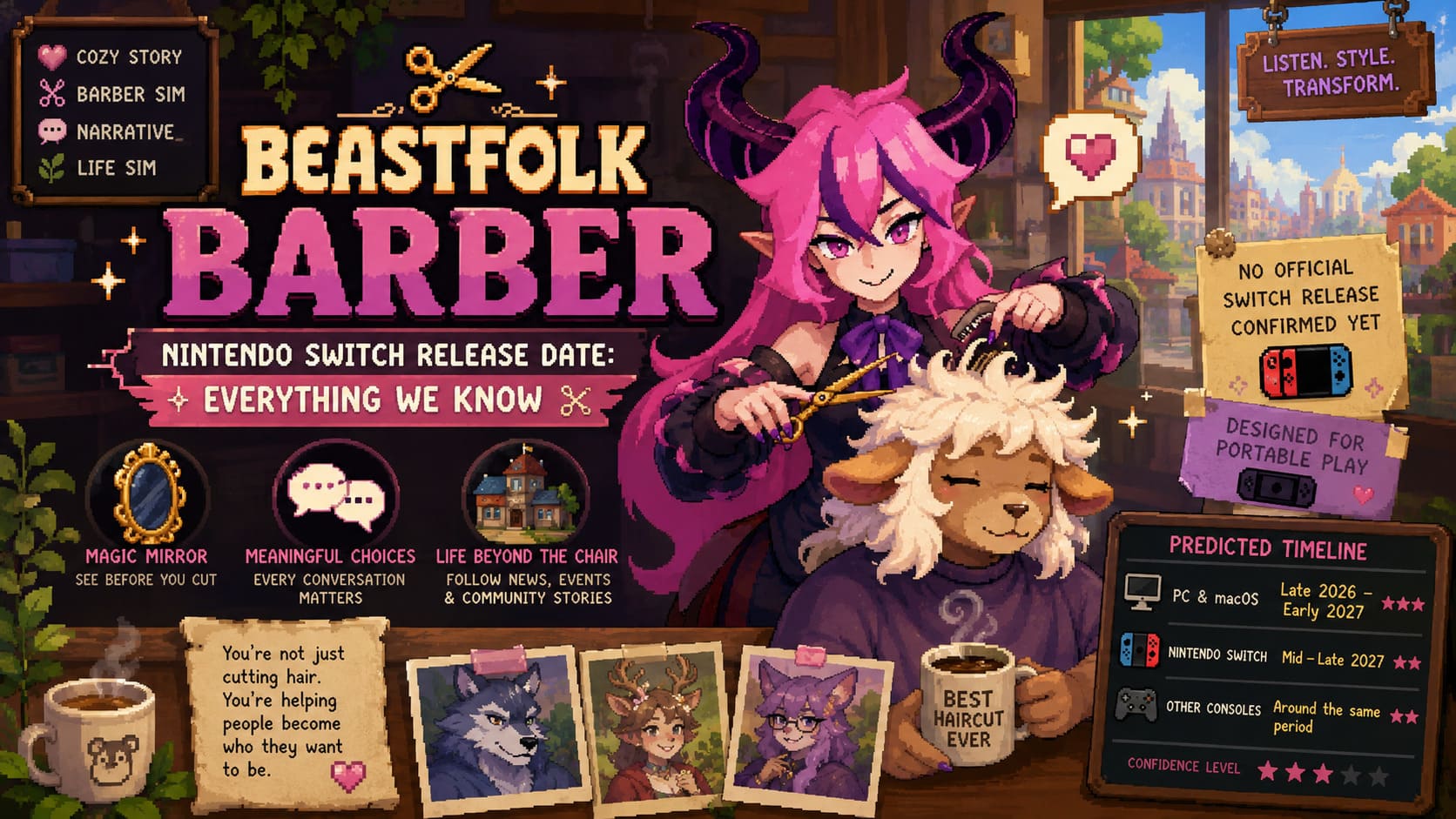
My Prediction for the Nintendo Switch Release
Based on the current development stage, I believe the most realistic scenario looks something like this.
| Platform | Estimated Release Window | Confidence |
|---|---|---|
| PC & macOS | Late 2026 or Early 2027 | High |
| Nintendo Switch | Mid to Late 2027 | Medium |
| Other Consoles | Around the same period | Medium |
Could it arrive earlier? Absolutely.
Could it skip directly to Nintendo’s next hardware generation? That’s also possible if development stretches longer than expected.
Still, judging by how indie studios usually handle ports, mid-to-late 2027 feels like the safest prediction rather than wishful thinking.
Why Beastfolk Barber Feels Built for Portable Gaming
I’ve played plenty of cozy games on both PC and Switch, and there’s something about Nintendo’s handheld format that completely changes the experience.
Games built around conversations, short gameplay sessions, and relaxing progression naturally fit portable play. They’re perfect for relaxing before bed, playing during a lunch break, spending twenty quiet minutes after work, or continuing a story without committing several hours.
Beastfolk Barber seems designed around exactly that rhythm. Instead of rushing players with endless combat encounters or complicated crafting systems, the game encourages observation. You meet customers, learn about their lives, understand their emotions, and then carefully create a hairstyle that reflects who they truly want to become.
That’s a refreshing gameplay loop in an industry where ‘more action’ often becomes the default solution.
More Than Just Cutting Hair
At first glance, Beastfolk Barber almost sounds like a joke.
‘A barber simulator?’
That was honestly my first reaction.
Then I looked closer.
You’re not simply trimming hair or grooming fur. Every haircut becomes part of an ongoing conversation. Every style choice influences how customers see themselves, how others react to them, and even whether they’ll trust you enough to return.
That instantly makes the gameplay much more interesting than another management simulator.
Freddie—the main character—doesn’t solve problems with swords, magic spells, or giant explosions. He listens. Oddly enough, that’s something gaming doesn’t explore nearly enough.
The Magic Mirror Changes Everything
One mechanic immediately stood out to me.
Freddie inherits a mysterious mirror from a late friend. Instead of blindly experimenting with a customer’s appearance, the mirror briefly reveals what they’ll look like before the scissors ever touch their hair.
It’s a clever gameplay idea because it transforms styling into something closer to reading emotions than simply following instructions.
The catch? The mirror can’t be used endlessly.
Its limited previews force players to pay attention during conversations. You have to notice tiny details, understand hidden feelings, and figure out what someone truly wants instead of taking every word at face value.
That’s exactly the kind of subtle mechanic that keeps narrative games engaging.
Building Relationships Instead of Grinding Levels
One thing I appreciate about Beastfolk Barber is that progression isn’t built around collecting increasingly bigger numbers.
You’re building trust.
Happy customers continue their personal stories.
Disappointed customers may never return.
That immediately creates emotional consequences for every decision without relying on artificial difficulty.
I’ve always preferred systems where relationships matter more than experience bars, and this game seems to lean heavily into that philosophy.
Life Outside the Barber Chair
Another feature I found surprisingly interesting is everything that happens after closing time.
Instead of simply ending each day, players continue interacting with the city by checking:
- Neighborhood news.
- Local social media.
- Community events.
- Festivals.
- Public discussions.
These aren’t just decorative world-building elements.
Following what’s happening around town unlocks new conversation topics, gives additional context about returning customers, and helps you better understand the community you’re serving.
Little details like these often separate good narrative games from unforgettable ones.
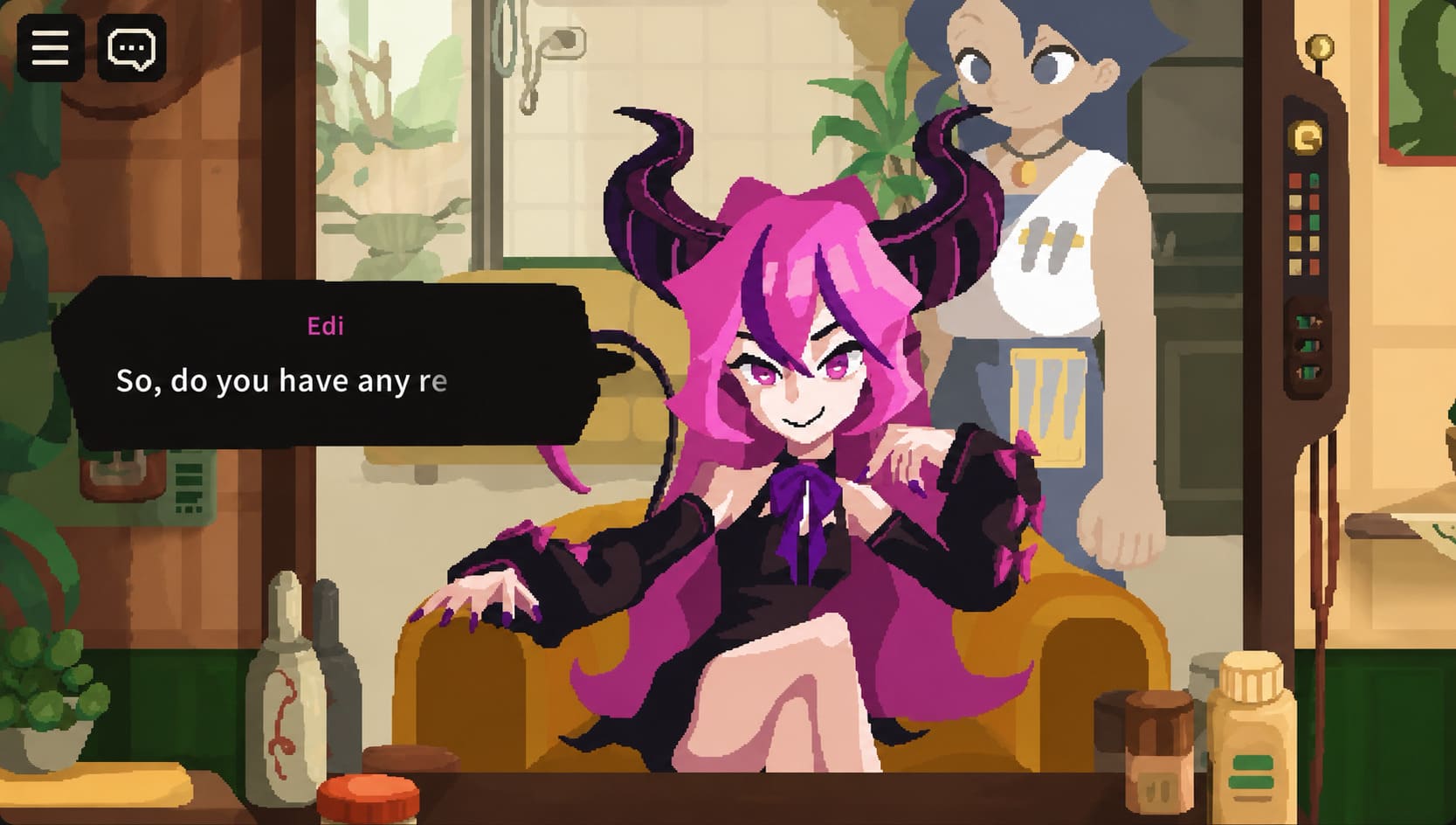
Gorgeous Pixel Art with Personality
Pixel art has become incredibly common in indie gaming over the last decade. Unfortunately, not every pixel-art game actually uses that style well.
From everything shown so far, Beastfolk Barber avoids feeling generic.
Its colorful streets, expressive character portraits, cozy interiors, and carefully animated customers all have their own personality. The anthropomorphic designs never feel gimmicky—they support the world’s themes about identity, belonging, and self-expression.
Pair that with a relaxing soundtrack, and it’s easy to understand why early demo impressions have been so positive.
Why Cozy Games Continue to Grow
The success of cozy gaming isn’t an accident.
After years filled with massive open worlds demanding hundreds of hours, battle passes, daily missions, and endless multiplayer grinds, many players simply want games that let them slow down.
Beastfolk Barber seems to understand that audience perfectly.
There’s no pressure to optimize every second. No race against online opponents. No complicated competitive meta.
Instead, success comes from empathy, patience, and paying attention to the people around you.
Ironically, those qualities feel far more rewarding than another victory screen.
Should Nintendo Fans Wait?
This is probably the biggest question for anyone interested in the game.
If you own a capable gaming PC and enjoy trying indie titles early, the Steam version will likely be the quickest way to experience Beastfolk Barber once it launches.
However, if you’re someone who almost exclusively enjoys cozy games on handheld devices, waiting for a Nintendo version might actually be worthwhile.
Nothing official guarantees a Switch release yet, but considering the genre, audience, and publishing history, it would honestly be more surprising if the game never arrived on Nintendo hardware.
Final Verdict
After following the game’s development, I genuinely think Beastfolk Barber has the potential to become one of the standout indie narrative adventures of the coming year. It isn’t trying to compete with giant AAA releases, and that’s exactly what makes it interesting. The combination of heartfelt conversations, meaningful choices, beautiful pixel art, and relaxing management mechanics creates something that already feels distinctive in an increasingly crowded indie market.
For now, Nintendo Switch players will have to remain patient while the developers focus on completing the PC release. If that launch is successful—and early impressions suggest it could be—there’s every reason to believe console versions will eventually follow. Until then, Beastfolk Barber remains one of the cozy games I’ll be watching most closely.