Desynced 1.0 Review 2026: Automation Strategy Masterpiece?
For years, automation fans have argued about which game truly defines the genre. Some swear by Factorio for its endless conveyor-belt optimization. Others prefer the massive 3D worlds of Satisfactory.
But with the full 1.0 launch of Desynced on March 5, 2026, a new contender has firmly planted its flag in the automation landscape—and it’s doing things very differently.
After spending dozens of hours with the full release, I can confidently say this: Desynced isn’t trying to replace traditional factory builders—it’s reinventing them.
Instead of belts, pipes, and rigid production lines, the entire system runs on programmable drones and modular machines. It feels part automation sandbox, part RTS experiment, and part programming playground.
And honestly? It’s one of the most fascinating factory games I’ve played in years.
A Factory Game Without Conveyor Belts
Let’s start with the thing that shocks most players the first time they boot up the game.
There are no conveyor belts. None.
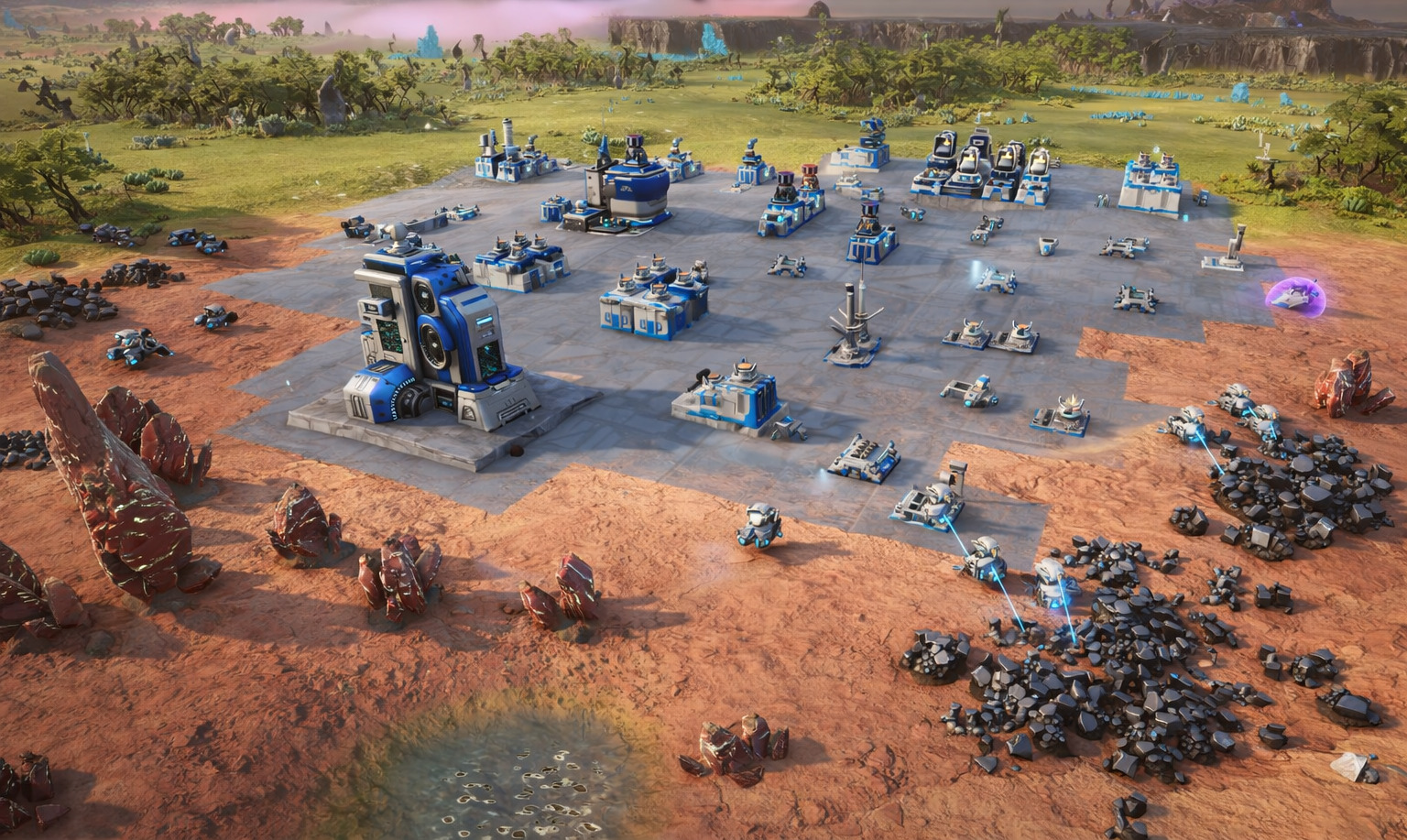
Instead, every part of your base operates through a network of worker bots that transport resources dynamically. This completely changes the way you think about automation.
In games like Factorio, you typically build long lines of belts feeding massive production chains. In Desynced, the focus shifts toward logistics programming and smart task distribution.
Your base becomes a living system rather than a fixed assembly line.
| Traditional Factory Game | Desynced Approach |
|---|---|
| Conveyor belts transport materials | Drones carry resources dynamically |
| Fixed production lines | Flexible modular stations |
| Static layouts | Adaptive logistics networks |
This might sound chaotic at first, but once the systems click, it’s incredibly satisfying.
You’re not just building factories. You’re designing automated ecosystems.
Esoteric Ebb Spell Preparation Bug: How to Fix the Altar Freeze, Geometry Glitch Fix
Modular Machines Change Everything
Another standout feature is the modular unit system.
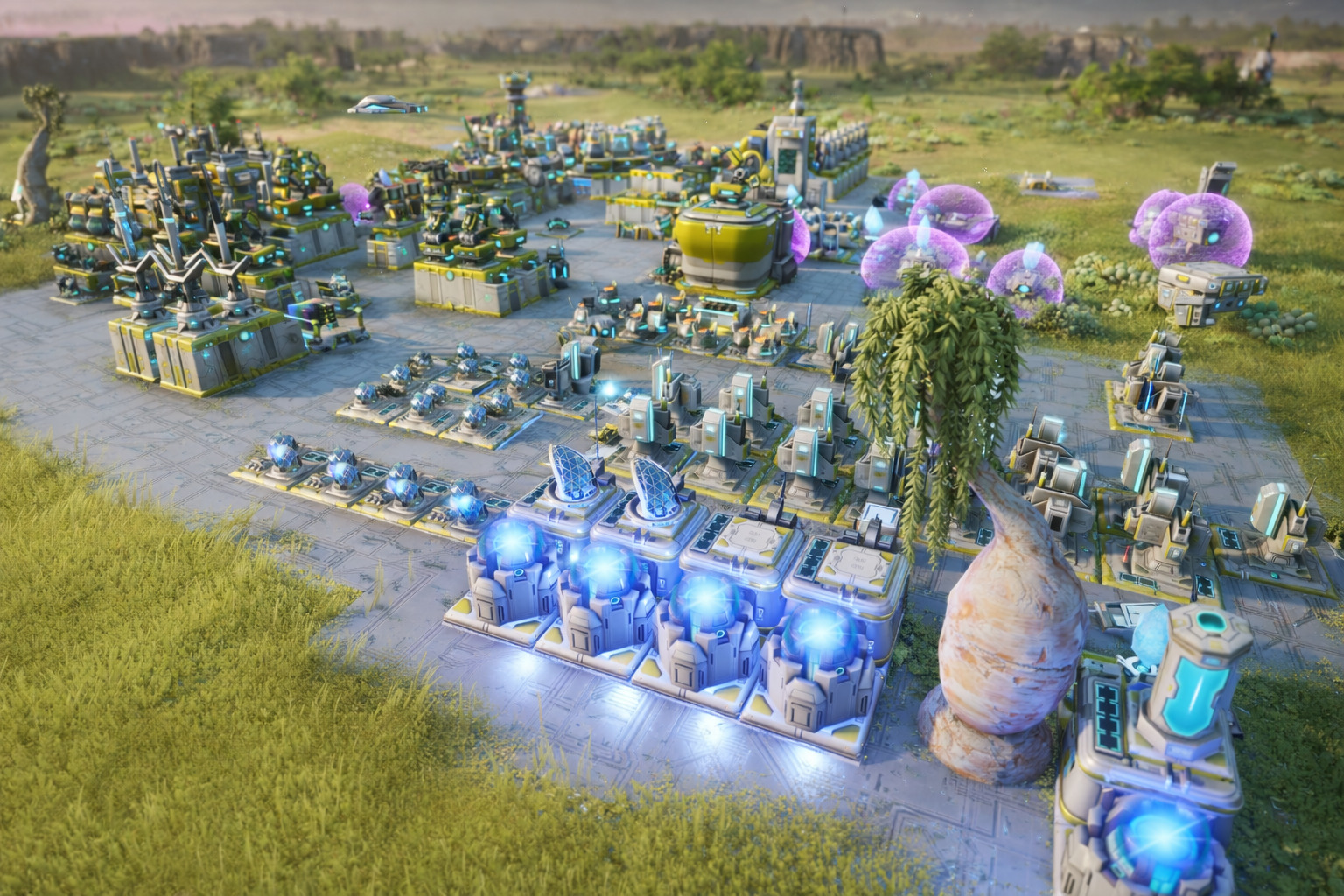
Instead of constructing predefined buildings like “miner” or “scout,” every unit in the game is basically a customizable platform.
You can equip different components such as:
- Mining lasers
- Radar modules
- Storage containers
- Batteries
- Defensive turrets
So one drone might be a resource harvester, while another becomes a mobile logistics carrier.
This flexibility leads to a ton of creative solutions.
Need a long-distance resource pipeline? Build a relay chain of cargo drones.
Exploring dangerous territory? Send scouting bots with radar and shield modules.
The result is a system where player creativity matters more than blueprint efficiency.
Behavior Chips: Automation for the Logic Nerds
Here’s where Desynced goes from interesting to deeply addictive.
Advanced automation uses something called behavior chips—essentially a logic-based programming system that lets you define how units behave.
Think of it as a simplified scripting language for automation.
You can program bots to:
- Automatically mine resources in a region
- Maintain storage levels in your base
- Patrol defensive routes
- Deliver materials only when needed
The beauty of the system is that you don’t have to use it if you don’t want to.
Casual players can stick to basic automation, while more technical players can dive into full-on optimization madness.
If you enjoy tinkering with systems and solving logistical puzzles, Desynced becomes a playground for experimentation.
RTS Elements Add Real Tension
Unlike many factory builders that focus purely on production, Desynced mixes in real-time strategy mechanics.
The world is affected by a mysterious corruption known as the Blight, which introduces hostile creatures and environmental threats.
This means your base isn’t just about efficiency—it also needs defense.
Combat features include:
- Drone squads with weapon modules
- Defensive structures
- Tactical positioning during enemy encounters
It’s not a hardcore RTS like StarCraft II, but it adds enough pressure to keep things exciting.
There’s also multiplayer, allowing players to cooperate on building massive automated colonies or compete in PvP scenarios.
The Story Is Finally Complete
One of the biggest additions in the 1.0 release is the full narrative campaign.
Throughout the game, players uncover the secrets behind:
- The mysterious AI systems
- The origin of the Blight
- The fate of previous expeditions
Story delivery happens mostly through exploration and discovery rather than traditional cutscenes, which fits the genre perfectly.
It gives players a reason to keep pushing deeper into the world instead of just expanding endlessly.
Performance Surprisingly Holds Up
Automation games often collapse under the weight of late-game complexity.
Massive factories can destroy frame rates—even on strong PCs.
But Desynced’s engine holds up surprisingly well.
The optimization improvements in version 1.0 make the game run smoothly even when your base becomes a sprawling drone metropolis. It even performs well on devices like the Steam Deck, which is impressive for a simulation-heavy game.
Strengths and Weaknesses
Here’s a quick breakdown after many hours of play.
What Works Great
- Unique logistics system – Bot-based automation feels fresh and flexible.
- Deep customization – Modular machines allow endless experimentation.
- Smart automation tools – Behavior chips create satisfying logic puzzles.
- Strong performance – Even large bases run smoothly.
Where It Still Struggles
- Steep learning curve – New players may feel overwhelmed early on.
- Late-game balance issues – Some enemy types can feel overly punishing.
- Less visual spectacle – Without belts, factories look less chaotic and dramatic.
Still, none of these issues ruin the experience.
Final Verdict
Desynced 1.0 proves that the automation genre still has plenty of room to evolve.
Instead of copying the formula established by games like Factorio or Satisfactory, it experiments with programmable logistics, modular machines, and RTS strategy.
The result is a game that feels both familiar and completely new.
If you love system optimization, automation puzzles, and experimenting with AI logic, then Desynced might become your next obsession.
It’s not the easiest factory game to learn—but once everything clicks, it’s incredibly rewarding.
And honestly? Watching a swarm of perfectly programmed drones run your entire base is one of the coolest feelings automation games have delivered in years.