Blossom: The Seed of Life Lore Explained – All Lore Fragments, Ancient Ruins, and Humanity’s Fate
When I first booted up Blossom: The Seed of Life, I expected a familiar survival-crafting routine: gather resources, build machines, expand a base, repeat. What I didn’t expect was that somewhere between drilling Martian rock and raising atmospheric pressure, the game would quietly transform into one of the most haunting pieces of environmental storytelling I’ve seen in years.
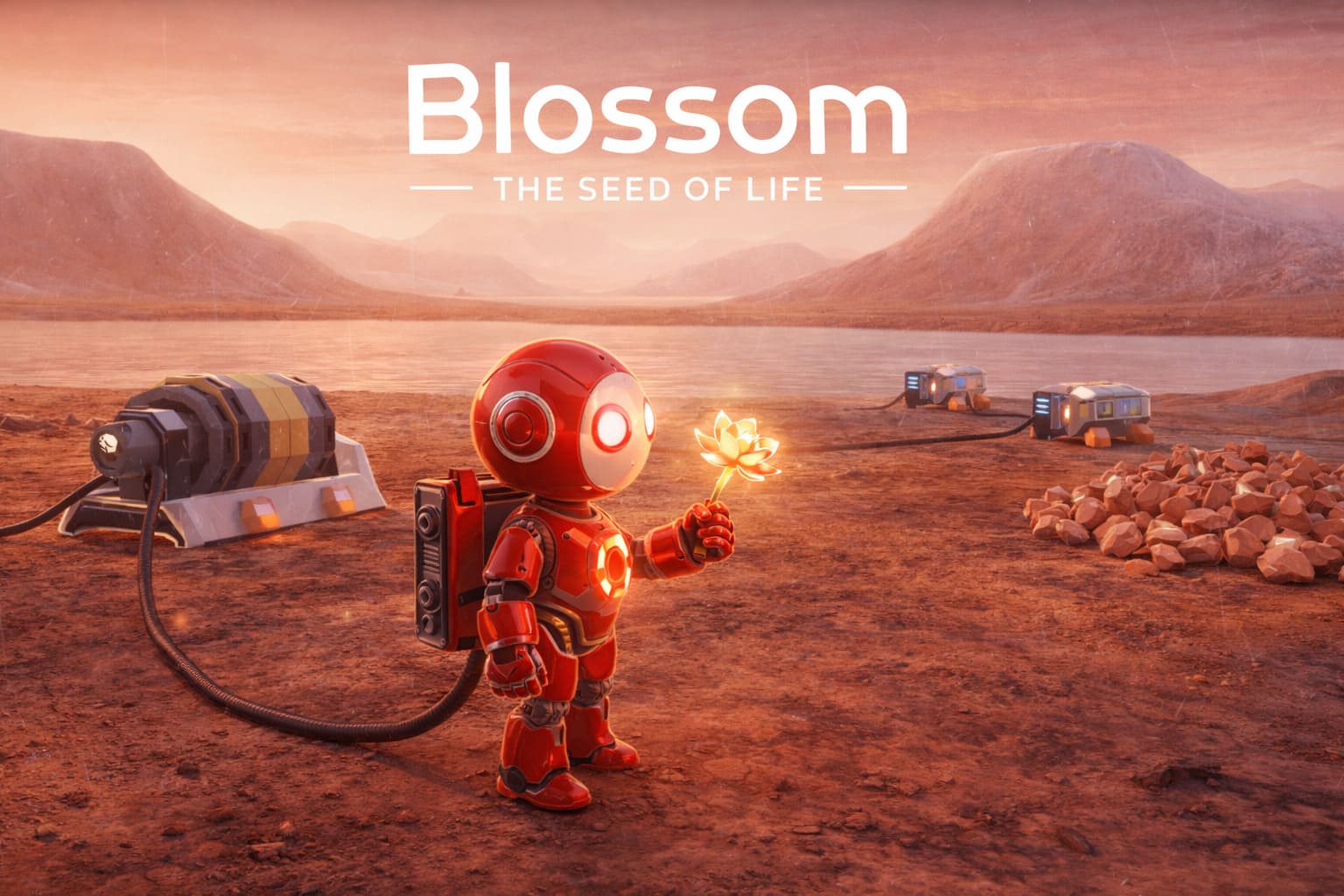
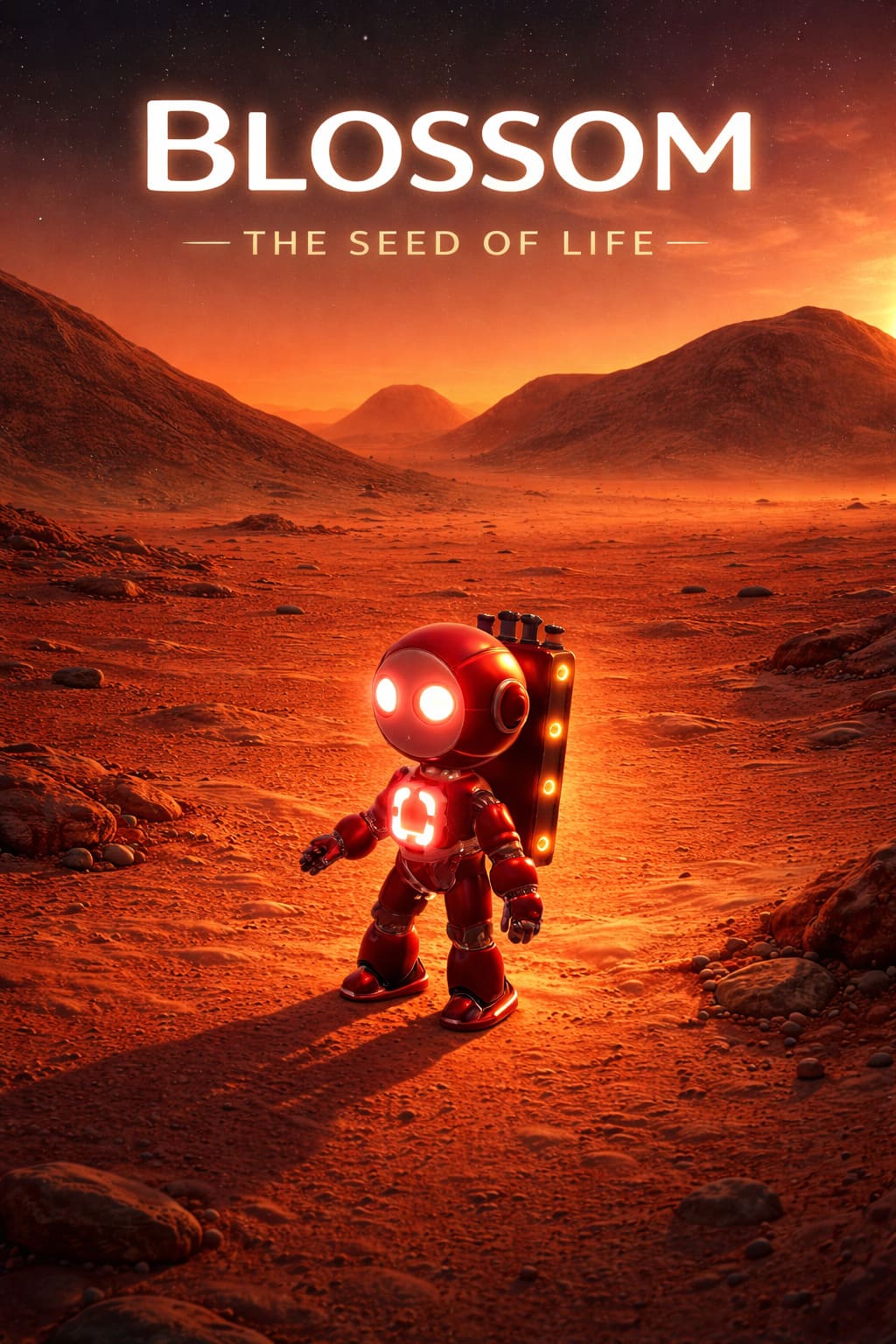
Developed by Pebbledust Games, the game drops players onto a barren Mars as a small modular robot tasked with one impossible mission: bring life back to a dead world.
But the deeper you explore the planet’s ruins, the more you realize this isn’t just a terraforming sandbox. It’s a memorial.
A Survival Game That Slowly Turns Into Archaeology
At first glance, Blossom: The Seed of Life plays like a classic survival-crafting game.
You gather minerals, build infrastructure, manage atmospheric pressure, temperature, and oxygen, and expand your base across the Martian terrain. These systems feel familiar to anyone who has played crafting sandboxes before, but exploration eventually leads you to abandoned human installations scattered across the planet.
Inside these broken outposts lie Lore Fragments — data logs that slowly piece together the fate of humanity.
Instead of traditional cinematic storytelling, the game relies on environmental discovery. You uncover history the same way archaeologists do: one artifact at a time.
And that design choice works brilliantly.
Each fragment feels like stumbling across a message meant for someone who would never come.
Until now.
The Lore Fragments: Humanity’s Last Echoes
The Lore Fragments are the real narrative backbone of the game. They appear in forgotten facilities, research stations, and storage crates that somehow survived Mars’ brutal environment.
What makes them powerful is how small and personal they feel.
Rather than dramatic disaster recordings, many entries focus on quiet memories: scientists remembering Earth’s oceans, engineers writing about environmental collapse, and people reflecting on how humanity only realized the value of their home planet when it was already slipping away.
As you collect more fragments, an unsettling realization begins to form.
Humanity didn’t abandon Mars.
Mars was their last attempt to fix what they had already lost.
Blossom: The Seed of Life vs. The Planet Crafter (2026): Which Terraforming Gem Should You Play?
Where Lore Fragments Are Usually Found
Most fragments are hidden in places players might initially treat as simple resource locations. The more curious you are, the more pieces of the story you uncover.
- Ruined research facilities
- Powered storage boxes containing blueprints
- High-altitude installations
- Submerged structures revealed after ice melts
- Derelict terraforming stations
Players who rush through the game’s progression may miss large parts of the narrative, which is why exploration becomes one of the most rewarding parts of the experience.
Ancient Ruins: Silent Storytelling Done Right
One of the smartest design choices in Blossom: The Seed of Life is how gameplay progression unlocks story locations.
Terraforming Mars is not just a mechanical objective. It physically reveals more of the past.
Raising atmospheric pressure clears the thick Martian haze and suddenly distant structures become visible on the horizon. Increasing the planet’s temperature melts ancient ice caps, revealing submerged bases that had been hidden for centuries. Eventually, advanced vehicles allow players to reach isolated mountain installations where some of the most important story fragments are stored.
The ruins stop feeling like resource points and start feeling like preserved chapters of a forgotten civilization.
Every abandoned structure raises more questions.
Why were humans building so many outposts on Mars?
Were they trying to escape Earth, or rebuild it?
Blueprint Technology: Rebuilding From Humanity’s Remains
Another subtle but clever piece of world-building appears through the blueprint system.
Many machines you craft are not original inventions created by your robot character. Instead, they are recovered human technologies stored inside powered containers scattered across the ruins.
This means the robot protagonist is not inventing tools.
It is recovering humanity’s lost knowledge and repurposing it to rebuild a living world.
That detail reinforces one of the central ideas behind the game: life continues not by replacing the past, but by learning from it.
The Loneliest Protagonist in Gaming?
Unlike most survival games, the protagonist in Blossom: The Seed of Life is completely alone.
Not stranded alone.
Existentially alone.
The robot is framed as the last sentient being left in the galaxy. Humanity is gone. Earth is gone. Mars is simply the first step toward bringing life back.
That sense of isolation quietly shapes the entire atmosphere of the game.
You are not building a base for survival.
You are rebuilding a future that no one else may ever see.
The Community’s “Flower Game” Theory
One of the most interesting discussions appearing in the community, especially on Reddit, is what players call the Flower Game Theory.
The concept suggests that species behave like flowers in a garden. Each one needs neighbors to survive, and ecosystems only stabilize when multiple forms of life grow together.
Interestingly, the mechanics of Blossom: The Seed of Life mirror this philosophy almost perfectly.
To stabilize Mars, players must create a network of interconnected life forms that support each other.
| Stage | Ecosystem Element | Purpose |
|---|---|---|
| Early Terraforming | Algae | Oxygen generation |
| Mid Progress | Flowers | Biodiversity expansion |
| Advanced Phase | Forests | Climate stabilization |
| Late Game | Insects | Pollination systems |
| Endgame | Animals | Complete ecosystem balance |
The message becomes clear as the planet slowly changes.
Life does not survive in isolation.
It survives through connection.
Tips for Finding Every Lore Fragment
Players who want to uncover the full narrative should approach exploration strategically. Some story fragments are easy to miss if you focus only on base-building.
- Raise atmospheric pressure early to clear the Martian haze and reveal distant ruins.
- Monitor temperature progression carefully because melting ice reveals hidden facilities.
- Upgrade to advanced drills quickly to access rare materials like silver and aluminium.
- Always check powered storage boxes since they often contain both blueprints and lore fragments.
Following these steps makes it much easier to experience the entire hidden narrative of the game.
Why This Game’s Story Hits Harder Than Expected
What surprised me most about Blossom: The Seed of Life is how quietly emotional it becomes.
There are no long cutscenes or dramatic speeches.
Instead you are surrounded by empty research stations, fading digital messages, and a silent robot carefully planting the first flowers on a world that has never known life before.
That simplicity gives the story its power.
By the time forests begin appearing across the Martian landscape, you start to understand something important.
You are not simply terraforming a planet.
You are fulfilling humanity’s final wish.
Final Thoughts
In a genre full of grinding resources and optimizing base layouts, Blossom: The Seed of Life manages to stand out by telling a meaningful story without interrupting gameplay.
The deeper you explore Mars, the clearer the picture becomes: humanity failed its first world, and this time a small robot carries the responsibility of giving life a second chance.
And honestly, that premise might make Blossom: The Seed of Life one of the most thoughtful survival games released in recent years.