Who is Charlie Disco? The Tragic Backstory and Lore of Dead as Disco’s Protagonist (2026 Guide)
There’s something oddly magnetic about Dead as Disco. Maybe it’s the way every punch lands perfectly on the beat, or how the neon-soaked world feels like a fever dream stitched together from music history. But if you’ve spent more than an hour with the game, you already know the real hook isn’t just the combat — it’s Charlie Disco. And honestly, I didn’t expect to care this much about a rhythm-brawler protagonist, but the deeper you go, the harder it is to ignore how much personality and mystery is packed into him.
This is not just another lore breakdown. This is a fan’s perspective — someone who actually spent time exploring the game, replaying levels, and paying attention to the small details hidden in dialogue, animations, and environmental storytelling. Because Charlie Disco isn’t just a character you control — he’s a puzzle you slowly piece together.
Who Is Charlie Disco, Really?
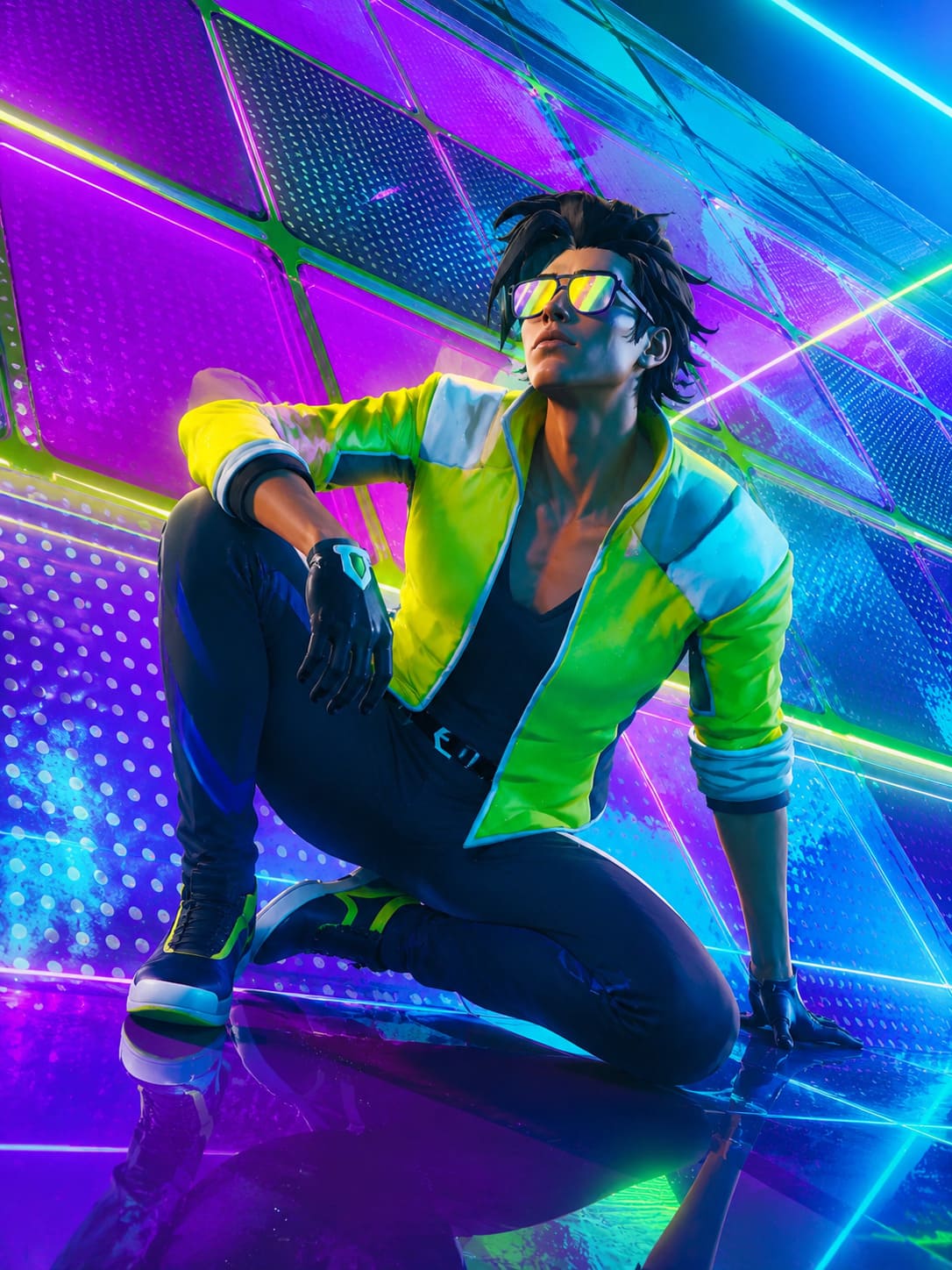
At first glance, Charlie Disco looks like the definition of effortless cool. The yellow jacket, the confident posture, the rhythmic swagger — everything about him screams style. He feels like the kind of character designed to immediately stand out, and he does. But that surface-level charisma hides something much heavier underneath.
Charlie is dead. Not metaphorically, not symbolically — literally. He’s a resurrected drummer, brought back for reasons that are never fully explained upfront. And that ambiguity is exactly what makes him so compelling. He isn’t just trying to defeat enemies; he’s trying to understand why he was given another chance at all.
At his core, Charlie isn’t just driven by revenge. He’s searching for answers, identity, and closure. Every step forward feels like a mix of determination and uncertainty, which makes his journey feel personal rather than purely action-driven.
The Band That Broke the World: Dead as Disco
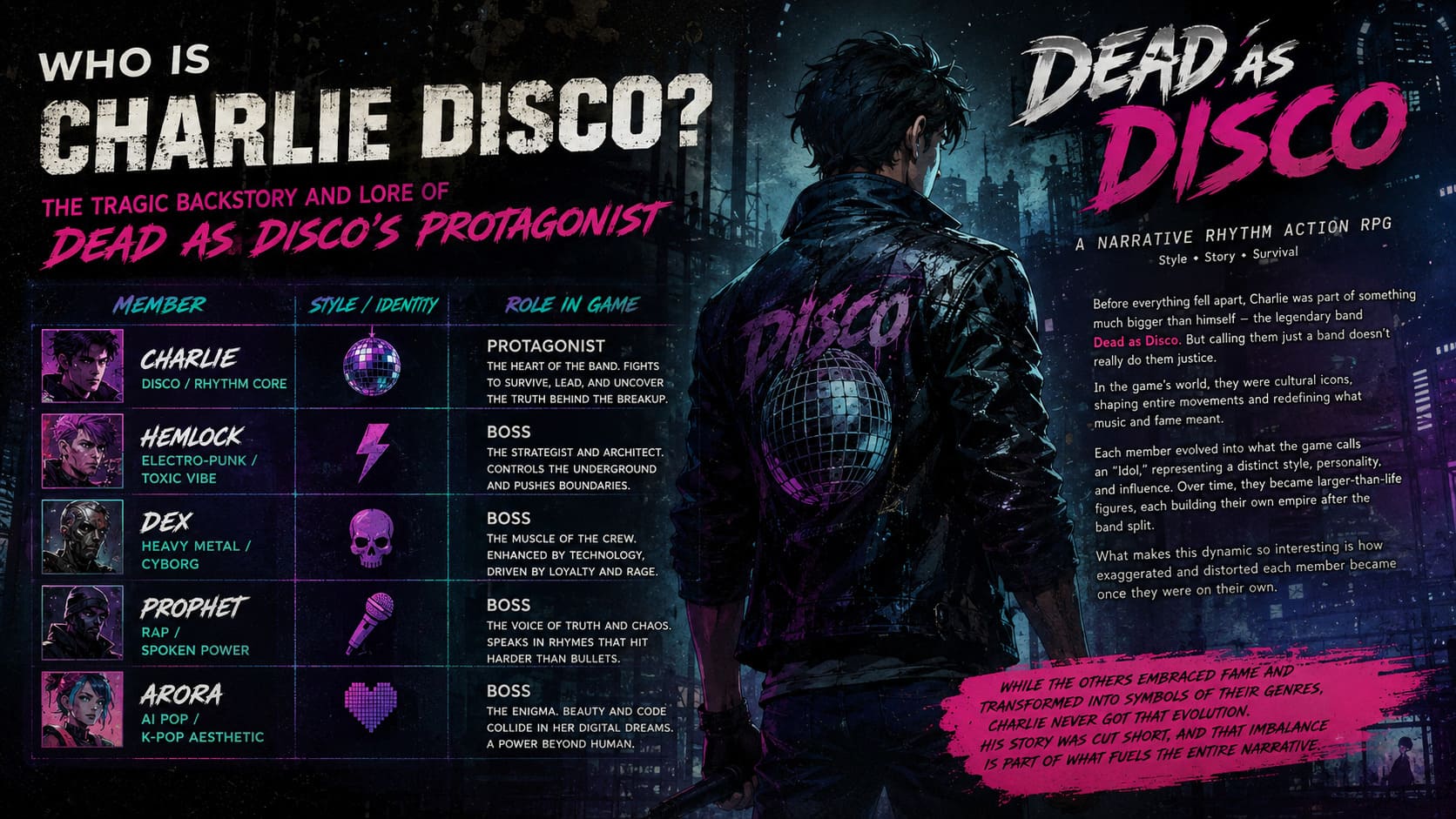
Before everything fell apart, Charlie was part of something much bigger than himself — the legendary band Dead as Disco. But calling them just a band doesn’t really do them justice. In the game’s world, they were cultural icons, shaping entire movements and redefining what music and fame meant.
Each member evolved into what the game calls an “Idol,” representing a distinct style, personality, and influence. Over time, they became larger-than-life figures, each building their own empire after the band split. What makes this dynamic so interesting is how exaggerated and distorted each member became once they were on their own.
| Member | Style / Identity | Role in Game |
|---|---|---|
| Charlie | Disco / Rhythm Core | Protagonist |
| Hemlock | Electro-punk / Toxic vibe | Boss |
| Dex | Heavy metal / Cyborg | Boss |
| Prophet | Rap / Spoken power | Boss |
| Arora | AI pop / K-pop aesthetic | Boss |
While the others embraced fame and transformed into symbols of their genres, Charlie never got that evolution. His story was cut short, and that imbalance is part of what fuels the entire narrative.
The Death That Started Everything
Ten years before the events of the game, Charlie Disco dies under what is officially described as mysterious circumstances. There is no clear explanation, no definitive answer, and that silence becomes one of the most important elements of the story.
The more you play, the more suspicious everything feels. His death conveniently benefits the rest of the band. The group disbands almost immediately afterward, and each member goes on to achieve massive success independently. It doesn’t feel like coincidence — it feels like something deliberate.
This is where the game really pulls you in. You’re not just progressing through levels; you’re constantly questioning what really happened and who might be responsible. The sense of unease grows stronger with each encounter.
Combo Guide: How to Master the Multiplier in Dead as Disco (2026)
Resurrection: One Night, One Chance
Charlie’s return is where the story takes a darker turn. This isn’t a typical resurrection story where a hero comes back stronger and ready to win. Instead, it feels temporary, unstable, and conditional.
The game strongly hints that Charlie made some kind of deal to return. He doesn’t have unlimited time, and his existence seems tied directly to the rhythm that drives the world around him. It creates a constant tension — every moment matters because it might be his last.
This idea of a “borrowed life” changes how you view everything. Every fight, every beat, every interaction feels like part of a countdown. It adds emotional weight to gameplay in a way that few rhythm-based titles manage to achieve.
Style Meets Violence: Character Design That Hits Hard
Visually, Charlie Disco is unforgettable. The yellow jacket alone makes him stand out instantly, but it’s the combination of style and attitude that really defines him. His movements are smooth, almost theatrical, and perfectly synced with the music.
But there’s a clear contrast in how he expresses himself. Outside of combat, he’s relaxed, confident, almost playful. In combat, that energy shifts into something far more intense and aggressive. His finishers feel heavy, emotional, and sometimes even personal.
This duality is what makes his design so effective. He’s both performer and fighter, entertainer and avenger. And the game constantly reminds you that those two sides are inseparable.
Dead as Disco Boss Guide: Tactics and Strategies to Beat Every Idol
Combat as Storytelling
One of the most impressive things about Dead as Disco is how it uses gameplay to reinforce narrative. Combat isn’t just about defeating enemies — it’s about expression, rhythm, and identity.
Every action you take is tied to the beat. If you stay in rhythm, everything flows smoothly and feels powerful. If you don’t, the impact weakens. This creates a direct connection between player performance and character strength.
- Rhythm-based attacks that reward timing and precision
- Combo systems that feel like choreography rather than repetition
- Progression tied to reclaiming identity rather than simple upgrades
The inclusion of custom music through the “My Music” feature adds another layer entirely. Players can bring their own tracks into the experience, effectively turning Charlie’s journey into something personal. It’s a feature that amplifies both gameplay and emotional connection.
Fan Theories That Actually Make Sense
The community surrounding Dead as Disco has been actively analyzing every detail, and several theories have gained serious traction. What makes these theories interesting is that they’re all plausible within the game’s framework.
- Prophet’s Knowledge: Some believe Prophet knew exactly what would happen or even caused it through his reality-shaping words.
- Harmony Corp Conspiracy: Evidence suggests a corporate entity may have orchestrated Charlie’s death to maximize profit and control.
- Accidental Tragedy: A more emotional theory proposes that the band’s internal conflicts led to an unintended outcome.
Each theory adds depth to the narrative, and the game does a great job of never fully confirming or denying any of them, keeping the mystery alive.
Why Charlie Disco Actually Stands Out
In a genre filled with stylized protagonists, Charlie manages to feel different. He isn’t just powerful or charismatic — he’s incomplete. That sense of incompleteness drives his actions and makes his journey more engaging.
He doesn’t start as a fully realized hero. Instead, he rebuilds himself piece by piece, both mechanically and emotionally. His growth feels earned, and his motivations evolve as the story unfolds.
Most importantly, Charlie feels human. Despite the supernatural elements surrounding him, his struggles are grounded in relatable emotions like regret, betrayal, and the need for closure.
Quick Character Breakdown
| Trait | Description |
|---|---|
| Core Identity | Drummer turned resurrected fighter |
| Motivation | Truth, revenge, closure |
| Strength | Rhythm-based combat mastery |
| Weakness | Limited time, emotional burden |
| Theme | Fame, betrayal, identity |
| Symbolism | Music as life force |
Final Thoughts: More Than Just a Revenge Story
Dead as Disco might draw players in with its stylish combat and music-driven mechanics, but it keeps them engaged through its character work. Charlie Disco stands at the center of that experience as a protagonist who feels both larger than life and deeply personal.
He isn’t just fighting enemies — he’s confronting his past, questioning his existence, and trying to make sense of a second chance that might not last. That tension between action and introspection is what gives the game its unique identity.
In the end, Charlie Disco isn’t just a cool character. He’s a reminder that even in the most stylized worlds, the strongest stories come from emotional truth.