Onimusha Way of the Sword Plot Explained: The Full Story of Miyamoto Musashi’s Demonic War
There is something wonderfully old-school about Onimusha: Way of the Sword, even though Capcom has clearly built it for a modern audience.
The combat is faster, the world is bigger, and the presentation is far more cinematic than what we got from the classic Onimusha games. But underneath all of that is the same idea that made the series special in the first place: take real Japanese history, throw it into a blender with demons, cursed weapons, supernatural mythology, and then ask a legendary swordsman to somehow survive the mess.
This time, that swordsman is Miyamoto Musashi.
And honestly? I really like what Capcom does with him.
This isn’t the wise, elderly Musashi we tend to imagine when we hear the name. He’s young, cocky, reckless, argumentative, and almost hilariously obsessed with proving that nobody can beat him with a sword. Then Capcom gives this guy an Oni Gauntlet, basically the one thing he absolutely does not want.
That decision drives almost the entire story.
So, if you’ve finished the game and still have questions about the Onimusha: Way of the Sword plot, Musashi’s relationship with Shizuka, Ganryu’s transformation, Lady Murasaki, or the mysterious Man in White, here’s how I see the full story.
The Story Starts With a Sword Fight
The opening is almost perfect for Musashi.
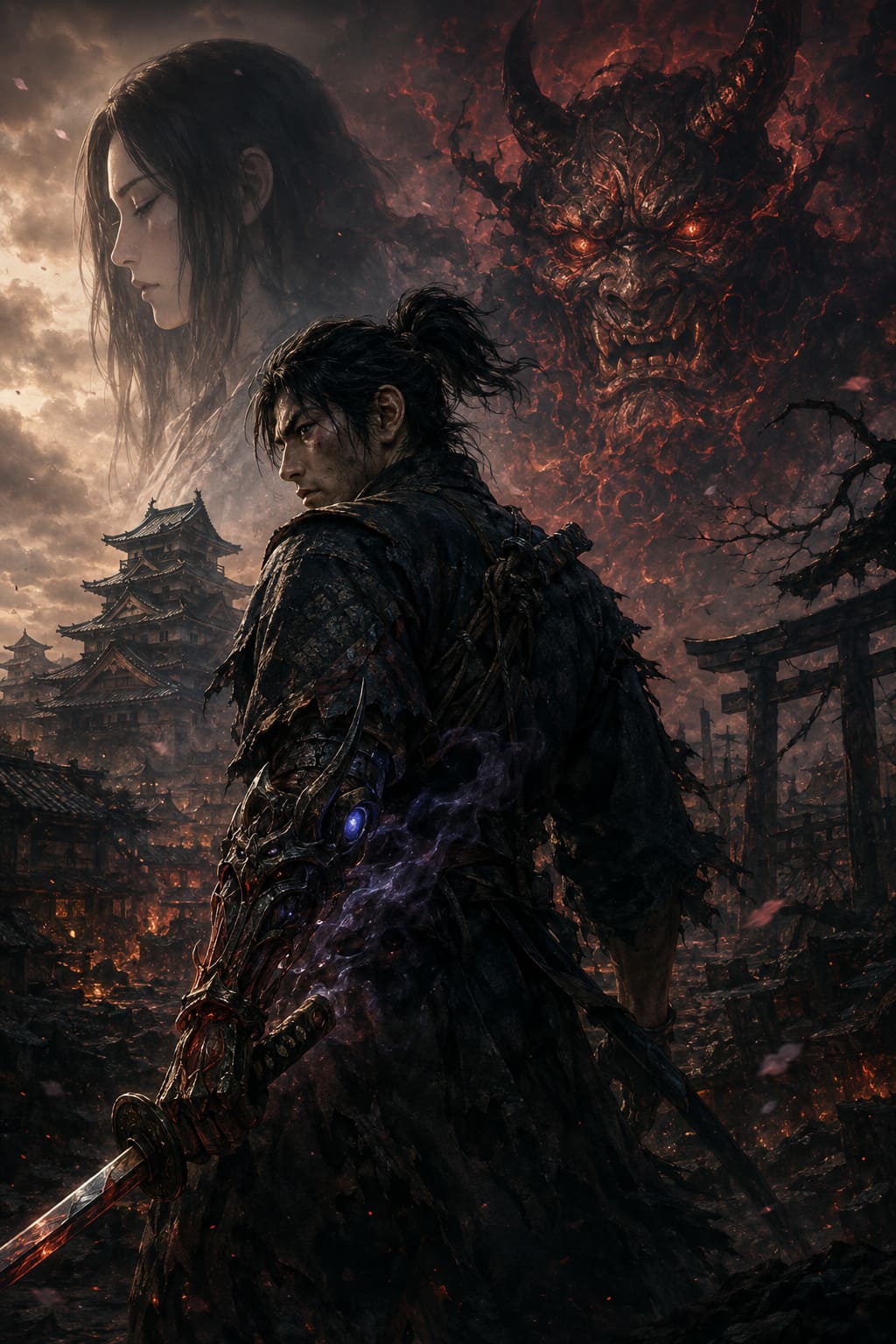
He’s not trying to save Japan. He’s not chasing some grand prophecy. He’s not particularly interested in politics or the problems of ordinary people.
He’s looking for the next great swordsman to defeat.
That search leads him to Sasaki Ganryu, a warrior clearly modeled after the legendary Sasaki Kojiro. The two are essentially walking manifestations of the same obsession: Who is the strongest swordsman alive?
Their confrontation is exactly the sort of dramatic samurai duel you’d expect from Onimusha.
And then the Genma ruin everything.
A massive eruption of Malice descends upon the area, turning what should have been a simple duel into a massacre. Genma creatures swarm the battlefield, and even Musashi and Ganryu—two extraordinarily talented warriors—are eventually overwhelmed.
Both men die.
That’s when the story gets weird.
And I mean that as a compliment.
Musashi Dies… Then Gets Thrown Back Into the World
Musashi awakens somewhere that looks nothing like feudal Japan.
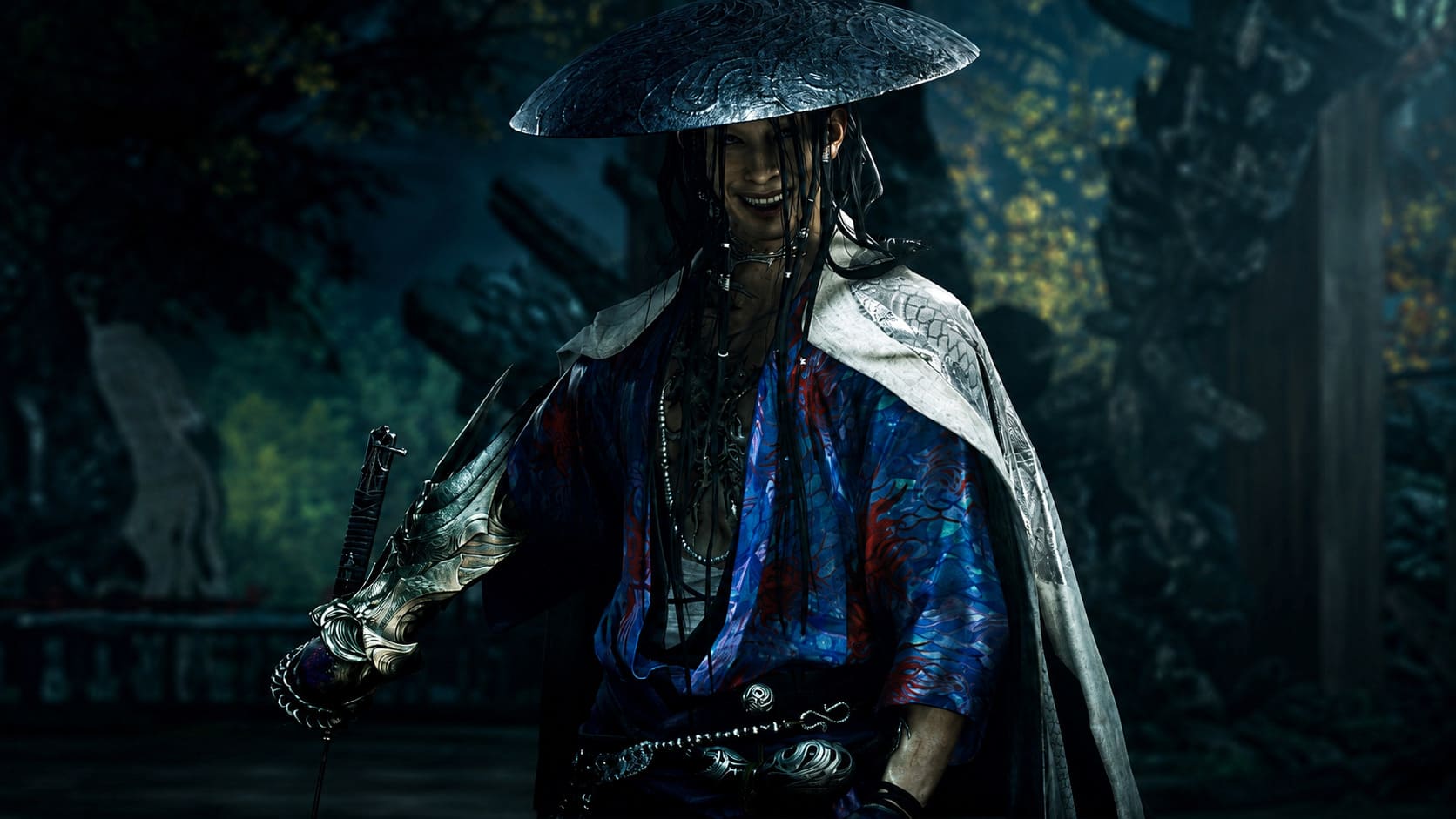
He’s surrounded by an almost completely white, dreamlike void, where he encounters a mysterious figure known as the Man in White.
The character immediately gives off the wrong kind of “god” energy. He’s calm, powerful, and strangely detached from Musashi’s death.
Rather than simply explaining what’s happening, the Man in White resurrects Musashi and gives him an Oni Gauntlet.
There is just one problem.
Musashi absolutely hates it.
And this is one of my favorite parts of the character.
Musashi believes swordsmanship should come from the warrior. His body. His training. His instincts. His steel.
The Oni Gauntlet feels like cheating.
Why spend years becoming the best swordsman alive if a supernatural artifact can simply give you additional power?
So instead of being thrilled about becoming an Onimusha, Musashi spends a significant portion of the story trying to figure out how to get the damn thing off his arm.
That’s a fantastic character hook because it creates an immediate contradiction:
Musashi needs the power he despises.
Shizuka Becomes the Voice in His Head
The Oni Gauntlet isn’t simply a magical weapon.
Inside it is the spirit of Shizuka, a noblewoman whose soul becomes connected to Musashi’s journey.
She serves several purposes throughout the story. She explains the supernatural rules of the world, helps Musashi understand the Gauntlet, and—perhaps most importantly—provides a moral counterweight to his personality.
Musashi is impulsive.
Shizuka is thoughtful.
Musashi wants to win.
Shizuka constantly reminds him that there are people worth protecting.
Their relationship gradually becomes one of the emotional foundations of the game.
The Gauntlet also allows Musashi to absorb the souls of defeated Genma. Those souls can then be used to strengthen his supernatural abilities and weapons.
From a gameplay perspective, that’s obviously useful.
From Musashi’s perspective?
It’s another reminder that he’s relying on something he never wanted.
Kyoto Has Become a Nightmare
Once Musashi returns to the mortal world, he finds Kyoto completely transformed.
The city is being consumed by Malice, a supernatural corruption that has effectively weakened the boundary between the human world and the demonic realm.
The result is exactly the kind of beautiful-but-horrifying setting that Onimusha does best.
Temples and historic locations have become corrupted battlefields. Fleshy growths cover buildings, demons roam the streets, and the remaining population is caught between an invading supernatural army and an increasingly unstable world.
And this is where Musashi’s personal journey starts becoming something bigger.
At first, he wants to survive.
Then he wants to remove the Gauntlet.
Eventually, he starts realizing that Kyoto actually needs him.
That’s an important distinction.
He doesn’t become a hero because somebody tells him he’s destined to be one.
He becomes one because he slowly discovers that being the strongest person in the room means very little if everyone else is dead.
Takamura and the Oni Gate
Musashi eventually encounters Ono no Takamura, an older warrior who has already embraced the life of an Onimusha.
Takamura is basically everything Musashi doesn’t understand yet.
He has accepted the burden.
He doesn’t complain about supernatural power corrupting the purity of swordsmanship. He simply uses what he has to protect people.
And somehow, despite the seriousness of the situation, Takamura has an almost absurdly relaxed attitude toward being an immortal demon hunter.
His answer to why he continues fighting is essentially:
Because it’s fun.
That tells you a lot about him.
Takamura isn’t tortured in the same way Musashi is. He has already found his relationship with the Oni power.
Musashi hasn’t.
Takamura is also responsible for protecting the Oni Gate, the enormous supernatural barrier separating the human world from the Genma’s domain.
Unfortunately, the Malice is destroying that barrier.
If the Oni Gate completely collapses, Kyoto isn’t simply going to have a demon problem.
Humanity could lose the entire war.
Ganryu Comes Back — and He’s Much Worse
One of the biggest surprises in the Onimusha: Way of the Sword story is that Musashi isn’t the only warrior brought back from death.
Ganryu returns too.
But his resurrection takes a very different path.
While Musashi struggles against supernatural power, Ganryu embraces it.
His obsession with becoming the greatest swordsman completely consumes him. Rather than seeing the Genma as enemies that must be destroyed, he sees them as a shortcut to greater strength.
And that’s exactly where his character becomes interesting.
Musashi initially thinks supernatural power makes someone a lesser swordsman.
Ganryu thinks supernatural power makes him an even greater one.
The two warriors therefore become distorted reflections of each other.
Ganryu’s repeated appearances also give the story some of its best confrontations.
He’s not simply another villain standing between Musashi and the final boss.
He’s the version of Musashi that could exist if the young swordsman never changed.
| Character | Belief | Relationship With Power |
|---|---|---|
| Musashi | Strength comes from mastery | Rejects the Oni Gauntlet |
| Ganryu | Strength is everything | Embraces Genma power |
| Takamura | Power is a responsibility | Accepts his Oni abilities |
| Shizuka | Power should protect others | Guides Musashi morally |
Lady Murasaki Is Pulling the Strings
As Musashi and his allies investigate the spreading Malice, they discover that the invasion isn’t random.
Behind it is Lady Murasaki, a mysterious aristocratic figure manipulating events from the shadows.
Her plan revolves around exploiting the suffering and negative emotions consuming Kyoto.
Those emotions help feed Daidara, a gigantic demonic entity that becomes one of the major manifestations of the crisis.
This is where the plot moves from “Genma invasion” to something much bigger.
The demons aren’t simply attacking Kyoto because they want territory.
They’re trying to destroy the spiritual foundations protecting the human world.
The ultimate target is the Oni Gate.
Break it, and the Genma can enter the mortal realm without restraint.
Musashi Finally Understands What the Sword Is For
For me, this is the real heart of the story.
The demon battles are great. The boss fights are spectacular. Ganryu is fun to hate.
But Musashi’s character development is what makes the plot work.
At the beginning, his sword exists almost entirely for himself.
He wants recognition.
He wants victory.
He wants to prove he’s better than everyone else.
But traveling through ruined Kyoto changes him.
He sees ordinary people suffering. He sees what the Genma are doing. He starts caring about Shizuka and the people around him.
Eventually, Musashi realizes something painfully obvious:
Being the strongest swordsman means nothing if there’s nobody left to protect.
And that’s why his relationship with the Oni Gauntlet changes.
He doesn’t suddenly stop disliking it.
Instead, he learns to use it without allowing it to replace his own skill.
That’s an important difference.
Musashi doesn’t surrender his identity to the Oni.
He incorporates the Oni into it.
The Final Battle Against Ganryu
Eventually, Musashi and Ganryu face each other again.
By this point, Ganryu has gone completely down the path of supernatural power.
Their final confrontation is therefore much more than another boss battle.
It’s the conclusion of their philosophical argument.
Ganryu believes power is the destination.
Musashi finally understands that mastery is about knowing why you use your power in the first place.
Musashi wins.
But the victory doesn’t feel like the end of his rivalry.
Ganryu’s final warning makes it clear that something much larger is waiting beyond the Oni Gate.
And, naturally, Musashi has no choice but to keep going.
Lady Murasaki, Daidara, and the Collapse of the Gate
The final section takes Musashi into the heart of the Malice corruption.
The Oni Gate is failing.
The Genma are flooding through.
The supernatural energy surrounding Kyoto reaches its peak.
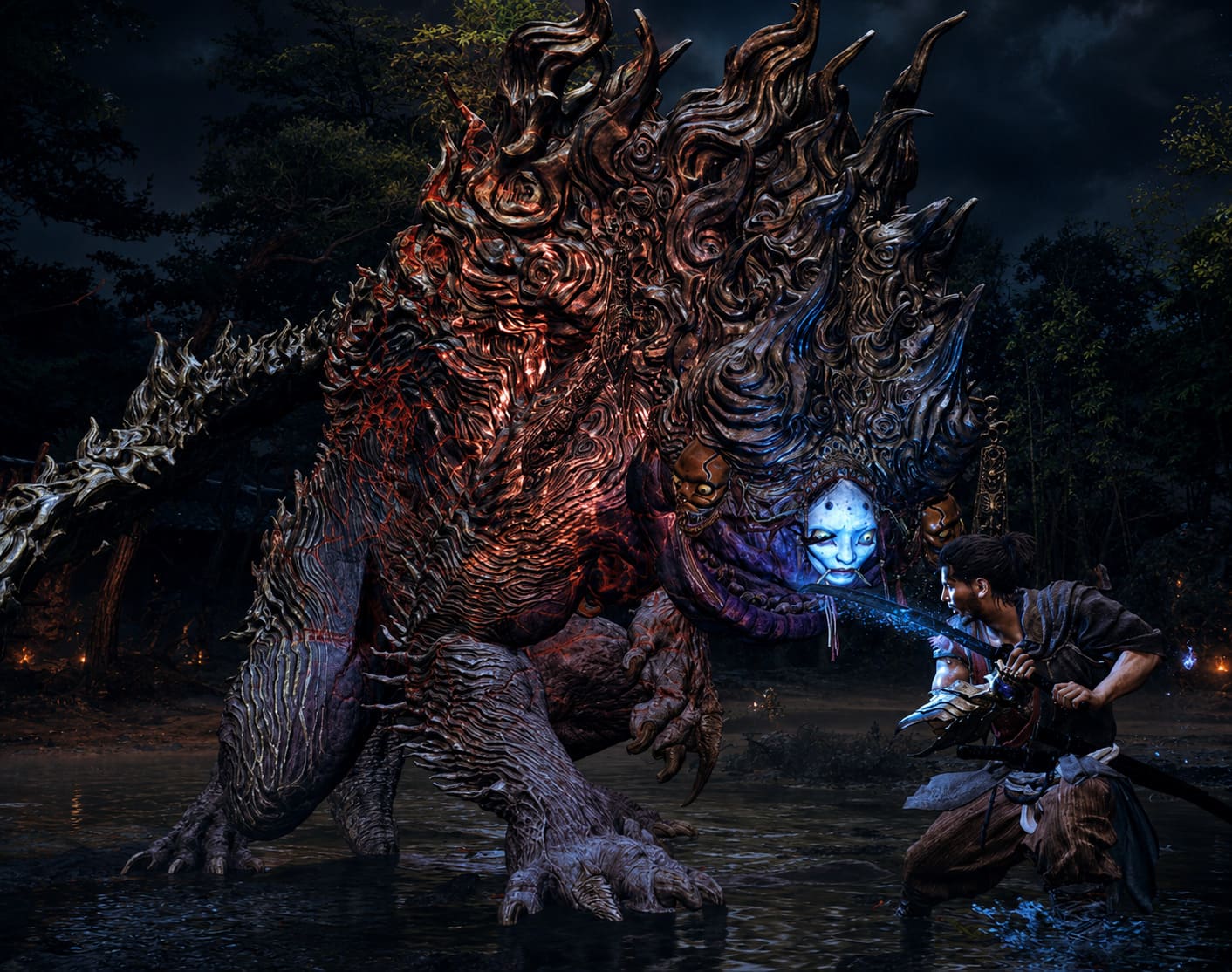
Musashi ultimately faces Daidara, the monstrous entity created through the manipulation of Malice and human suffering.
This is where everything comes together.
Takamura makes his final sacrifice.
Shizuka pushes the Oni Gauntlet to its limits.
And Musashi finally stops fighting against the idea of being an Onimusha.
Instead, he combines his own swordsmanship with the power he once considered a disgrace.
That combination allows him to defeat Daidara and begin purifying Kyoto.
But there is still one mystery left.
The Man in White.
Onimusha: Way of the Sword Ending Explained
The game’s ending is probably the part most players are going to debate.
Remember the Man in White?
The mysterious entity who resurrected Musashi?
Well, he’s not the benevolent supernatural savior you might have assumed.
The Man in White is revealed to be something much more detached and unsettling.
He engineered the events surrounding Musashi’s resurrection as a kind of test.
The conflict wasn’t simply about stopping the Genma.
It was also about discovering whether humanity still had the strength and determination to survive.
In other words, Musashi wasn’t necessarily chosen because he was destined to become a legendary hero.
He was thrown into the fire to see what would happen.
And somehow, that’s even more interesting.
The Man in White sees the struggle from an almost cosmic perspective. Kyoto is just one battlefield in a much larger cycle of conflict between humanity and the supernatural.
Musashi has won.
But the war isn’t necessarily over forever.
What Happens to Shizuka?
The emotional payoff comes after the battle.
With the Malice disappearing and the spiritual balance being restored, the souls trapped between the mortal and supernatural worlds can finally move on.
That includes Shizuka.
Her spirit is released from the Oni Gauntlet.
Her farewell to Musashi is quiet compared with the game’s enormous battles, and I think that’s exactly why it works.
For much of the game, Shizuka was the voice constantly challenging Musashi’s selfish worldview.
By the end, she has helped him become someone capable of making the right choice without needing someone to tell him what to do.
Then she leaves.
It’s bittersweet, but fitting.
The Final Image of Musashi
The game closes with Musashi looking over a restored Kyoto.
The Oni Gauntlet remains on his arm, but its power has gone dormant.
More importantly, Musashi himself has changed.
He started the game wanting to become the greatest swordsman alive.
He ends it understanding that being a great swordsman isn’t really about defeating everyone else.
It’s about what you’re willing to fight for.
And that’s a surprisingly mature conclusion for a character who spends so much of the opening hours being an arrogant pain in the neck.
Onimusha: Way of the Sword Price Comparison – Standard vs Deluxe vs Premium Deluxe Edition
My Take on the Onimusha: Way of the Sword Story
I think Capcom made the right decision by making Musashi such a flawed protagonist.
A more traditional heroic Musashi would have been easy to write, but probably much less interesting. The fact that he actively hates the Oni Gauntlet gives the entire story a central conflict that works on both a character and thematic level.
The Genma invasion gives us the spectacle.
Ganryu gives us the rivalry.
Shizuka gives Musashi an emotional anchor.
Takamura represents the warrior Musashi could become.
And the Man in White gives the ending that slightly unsettling supernatural twist that feels very appropriate for Onimusha.
What I especially appreciate is that Musashi doesn’t become a completely different person overnight. He’s still competitive. He’s still arrogant. He’s still obsessed with swordsmanship.
He simply learns what that strength is supposed to mean.
And honestly, that’s probably the best way Capcom could have handled a character as famous as Miyamoto Musashi.
Onimusha: Way of the Sword isn’t really a story about becoming the strongest. It’s a story about finally understanding why strength matters.
And for a franchise built around samurai, demons, cursed weapons, and ridiculous boss fights, that’s a surprisingly human message.