Blossom: The Seed of Life vs. The Planet Crafter (2026): Which Terraforming Gem Should You Play?
Terraforming games have quietly become one of my favorite subgenres of survival gaming. There’s something incredibly satisfying about landing on a lifeless rock and slowly transforming it into a living, breathing world. In 2026, two titles are dominating that space: The Planet Crafter and the newly released Blossom: The Seed of Life.
Both games revolve around the same core fantasy—turning a dead planet into a thriving ecosystem. But after spending time with both concepts and watching how each approaches terraforming, I realized they’re actually built around completely different philosophies.
If you’re trying to decide which one deserves your time, here’s my honest take as someone who genuinely loves this type of game.
Two Very Different Visions of Terraforming
At first glance, these games might seem similar. You collect resources, build structures, and slowly reshape an alien world. But the feeling of playing them is dramatically different.
| Feature | The Planet Crafter | Blossom: The Seed of Life |
|---|---|---|
| Terraforming Style | Industrial & automated | Manual & ecological |
| Player Character | Human convict | Sentient robot |
| Core Focus | Heat, pressure, oxygen metrics | Biodiversity & ecosystem growth |
| Exploration | Wrecks, caves, ruins | Open world landscapes |
| Vehicles | Limited mobility tools | Modular drivable vehicles |
| Difficulty | Survival-focused | Relaxed, energy-based |
Both games succeed—but they cater to very different player personalities.
The Planet Crafter – Terraforming at an Industrial Scale
Let’s start with The Planet Crafter, which has already built a strong reputation among survival fans.
The premise is simple but effective: you’re a convict sent to terraform a hostile planet as part of a sentence reduction program. It sounds grim, but the gameplay quickly becomes addictive.
Your job is to build machines that gradually increase planetary metrics like:
- Heat
- Atmospheric pressure
- Oxygen levels
At first, the planet looks completely barren. But slowly, things begin to change.
And that’s where the magic happens.
Watching a Planet Wake Up
One of the most satisfying moments in the game is when global changes finally start happening.
You’ll experience milestones like:
- The first rainfall
- The first pools of water forming
- Grass spreading across the landscape
- Insects appearing in the ecosystem
These moments hit surprisingly hard because you worked for them for hours.
Instead of micro-managing nature, you’re essentially running a planetary-scale engineering project.
Automation Becomes the Real Game
Early gameplay is about survival—oxygen, food, water. But later, automation becomes the real focus.
You eventually unlock:
- Drones
- Resource extractors
- Automated logistics
- Massive industrial machines
At that point the game turns into a kind of satisfying terraforming factory simulator.
And honestly? Watching those global numbers climb is weirdly addictive.
Blossom: The Seed of Life – Terraforming Like a Gardener
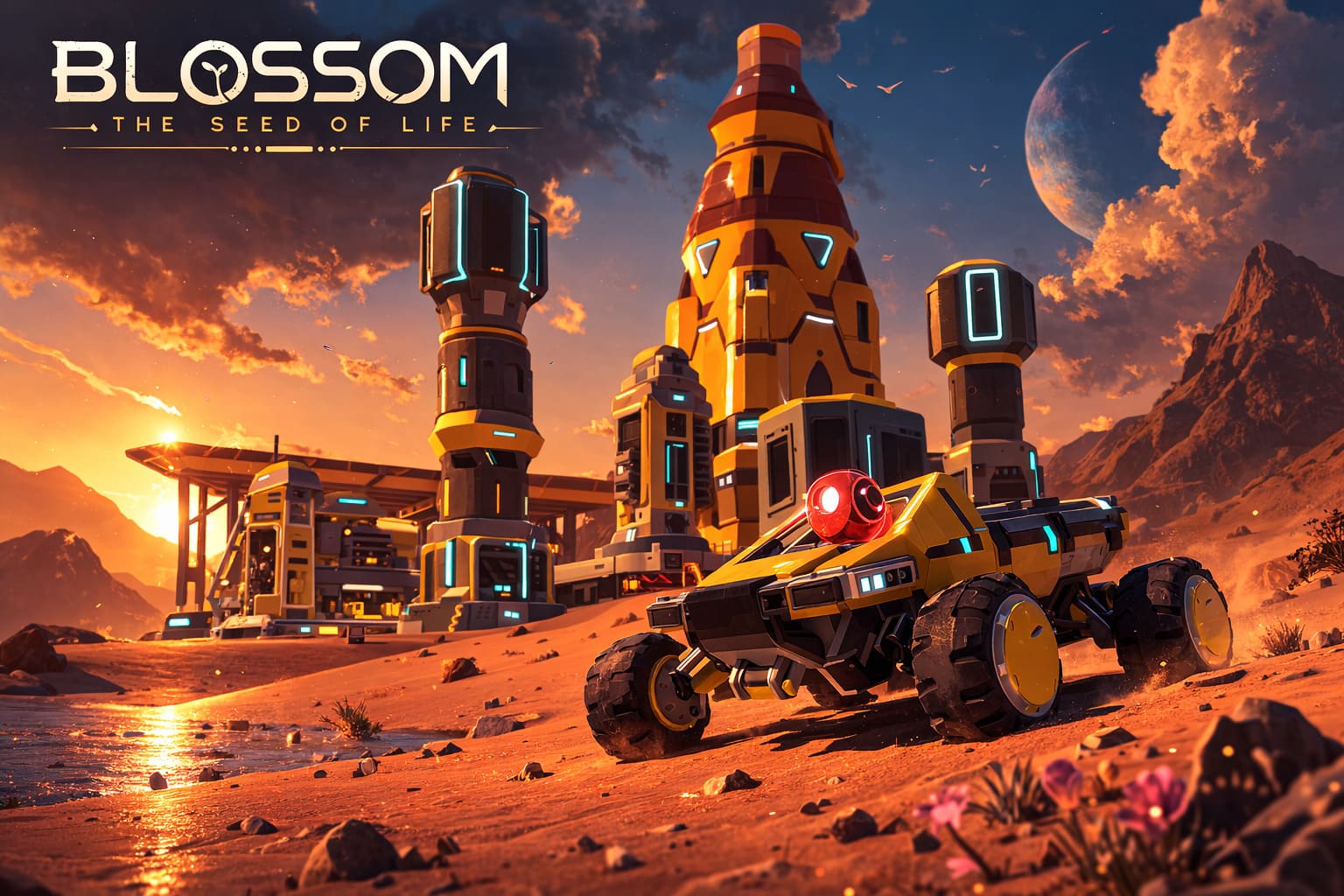
Now let’s talk about the new challenger: Blossom: The Seed of Life, which officially launched on March 9, 2026.
This game takes the exact opposite approach.
Instead of acting like a planetary engineer, you become a caretaker of life itself.
You play as Blossom, a sentient robot tasked with restoring a dead world. And the game focuses heavily on hands-on ecological work.
Terraforming Happens at the Micro Level
In this game, you don’t just drop giant machines and wait.
You actually:
- Prepare soil manually
- Plant individual seeds
- Introduce animals into ecosystems
- Monitor how species interact
Animals aren’t decorative either. They behave realistically—they eat, sleep, hunt, and migrate.
The whole experience feels more like building a living nature reserve than running a construction project.
And that change in perspective makes the game feel very different.
Vehicles and Exploration Feel More Dynamic
Another major difference is movement and exploration.
In Blossom, the developers clearly took inspiration from Astroneer. Movement is smooth and playful, and vehicles are a major part of exploration.
You can build modular vehicles that allow you to:
- Traverse massive environments
- Carry resources
- Expand your mobile base
Instead of teleporters and jetpacks, exploration feels grounded and adventurous.
It makes the world feel bigger.
Tone and Atmosphere: Lonely vs Cozy
One thing I immediately noticed comparing these games is tone.
The Planet Crafter
The atmosphere here feels isolated and mysterious.
While exploring the planet, you’ll find:
- Abandoned bases
- Logs from previous terraformers
- Signs of failed missions
It gives the world a subtle sense of danger—even without combat.
You’re not the first person to try this.
And maybe not the last to fail.
Blossom: The Seed of Life
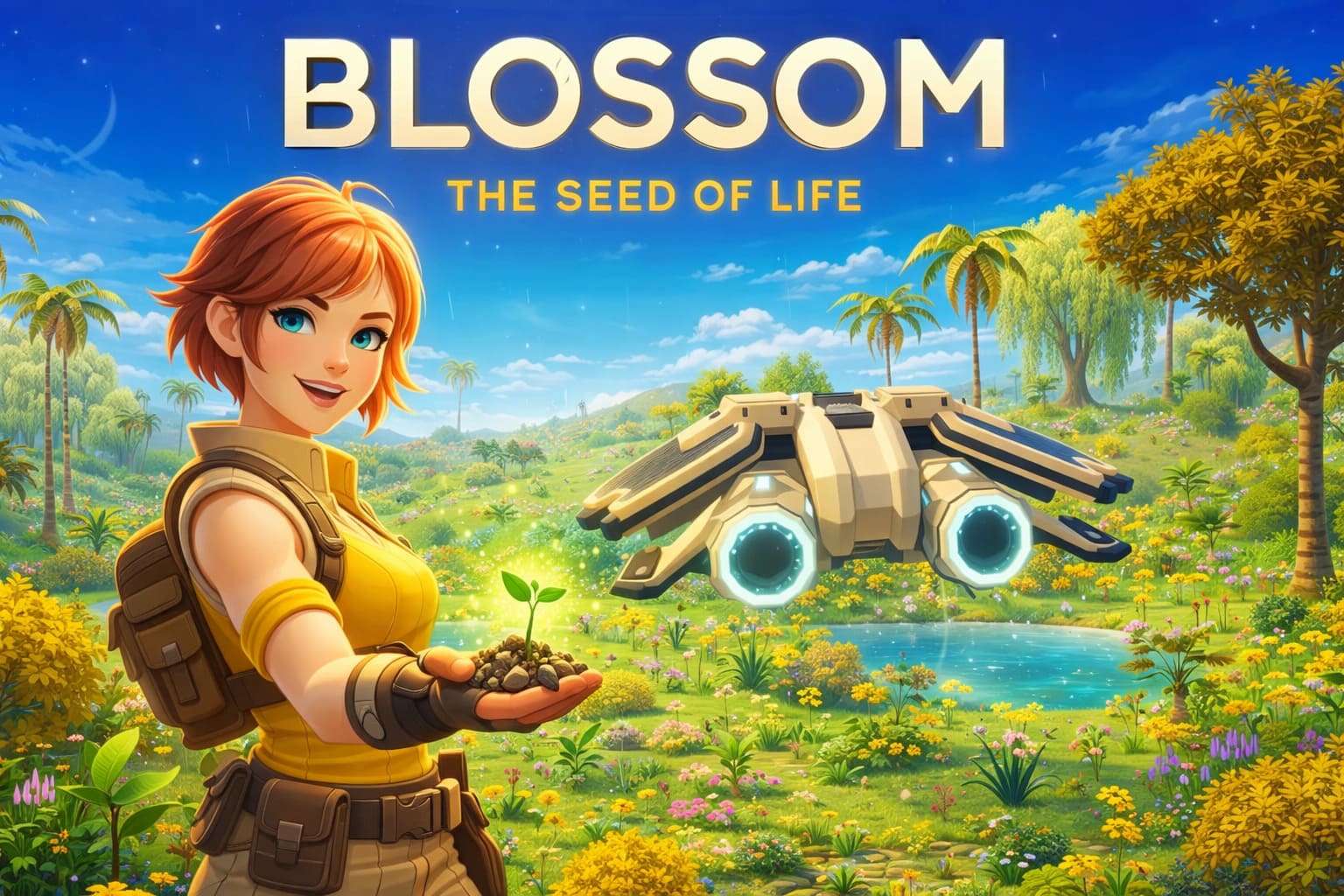
By contrast, Blossom feels almost cozy.
The entire game revolves around restoring life rather than conquering nature.
Instead of industrial machines dominating the landscape, you’re slowly nurturing ecosystems back to health.
It’s calmer. More optimistic.
Honestly, it’s probably one of the most relaxing survival concepts I’ve seen in years.
What’s New in 2026?
Both games are evolving in interesting ways this year.
The Planet Crafter Roadmap
Developers are expanding the game with a live-service style model that includes:
- Quality-of-life improvements
- Additional moons to explore
- A major expansion called Toxicity DLC
This means the game will likely keep growing for years.
Blossom 1.0 Launch Features
The full release includes:
- 6 terraforming stages
- Base-building systems
- Mobile and stationary power hubs
- A Mars-inspired environment
- Full ecological simulation systems
For a fresh launch, it’s surprisingly feature-rich.
My Honest Verdict
If I had to sum up the difference, it would be this:
The Planet Crafter feels like running a planet-scale industrial project.
Blossom: The Seed of Life feels like gardening an entire world.
Both are great—but they appeal to different moods.
Choose The Planet Crafter if you love:
- Watching global progress metrics climb
- Automation and factory systems
- Long-term progression and expansions
Choose Blossom: The Seed of Life if you prefer:
- Hands-on ecological gameplay
- Relaxed survival experiences
- Exploration with vehicles
Personally, I think both games deserve attention.
One scratches the itch for massive planetary engineering, while the other delivers a more intimate connection to nature and life.
And honestly, in a genre full of harsh survival mechanics, having a cozy terraforming game like Blossom might be exactly what the genre needed.