Beastfolk Barber Low FPS Fix: How to Boost Performance on AMD Radeon Graphics
Beastfolk Barber is one of those games that sounded almost too wholesome when I first heard about it. A barber simulator where you cut the hair of anthropomorphic animals while listening to their personal stories? It could have easily turned into another cozy game with nice art but shallow gameplay. After spending years playing everything from management sims and visual novels to heavy RPGs and indie narrative adventures, I’ve learned to keep my expectations in check.
After trying the latest Steam demo, though, I walked away genuinely impressed. Safe Flight Games didn’t simply create another relaxing simulator—they built a game where every haircut has emotional weight. It reminds me of the best parts of character-driven indies without copying them outright. Instead of asking players to constantly chase bigger numbers or endless progression systems, Beastfolk Barber focuses on people, conversations, and the quiet satisfaction of doing a job well.
Beastfolk Barber FPS Guide: How to Unlock Smooth 60 FPS and Fix Performance Lag
A Barber Shop That Feels Like a Real Place
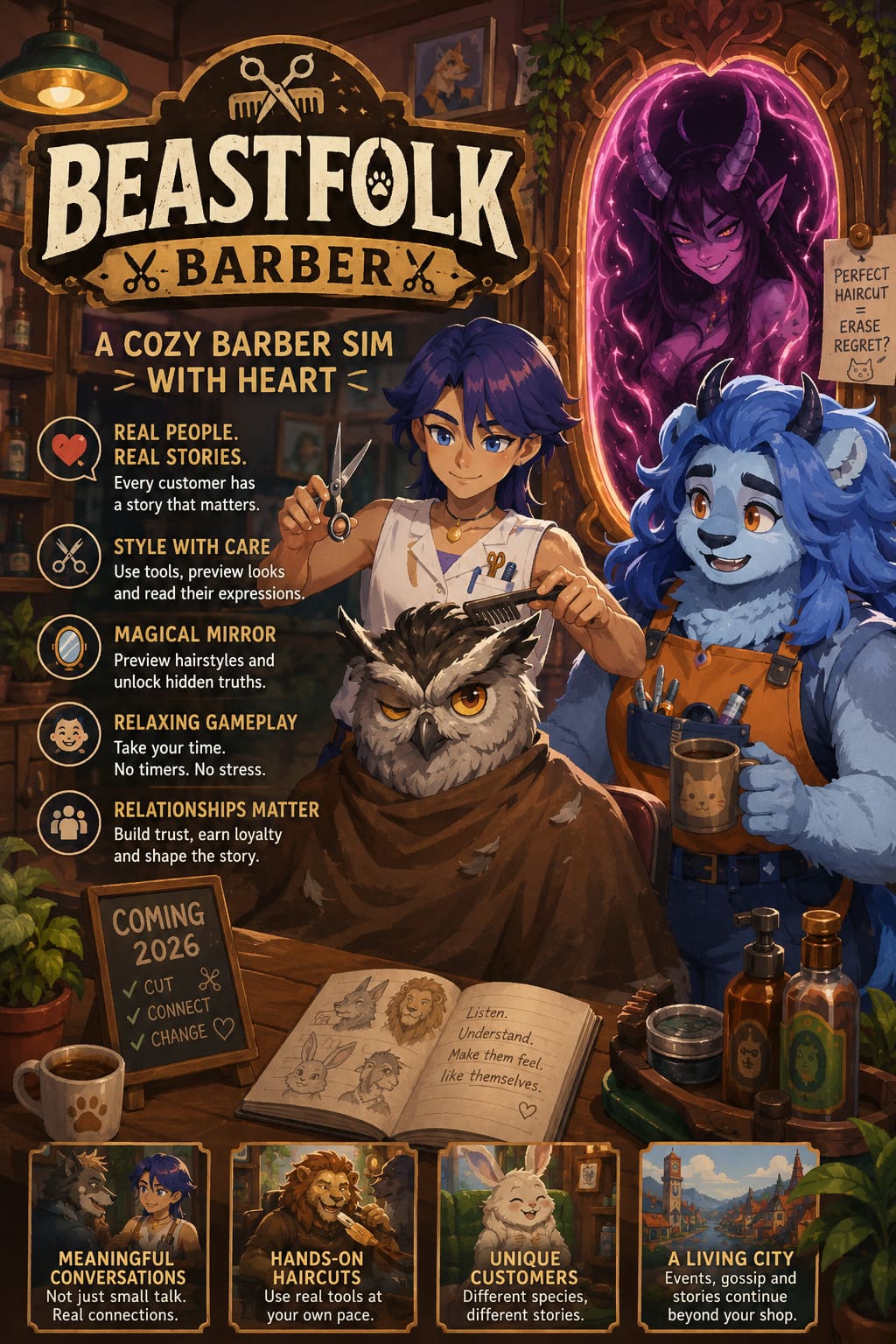
You play as Freddie, a neighborhood barber running a cozy shop in a city where humans and beastfolk live together. That setup immediately opens the door for dozens of interesting characters, but what surprised me is how natural every interaction feels.
Most simulation games eventually fall into repetitive routines. Here, every customer brings something different into the chair. Sometimes it’s excitement before an important event. Sometimes it’s anxiety, heartbreak, workplace stress, or uncertainty about who they really are. The haircut becomes less about changing appearances and more about helping someone feel comfortable with themselves.
I’ve played games where dialogue exists only to unlock rewards. Beastfolk Barber avoids that trap. Conversations don’t feel like checkpoints—they feel like the reason you’re playing.
Cozy Gameplay Without Feeling Empty
The cozy genre has exploded over the past few years, but plenty of titles mistake ‘relaxing’ for ‘boring.’ This game understands that relaxing doesn’t mean removing meaningful decisions.
Your daily routine follows a satisfying rhythm:
- Welcome new customers.
- Learn about their personalities.
- Preview possible hairstyles.
- Cut and style their hair.
- Listen carefully during conversations.
- Close the shop and review the day.
That loop sounds simple on paper, yet it never felt repetitive during my time with the demo because each customer reacts differently.
Instead of rushing you through objectives or bombarding you with timers, the game encourages patience. That’s refreshing in a year packed with competitive multiplayer releases and live-service grinds.
The Magical Mirror Is More Than a Cool Gimmick
One mechanic I wasn’t expecting to enjoy this much is Freddie’s enchanted mirror.
Before making your first cut, you can preview hairstyles using the mysterious mirror created by Freddie’s late friend. The twist is that customers won’t simply tell you whether they love or hate the result. You need to study their expressions, hesitation, and body language.
That tiny mechanic adds an unexpected layer of psychology.
Rather than solving everything through dialogue trees, you’re paying attention to subtle emotional cues. It’s surprisingly immersive, especially because people rarely know exactly what they want from a haircut in real life either.
As someone who’s played countless simulation games, I appreciated that this mechanic asks for observation instead of memorization.
Haircuts Feel Surprisingly Hands-On
The actual styling process is much more interactive than I expected.
Instead of watching progress bars fill automatically, you’re actively using scissors, brushes, clippers, and grooming tools. Better yet, Safe Flight Games wisely avoided Quick Time Events. You’re free to work at your own pace, making the entire experience relaxing instead of stressful.
Different beastfolk species also require different approaches.
A lion’s thick mane behaves nothing like the delicate feathers of a bird character or the soft fur of a rabbit. These aren’t massive gameplay overhauls, but they’re enough to make every appointment feel unique.
That’s exactly the kind of variety I like seeing in simulation games—small mechanical differences that keep familiar systems engaging.
The Story Is Much Darker Than It First Appears
If you only watched the trailers, you might think Beastfolk Barber is simply about running a friendly salon.
It isn’t.
The game’s biggest narrative hook begins when a mysterious demon appears inside Freddie’s mirror. She promises something impossible: create the perfect haircut for her, and she’ll erase Freddie’s greatest regret.
It’s a fantastic setup because it quietly changes your priorities.
You’re no longer cutting hair just to earn money. Every customer, every conversation, and every crafting material might eventually help you prepare for that impossible appointment.
Without spoiling anything, Freddie’s own emotional baggage slowly becomes just as important as the lives of the customers sitting in his chair.
That’s where the writing really shines.
Relationships Matter More Than High Scores
One thing I immediately liked is that customer satisfaction isn’t just another percentage bar.
If someone trusts you, they’ll return.
If they don’t, their story can end differently—or disappear from your shop entirely.
That creates natural consequences without feeling overly punishing.
I’ve always preferred games where relationships develop organically rather than through obvious affection meters, and Beastfolk Barber leans heavily into that philosophy.
Listening carefully matters just as much as making a technically perfect haircut.
Social Media Actually Has a Purpose
After each workday, Freddie checks local social media alongside customer reviews and daily income.
Normally I’d roll my eyes at another fake social feed in a video game.
Here, though, it works.
Posts about neighborhood festivals, local gossip, or updates from recurring customers often provide valuable context before their next visit. It makes the city feel alive because events continue even after your shop closes.
It’s a subtle feature, but one that gives the world surprising depth.
Why The Characters Stand Out
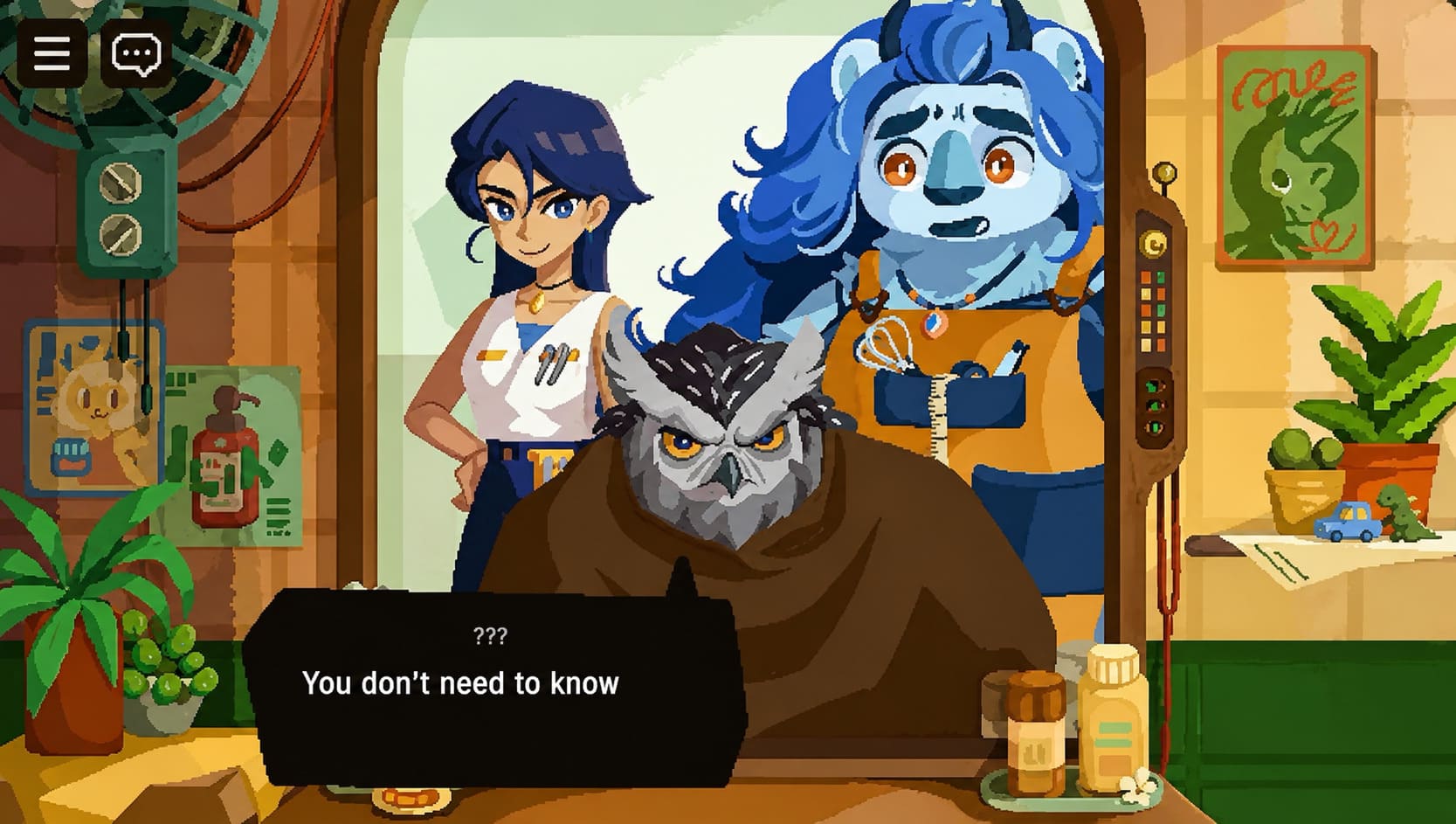
The anthropomorphic cast could have easily become nothing more than cute designs.
Instead, the different animal species naturally reflect real emotional experiences.
Without feeling preachy, the game explores topics like:
- Identity.
- Workplace pressure.
- Family expectations.
- Social prejudice.
- Self-confidence.
- Regret.
A wolf trying to appear less intimidating at work or a sheep struggling to stand out among countless others aren’t simply clever animal metaphors—they become believable people.
That’s the biggest compliment I can give the writing.
I stopped thinking about them as animal characters and started thinking about them as customers I genuinely wanted to help.
Visuals and Audio Create the Perfect Mood
Safe Flight Games clearly understands atmosphere.
The art direction isn’t chasing hyper-realism or flashy effects. Instead, it embraces soft colors, expressive animations, and detailed environments that make the barber shop feel welcoming.
The acoustic soundtrack deserves special praise.
Rather than demanding your attention, it quietly supports every conversation. It’s the kind of music that disappears into the background until you realize how much it contributes to the overall mood.
For a cozy simulation game, that’s exactly what you want.
What I Loved Most
Some features stood out immediately during my playtime:
- Meaningful conversations instead of filler dialogue.
- Relaxing gameplay with no unnecessary pressure.
- Distinct customers that feel memorable.
- Interactive haircut mechanics that reward observation.
- Excellent atmosphere supported by music and visuals.
None of these ideas are individually revolutionary, but together they create something that feels surprisingly fresh.
A Few Things I’m Curious About
| Feature | My Early Impression |
|---|---|
| Story pacing | Excellent in the demo, hopefully remains consistent. |
| Character variety | Very strong opening cast. |
| Haircut mechanics | Relaxing and enjoyable. |
| Replay value | Depends on branching storylines. |
| Long-term progression | Still difficult to judge from the demo. |
These aren’t criticisms as much as things I’m eager to see answered in the full release.
Final Thoughts
After playing hundreds of indie games over the years, I’ve become skeptical whenever a new cozy title gets labeled as ‘the next big thing.’ Too often, beautiful visuals hide repetitive mechanics or forgettable storytelling.
Beastfolk Barber doesn’t feel like one of those games.
It succeeds because it remembers that simulation games don’t need giant open worlds or endless crafting systems to stay interesting. Sometimes all you need is believable writing, satisfying mechanics, and characters worth caring about.
If the full release maintains the quality shown in the Steam demo, I genuinely believe Beastfolk Barber has a chance to become one of the standout indie games of 2026. It’s thoughtful without being slow, emotional without becoming melodramatic, and relaxing without ever feeling empty.
As someone who’s spent countless hours playing everything from management simulators to narrative adventures, I wasn’t expecting a cozy barber simulator to become one of my favorite demos of the year—but here we are. Sometimes the smallest indie projects end up leaving the biggest impression.