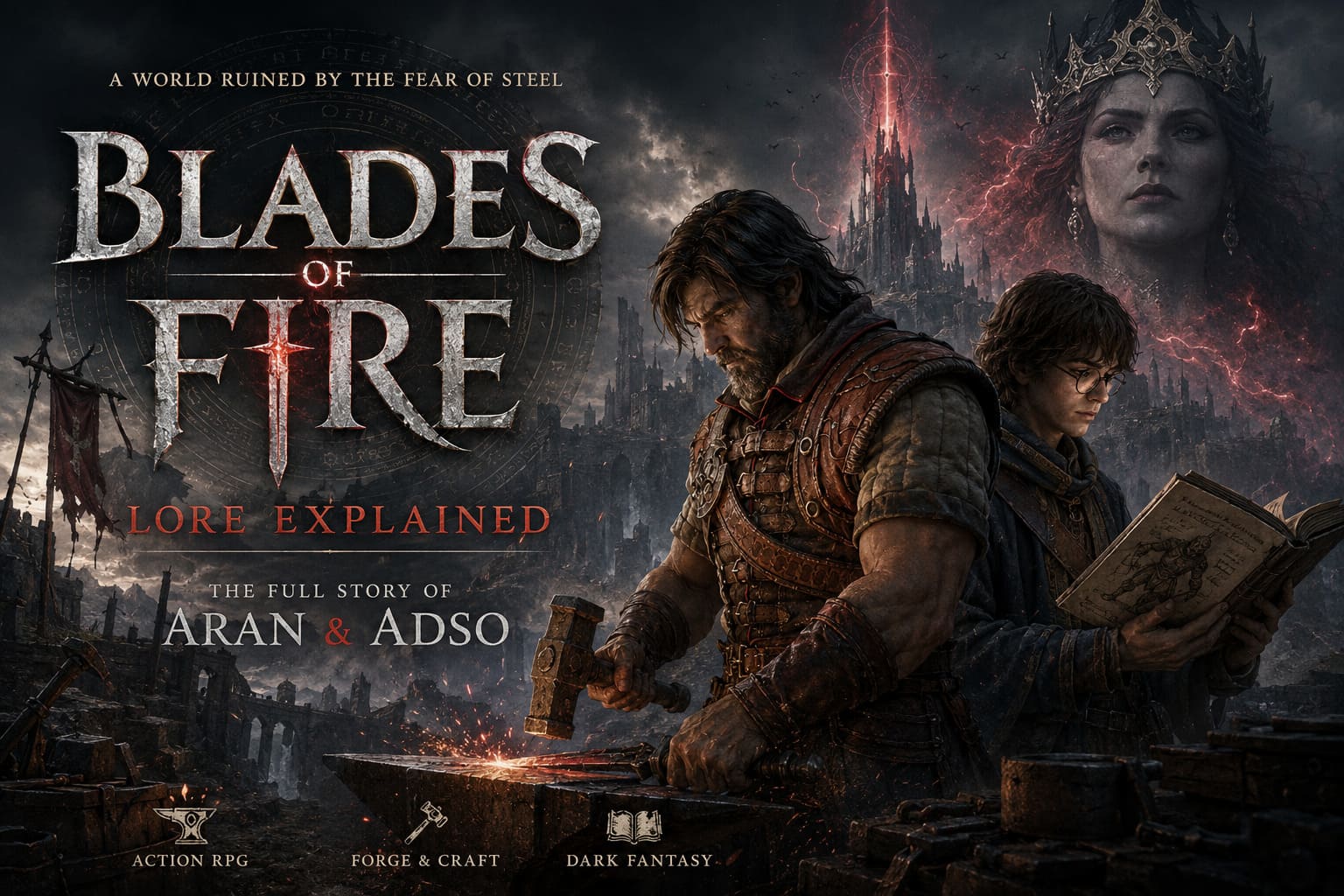
Blades of Fire Lore Explained: The Full Story of Aran and Adso
When people talk about modern dark fantasy RPGs, the same names always dominate the conversation. Everyone brings up massive open-world giants, endless Soulslike clones, or cinematic action games that spend more time in cutscenes than actual gameplay. But after finally diving deep into Blades of Fire following its massive Version 2.0 overhaul, I genuinely think this game deserves way more attention than it got at launch.
Back in 2025, a lot of players skipped it entirely because of the Epic Games Store exclusivity. That hurt momentum badly. But the 2026 Steam release changed everything. Suddenly Reddit threads exploded with lore theories, YouTube creators started breaking down hidden dialogue, and players realized there was something special buried underneath the rough edges.
And honestly? They were right.
What makes Blades of Fire stand out is that it trusts the player. The game never stops every fifteen minutes to explain itself. There are almost no intrusive quest markers, barely any forced exposition, and entire pieces of lore can be missed if you’re not paying attention. That design choice alone makes the world feel more authentic than most modern RPGs.
At the center of it all is the relationship between Aran de Lira and Adso de Zelk, two characters who slowly became one of my favorite duos in fantasy gaming.
A World Ruined by the Fear of Steel
The core concept behind Blades of Fire is incredibly simple, but the execution gives it real weight.
In this world, steel represents freedom, power, and human progress. Long ago, divine beings known as The Forgers gave humanity the knowledge of metallurgy. Steel allowed civilization to rise. Kingdoms were built around it. Armies depended on it. Entire cultures were shaped by the forge.
Then Queen Nerea destroyed everything.
After taking the throne following her father’s death, Nerea unleashed a magical curse across the continent. The spell transforms enemy steel into stone the moment it’s used against her rule. Swords crumble. Spears shatter. Resistance becomes impossible.
That single idea changes the entire atmosphere of the game.
Most fantasy RPGs are about gaining stronger weapons. Blades of Fire turns weapons themselves into forbidden objects. Steel becomes almost mythical, something feared and controlled. The world feels desperate because ordinary people literally cannot fight back anymore.
It creates one of the bleakest settings I’ve seen in recent action RPGs without relying on constant gore or edgy storytelling.
Aran de Lira Is the Opposite of the Typical Fantasy Hero
Aran works because he feels tired before the story even begins.
He isn’t some chosen teenager desperate for adventure. He’s a broken man hiding from his past, living alone as a blacksmith far away from the empire. The game slowly reveals that Aran once belonged to the royal court itself. He grew up alongside Princess Nerea before everything collapsed.
That background adds emotional weight to every major encounter later in the story.
What I personally liked most is that Aran rarely overexplains himself. He’s stoic, sarcastic, and emotionally restrained in a believable way. A lot of games try too hard to make their protagonists “cool,” but Aran feels grounded instead.
You can tell this is someone carrying years of guilt and unresolved trauma.
Even better, the game avoids turning him into an invincible superhero. He survives because he’s skilled, experienced, and stubborn — not because destiny magically solves his problems.
Adso de Zelk Quietly Becomes the Heart of the Story
At first glance, Adso looks like the classic “bookworm companion” archetype. He’s not a fighter. He doesn’t swing swords or destroy monsters. Instead, he studies history, language, and mythology.
But the more time you spend with him, the more essential he becomes.
Adso acts almost like the player’s living journal. He translates ancient texts, comments on environments, sketches enemies into his bestiary, and constantly shares observations about the world. In another game, this could’ve become annoying fast.
Instead, it becomes weirdly charming.
Some of the best moments happen during casual exploration. You’ll be fighting terrifying monsters while Adso calmly explains their anatomy like he’s writing a university thesis in the middle of a massacre. Aran’s dry responses make the dialogue feel natural instead of scripted.
Their chemistry carries the entire game.
By the second half of the story, it genuinely feels like two exhausted travelers trying to survive a dying world together.
That emotional realism is something many AAA games still struggle to achieve.
The Forging System Is Secretly the Game’s Real Narrative
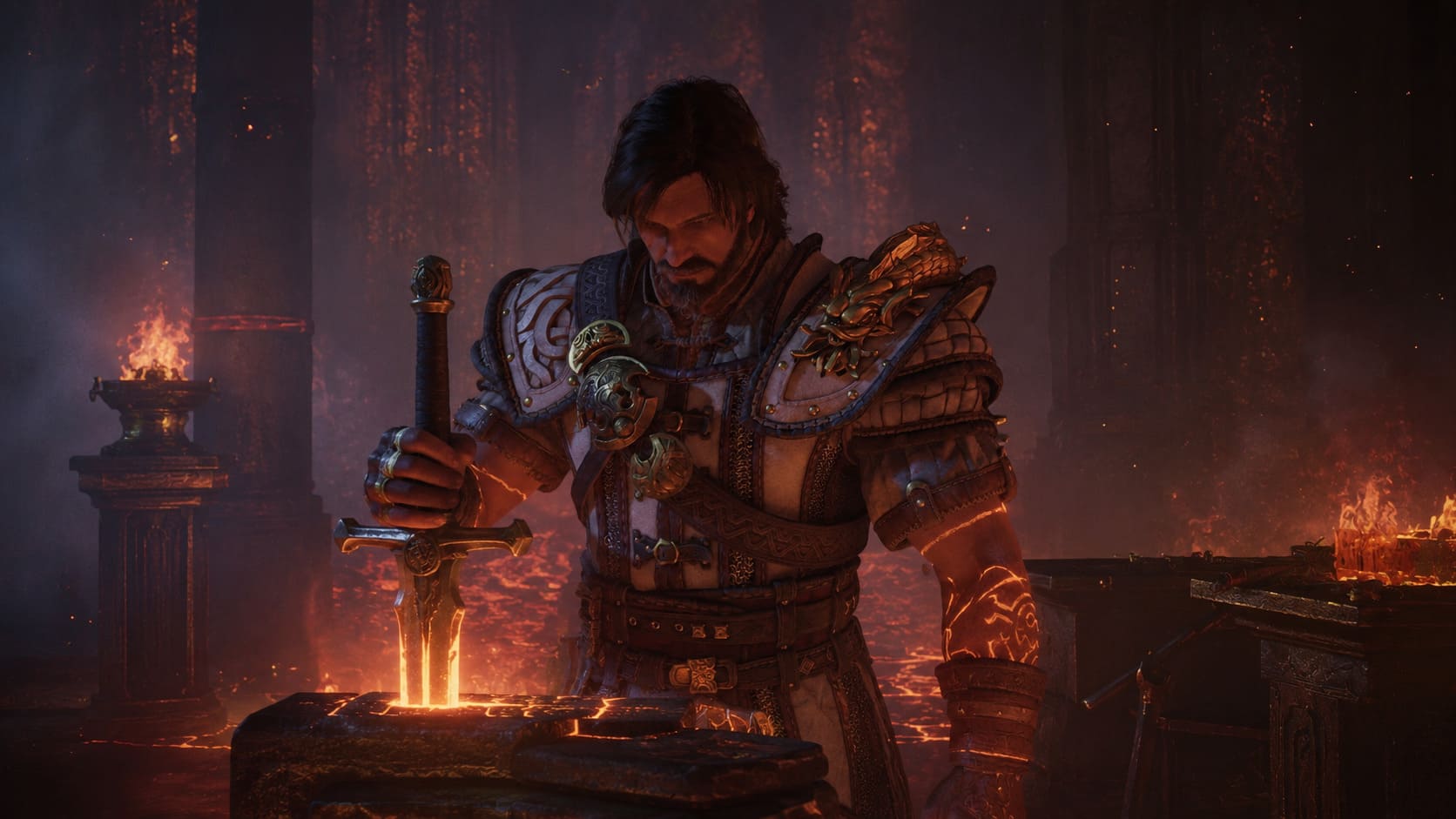
A lot of players initially focused on combat when discussing Blades of Fire, but I think the forge mechanics are actually the most important storytelling device in the entire game.
The legendary Forger Hammer changes everything once Aran obtains it.
Because the hammer carries divine power, weapons forged by it can resist Queen Nerea’s curse. Suddenly steel becomes possible again. But the game never treats crafting like a simple inventory menu.
Every weapon feels personal.
You choose alloys, components, rune combinations, blade types, and weapon balance. Gear degrades constantly, forcing you to repair or rebuild equipment instead of getting emotionally attached forever.
That system perfectly matches the game’s themes:
- Steel survives through effort
- Power requires maintenance
- Creation matters more than destruction
- Humanity must continuously rebuild itself
Honestly, few RPGs integrate gameplay mechanics with narrative themes this well.
The forge isn’t just crafting. It represents identity.
Blades of Fire Update 2.0 Patch Notes: New Game Plus, Titanium Difficulty, and Full Steam Breakdown
Why the Story Hits Harder Than Expected
What surprised me most was how mature the writing becomes toward the end.
Initially, Queen Nerea seems like a straightforward tyrant. But late-game lore reveals something more tragic underneath. Her curse wasn’t created purely out of cruelty. It came from fear.
After traumatic events during her youth, Nerea became obsessed with preventing chaos, betrayal, and war. She believed removing steel from society would eliminate humanity’s ability to destroy itself.
In her mind, she wasn’t creating oppression.
She was creating stability.
That revelation completely changes the final confrontation. Aran and Nerea stop feeling like hero and villain. Instead, they represent opposing philosophies.
| Character | Represents |
|---|---|
| Aran | Change, risk, freedom |
| Nerea | Control, fear, stagnation |
| Adso | Memory, knowledge, preservation |
That thematic structure gives the ending far more emotional impact than I expected from an action RPG.
When the curse finally breaks and stone weapons return to true steel, the scene works because the game earned it emotionally.
It doesn’t feel like “the hero saved the kingdom.”
It feels like humanity regained responsibility for its own future.
The Best Part? The Ending Stays Surprisingly Grounded
One thing I deeply respected: Aran never becomes king.
Modern fantasy stories often force protagonists into positions of ultimate power by the finale. Blades of Fire avoids that cliché entirely.
After everything ends, Aran simply returns to the forge.
That decision perfectly fits his character. He was never chasing power. He only wanted purpose. Meanwhile, Adso plans to record their journey so future generations understand what happened during the Age of Stone.
It’s a quiet ending, but it works beautifully.
The world isn’t magically perfect afterward. The curse is gone, but humanity still has to decide what comes next.
That ambiguity makes the conclusion feel more believable than most fantasy finales.
Why Version 2.0 Finally Gave the Game New Life
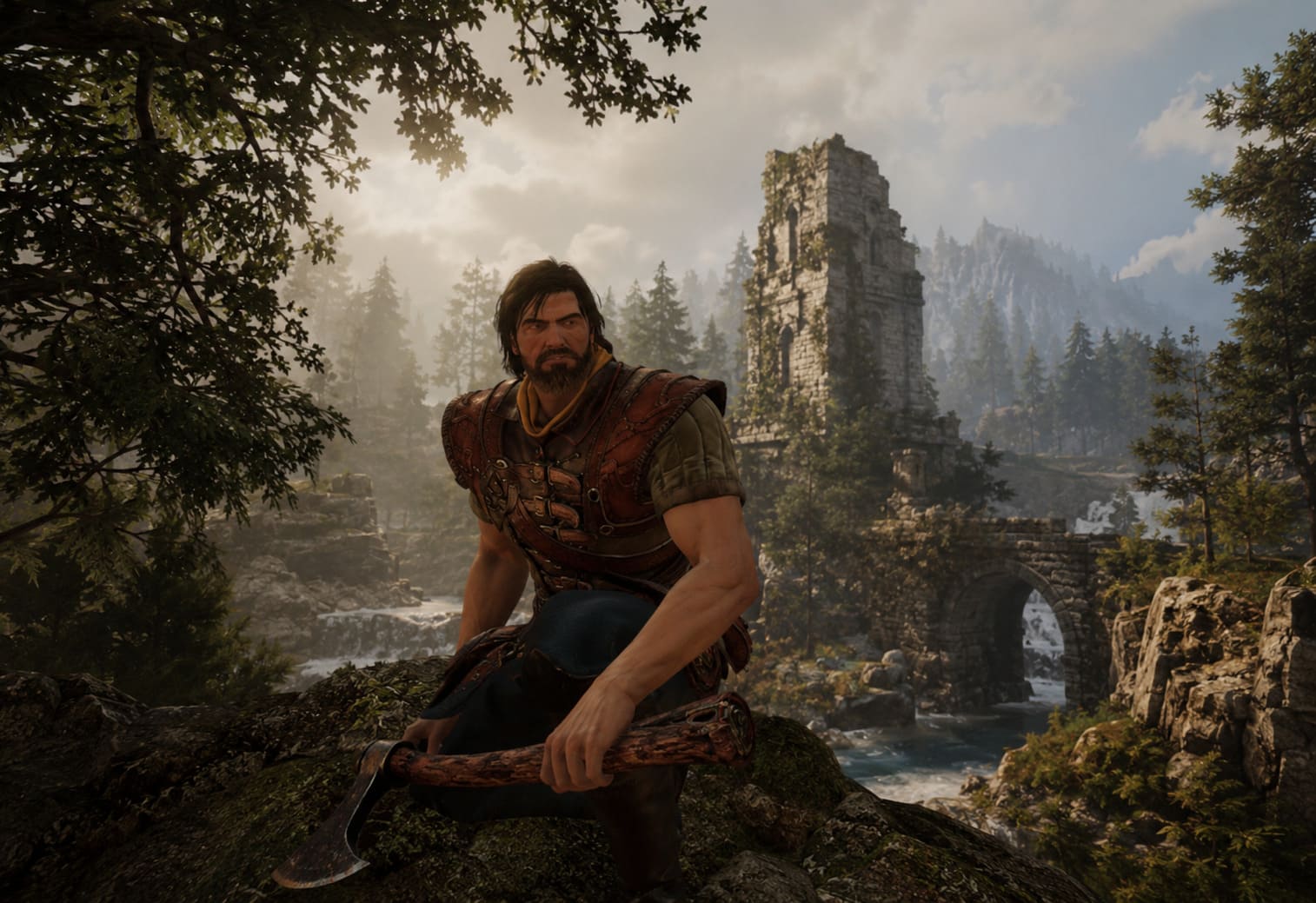
The Version 2.0 update honestly feels like the relaunch the game needed from the beginning.
The addition of:
- Titanium Difficulty
- Expanded New Game Plus
- Boss revival mechanics
- New weapon abilities
- Combat balancing improvements
gave longtime players a reason to return while helping newer players finally discover the game.
The Steam release also massively increased community discussion. Lore videos, theory posts, and hidden secret discoveries are everywhere now. Some players are even comparing the environmental storytelling to older cult-classic RPGs from the early 2000s.
That comparison actually makes sense.
Blades of Fire feels old-school in the best possible way. It expects patience. It expects curiosity. It expects players to think.
And in 2026, that’s honestly refreshing.
Final Thoughts
I genuinely believe Blades of Fire will become one of those games people rediscover years later and ask:
“How did this not become bigger?”
It isn’t flawless. Some animations are rough. Certain pacing sections drag slightly. The combat can feel brutally punishing early on. But underneath those imperfections is one of the most atmospheric dark fantasy worlds released in recent years.
More importantly, it tells a story that respects player intelligence.
Aran and Adso’s journey works because it feels human. Two completely different people slowly learning to trust each other while carrying the weight of a dying civilization on their shoulders.
No forced Marvel-style jokes.
No endless exposition dumps.
No giant map full of meaningless filler icons.
Just steel, fire, loss, and the fragile hope that humanity can learn from its mistakes.
And honestly? That stayed with me long after the credits rolled.