Blades of Fire Update 2.0 Patch Notes: New Game Plus, Titanium Difficulty, and Full Steam Breakdown
When MercurySteam first launched Blades of Fire back in 2025, I honestly wanted to love it more than I actually did. The atmosphere was incredible, the combat had weight, and the weapon forging system felt fresh compared to the endless copy-paste loot systems most modern soulslikes rely on. But at the same time, the game fought against the player almost as much as its monsters did.
Now, after spending serious time with the massive Version 2.0 update, I can finally say this feels much closer to the experience the game should have launched with in the first place.
The Steam release wasn’t just a platform expansion. It feels like a complete second chance for the game — and surprisingly, MercurySteam actually listened to the community instead of pretending nothing was wrong.
A Dark Fantasy World That Finally Feels Complete
The core premise of Blades of Fire is still one of the coolest setups in modern fantasy gaming.
You play as Aran de Lira, a warrior trapped in a kingdom where Queen Nerea has cursed steel itself. Weapons crumble, armies collapse, and horrific creatures dominate the land. Aran survives because he alone can forge true steel weapons capable of standing against the Queen’s forces.
That forging system remains the heart of the game — and thankfully, Version 2.0 finally stops it from becoming exhausting.
Back at launch, the biggest issue wasn’t difficulty. Soulslike fans can handle difficulty. The real frustration came from constantly farming materials while trying to maintain weapon durability and experiment with builds. It often felt like the game punished creativity.
Now, the new Element Transmutation system changes everything.
Instead of endlessly grinding for one rare component, players can convert unwanted materials into more useful crafting resources. It sounds simple, but this single mechanic dramatically improves pacing across the entire adventure.
For me personally, this is the update’s biggest victory.
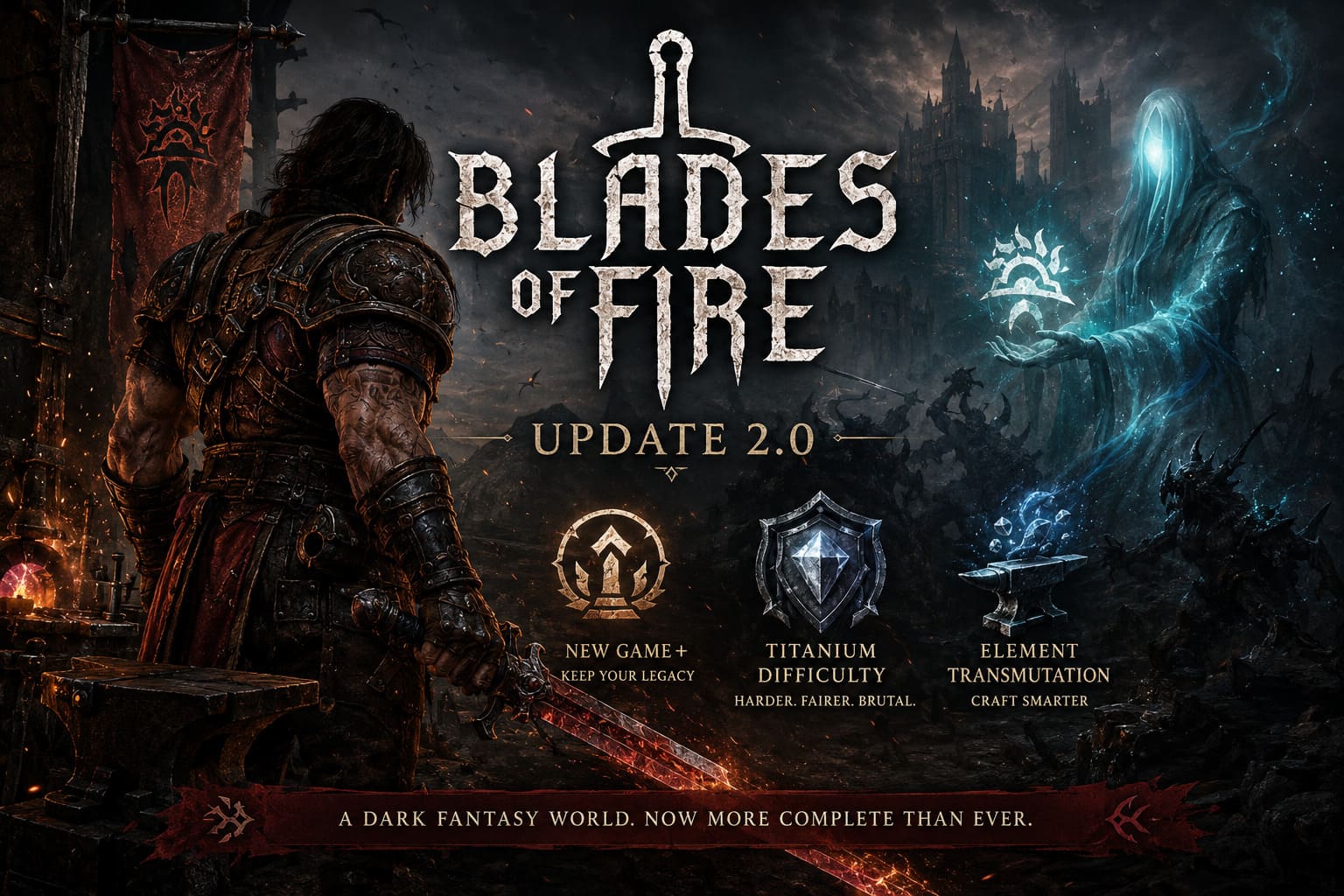
New Game Plus Actually Gives You a Reason to Return
Too many action RPGs throw in New Game Plus as an afterthought. Enemy health increases, damage scales up, and that’s basically it.
Blades of Fire does more than that.
- Skills carry over
- Character progression remains intact
- Health upgrades are preserved
- Forge recipes stay unlocked
- Weapon knowledge transfers into NG+
MercurySteam smartly added dynamic enemy scaling so overpowered players can’t completely destroy early-game encounters.
Even better, there are now 27 hidden Forge Statues scattered throughout the world that unlock exclusive weapon parts and cosmetic weapon skins unavailable in a standard playthrough.
That small addition completely changes exploration incentives. Suddenly revisiting old areas actually matters.
And honestly, that’s exactly the kind of replay motivation this genre needs.
Titanium Difficulty Is Brutal in the Best Way
Most “hard modes” in games simply inflate enemy numbers. More HP. More damage. Bigger health bars.
Titanium Difficulty does some of that, sure — enemies hit harder and survive longer — but the real difference is in timing windows and boss behavior.
Bosses feel meaner here.
Dodges need precision. Parries require commitment. Greedy attacks get punished immediately.
Some fights honestly reminded me of older-school action games where patience mattered more than flashy aggression. You can’t just spam heavy attacks and hope for the best anymore because the new Integrity balancing makes reckless play genuinely dangerous.
This difficulty setting won’t be for everyone, but for players who enjoy mastering combat systems, it’s probably the best addition in the patch.
Anvil Trials Might Be the Most Underrated Feature
One thing I’ve always hated in cinematic boss-focused games is replaying entire campaigns just to re-fight one amazing encounter.
Thankfully, Blades of Fire fixes that with the new Anvil Trials system.
Players can now revisit defeated bosses from the camp hub in special challenge encounters featuring:
- New mechanics
- Alternate attack patterns
- Time-based combat conditions
- Modified phase transitions
And surprisingly, these fights don’t feel lazy or recycled.
Several bosses caught me off guard because MercurySteam clearly redesigned portions of their AI behavior specifically for the trials.
The rewards are meaningful too. Completing challenges earns Medals that unlock Arcana abilities through Adso, Aran’s traveling companion.
These Arcana upgrades can dramatically change how forged weapons perform during combat.
| Arcana Effect | Gameplay Benefit |
|---|---|
| Elemental Infusion | Adds elemental damage to forged weapons |
| Health Leech | Restores health during combat |
| Stamina Recovery | Improves combat sustainability |
| Defensive Wards | Reduces incoming posture damage |
This system finally adds a proper endgame progression loop — something the original version desperately lacked.
Steam Deck Optimization Is Shockingly Good
One area where MercurySteam deserves serious praise is technical optimization.
A lot of dark fantasy action games launch with terrible PC performance these days. Stuttering, shader compilation issues, broken frame pacing — players almost expect it now.
But Blades of Fire Version 2.0 feels unusually polished.
The addition of DLSS 4 gives high-end PC players massive framerate improvements during particle-heavy boss fights, while Steam Deck support is genuinely impressive.
I expected compromises. Instead, the game feels surprisingly smooth on handheld hardware.
UI readability is solid, frame pacing is stable, and traversal no longer feels choppy during combat-heavy zones.
That optimization work matters because this is exactly the type of game people sink dozens of hours into while relaxing on portable systems.
The Combat Still Won’t Click for Everyone
Here’s the important thing though.
Version 2.0 fixes many problems, but it doesn’t fundamentally change the game’s identity.
And honestly, I’m glad it doesn’t.
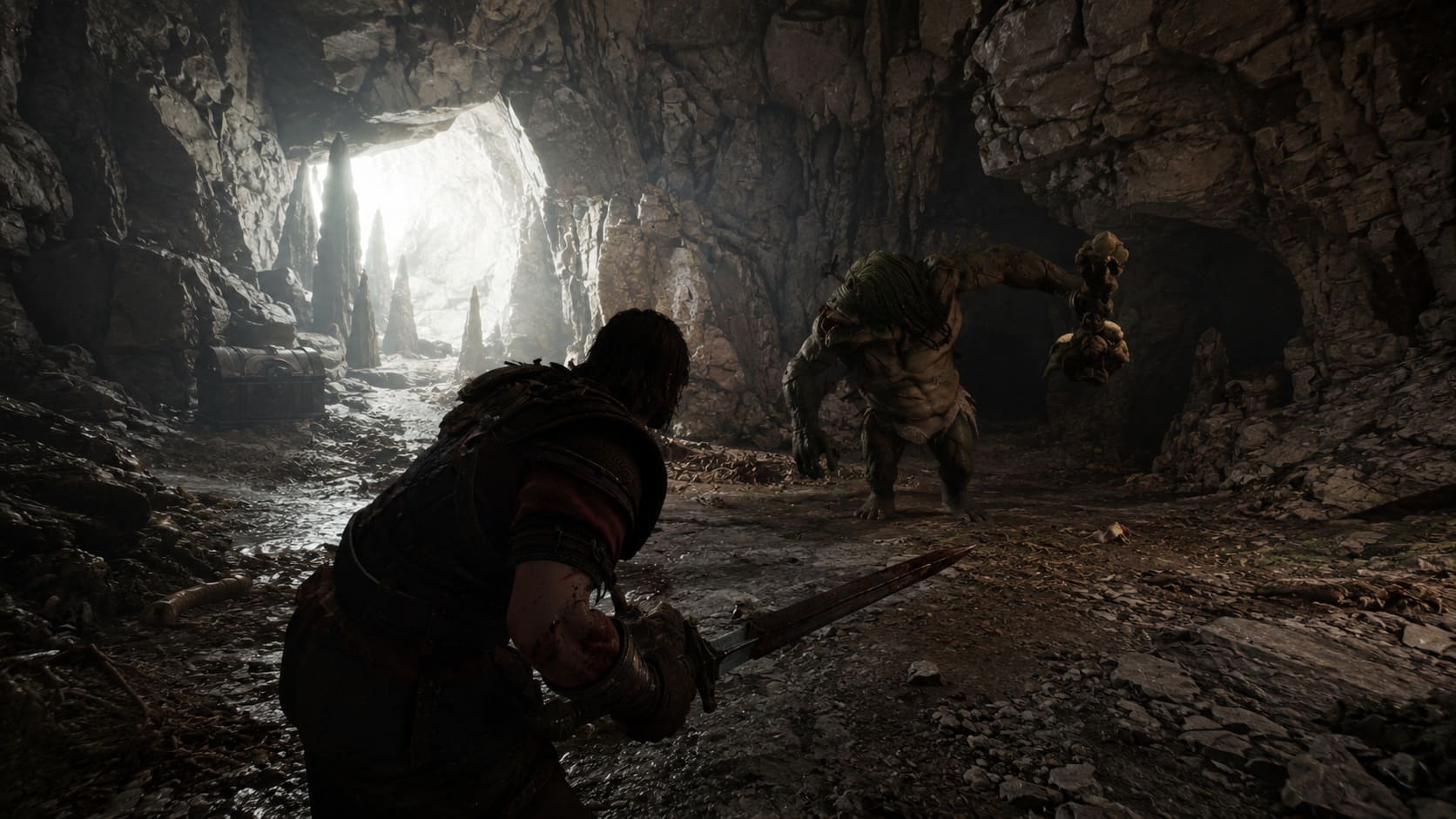
The directional combat system remains deliberate and methodical. Weapon crafting still requires thought. Durability still matters. You still need to care about blade shape, reach, balance, and stamina management.
Some players will absolutely love that depth.
Others will still find it annoying compared to traditional loot-focused soulslikes.
That divide isn’t disappearing.
Personally, I think the game becomes far more enjoyable once you stop treating it like a standard Souls clone and instead approach it like a tactical weapon-management RPG.
Once that mindset clicks, the systems start making sense.
Smaller Changes That Quietly Improve Everything
Not every improvement needed giant patch-note headlines.
Some of the best additions are the smaller quality-of-life updates:
- Better camera distance settings
- Improved collision handling indoors
- Cleaner HUD readability
- Faster checkpoint placement
- Better localization fixes
- Hold-to-confirm menu inputs
- Additional loot opportunities in Chapters 2 and 3
- Improved animation transitions using updated IK systems
And yes — you can finally pet the Ox at camp.
That alone probably earned MercurySteam goodwill on social media.
Community Reactions Are Split — But Mostly Positive
The interesting thing about the 2.0 relaunch is how differently new and returning players see the game.
New Steam players seem far more receptive because they’re entering after most of the frustrating systems were refined.
Older players, meanwhile, mostly appreciate the improvements but still argue that some core design choices remain too niche.
And honestly, both sides are right.
This still isn’t a mainstream RPG designed for everyone.
It’s slower. Stranger. More demanding. More experimental.
But that uniqueness is also exactly why some players are starting to appreciate it more now than they did at launch.
Final Verdict
MercurySteam and 505 Games didn’t just drop a routine patch with Version 2.0. They essentially rebuilt the surrounding structure of Blades of Fire without compromising the game’s identity.
The addition of New Game Plus, Anvil Trials, Arcana upgrades, material transmutation, Steam Deck support, and major balance refinements transforms the experience into something far more approachable without becoming generic.
Is it perfect? No.
The forging mechanics will still divide players, and the pacing remains intentionally methodical compared to faster modern action RPGs.
But for players who enjoy dark fantasy worlds, deliberate combat, and systems-heavy progression, Blades of Fire now feels like one of the most interesting redemption stories in recent gaming.
And honestly, that’s far more memorable than another safe, forgettable soulslike clone.