The Adventures of Elliot: The Millennium Tales Time Travel Eras Explained
Time travel in video games usually falls into one of two categories. It’s either a flashy story device that appears for a few cutscenes, or it’s an excuse to throw players into different historical settings without making those eras truly matter. After diving deep into everything revealed about The Adventures of Elliot: The Millennium Tales, I’m convinced Square Enix is aiming for something far more ambitious.
This isn’t just a game where you jump between timelines. The entire world appears to be built around the consequences of those jumps.
As someone who has spent hundreds of hours obsessing over action RPGs, exploring every hidden chest, breaking progression systems, and hunting for lore buried in optional dialogue, I can already see why this project has become one of my most anticipated games of 2026.
The combination of HD-2D visuals, real-time combat, environmental puzzle solving, and a continent that evolves across an entire millennium feels like Square Enix taking lessons from Zelda, Chrono Trigger, Octopath Traveler, and classic adventure RPGs and throwing them into one giant experiment.
And honestly? The four eras of Philabieldia look like the heart of that experiment.
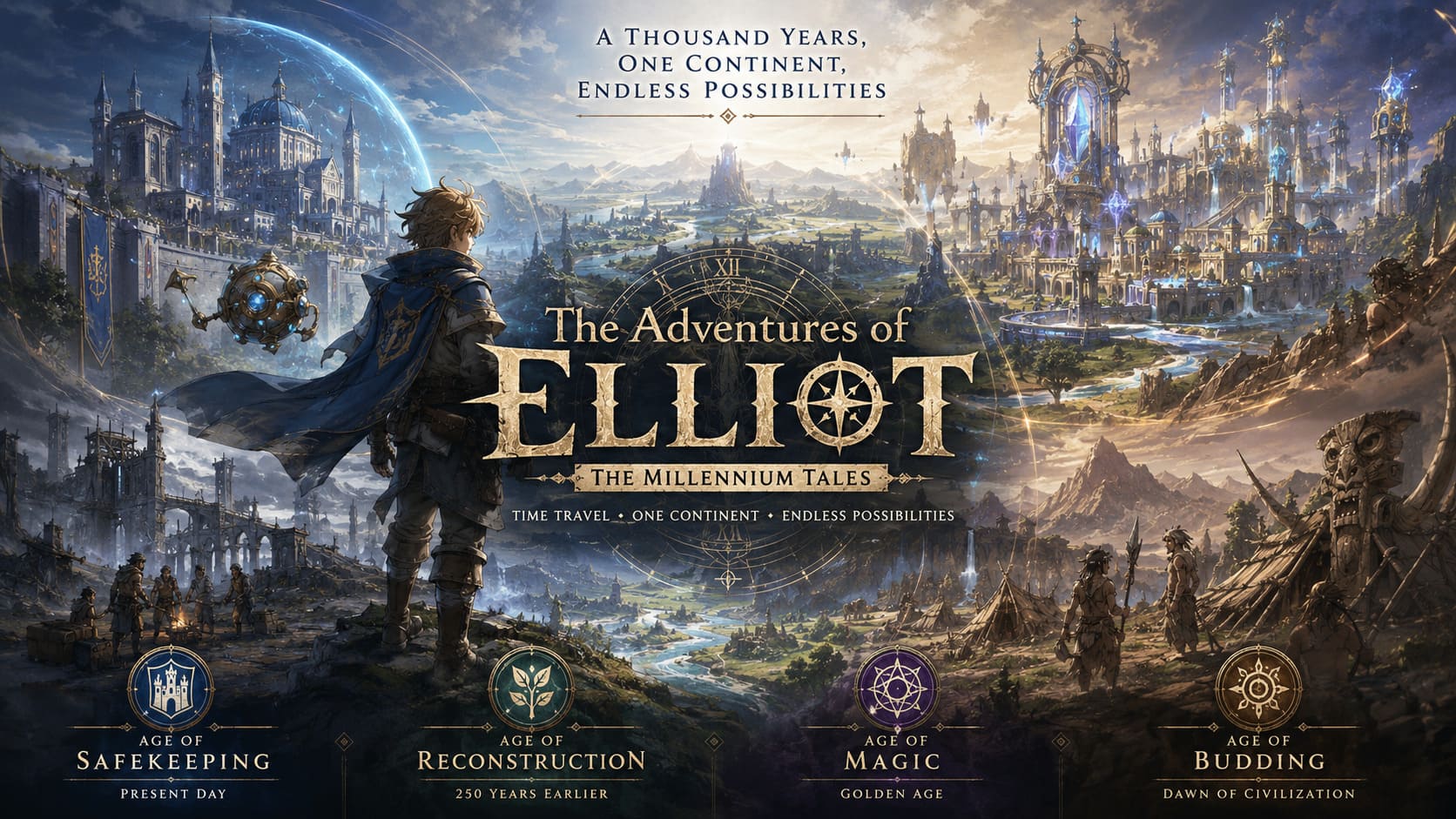
A Thousand Years, One Continent, Endless Possibilities
Rather than sending players across different worlds, Elliot’s adventure unfolds on a single continent.
That design choice might sound limiting at first.
It’s actually the opposite.
Every mountain, forest, ruin, settlement, and dungeon exists simultaneously across multiple points in history. The result is a world where every action has the potential to ripple across centuries.
A collapsed bridge in one era might become a major trade route in another.
A tiny village could eventually transform into a sprawling kingdom.
A mysterious ruin may reveal itself as a thriving city when viewed hundreds of years earlier.
For players who love exploration, this concept is gaming catnip.
Era Overview
| Era | Historical Position | World State | Core Gameplay Focus |
|---|---|---|---|
| Age of Safekeeping | Present Day | Humanity’s final stronghold | Story progression and hub activities |
| Age of Reconstruction | 250 Years Earlier | Civilization struggling to survive | Resource management and environmental restoration |
| Age of Magic | Golden Age Civilization | Magical prosperity at its peak | Advanced upgrades and magical systems |
| Age of Budding | Dawn of Civilization | Primitive tribal world | Exploration and timeline-altering decisions |
The Age of Safekeeping: Humanity’s Last Refuge
The adventure begins in what feels like the calm before a massive storm.
The Kingdom of Huther survives behind an enormous magical barrier maintained by Princess Huria. On the surface, the kingdom appears secure. Dig deeper and the situation becomes far less stable.
Everything depends on a single source of protection.
That’s never a good sign in fantasy worlds.
What immediately grabs my attention is how vulnerable humanity seems despite living in the most technologically advanced point currently available to Elliot.
Outside the walls, beast tribes dominate the landscape.
Inside the walls, people have grown dependent on magical protection rather than self-reliance.
It’s a fascinating setup because the kingdom doesn’t feel powerful.
It feels fragile.
From a gameplay perspective, this era functions as the player’s anchor point:
- Main quest progression
- Equipment purchases
- NPC interactions
- Story development
- Access to time-travel gateways
The early involvement of Princess Huria through enchanted communication also gives the opening chapters a more personal feel before Elliot’s partnership with Faie fully takes center stage.
The Age of Reconstruction: A World Picking Up the Pieces

If the present era represents fragile stability, the Age of Reconstruction is pure survival mode.
This period takes players roughly 250 years into the past, where humanity is still recovering from a catastrophic collapse.
Forget grand castles.
Forget magical luxuries.
Forget comfortable cities.
People are scraping by in settlements like Littlehope, fighting to stay alive against overwhelming threats.
I love this kind of setting because it gives real weight to exploration.
Every abandoned structure tells a story.
Every broken pathway hints at a better age that came before.
The atmosphere sounds considerably darker than the present timeline, with ruined infrastructure, damaged roads, and a constant sense of uncertainty hanging over the world.
What excites me most is how this era appears to influence future geography.
Imagine repairing a pathway centuries earlier and discovering that your actions create a shortcut in Elliot’s present day.
That’s exactly the sort of interconnected world design RPG fans remember for years.
Key highlights include:
- Resource scarcity creating meaningful progression
- Limited merchant inventories
- Heavy emphasis on gathering crafting materials
- Environmental problem solving
- Direct timeline manipulation affecting future exploration
This could easily become the era where completionists spend dozens of extra hours experimenting with every possible outcome.
The Age of Magic: The Civilization Everyone Will Wish They Could Save
Every great fantasy world has a legendary age people talk about in myths.
For Philabieldia, that’s the Age of Magic.
This appears to be the period where humanity reached its absolute peak.
Massive magical cities.
Advanced arcane technology.
Powerful spellcraft.
A society so sophisticated that it eventually created the Doorway of Time itself.
As a longtime RPG fan, this era immediately gives me that same feeling I had when exploring ancient advanced civilizations in classic JRPGs.
You already know disaster is coming.
You know the world eventually falls.
Yet seeing that greatness before its collapse makes the tragedy hit harder.
Gameplay-wise, the Age of Magic sounds packed with systems that theorycrafters will obsess over:
- Enhanced magical customization
- Advanced Magesite upgrades
- Weapon augmentation
- Vertical dungeon design
- Complex magical puzzles
The introduction of premium Magesite could become one of the game’s biggest progression hooks.
If these magical stones genuinely alter combat styles and combo routes, players will spend countless hours experimenting with builds.
And honestly, that’s exactly what I want from an action RPG.
Give me ridiculous customization options and let me break the combat system.
The Age of Budding: Where Everything Begins
Then we arrive at what might be the most fascinating era of them all.
The Age of Budding.
This isn’t just ancient history.
This is the birth of civilization itself.
No kingdoms.
No advanced magic.
No sophisticated technology.
Just tribes trying to survive in a dangerous and untamed world.
What makes this setting particularly compelling is that players aren’t simply learning history.
They’re actively shaping it.
Every structure, cave system, pathway, and settlement here has the potential to influence all future eras.
That level of narrative responsibility instantly raises the stakes.
The introduction of the mysterious Muu Tribe also opens the door for some potentially massive lore revelations. Whenever developers introduce an ancient civilization tied to the origins of monsters and spiritual forces, you can almost guarantee hidden secrets are waiting beneath the surface.
Combat also appears more grounded here.
Without access to advanced magical tools, players must rely on:
- Weapon mastery
- Shield timing
- Positioning
- Ranged combat precision
- Resource management
As someone who often prefers skill-based combat over overpowered magic builds, that sounds incredibly appealing.
Why The Time Travel System Could Be The Game’s Greatest Strength
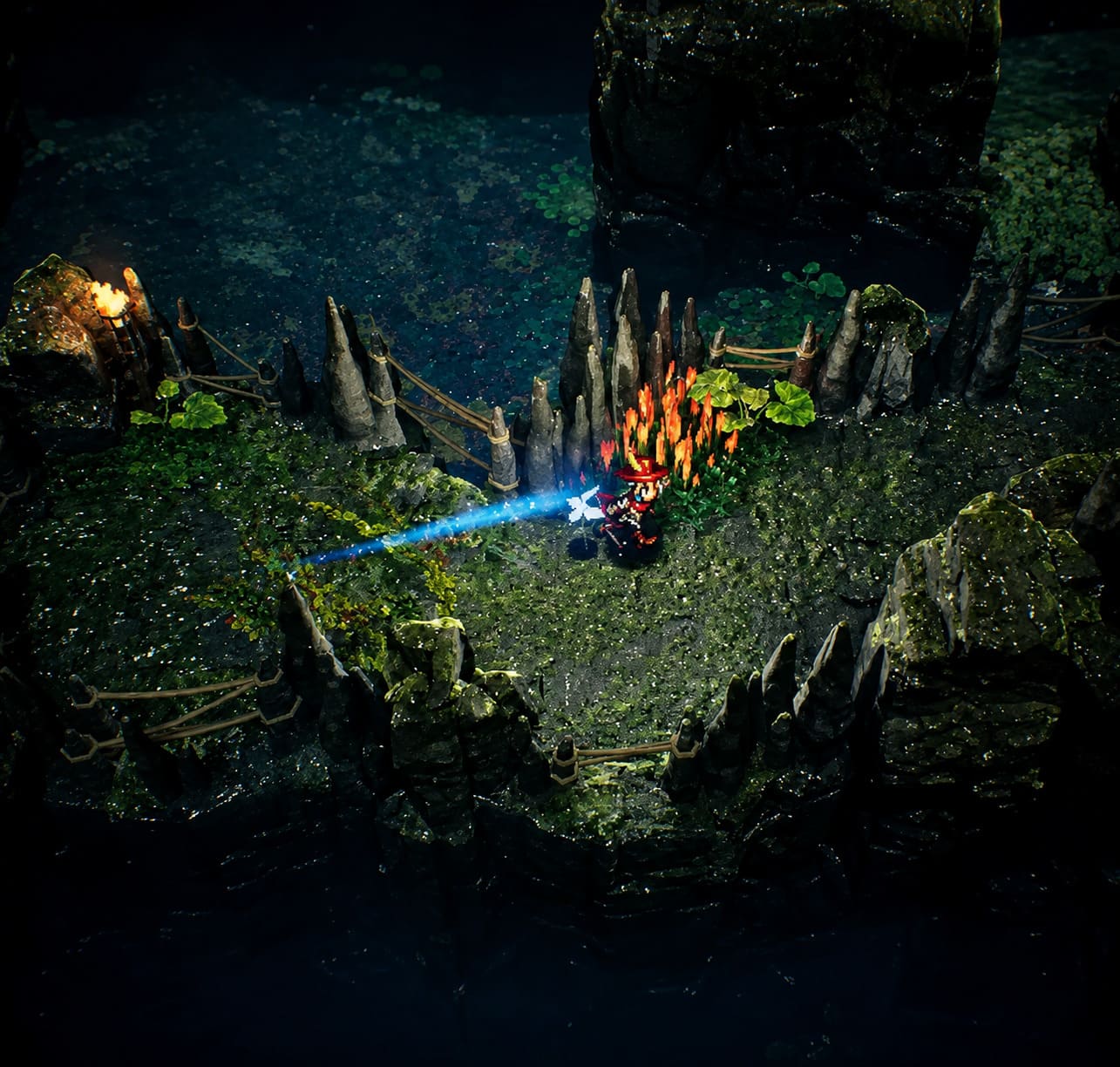
The biggest reason I’m excited about The Millennium Tales isn’t any single era.
It’s the interaction between them.
Too many games treat time travel like separate levels connected by a menu.
This project seems determined to make every era feel connected.
Imagine discovering:
- A hidden cave in prehistory
- A buried relic in the reconstruction era
- A magical research facility during the golden age
- The final treasure chamber in the present
All within the same physical location.
That’s the kind of layered exploration that rewards curiosity.
The best part is that every player will likely approach problems differently.
One person may solve environmental puzzles immediately.
Another might accidentally create solutions while chasing side quests.
Those organic discoveries often become the stories players share online years after release.
Final Thoughts
After years of seeing time-travel mechanics underused in RPGs, The Adventures of Elliot: The Millennium Tales looks refreshingly ambitious.
The four eras aren’t just visual themes.
They appear to be fully realized versions of the same world, each carrying unique cultures, challenges, mechanics, and consequences.
If Square Enix successfully delivers on the interconnected timeline design they’ve been teasing, this could become one of the most memorable action RPG experiences of the decade.
The combat already looks promising.
The HD-2D presentation is gorgeous.
The world-building is packed with potential.
But the real magic may come from watching a single continent evolve across a thousand years and realizing that every decision you make echoes through history.
For RPG fans who love exploration, lore hunting, hidden secrets, and meaningful progression, Philabieldia is shaping up to be a place worth getting lost in.