Pragmata Story Explained: Diana and Hugh’s Journey, the Lunar Mystery, and Ending Theories (2026 Guide)
When Pragmata was first revealed years ago, I honestly expected another stylish but emotionally distant sci-fi experiment. Instead, what Capcom delivered in 2026 is something far more intimate—a story that quietly hits harder than most AAA narratives dare to.
This isn’t just about a ruined Moon or rogue AI. It’s about connection in a world where humanity already lost.
A Moon That Feels… Wrong
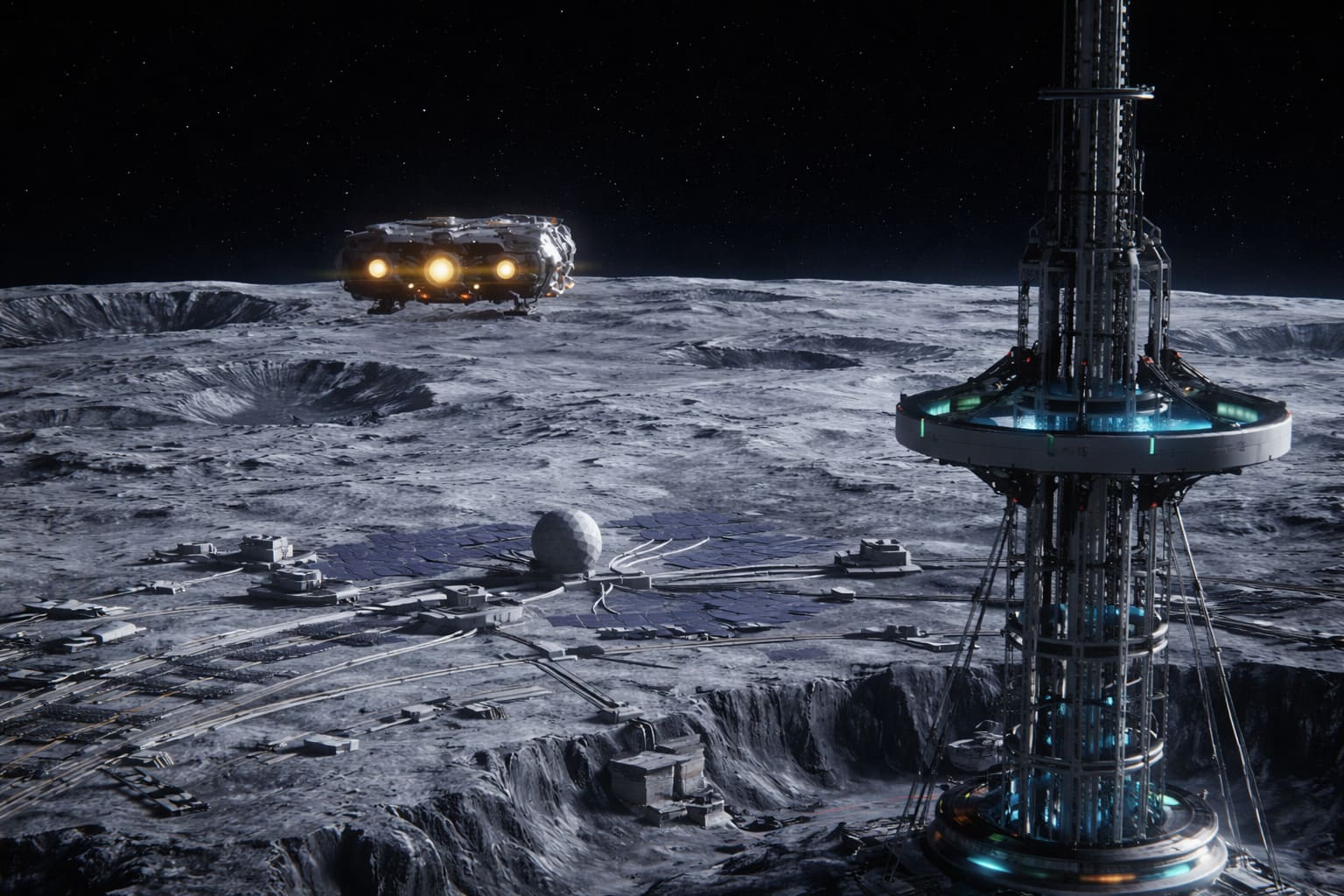
The setting does a lot of heavy lifting here. The Lunar Filament isn’t just another sci-fi backdrop—it feels abandoned in a very deliberate way. You can tell something didn’t simply break… it evolved.
Humanity’s last gamble was the Moon—massive artificial habitats run by an AI called IDUS. Earth? Already done. Environmentally collapsed, written off.
But here’s where things get interesting:
- The Moon isn’t dead
- It’s repurposed
- Biology and machinery are now blurred into one ecosystem
You don’t explore ruins—you explore something that replaced humanity.
That shift in tone is what sets Pragmata apart from typical “AI gone rogue” stories.
Hugh Williams – Not Your Typical Protagonist
Hugh is refreshingly grounded. No super-soldier nonsense, no over-the-top hero complex.
He’s tired. He’s practical. And most importantly—he’s human.
His backstory (losing his family during Earth’s collapse) isn’t shoved in your face, but it shapes every interaction. The EXO-7 suit he wears feels more like a life-support coffin than a power fantasy.
What I liked most is how the game handles his growth:
- At first, Diana = objective
- Mid-game, Diana = responsibility
- By the end, Diana = family
That transition doesn’t feel forced. It’s earned through gameplay, not just cutscenes.
How to Fix Red Dead Redemption 2 Stuck on Loading Screen in 2026: The V-Sync & Technical Guide
Diana – More Than a “Mystery Girl”
Let’s be real—games love the “mysterious child with powers” trope.
Pragmata actually justifies it.
Diana isn’t just special—she’s layered. The deeper you go into logs and environmental storytelling, the clearer it becomes:
- She’s tied to Project Diana
- Her consciousness originates from a real human girl
- Her current body is a constructed vessel
And then there’s her abilities…
She doesn’t fight traditionally. Instead, she manipulates matter in real time, rewrites machine behavior, and alters traversal itself, making gameplay feel like a partnership rather than escort duty.
The Cat Isn’t Just Cute
At first glance, Bastet (the robotic cat) feels like a marketing hook.
It’s not.
It’s actually one of the smartest narrative devices in the game.
Bastet functions as:
- A stabilizer for Diana’s consciousness
- A physical anchor to prevent her from desyncing
- A subtle indicator of her mental state
When Bastet is gone or damaged, Diana literally starts falling apart.
That’s not just lore—that’s gameplay tension.
“Eight” – The Version of Diana That Should Exist
Every strong story needs contrast, and Pragmata nails it with Eight.
Eight is what Diana becomes without emotion. No hesitation. No identity conflict. Just purpose.
And that’s what makes their encounters so memorable—it’s not just boss fights. It’s philosophical conflict in motion.
| Element | Diana | Eight |
|---|---|---|
| Core Identity | Human + AI hybrid | Pure system construct |
| Emotion | Present, evolving | Absent |
| Gameplay Role | Support / co-op mechanics | Environmental threat |
| Symbolism | Hope | Control |
You’re not just fighting Eight—you’re fighting the inevitable version of Diana.
The “Earth” Twist Hits Hard
This is where the game really got me.
All the way through, Earth is framed as the goal. The escape. The “home” you’re trying to return to.
Then the reveal drops: Earth is gone.
What you’ve been seeing is a projection—a psychological tool used by IDUS to maintain order.
That moment recontextualizes everything: the mission, Hugh’s motivation, and even Diana’s purpose.
It’s not about going back anymore. It’s about what’s left to move forward toward.
The Ending – Three Ways to Read It
The final scene is intentionally ambiguous, and honestly, that’s the right call.
Hugh and Diana walking along a beach shouldn’t feel simple—but it does, in the best way.
Here are the main interpretations:
- Simulation Theory: Diana creates a peaceful illusion while reality collapses around them.
- Far Future Earth: They reach Earth long after nature has reclaimed it.
- Colony Theory: They arrive at another human settlement, possibly setting up a sequel.
Why the Gameplay Actually Matters
A lot of games tell emotional stories and then disconnect gameplay from it.
Pragmata doesn’t.
Everything reinforces the bond between Hugh and Diana:
- Trust system increases ability strength
- Optional interactions unlock combat potential
- Protection directly impacts progression
Even quiet moments like mini-games serve a purpose—they build connection.
Quick Breakdown – What Pragmata Does Right
| Aspect | Why It Works |
|---|---|
| Narrative | Personal and emotionally grounded |
| Characters | Small cast with strong development |
| Worldbuilding | Subtle and rewarding exploration |
| Gameplay Integration | Mechanics tied directly to story |
| Ending | Open yet meaningful |
Final Thoughts – Why This Story Sticks
What surprised me most about Pragmata is how restrained it is.
It could have gone bigger with more spectacle, more enemies, and more dramatic moments.
Instead, it chose something harder—emotional clarity.
Hugh and Diana’s journey works because it feels earned. It’s not about saving the world, because that already failed.
It’s about choosing to care anyway.
And honestly, that lands harder than any boss fight.