Blue Umbrella vs. Red Umbrella in Resident Evil Requiem: Lore Breakdown
When Resident Evil Requiem dropped on February 27, 2026, it didn’t just give us another outbreak, another monster, or another conspiracy. It did something far more dangerous: it reopened old wounds.
Not the kind caused by a Licker.
The kind caused by a logo.
That octagon. That umbrella.
And now, it’s split in two.
The Ghost of the Red Umbrella
Let’s not kid ourselves. The Red Umbrella is the reason survival horror changed forever.
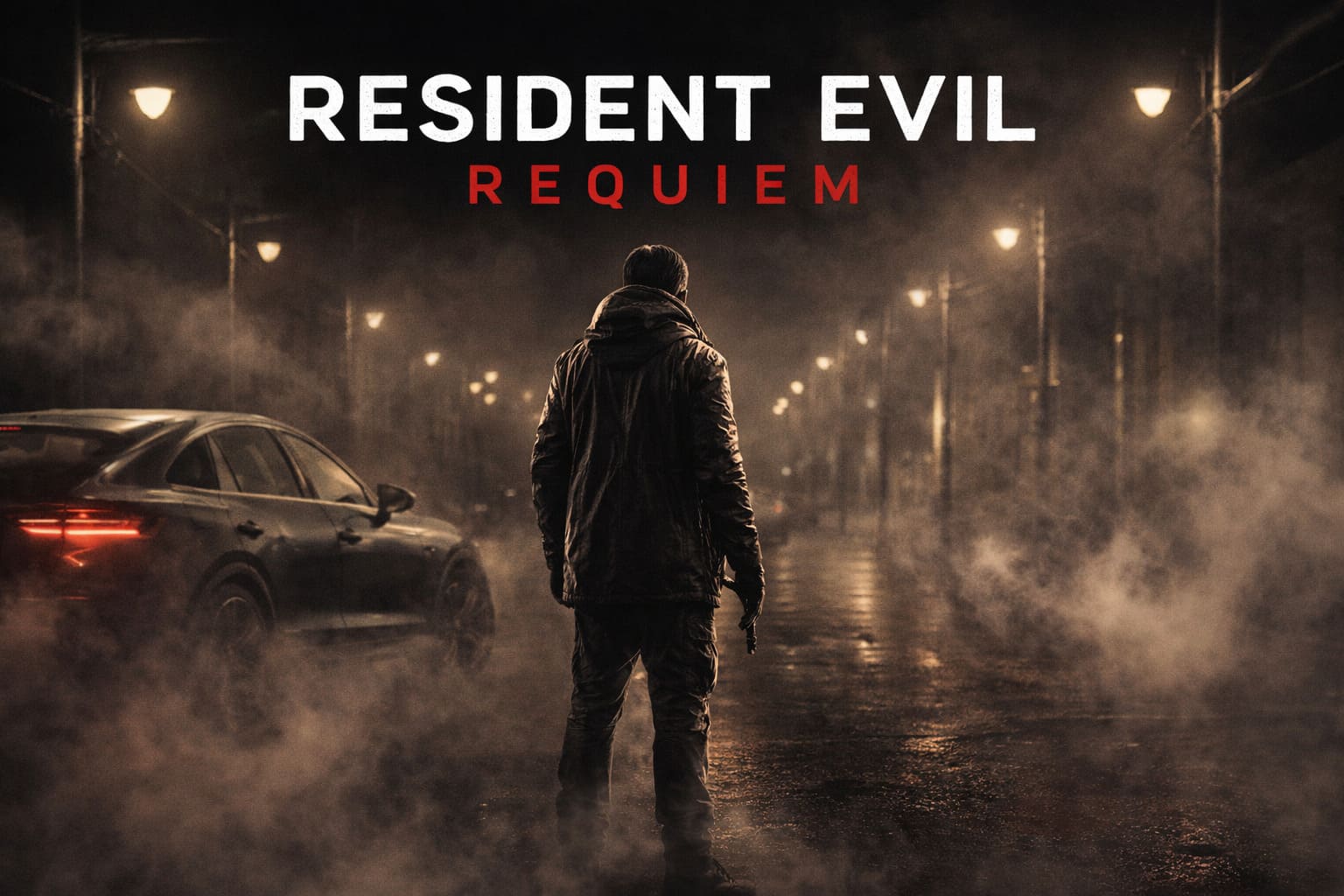
Founded in the late ‘60s by Oswell E. Spencer, Edward Ashford, and James Marcus, the original Umbrella Corporation wasn’t just a shady pharma giant. It was a eugenics cult wrapped in lab coats. Their obsession? Viral-driven “human evolution.” Their method? Bio-Organic Weapons (B.O.W.s) unleashed in controlled disasters that were never really controlled.
What made Red Umbrella terrifying wasn’t just the T-Virus. It was the ideology.
- Control life and death.
- Engineer superiority.
- Profit from chaos.
From the Arklay Lab to NEST, from the U.B.C.S. to the U.S.S., everything was a chessboard move. And when Raccoon City burned in 1998, Umbrella didn’t die because it felt guilt.
It died because it got caught.
Albert Wesker handing over data to the U.S. government sealed its legal fate in 2003. But in Resident Evil Requiem, the Red legacy refuses to stay buried. The Umbrella Corps operate like scavengers in the dark—mercenaries picking through the ruins of old labs, selling viral remnants to whoever pays enough.
Same brand. Same philosophy. Just fewer press releases.
Enter Blue Umbrella: Redemption or Rebranding?
Blue Umbrella first showed up in Resident Evil 7: Biohazard, and I remember the community reaction vividly: “Wait… we’re working with Umbrella now?”
Formed in 2007 from Umbrella USA’s remains, Blue Umbrella positions itself as a private military company dedicated to anti-B.O.W. operations. Their whole narrative is built around atonement. Former employees claiming they want to fix what they helped create.
On paper, it sounds noble.
In practice? It’s complicated.
They developed anti-B.O.W. tech like the Albert-01P pistol. They deploy specialized tactical teams to neutralize outbreaks. And perhaps most controversially, they partnered with Chris Redfield during the Dulvey and Village incidents.
Chris didn’t trust them. And neither did we.
In Resident Evil Requiem, that distrust becomes a central theme. Logs, hidden memos, executive transcripts—all hint that the corporate elite behind Blue Umbrella may still believe in Spencer’s core philosophy. Maybe they’ve just refined it.
Not “world domination.”
But managed evolution. Controlled biowarfare. Strategic superiority.
That’s scarier.
Resident Evil Requiem Arklay Mountains Lockbox Guide: Codes and Solutions, Bolt Cutters Location
Red vs. Blue — The Real Differences
Here’s how the two factions stack up in Resident Evil Requiem:
| Feature | Red Umbrella (Original/Corps) | Blue Umbrella (PMC) |
|---|---|---|
| Primary Goal | Viral evolution & dominance | Atonement & eradication of B.O.W.s |
| Status | Illegal / Mercenary network | Legally sanctioned PMC |
| Leadership Legacy | Spencer, Wesker ideology | Shadowy “Legendary Executive” |
| Signature Tech | T-Virus, Tyrants, Nemesis | Anti-B.O.W. weapons, advanced tactical systems |
| Philosophy | Humanity must evolve | Humanity must be protected… maybe |
The brilliance of Resident Evil Requiem is that it refuses to give us a clean answer.
Red Umbrella is obviously evil. Cartoonishly so.
Blue Umbrella? That’s where things get uncomfortable.
The B.S.A.A. Problem
If you’ve been paying attention since Resident Evil 8, you know something is deeply wrong with the B.S.A.A. The organization founded to combat bioterrorism is now deploying bio-engineered soldiers.
Let that sink in.
In Resident Evil Requiem, the implication is clear: Blue Umbrella’s influence may be seeping into global anti-bioterror institutions. The line between fighting monsters and manufacturing them is blurring.
That’s the real civil war.
Not just Red vs. Blue.
But ideology vs. accountability.
Why This Conflict Actually Matters
From a gameplay perspective, the faction divide isn’t just lore dressing. It shapes mission design such as cleanup ops versus sabotage runs, enemy types including prototype anti-B.O.W. units versus rogue viral experiments, and moral framing that forces you to question whether you’re stopping evil or stabilizing it.
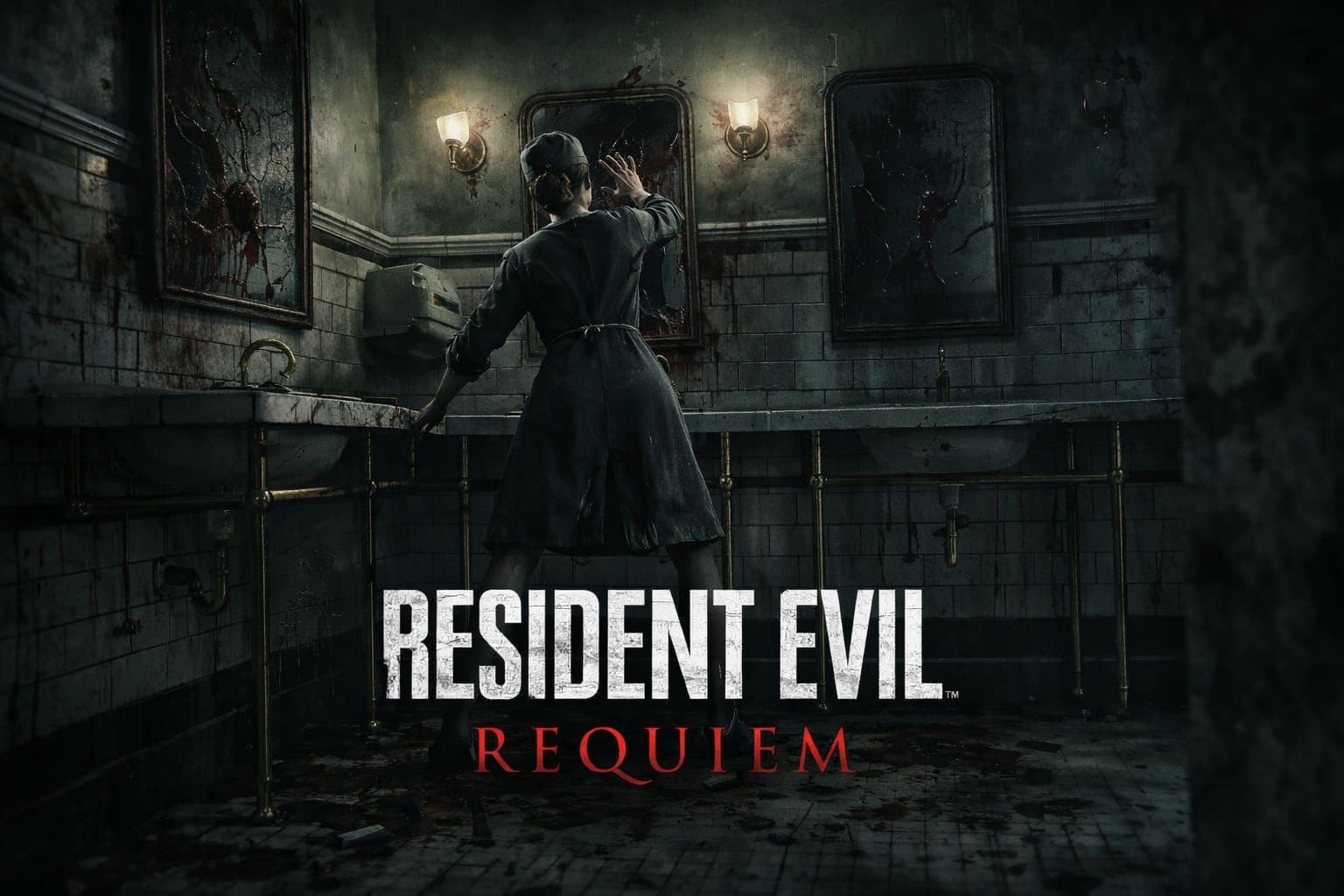
And emotionally? It hits harder because Umbrella isn’t just a villain anymore. It’s a fractured legacy.
As a long-time fan, this feels like Capcom finally embracing the series’ identity crisis. After years of global bioterror arcs and superhuman villains, Resident Evil Requiem brings it back to corporate horror—the idea that the real monster is institutional power.
Blue Umbrella Unleashed: The Anti-B.O.W. Arsenal That Redefines Resident Evil Requiem
Resident Evil Requiem (2026) isn’t just another survival horror sequel — it feels like a statement. A reckoning. And at the center of it all stands Blue Umbrella, no longer the shadowy architect of nightmares, but the arms dealer determined to erase its own sins with overwhelming firepower.
As someone who has followed this franchise since the Spencer Mansion days, I can honestly say: Requiem’s weapon design is some of the boldest the series has ever attempted. This isn’t about conserving handgun bullets anymore. This is about tactical eradication.
Let’s break down why Blue Umbrella’s new Anti-B.O.W. lineup changes everything.
Blue Umbrella’s Redemption Arc
Before diving into the hardware, we need to talk about context.
The original Umbrella Corporation destroyed the world piece by piece. Now its successor, Blue Umbrella, claims to fight bioterrorism instead of fueling it.
And in Resident Evil Requiem, they don’t just say it — they prove it through tech.
1. “Alligator Snapper” – Precision Over Panic
Based on the SIG Sauer P320 platform, Blue Umbrella’s standard DSO sidearm is sleek, heavy, and unapologetically modern.
Why it matters in gameplay:
- Metal frame provides superior recoil control
- Faster target reacquisition against Hunters
- Reliable stopping power without feeling overpowered
- Feels tactical rather than arcade-like
When Leon S. Kennedy steps into action with this pistol, it’s clear we’re not scavenging rusty police station leftovers anymore. This is professional-grade equipment designed for viral combat zones.
Compared to Grace’s early-game struggles in the Care Center, the contrast is intentional — and honestly, brilliant.
Resident Evil Requiem: Antique Coin Locations & Organ Transport Box Solution
2. “Reququan” – The Hand Cannon Returns with a Vengeance
Inspired by the Russian RSh-12 revolver, the Reququan is pure excess in the best possible way.
Chambered in monstrous 12.7×55mm rounds, the Reququan is essentially a rifle pretending to be a revolver.
Where it shines:
- Boss encounters
- Super B.O.W. fights
- Moments where standard 9mm feels completely useless
It’s rare. It’s narratively important. And when you finally fire it, the sound design alone makes it feel like judgment day.
In classic Resident Evil fashion, it’s not meant for casual use. It’s a statement weapon, symbolizing just how far Blue Umbrella is willing to go to eliminate the horrors it once helped create.
3. Legacy Weapons: Albert-01P & Thor’s Hammer
Requiem smartly leans on established lore rather than replacing it outright.
- Albert-01P, named after Albert Wesker, returns as a refined anti-B.O.W. pistol platform.
- Thor’s Hammer, the heavy auto-shotgun first introduced in Resident Evil 7: Biohazard, comes back with upgraded stopping capability.
But here’s the real innovation.
Anti-Regeneration Rounds
Blue Umbrella’s biggest leap isn’t the guns — it’s the ammunition.
- Disrupts rapid viral cell regeneration
- Prevents mutation phase shifts
- Reduces drawn-out boss mechanics
From a gameplay perspective, this tightens encounters and rewards precision instead of pure ammo dumping.
Dual-Protagonist Design: Power vs. Survival
One of the smartest design decisions in Resident Evil Requiem is the contrast between characters.
| Aspect | Grace | Leon |
|---|---|---|
| Starting Weapons | Antiquated sidearms | Blue Umbrella tactical gear |
| Combat Style | Survival-focused | Controlled aggression |
| Resource Economy | Scarcity-driven | Efficiency-based |
| Emotional Arc | Growth and discovery | Experience and burden |
Grace’s early reliance on a vintage Beretta-style handgun reinforces vulnerability and tension. Leon’s arsenal reinforces competence and authority.
Switching between them keeps the game from leaning too far into action-shooter territory while preserving the franchise’s survival horror DNA.
The Controversial Naming Problem
Here’s where things get morally messy.
Blue Umbrella naming its elite weapons after Albert Wesker is bold. Maybe too bold.
Within the story, it’s framed as reclaiming the name. But if you’ve followed Chris Redfield’s arc across the series, you know trust doesn’t come easy.
Is Blue Umbrella truly reformed — or are they just better at marketing?
That ambiguity adds depth to the narrative and keeps longtime fans guessing.
Final Thoughts – The Most Militarized Resident Evil Yet?
Here’s my honest opinion: Blue Umbrella is more dangerous than Red ever was.
Red Umbrella was arrogant. Loud. Obsessed with godhood.
Blue Umbrella is pragmatic. Patient. Sanitized.
If Red was a biohazard explosion, Blue is a slow infection.
And that’s why Resident Evil Requiem works so well. It doesn’t ask whether Umbrella is evil. It asks whether evil can evolve into something socially acceptable.
Can a corporation responsible for thousands of deaths ever truly become “good”?
Or is the blue logo just a cleaner shade of the same blood-red ambition?
If this is the future of Resident Evil, I’m all in. Not because it’s comfortable.
Because it finally feels dangerous again.
Resident Evil Requiem feels like a franchise evolution. It doesn’t abandon horror — it reframes it.
Instead of being powerless civilians, we now see what a world permanently shaped by bioterror looks like. Blue Umbrella’s Anti-B.O.W. arsenal represents humanity adapting aggressively to survive in that reality.
As a longtime fan, I appreciate that Capcom isn’t pretending the old formula still fits. The world changed. The weapons changed. The stakes changed.
And honestly, firing the Reququan into a regenerating nightmare and watching it finally stay down feels like catharsis twenty years in the making.