33 Immortals Ordeals and Agony Levels Ultimate Guide: How to Survive the Endgame
If there’s one thing I’ve noticed after spending time in co-op roguelikes, it’s that the real challenge never begins during the early runs. It starts much later, when systems like Ordeals and Agony levels kick in and completely reshape how you play. In 33 Immortals, this is exactly where the game stops being a chaotic multiplayer brawler and turns into a highly structured survival test.
Once you get into these systems, the game developed by Thunder Lotus stops forgiving mistakes and starts rewarding discipline, coordination, and actual team thinking instead of random solo play.
33 Immortals Relic Guide: Action Relics vs Boost Relics Explained
What Ordeals Actually Are
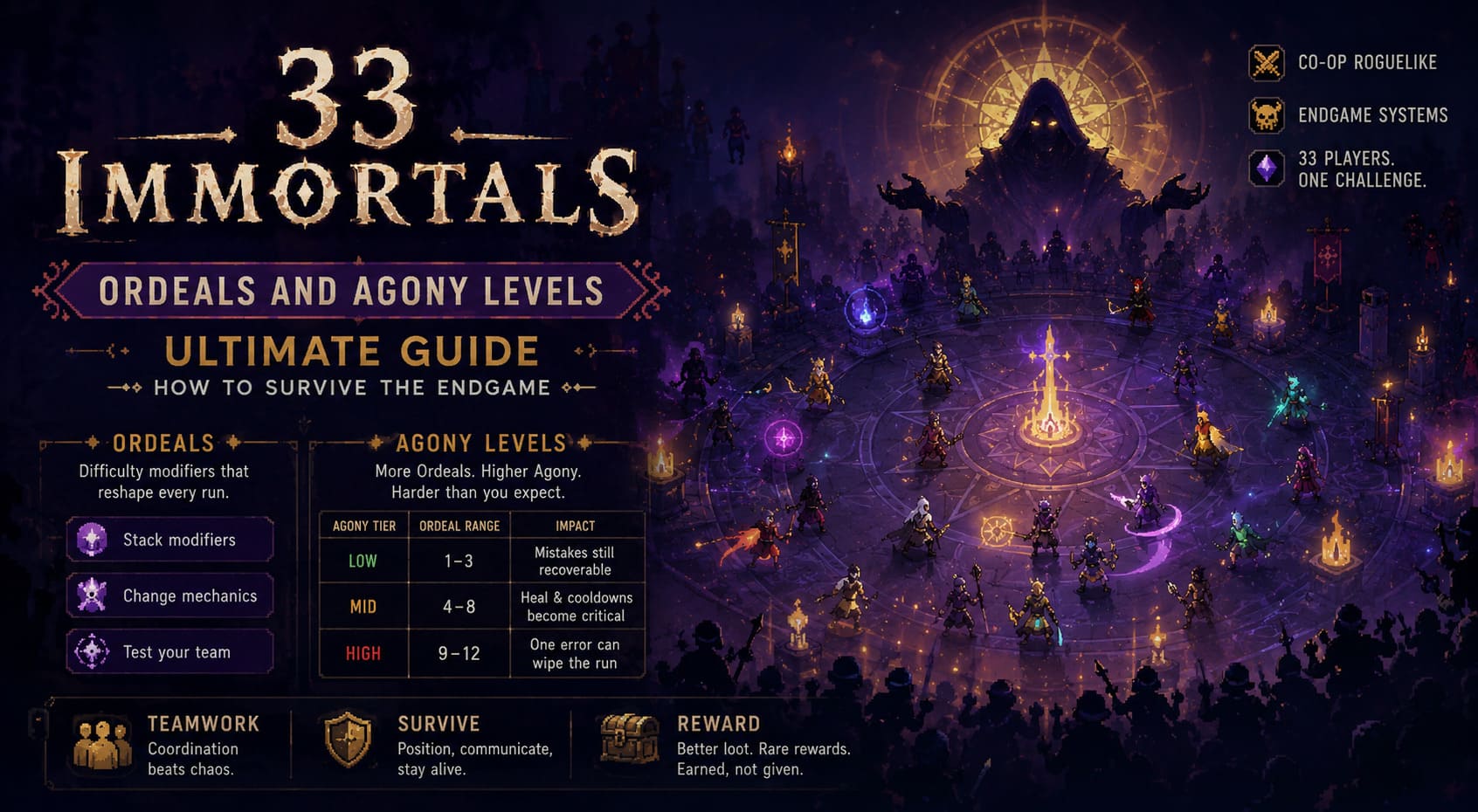
Ordeals are basically difficulty modifiers you choose before an endgame run. They unlock after reaching a certain progression milestone, and from that point on, you’re no longer just selecting a build—you’re deciding how difficult your entire run will be.
At first, it feels harmless. One modifier doesn’t seem like much. But once you start stacking them, the entire rhythm of the game changes.
How progression works
- Early Ordeals: manageable and mostly forgiving
- Mid stacking: coordination becomes necessary
- High stacking: one mistake can end the entire run
The important thing is that Ordeals don’t just add difficulty—they reshape how mechanics behave in real time.
Agony Levels: The Real Difficulty Curve
Agony levels are tied directly to how many Ordeals you stack. The more modifiers you activate, the higher the global difficulty tier rises. And unlike normal scaling systems, this one doesn’t just increase enemy health—it changes how the game feels entirely.
Difficulty scaling overview
| Agony Tier | Ordeal Range | Gameplay Impact |
|---|---|---|
| Low | 1–3 | Minor pressure, mistakes still recoverable |
| Mid | 4–8 | Healing and cooldown management become critical |
| High | 9–12 | Extreme difficulty where single errors can wipe runs |
At high Agony levels, even experienced players feel the pressure. Enemy aggression rises, healing becomes limited, and positioning mistakes get punished instantly.
The reward for surviving this chaos is equally significant: better loot, higher drop rates, and rare cosmetic rewards that actually signal skill rather than grind.
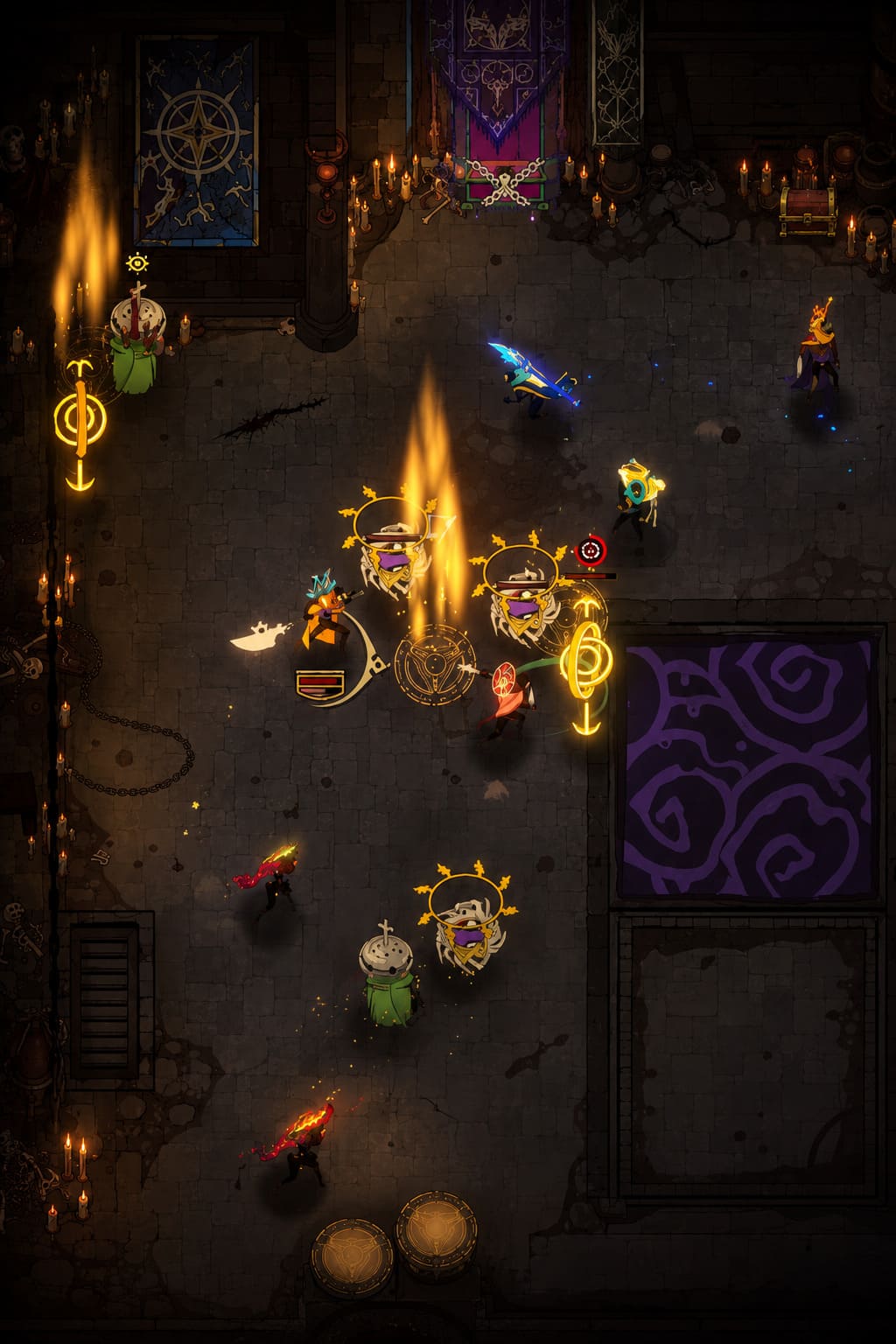
Most Dangerous Ordeals in the Game
Not all Ordeals are equal. Some are just mildly annoying, while others can completely break a run if your team isn’t prepared.
1. Reduced Mobility (Dash Cooldown Increase)
This is one of the most impactful modifiers because movement is everything. When dodge timing slows down, survival becomes significantly harder in tight combat situations.
2. Hardcore Death Mode
This removes revival safety entirely. In a 33-player environment, losing one player permanently changes the entire dynamic of the run.
3. Increased Stagger Punishment
Getting hit becomes much more dangerous. One stun chain can quickly lead to elimination if teammates don’t react immediately.
4. Healing Reduction
This is a slow-burn problem. At first it feels manageable, but over time it drains team sustainability and forces cleaner execution.
5. Anti-Solo Penalty
Players who drift away from the group lose efficiency. This system forces teamwork even if someone prefers a solo playstyle.
How High-Level Teams Actually Survive
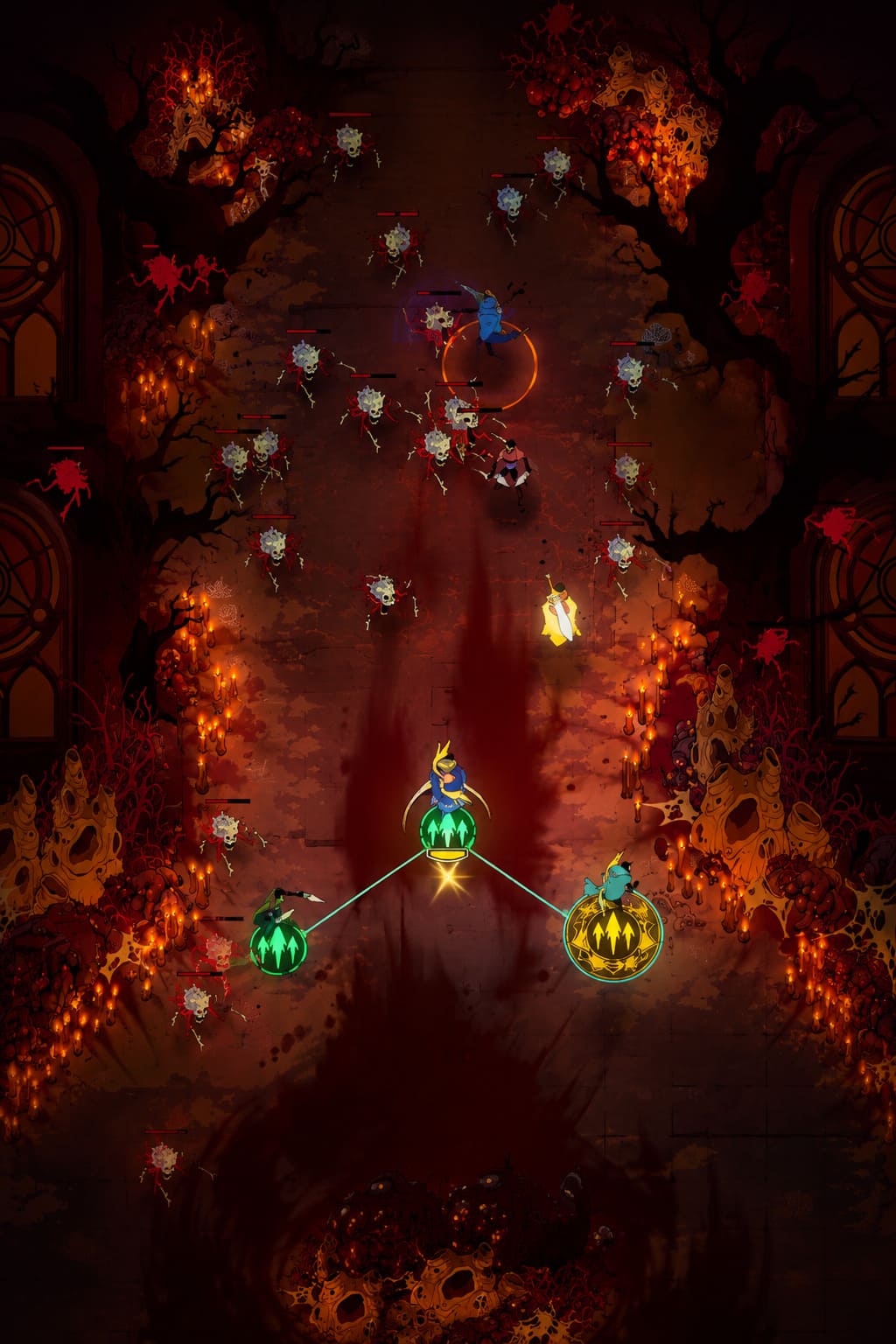
At high Agony levels, individual skill matters far less than coordination. Successful teams don’t improvise constantly—they follow structured patterns that keep everyone aligned.
Core survival rules
- Stack mechanics properly: avoid panic spreading during damage-sharing attacks
- Coordinated burst windows: damage phases are synchronized, not random
- Role distribution: players naturally split into frontline, midline, and ranged support
It starts to feel less like a roguelike and more like a large-scale raid encounter where discipline matters more than reflexes.
Build Philosophy for High Agony Runs
One of the biggest mistakes players make is trying to run pure damage builds. At higher difficulty levels, survivability becomes just as important as output.
Recommended build priorities
- Focus on sustain over raw damage
- Prioritize team synergy effects
- Stack health and defensive stats
Build comparison
| Build Type | Performance |
|---|---|
| Glass Cannon | High damage but very inconsistent survival |
| Balanced Build | Reliable and stable in long runs |
| Support-Oriented | Extremely valuable in coordinated groups |
Why the System Works So Well
What makes Ordeals and Agony interesting is not just the difficulty, but how they force players to think differently. You stop acting like an individual and start functioning as part of a system.
And in a 33-player environment, that shift is what turns chaos into structure.
When a high Agony run succeeds, it doesn’t feel random. It feels earned through coordination, awareness, and execution.
Final Thoughts
High-end gameplay in 33 Immortals isn’t for everyone. It demands attention, patience, and a willingness to play as part of a group instead of chasing solo highlights.
But if you enjoy games where teamwork actually matters, and where difficulty scales into something meaningful rather than just inflated numbers, then the Ordeals and Agony system is one of the most interesting endgame structures in modern co-op roguelikes.
It transforms chaos into discipline—and somehow makes that chaos even more intense in the process.