Project Zomboid Basement Guide: How Underground Bases Work
If you’ve spent enough time in Project Zomboid, you eventually reach a point where surface bases stop feeling safe. Walls get breached, hordes migrate in unexpected ways, and even the most carefully planned fortifications start to feel temporary.
After dozens of runs across different builds, I’ve learned that the introduction of real underground basements changes that feeling completely—but not always in the way people expect.
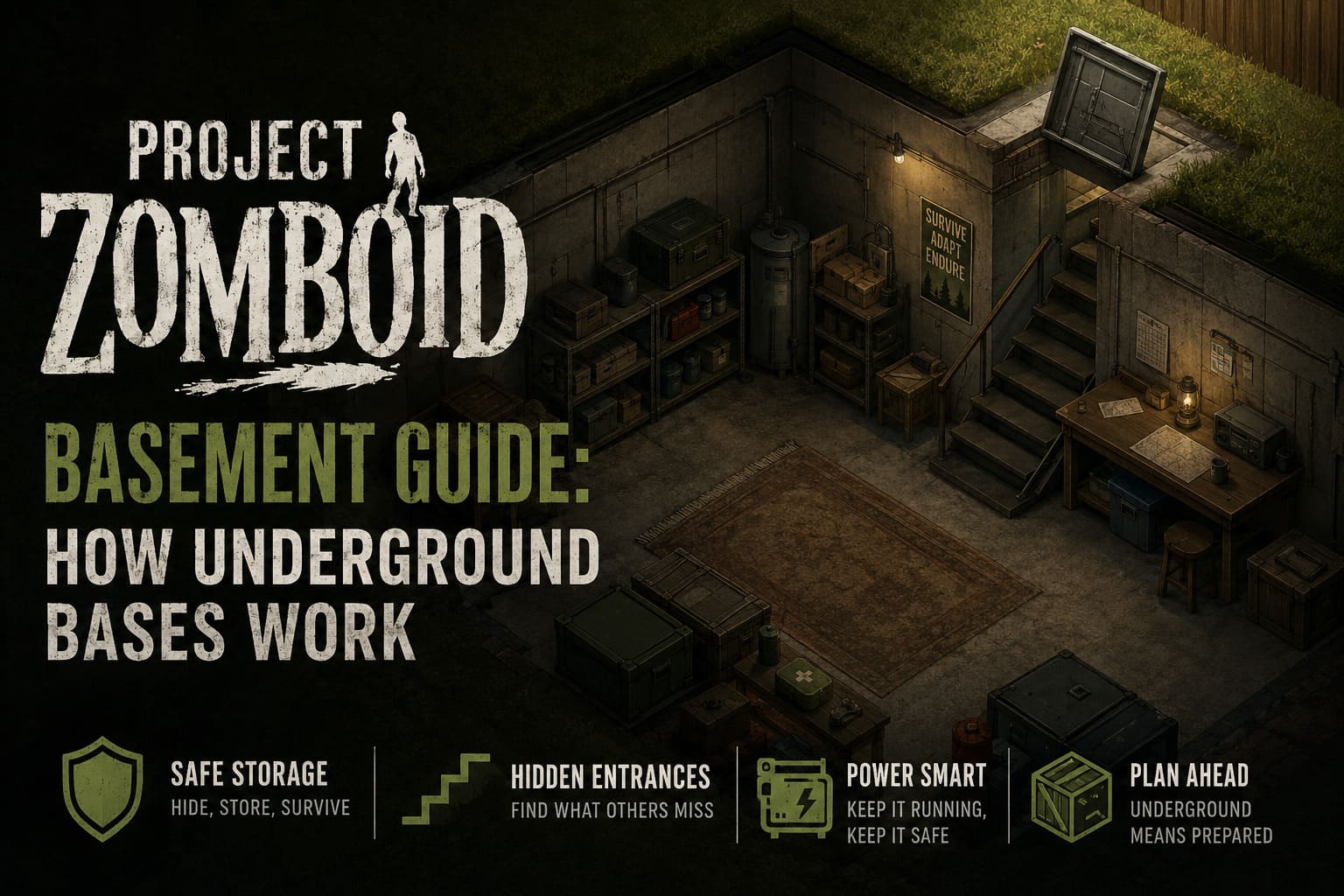
Basements are not just extra storage rooms anymore. They are structural systems tied to world generation, map design, and survival psychology.
Used correctly, they can become some of the safest spaces in the entire game. Used incorrectly, they turn into traps with only one exit and zero forgiveness.
Project Zomboid Build 43 NPC Guide: What to Expect from the Next Big Update
Understanding Basements in Build 42
The key thing to understand is that basements are not universal. They are partially scripted and partially procedural depending on the location. This creates two fundamentally different experiences depending on where you settle.
Fixed Underground Structures
Fixed basements are tied to specific points of interest in the world. These locations are designed by the developers and remain consistent across playthroughs. When you find one, you always know what to expect in terms of layout and structure.
These areas are typically found under major institutions and high-value buildings. They are often heavily defended by design and usually contain better loot tables than standard residential areas.
Project Zomboid Build 42 Animal Husbandry Guide: Complete Livestock and Breeding Strategy
Procedural Residential Basements
Procedural basements are generated dynamically based on the world seed and building structure. A house might have a full underground storage room in one playthrough and nothing at all in another.
This randomness is what makes exploration both exciting and frustrating. You are never guaranteed value, even if the surface building looks promising.
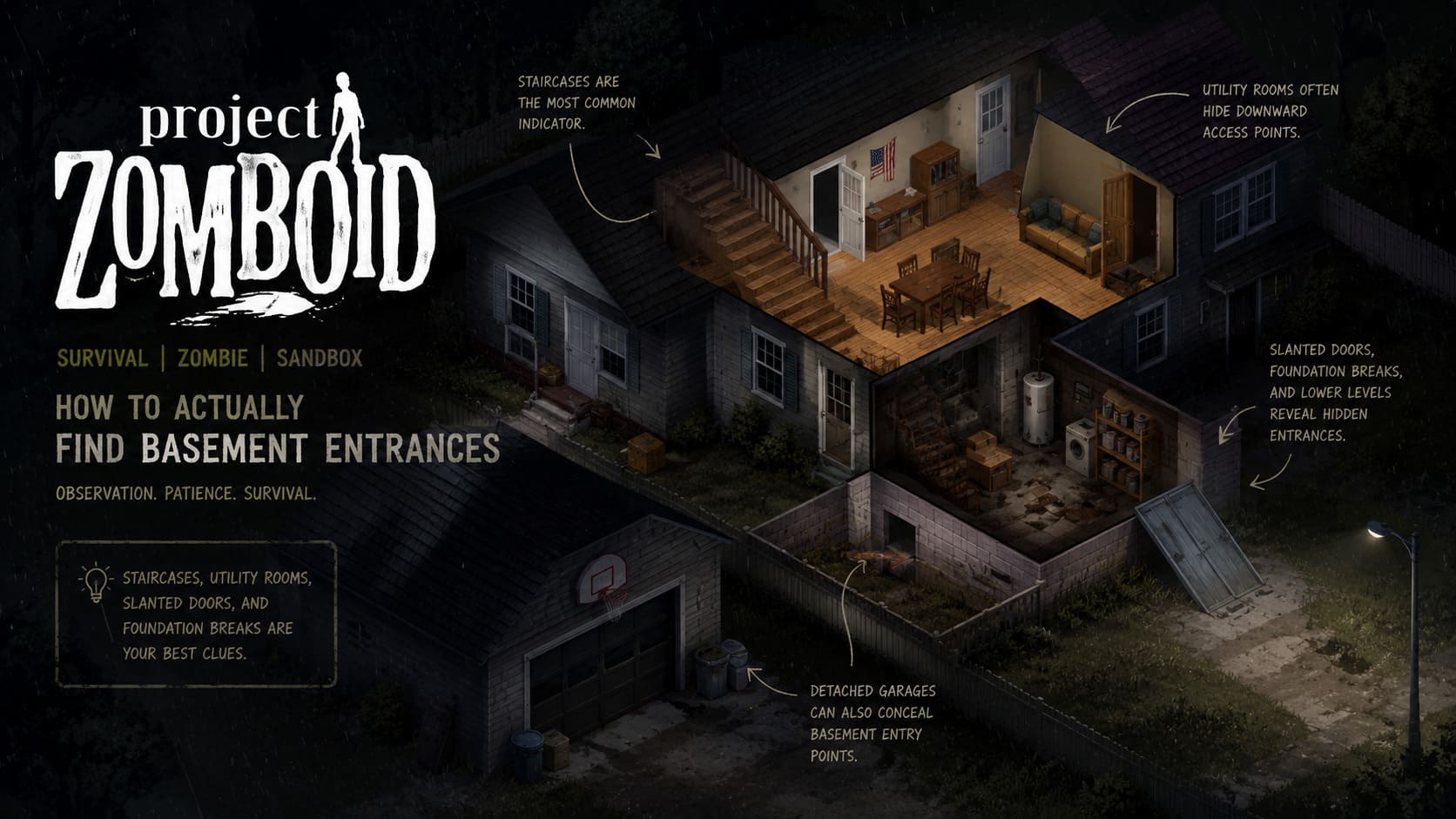
How to Actually Find Basement Entrances
After enough hours, you stop relying on luck and start recognizing architectural patterns. The game doesn’t always highlight entrances clearly, so observation becomes essential.
Interior Clues
Inside buildings, basement access is often hidden in plain sight. Staircases are the most common indicator, especially when they feel slightly misplaced or tucked into awkward corners of a layout.
Utility rooms are another major clue. Small closets, laundry spaces, or maintenance rooms sometimes hide downward access points that players rush past while looting.
Exterior Indicators
Outside the building, you may find slanted metal doors, concrete stairwells, or subtle foundation breaks that reveal underground access. If a building’s footprint feels larger than its interior layout, there is a good chance something is hidden below ground level.
Detached garages can also contain basement entry points in rare cases, which makes them surprisingly valuable for base planning.
Types of Basements and Their Value
Not all basements are equal, and understanding their differences helps you decide whether to invest time in securing them.
| Basement Type | Value | Risk | Use Case |
|---|---|---|---|
| Fixed Institutional | Very High | Medium | Main bases, military-style loot |
| Residential Procedural | Medium | High | Early survival storage |
| Industrial Sublevels | High | Medium | Large-scale storage and crafting |
| Utility Cellars | Low–Medium | Low | Emergency hiding spots |
The most important takeaway is consistency. Fixed locations are reliable, while procedural ones are always a gamble.
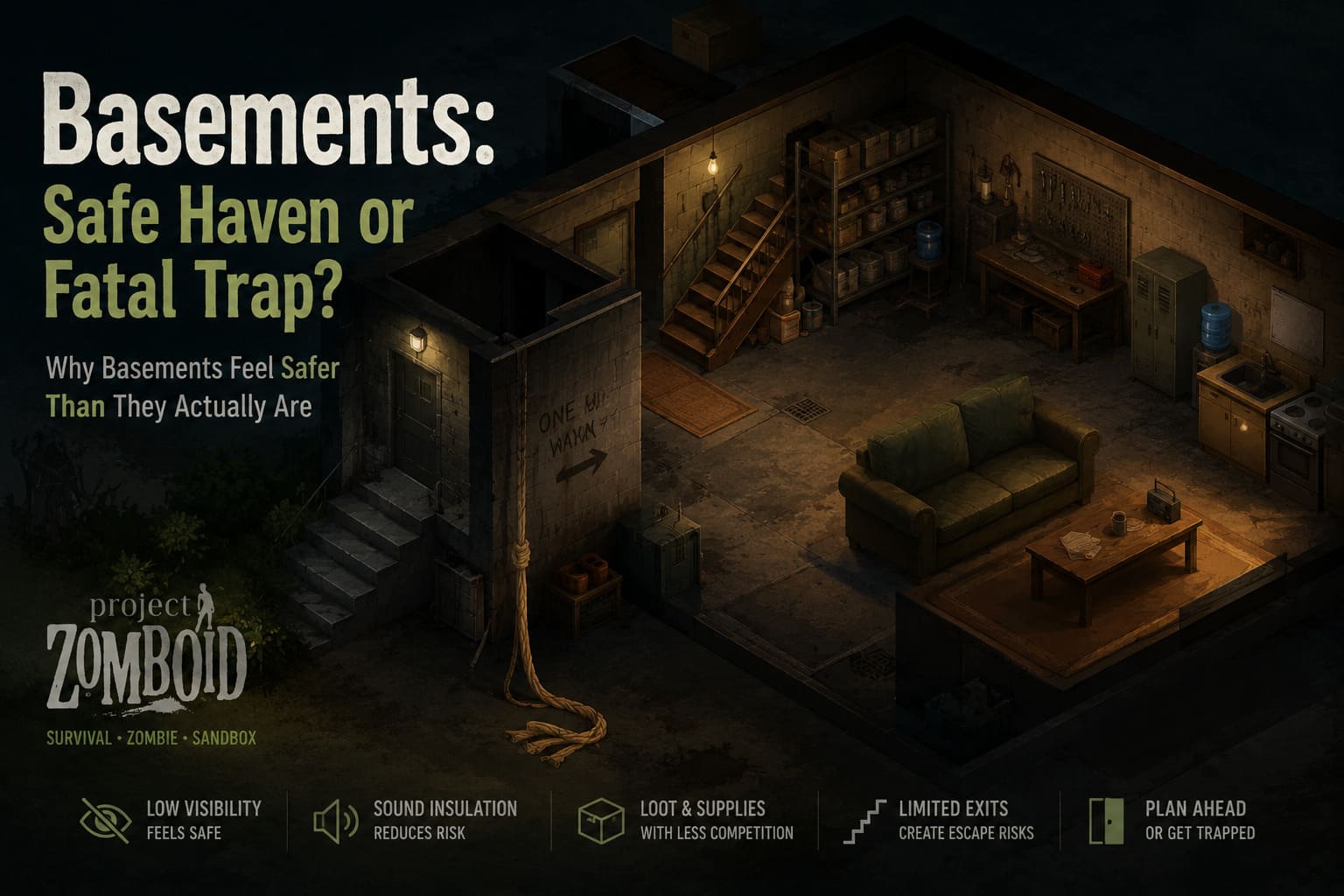
Why Basements Feel Safer Than They Actually Are
At first glance, basements feel like perfect survival spaces. No windows, limited visibility from the outside, and reduced zombie awareness all contribute to a sense of safety that can be misleading.
From my experience, the biggest advantage is sound isolation. Activities like crafting, organizing loot, or cooking rarely attract attention from surface-level zombies.
However, this advantage comes with a serious downside: escape limitation. Most basements only have one entry point, which becomes a fatal bottleneck if a horde blocks your exit.
The Escape Problem
In surface bases, you can create multiple escape routes using sheet ropes and upper floors. In basements, you are usually locked into a single staircase. If that staircase becomes compromised, your options disappear quickly.
This is the main reason experienced players treat basements as secondary bases rather than primary strongholds.
Power and Lighting Considerations
Electricity plays a major role in making basements functional. Without proper lighting, even the best underground space becomes inefficient and dangerous during panic situations.
Generators placed on the surface can usually power underground systems, which allows you to run lights, fridges, and other essential equipment below ground.
The key rule is simple: never place generators inside basements. The confined space creates lethal conditions due to exhaust buildup, which can quickly end a run if ignored.
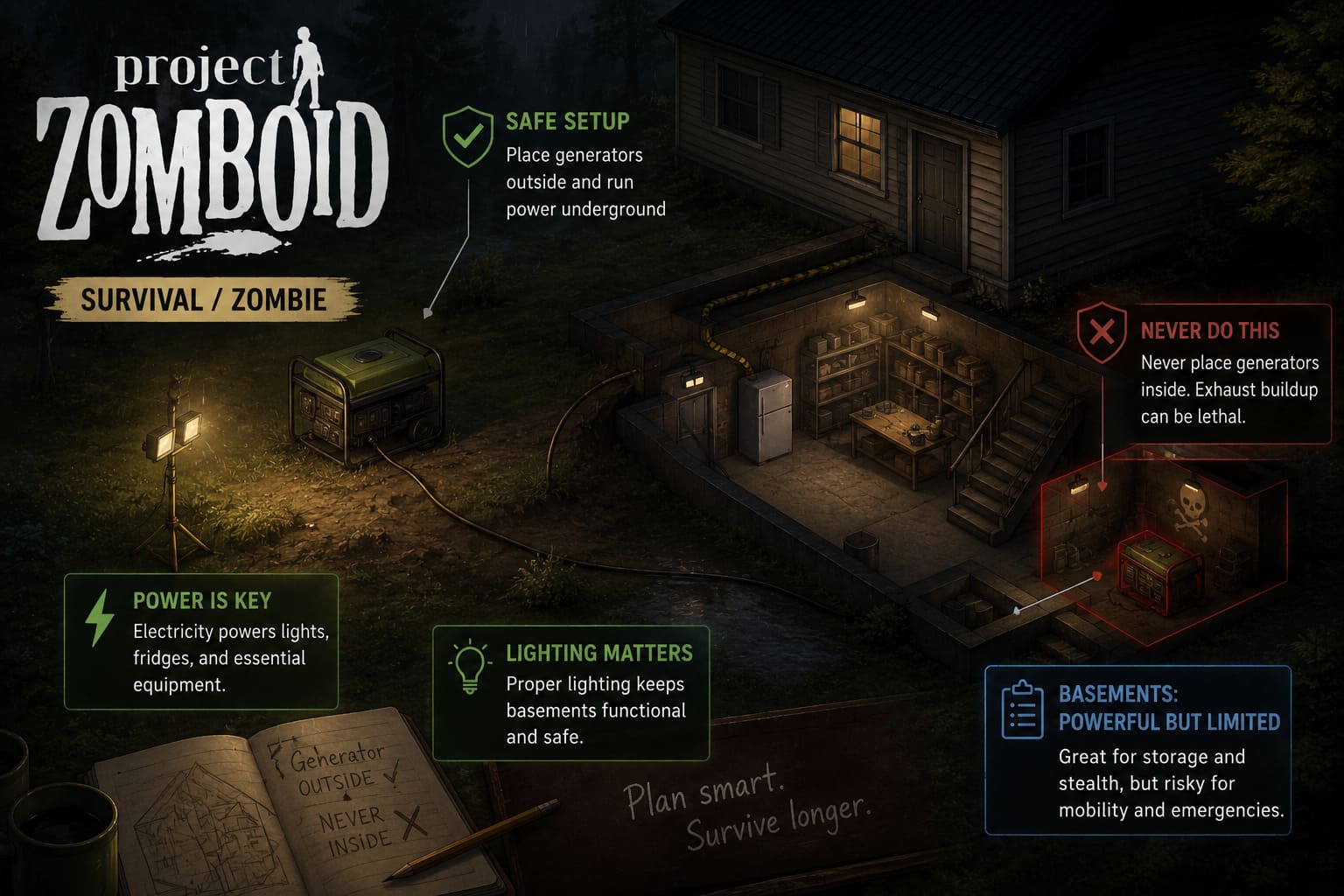
Practical Setup Strategy
Most experienced players place generators outside the building, then distribute power downward into the basement. This setup keeps both safety and functionality balanced without risking toxic exposure.
Are Basements Worth Using?
After multiple long survival runs, my answer is nuanced. Basements are extremely powerful tools, but they are not universal solutions.
They excel in storage efficiency, stealth gameplay, and long-term resource management. However, they fail when it comes to mobility, flexibility, and emergency response situations.
The biggest mistake players make is turning basements into full-time headquarters. Once that happens, survival becomes static—and static survival in Project Zomboid usually ends badly.
Final Thoughts From Experience
What makes basements interesting is not just their loot or structure, but how they change player behavior. They encourage hoarding, reduce movement, and create a false sense of control in a world designed to punish predictability.
In my own runs, I now treat basements as support infrastructure rather than main bases. They are excellent for hidden storage, emergency fallback points, and resource organization—but I never rely on them as my only safe zone.
If you use them with discipline, they can dramatically improve your survival efficiency. If you overcommit, they will eventually become a trap you built yourself.