Project Zomboid Build 43 NPC Guide: What to Expect from the Next Big Update
After years of playing survival games across different genres—from hardcore zombie sims to colony builders and open-world sandboxes—I’ve learned to stay cautious whenever developers promise “living worlds” and “advanced AI.” Most of the time, it sounds better on paper than it feels in actual gameplay.
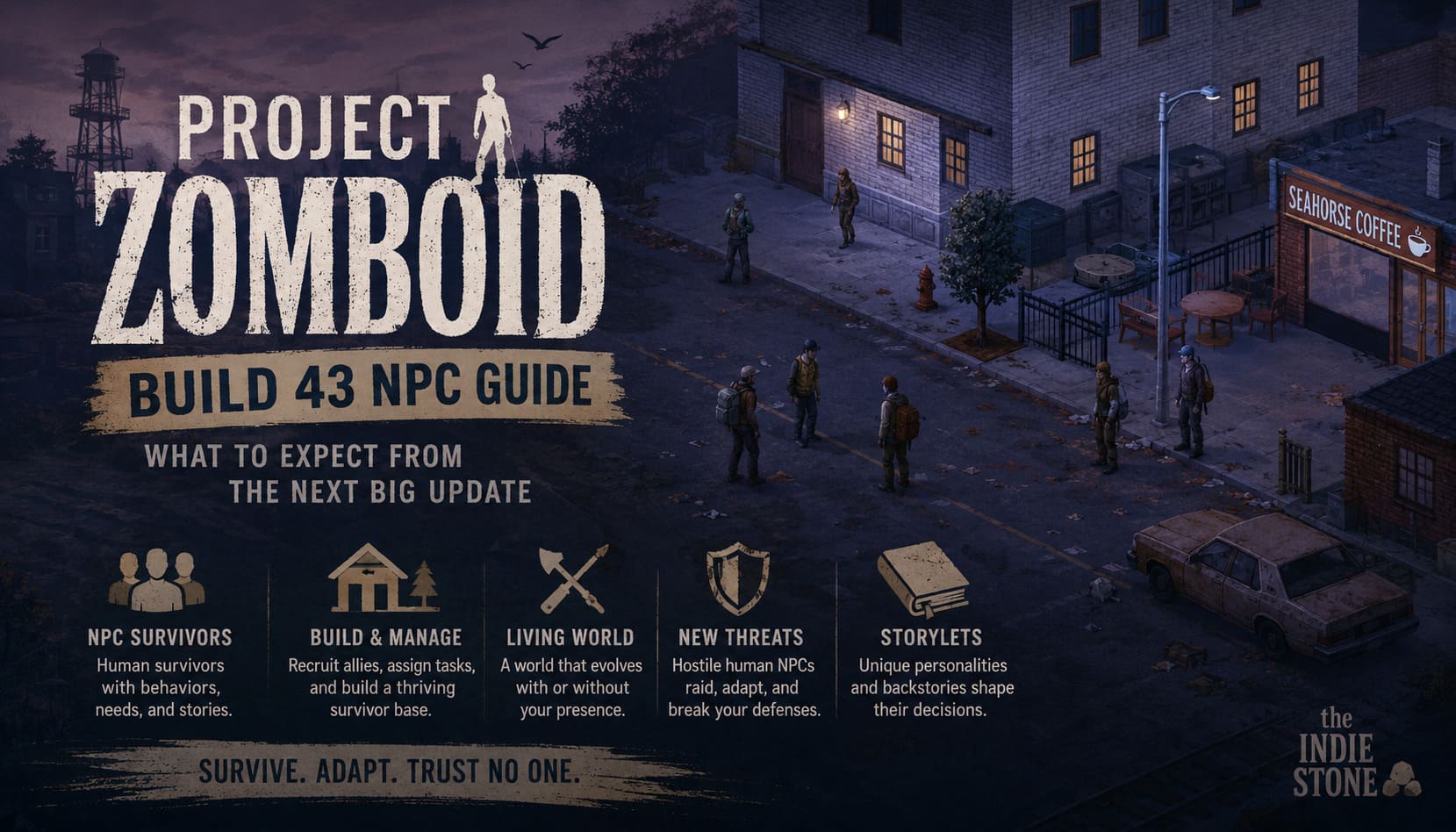
But Project Zomboid Build 43 is different in one important way: it doesn’t just aim to improve systems, it aims to fundamentally change the emotional experience of survival by introducing human NPCs into a world that has always been defined by loneliness.
If The Indie Stone manages to pull this off even partially, Build 43 won’t feel like a regular update. It will feel like a shift in identity for the entire game.
Project Zomboid Build 42 Animal Husbandry Guide: Complete Livestock and Breeding Strategy
From Isolation to a Living World
Right now, even with all the improvements introduced in Build 42 like basements, animal ecosystems, and expanded crafting, Project Zomboid still feels intentionally empty. That isolation is part of its identity and one of its strongest design pillars.
Build 43, however, appears to challenge that foundation by introducing human survivors who exist independently of the player. And that is where things get interesting—and risky.
As someone who has seen survival games break under overly complex AI systems, I can already see both the promise and the potential pitfalls of this direction.
The “Wide but Shallow” NPC Philosophy
The most important design decision behind Build 43 NPCs is what developers describe as a “wide but shallow” implementation. Instead of launching with deep faction systems or complex political simulation, the focus is on establishing basic human behavior first.
Project Zomboid Build 42 Multiplayer Stability Guide: Fix Lag, Desync, and Low FPS
Core NPC behaviors include:
- – Scavenging for resources
- – Avoiding or fighting zombies
- – Traveling between locations
- – Resting and survival decision-making
This approach is actually one of the most grounded parts of the entire concept. It avoids the common mistake of overbuilding systems before the foundation is stable.
From a player perspective, this is the right call. NPCs need to feel believable before they need to feel complex.
A World That Continues Without You
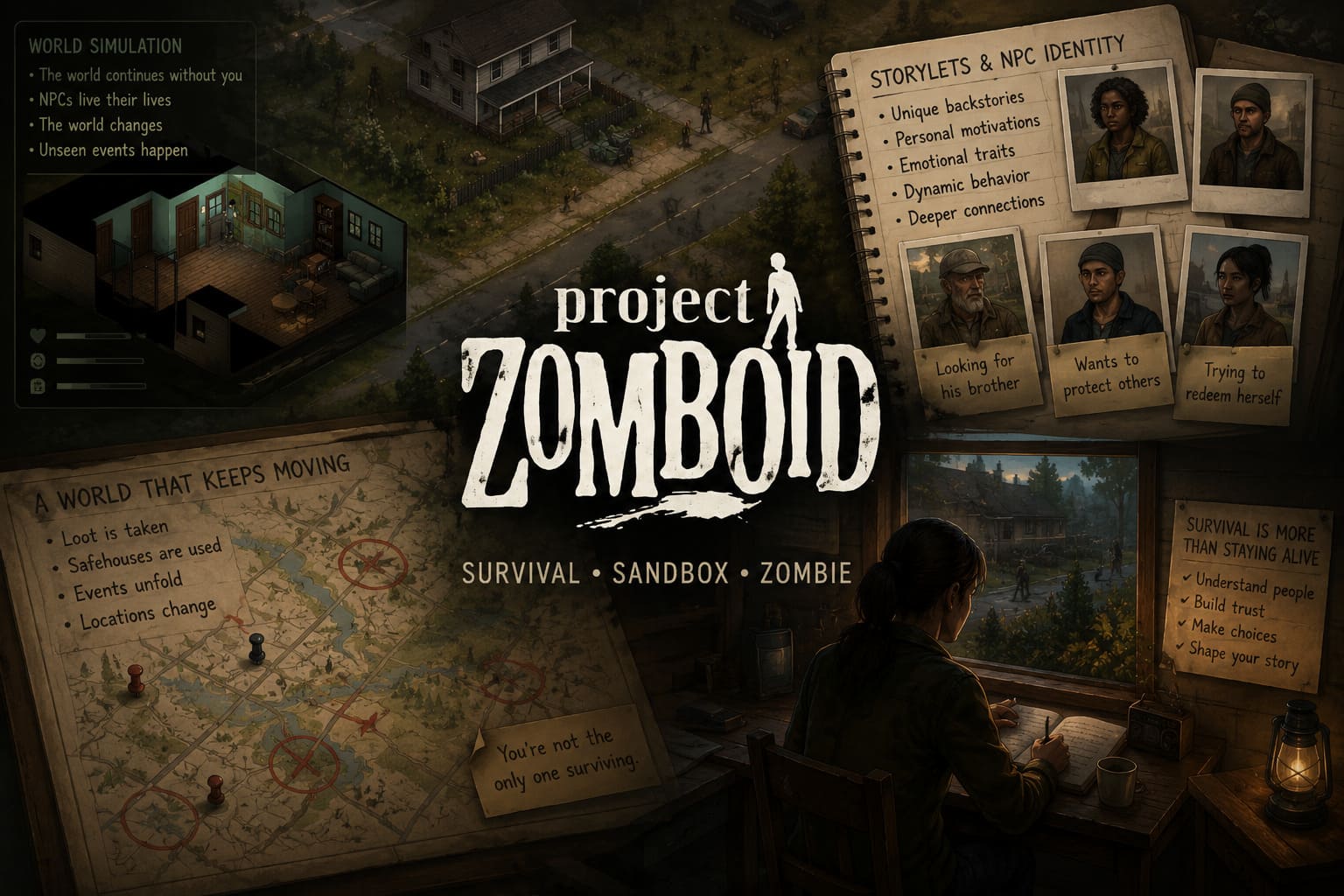
One of the most ambitious ideas being discussed is the concept of a virtual simulation layer. In simple terms, NPCs continue living their lives even when they are outside the player’s loaded area.
This means the world does not wait for the player anymore. Survivors will loot, travel, die, and relocate even when you are not around to witness it.
When you finally arrive at a location, the world state may already have been changed by unseen human activity.
Why this matters
This system could finally eliminate one of the biggest immersion problems in survival games: the feeling that the world only exists when you are looking at it.
However, it also introduces a new challenge. If not balanced carefully, players may feel frustrated when key resources disappear due to unseen simulation events.
Storylets and NPC Identity Systems
Another major feature being discussed is the introduction of Storylets—small narrative fragments tied to NPC backgrounds and personalities.
Instead of generic survivors, players will encounter individuals with personal histories, motivations, and emotional traits that influence their behavior.
Potential NPC traits include:
- – Loyal or protective behavior
- – Opportunistic survival instincts
- – Fear-driven decision-making
- – Conflicting personal narratives about the outbreak
This adds an important layer of depth, turning NPCs into perspectives rather than just interactive objects.
However, as someone who has played many narrative-heavy survival games, I know how quickly this can become repetitive if not handled with enough variation.
Base Building and Group Survival Systems
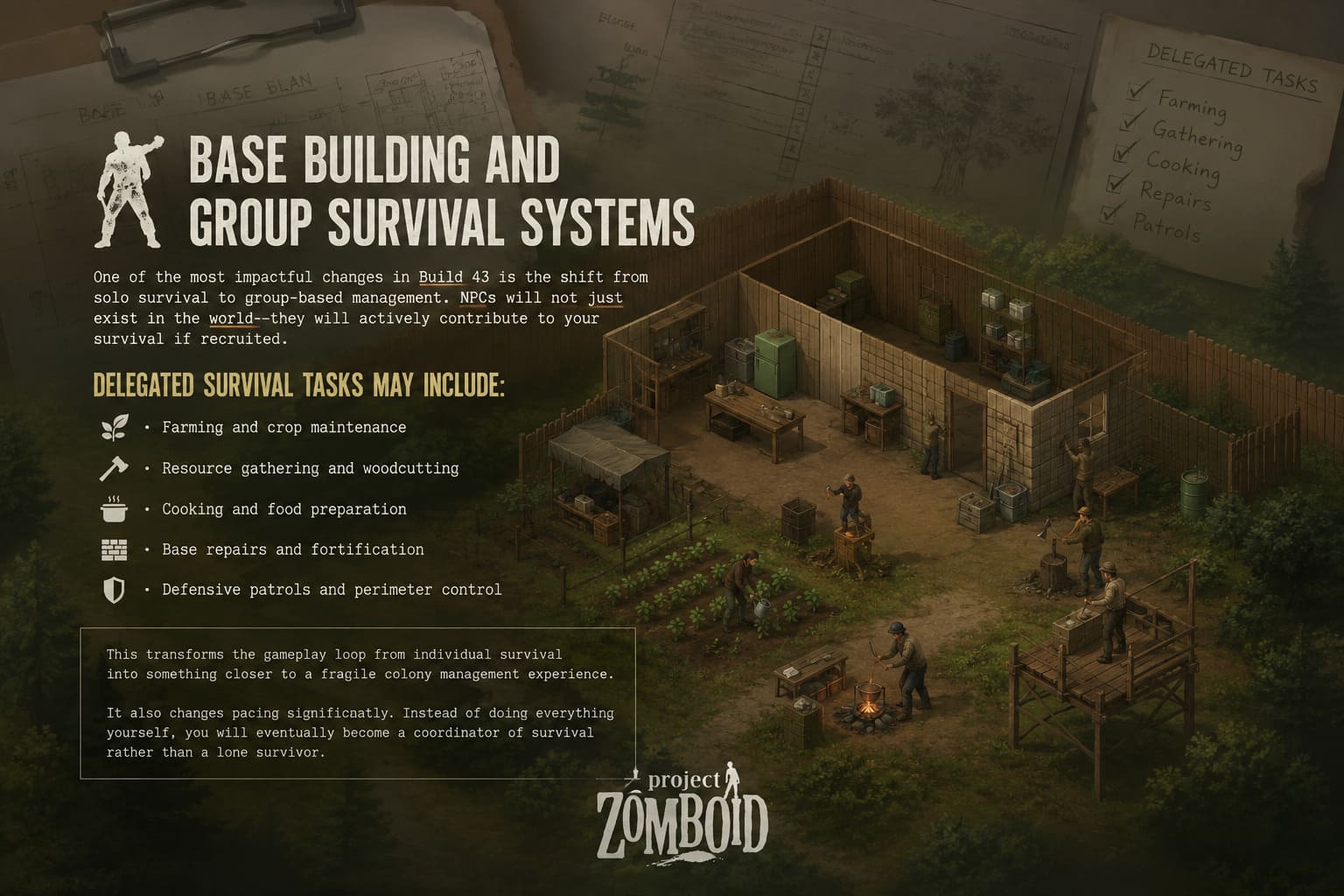
One of the most impactful changes in Build 43 is the shift from solo survival to group-based management. NPCs will not just exist in the world—they will actively contribute to your survival if recruited.
Delegated survival tasks may include:
- – Farming and crop maintenance
- – Resource gathering and woodcutting
- – Cooking and food preparation
- – Base repairs and fortification
- – Defensive patrols and perimeter control
This transforms the gameplay loop from individual survival into something closer to a fragile colony management experience.
It also changes pacing significantly. Instead of doing everything yourself, you will eventually become a coordinator of survival rather than a lone survivor.
Human Threats and Base Raids
The introduction of hostile human NPCs is arguably the most important gameplay shift in the entire update.
Unlike zombies, human enemies are unpredictable. They think, adapt, and exploit weaknesses in ways that scripted enemies never can.
Expected hostile behaviors include:
- – Breaking doors and barricades
- – Raiding supply storage
- – Stealth infiltration of bases
- – Coordinated group attacks
- – Resource theft and ambush tactics
This fundamentally changes how base defense works. Static walls and simple barricades will no longer guarantee safety.
As a veteran survival player, I see this as both exciting and dangerous for balance. If tuned correctly, it could bring back long-term tension that many sandbox survival games lose over time.
Changing NPC Roles Over Time
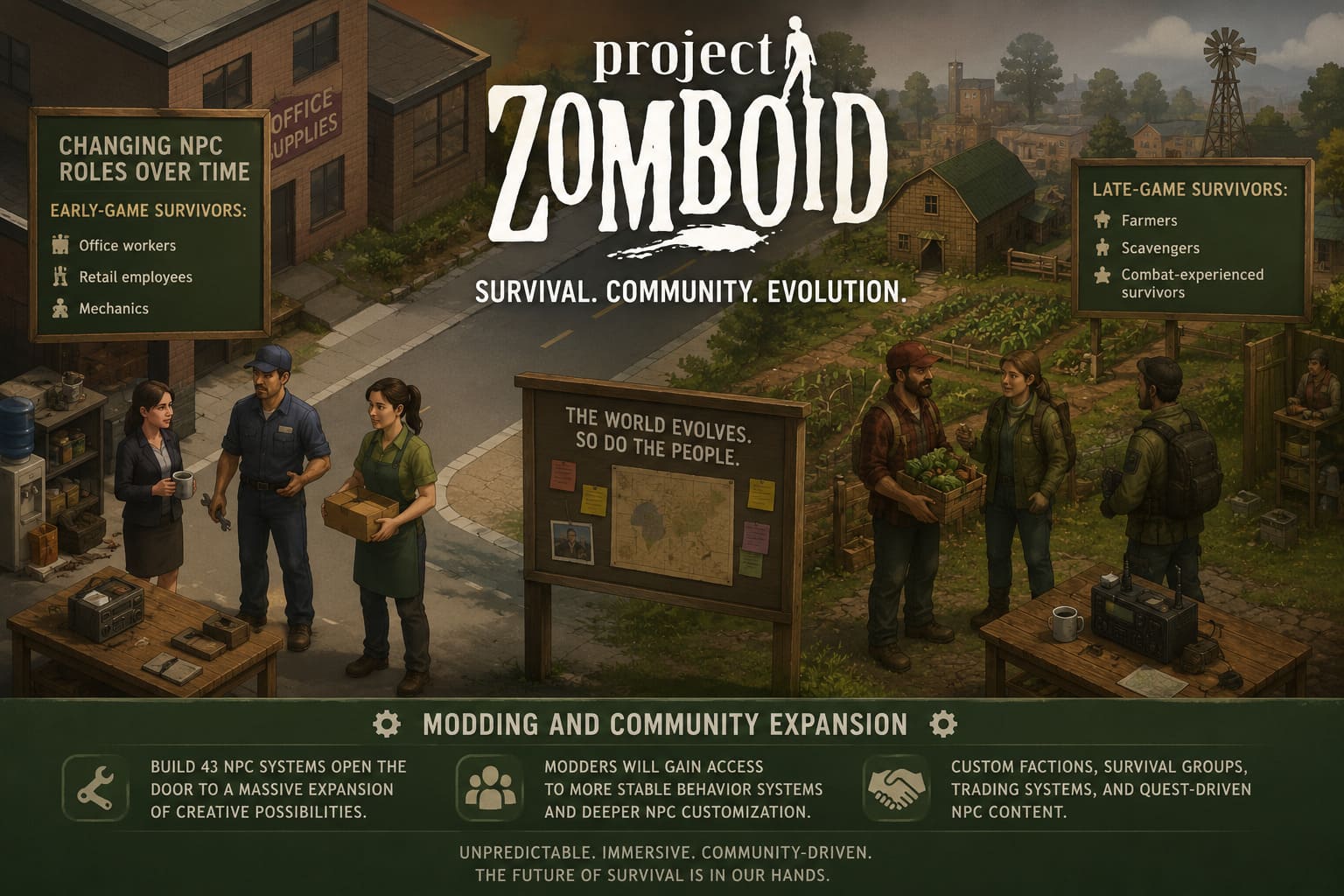
Another subtle but powerful idea is how NPC backgrounds evolve depending on the stage of the apocalypse.
Early-game survivors:
Common civilian roles like office workers, retail employees, and mechanics.
Late-game survivors:
More specialized and hardened roles such as farmers, scavengers, and combat-experienced survivors.
This creates a sense of world evolution. The longer the apocalypse continues, the more adapted the human population becomes.
Modding and Community Expansion
One of the strongest aspects of Project Zomboid has always been its modding community. Build 43 NPC systems open the door to a massive expansion of creative possibilities.
Modders will likely gain access to more stable behavior systems, allowing for custom factions, survival groups, trading systems, and quest-driven NPC content.
This is where things could get truly unpredictable—in a good way. Historically, the modding community often pushes survival games far beyond their original design scope.
Final Thoughts: Risk and Potential
Build 43 represents one of the most ambitious shifts in Project Zomboid’s history. It attempts to transform the game from a solitary survival experience into a living ecosystem populated by unpredictable human behavior.
But ambition always comes with risk.
If NPCs are too shallow, the world will feel empty despite being populated. If they are too complex, the system may become unstable or overwhelming. The balance between realism, performance, and gameplay clarity will define whether this update succeeds.
Still, as someone who has spent years in survival games, I can say this much with confidence: if even part of this system works as intended, Project Zomboid will no longer be just a survival sandbox. It will become a true simulation of post-apocalyptic human behavior.
And that is something very few games have ever managed to achieve.