NBA 2K27 Steal Controls Guide: Aggressive vs Conservative Defense Explained
NBA 2K27 has finally made perimeter defense feel like something you actually have to play. That might sound obvious for a basketball game, but anyone who has spent enough time online knows how frustrating defense could become in previous versions. Sometimes your defender felt glued to the floor. Other times, a guard could spam the same dribble move over and over while you desperately tried to stay in front of him.
NBA 2K27 takes a noticeably different approach. Steals are no longer something I would recommend throwing out randomly just because the ball is nearby. The game rewards defenders who understand positioning, timing, stamina management, and, most importantly, when not to press the steal button.
After spending time looking at the new defensive mechanics and comparing the aggressive and conservative approaches, I think the biggest lesson is pretty simple: good defense in NBA 2K27 is about making the right decision before the steal animation even begins.
If you’re trying to stop quick guards, reduce blow-bys, force turnovers without collecting unnecessary fouls, or simply become more reliable in Rec and Pro-Am, this guide breaks down the defensive system and the controls that matter most.
NBA 2K27 Steal Mechanics Explained
The first thing to understand is that steals aren’t supposed to feel like pure luck anymore. A successful reach is influenced by the matchup between the defender and the ball handler, along with positioning, timing, badges, and the current state of both players.
Your Steal attribute matters, but so does the offensive player’s ability to protect the ball. A defender with a strong steal rating attacking a weak ball handler can create much more pressure than the same defender reaching against a highly skilled playmaker.
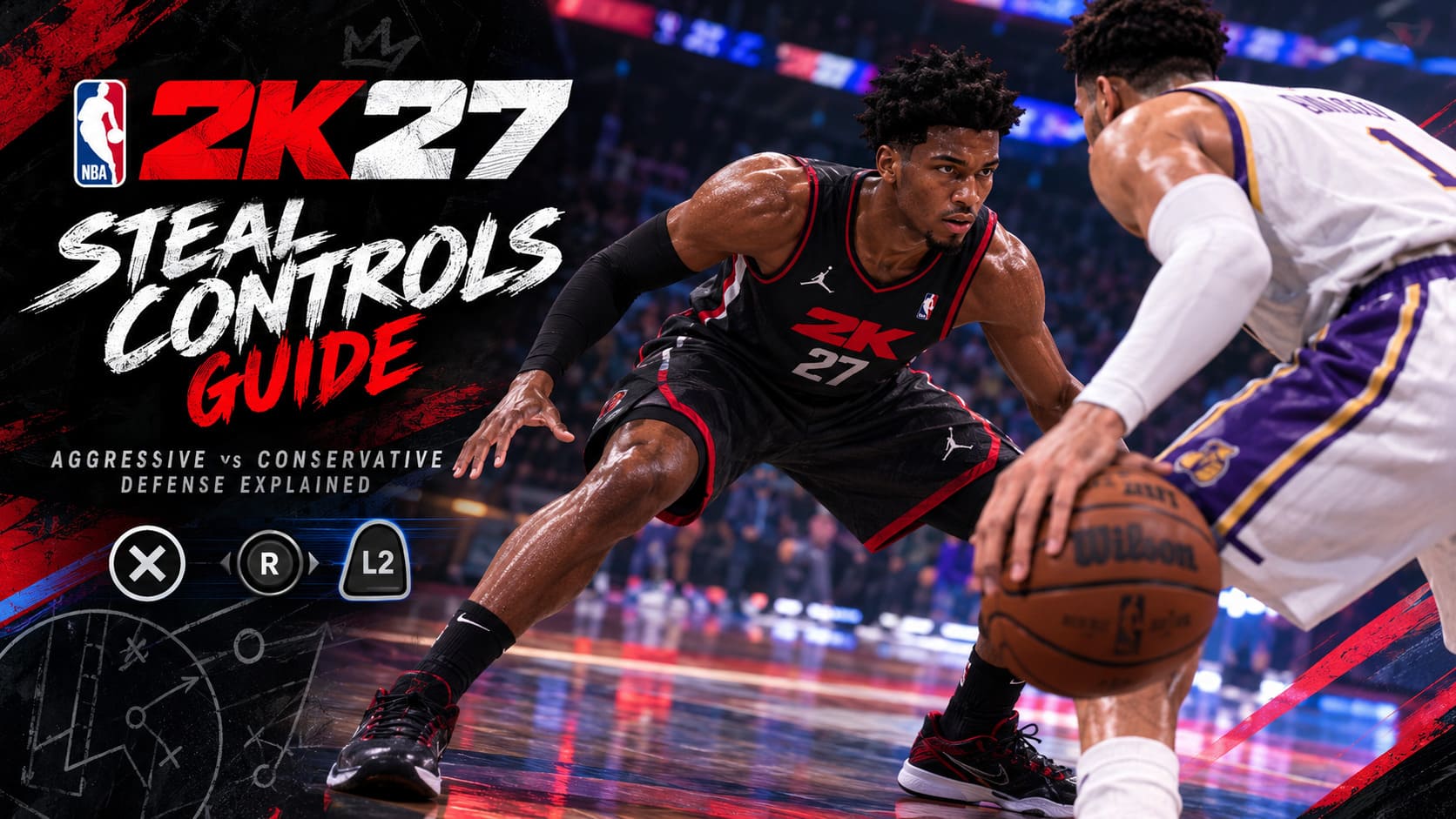
This is one of the changes I actually like. It makes defensive ratings feel more meaningful instead of turning every possession into a contest of who can press Square or X faster.
There is also another important factor: adrenaline management.
Repeated defensive actions can drain your available defensive adrenaline. If you keep reaching, bumping, and lunging without a plan, your player becomes much less effective. At that point, another steal attempt is usually less of a defensive strategy and more of a donation to the opponent.
The same principle works against the offense. When a ball handler burns through their own resources by over-dribbling, they become easier to pressure. That’s the moment when an experienced defender should become more aggressive.
| Situation | Best Defensive Response | Risk Level |
|---|---|---|
| Fresh ball handler with strong handles | Stay disciplined and contain | Low |
| Opponent repeats the same dribble move | Time a controlled reach | Medium |
| Opponent has burned offensive adrenaline | Increase pressure and attack the ball | Medium |
| Ball exposed during an animation | Quick steal attempt | Medium |
| Defensive adrenaline is nearly empty | Stop reaching and contain | High |
Aggressive Defense in NBA 2K27: When to Attack
Let’s start with the fun stuff.
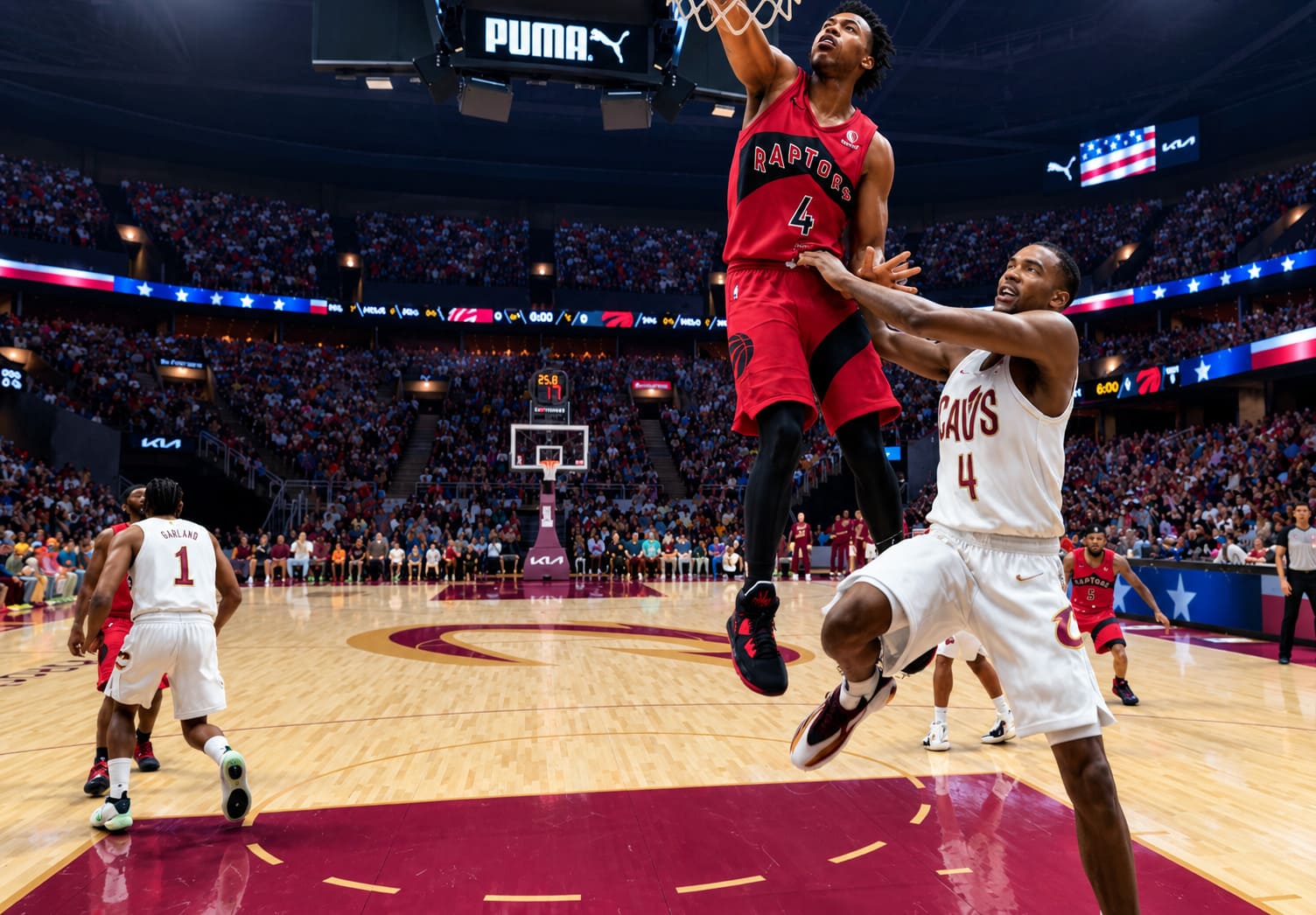
Aggressive defense is incredibly satisfying when you get it right. There is nothing better than bumping a dribbler, reading the next move, reaching at exactly the right moment, and watching the ball pop loose. But there is also nothing more annoying than giving up an uncontested three because you decided to gamble from the wrong side of the ball.
The aggressive style is best suited to players with strong defensive ratings, good reaction speed, and enough experience to recognize dribble patterns.
Key Aggressive Defensive Controls
- Square on PlayStation / X on Xbox: Use for steal attempts.
- Right Stick Up: Useful for active hands-up pressure and contests.
- L2 / Left Trigger: Helps with controlled defensive positioning and staying attached.
- Movement: Your feet are still more important than the steal button.
One mistake I see constantly is treating aggressive defense as nonstop reaching. That’s not really aggression; it’s panic.
The better approach is to pressure first and steal second.
For example, if a guard crosses half-court and immediately starts using the same escape animation, don’t instantly reach. Stay attached. Watch which hand the ball moves to. Force the player toward an uncomfortable direction. If the dribble animation exposes the ball, then make your move.
That short delay can be the difference between a clean steal and a reach-in foul.
The Bump-and-Reach Strategy
One of my favorite concepts in the current defensive system is the bump-and-reach sequence.
The idea is straightforward: use your body positioning to disrupt the ball handler’s movement first, then attack when the dribble animation becomes vulnerable.
You’re not trying to steal the ball from a perfectly controlled dribble. You’re trying to create a moment where the offense loses control.
That distinction matters.
A well-timed bump can interrupt the rhythm of a dribble sequence. If the ball moves away from the defender or the offensive player enters a vulnerable animation, that’s your window.
Don’t chase the steal. Create the opportunity for the steal.
Why Aggressive Defense Can Backfire
Of course, there is a price for playing this way.
Cross-body reaches are particularly dangerous because you’re attacking from a poor angle. If the ball isn’t properly exposed, you’re basically asking the referee to blow the whistle.
Repeated reaching can also destroy your defensive resources. Once you’ve burned through too much adrenaline, your player won’t have the same ability to recover or contest.
And then there’s the biggest problem: the blow-by.
If you commit too heavily to a steal attempt and miss, a competent ball handler can immediately attack the space you just created. Suddenly your aggressive defense has turned into an easy drive.
That’s why I wouldn’t recommend playing maximum aggression for an entire game. Use it in bursts.
Conservative Defense: The Better Option for Consistency?
Now we get to the style I personally prefer for serious games.
Conservative defense isn’t passive defense. That’s an important distinction.
The goal isn’t to stand several feet away and hope the opponent misses. The goal is to control where the offense can go while refusing to give away easy opportunities.
Instead of gambling for every steal, you’re using your positioning to force the ball handler toward help, the sideline, or an uncomfortable shooting situation.
For competitive Rec and Pro-Am games, this can be much more valuable than constantly hunting for turnovers.
How Conservative Defense Works
Use your defensive stance and movement to stay square with the ball handler. Keep your distance tight enough to contest, but don’t overcommit your player toward one side.
Holding Down on the Right Stick can be useful for a more grounded hands-up approach, while L2/Left Trigger helps maintain controlled defensive positioning.
The biggest advantage is that you’re preserving your ability to react.
If the opponent tries a crossover, you can move with them. If they pull up, you’re already close enough to contest. If they drive, you can angle them toward help defense instead of giving up the middle immediately.
That’s why conservative defense works so well against players who are impatient.
How to Stop Blow-By Animations
If you’re constantly getting beaten off the dribble in NBA 2K27, your first instinct might be to increase your steal attempts. I would actually do the opposite.
Stop reaching and fix your positioning.
Blow-bys often happen because the defender is already leaning the wrong way or is too aggressive with their movement. Once your defender is out of position, the offensive player doesn’t need a spectacular dribble move. They just need a small opening.
Try using shorter lateral movements instead of constantly holding a direction.
Watch the player’s chest and hips rather than staring exclusively at the basketball. Experienced ball handlers use animations to make you react to the wrong visual cue. Your job is to stay balanced.
If you can keep the ball handler in front of you without reaching, you’ve already won half the defensive battle.
Creating Turnovers Without Constantly Reaching
This is where the conservative approach gets interesting.
You don’t need to generate every turnover with an on-ball steal.
- Force uncomfortable passing angles.
- Shade the ball handler toward help defense.
- Contest passing lanes without abandoning your assignment.
- Wait for loose-ball animations.
- Attack only after the opponent makes a mistake.
Passing-lane steals can be particularly effective when the offense becomes predictable. If the same player repeatedly looks for a corner pass or a basic kick-out after driving, you can anticipate the play instead of reacting late.
That’s also where defensive IQ becomes more important than raw ratings.
Best Defensive Settings for NBA 2K27
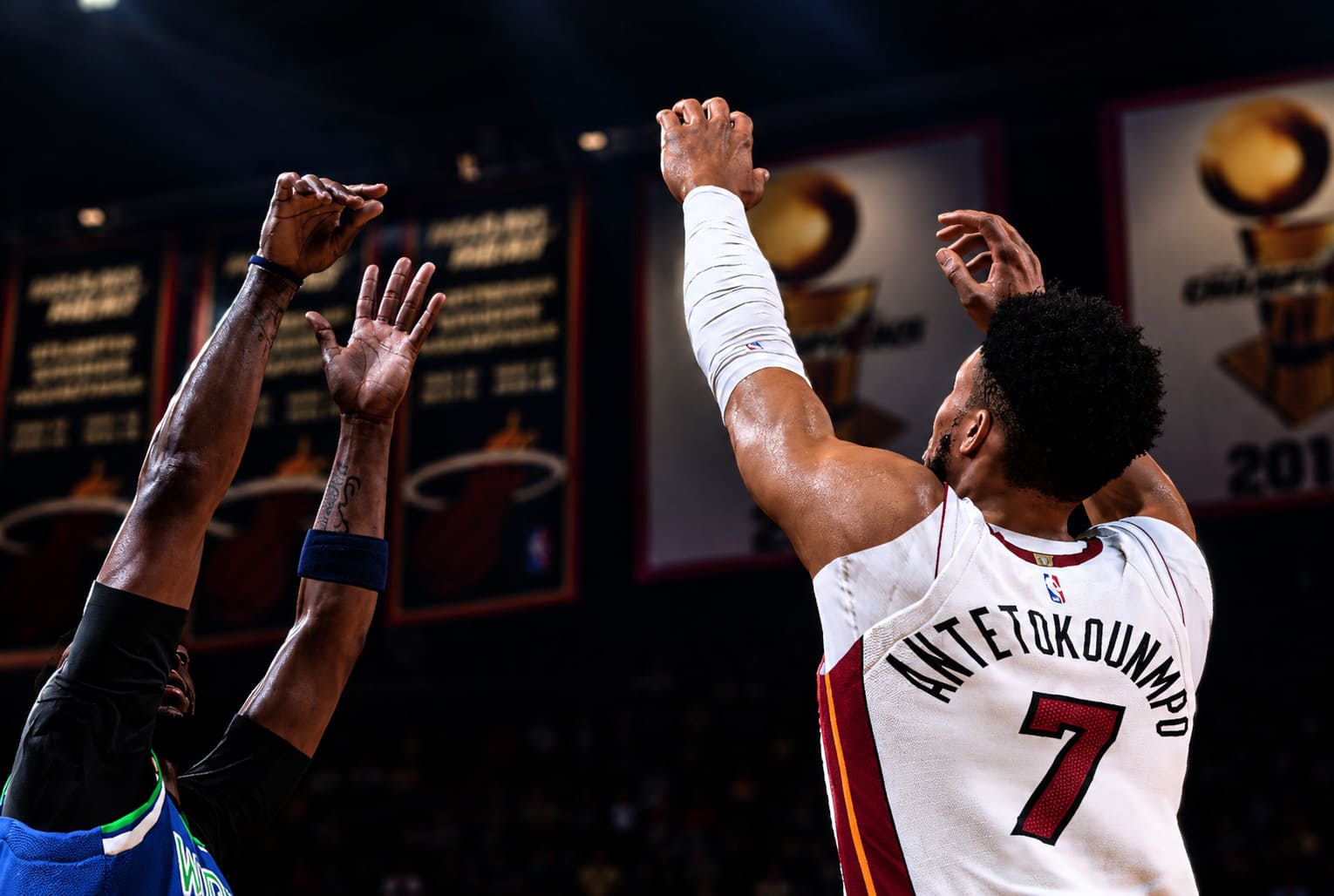
Your individual defense isn’t the only thing that matters. Team settings can have a huge impact, especially when you’re playing modes where AI-controlled teammates are involved.
| Setting | Recommended Value | Why |
|---|---|---|
| On-Ball Pressure | Tight | Helps maintain pressure without completely overcommitting. |
| Off-Ball Pressure | Tight | Reduces easy catch-and-shoot opportunities. |
| Catch Hedge | Always | Provides better support against pick-and-roll actions. |
| Stay Attached | On | Reduces unnecessary defensive rotations. |
| Adaptive Coaching Engine | Off | Gives you more direct control over defensive adjustments. |
Obviously, these aren’t magic settings. A bad defensive possession is still a bad defensive possession. But they provide a much better starting point than simply leaving everything at default.
Best NBA 2K27 Defensive Builds for the Current Meta
If perimeter defense is your priority, the current build philosophy heavily favors versatile wings.
A height around 6’6″ to 6’8″ gives you a useful combination of size, mobility, contest ability, and defensive versatility. You’re tall enough to bother larger wings while still having the movement tools necessary to defend guards.
For a balanced defensive build, I would rather have a strong perimeter defense rating combined with a respectable steal rating than sacrifice everything just to chase a huge steal number.
| Build Focus | Recommended Priority |
|---|---|
| Perimeter Defense | Very High |
| Lateral Quickness | Very High |
| Steal | 79–85 for balanced builds |
| Steal for pure lockdown | 94+ |
| Wingspan | Longer is generally better for defensive coverage |
I wouldn’t automatically sacrifice offensive ability just to build a one-dimensional lock, though. Unless you’re specifically creating a pure defensive specialist, versatility is extremely valuable in NBA 2K27.
Badges That Matter for Perimeter Defense
Wall-Up is one of the defensive badges worth watching closely because of its connection to hands-up contests.
Combined with defensive staples such as Clamps and Interceptor, it can give a properly built defender several ways to influence a possession.
The important thing is not to look at badges individually. A great defensive build works because the attributes, badges, physical profile, and your controller inputs all complement one another.
A high steal rating won’t save you if you’re constantly out of position.
NBA 2K27 Shot Timing Visual Cue Guide: How to Fix Broken Shooting and Green Every Shot
Aggressive vs Conservative Defense: Which Should You Use?
If you’re still unsure which philosophy fits your playstyle, here’s my quick breakdown.
| Category | Aggressive | Conservative |
|---|---|---|
| Steal Potential | Excellent | Good |
| Foul Risk | High | Low |
| Blow-By Risk | High | Low |
| Adrenaline Usage | High | Low |
| Consistency | Medium | High |
| Best For | Locks and experienced defenders | Pro-Am and disciplined players |
Personally, I think the best NBA 2K27 defenders will constantly switch between the two.
Start conservative. Learn what the opponent likes to do. If they repeatedly attack the same side, adjust. If they’re burning through adrenaline with unnecessary dribble combos, turn up the pressure. If you’ve already reached twice and accomplished nothing, stop.
That last part sounds ridiculously simple, but it’s probably one of the hardest habits for online players to develop.
NBA 2K27 Legend Badges Guide: How to Unlock the Legendary Tier
Final Verdict: Defense in NBA 2K27 Rewards Patience
The biggest change to defense isn’t really a single button or badge. It’s the fact that defense now feels more dependent on decision-making.
You can still play aggressively. You can still hunt steals. You can still create those ridiculous possessions where your lockdown completely takes over the game. But blindly spamming the steal button isn’t a strategy anymore.
Use conservative defense to establish control. Preserve your adrenaline. Force the ball handler into predictable situations. Then, when the opportunity appears, switch gears and attack.
That’s the defensive rhythm I would recommend in NBA 2K27: contain, read, pressure, attack.
If you master that sequence instead of trying to steal the ball on every possession, you’ll notice something else happening too: you’re giving up fewer blow-bys, committing fewer reach-in fouls, and forcing turnovers that actually feel earned.
And honestly, that’s what I want from a basketball game’s defense. Not 20 random steals per game. I want to feel like I outplayed the person holding the other controller.