Liquidation RTS Guide: Pro Tips, Faction Strategies, and Combat Lifehacks
When I launched Liquidation for the first time, I expected another familiar RTS where the player with the larger economy eventually snowballs into an unstoppable force. After several multiplayer matches and plenty of painful defeats, I realized that assumption was completely wrong.
This isn’t a game where endlessly producing units guarantees victory. In fact, I’ve watched smaller armies dismantle much larger forces simply because their positioning, timing, and Commander management were better. That’s exactly what makes Liquidation so refreshing.
The world of Veá is dying, every battle revolves around the precious resource known as Quenrium, and every decision on the battlefield matters. Whether you’re coming from Warcraft III, StarCraft, Company of Heroes, or Command & Conquer, you’ll quickly discover that Liquidation rewards tactical thinking far more than simple macro play.
If you’re just getting started—or you’re struggling to win consistently—these are the lessons that made the biggest difference for me.
Why Quenrium Matters More Than Almost Anything Else
One of the first mistakes I made was treating Quenrium fields like optional expansion points.
They’re not.
They’re the heart of every match.
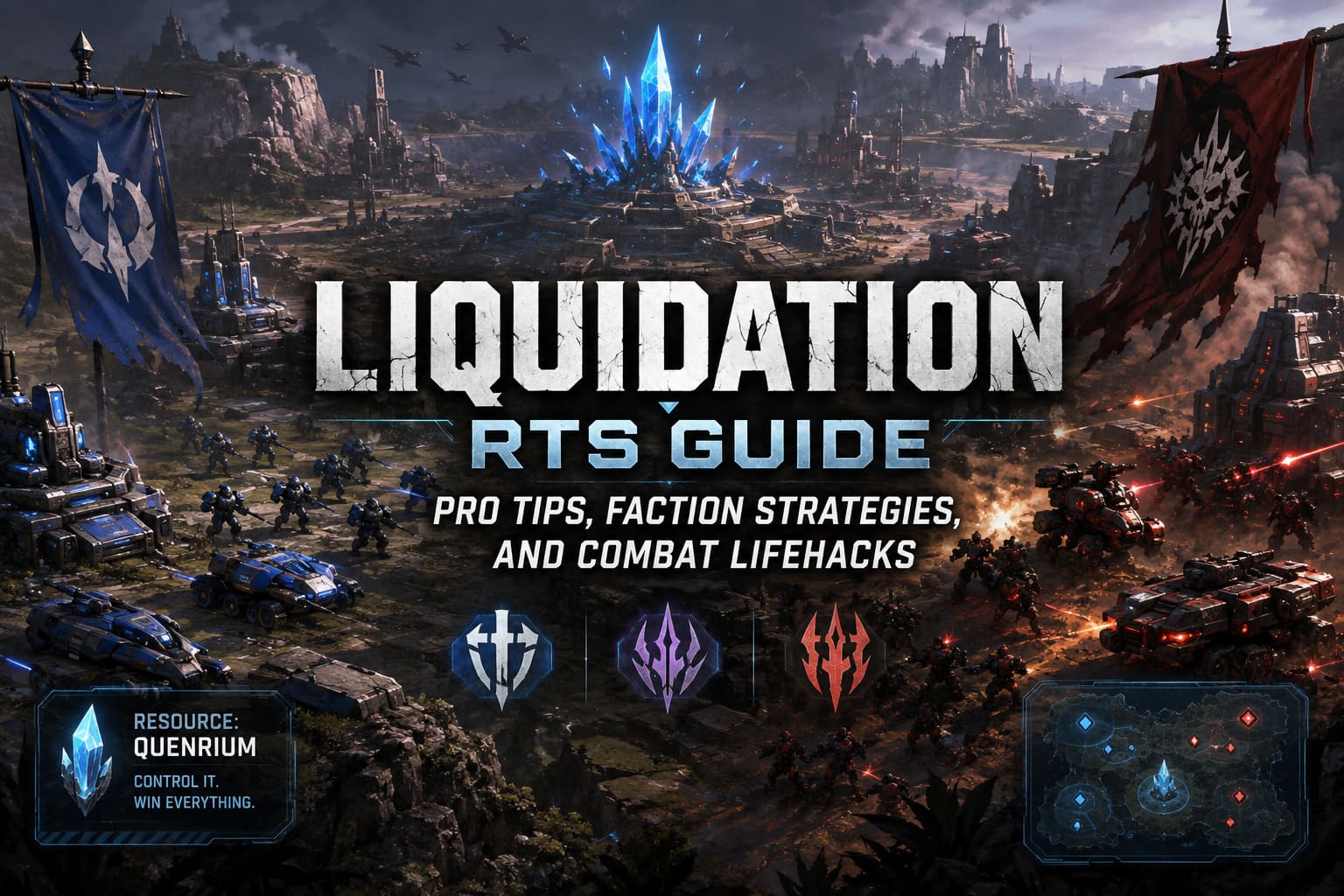
Unlike traditional RTS games where your starting economy can keep you competitive for quite a while, Liquidation constantly pushes players toward the center of the map. Whoever controls more Quenrium gains access to faster production, stronger technology, and more strategic flexibility.
Instead of spending your opening resources fortifying your initial base, think about where you’ll be fighting five minutes later.
That mindset alone completely changes how you approach the early game.
My Favorite Habit
Whenever I capture a new Quenrium node, I immediately send one mobile unit to patrol nearby paths instead of returning it home.
That single scout has saved countless expansions from surprise attacks.
Stop Defending Everything
One thing that surprised me was how often players overcommit to static defenses.
Yes, defensive structures have value.
No, they won’t win you the game by themselves.
Every turret or bunker you build early represents resources that could have become:
- Another combat squad
- Additional workers
- Faster tech progression
- Earlier map control
I’ve won several matches simply because my opponent invested heavily into their starting base while I quietly secured two additional resource locations.
Eventually their defenses became meaningless because they couldn’t afford an army large enough to leave their own territory.
Every Faction Feels Completely Different
One of Liquidation’s strongest features is that the three playable factions don’t simply have different unit skins—they genuinely encourage different ways of thinking.
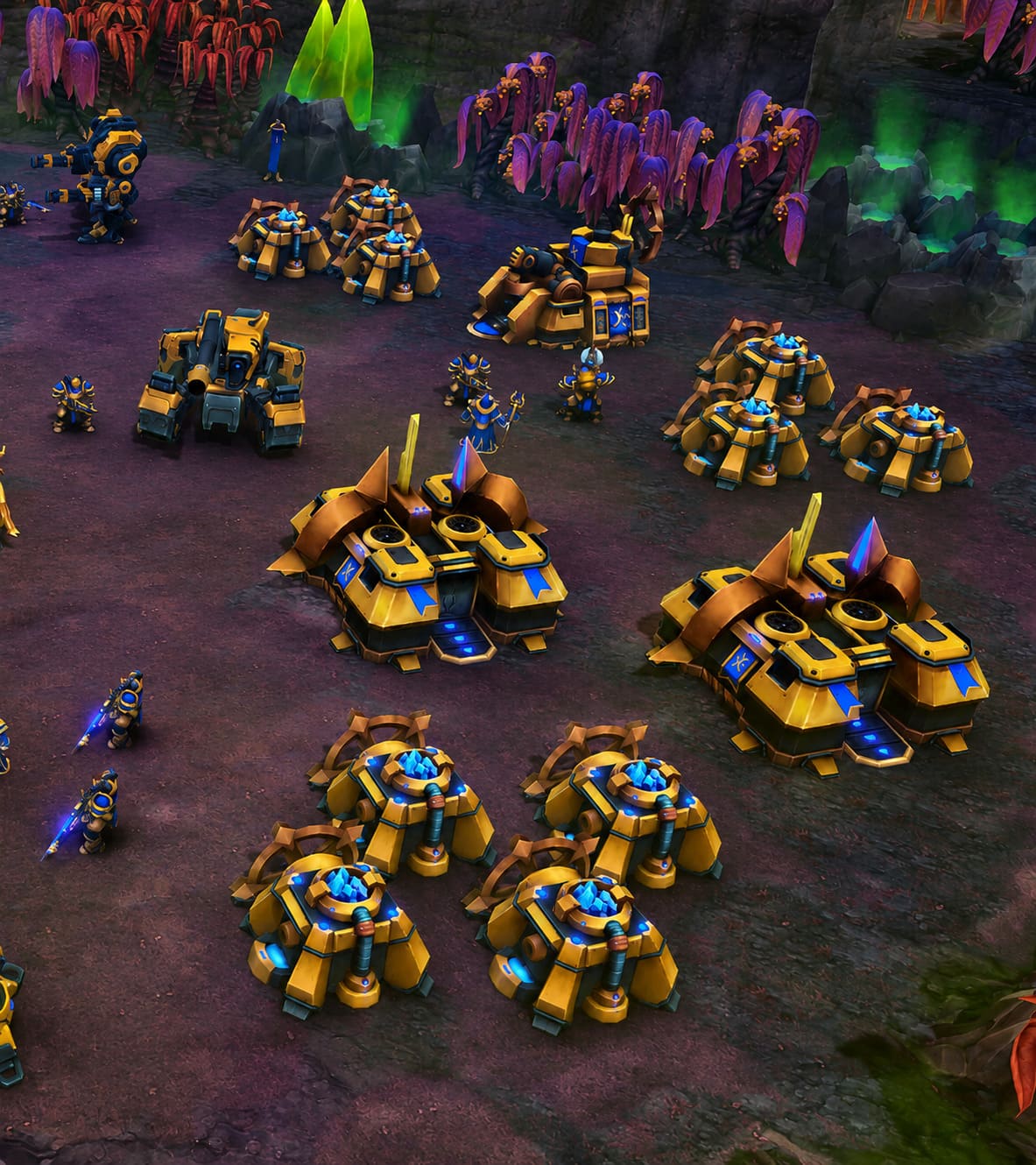
| Faction | Best At | Biggest Weakness | My Personal Advice |
|---|---|---|---|
| Twilight Crusade | Defense and sustained fights | Slow expansion | Build around unit preservation rather than aggression. |
| Scourge Alliance | Mobility and map control | Less forgiving mistakes | Always scout. Vision is your greatest weapon. |
| Legion | Explosive offense | Risky engagements | Attack decisively once enemy cooldowns are spent. |
Personally, I enjoyed the Scourge Alliance the most.
They’re incredibly satisfying if you like constantly moving around the map instead of sitting behind walls.
The Twilight Crusade, meanwhile, feels much more methodical. Their units can survive situations where other factions would simply collapse, especially when your support troops stay alive long enough to keep everyone fighting.
The Legion is probably the most exciting faction for aggressive players. When everything goes according to plan, their attacks feel overwhelming—but poor timing usually gets expensive very quickly.
Positioning Wins More Battles Than Unit Count
This is probably the biggest lesson Liquidation teaches.
A larger army doesn’t automatically win.
Terrain matters.
Vision matters.
Approach angles matter.
I’ve seen narrow mountain passes completely erase an opponent’s numerical advantage because only a handful of units could attack at once.
Whenever possible, try to fight on your own terms.
Some simple rules I now follow every match:
- Never rush into unexplored terrain.
- Scout before committing your entire army.
- Fight from elevated ground whenever possible.
- Force enemies through narrow chokepoints instead of open fields.
These sound like obvious RTS fundamentals, but Liquidation rewards them more heavily than many modern strategy games.
Save Your Units Whenever Possible
Replacing an army is expensive.
Keeping it alive is much cheaper.
One habit that immediately improved my win rate was manually retreating damaged front-line units before they died.
Instead of losing experienced squads, I’d rotate them behind healthier troops.
The enemy AI naturally shifts targets, allowing wounded soldiers to survive long enough to keep contributing damage later in the battle.
It sounds like a small detail.
It isn’t.
Across a twenty-minute match, preserving just a handful of squads can completely change your economy.
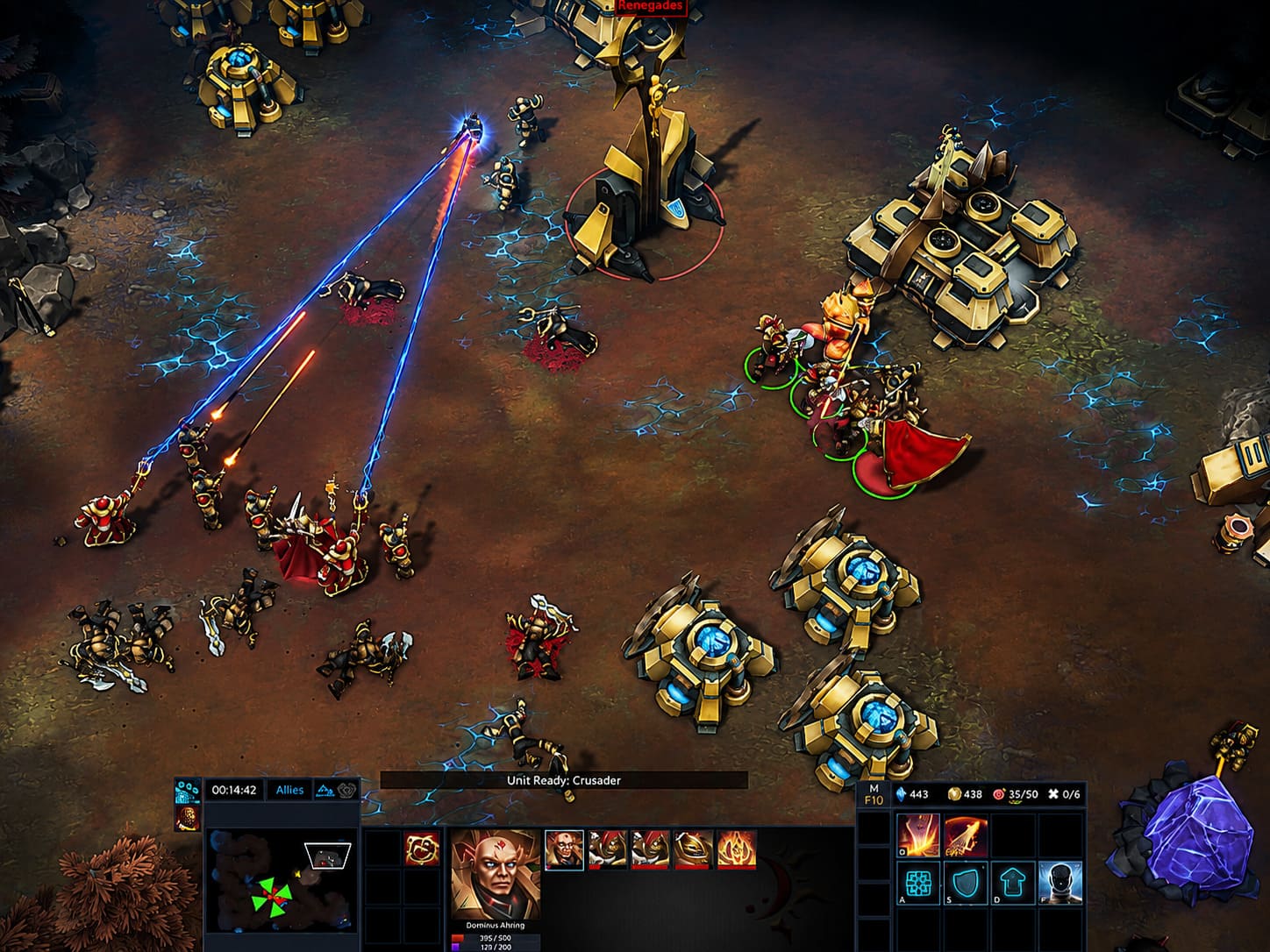
Don’t Waste Temporary Units
Legion players especially shouldn’t underestimate summoned creatures.
Their job isn’t always dealing damage.
Sometimes they’re simply the first thing that enters combat.
I often use temporary summons to:
- Trigger enemy ambushes.
- Absorb explosive abilities.
- Reveal hidden defenses.
- Bait powerful cooldowns.
Once those dangerous abilities are gone, my real army moves in.
That simple sequence has won far more engagements than trying to maximize summon damage.
Your Commander Isn’t Invincible
Commanders feel powerful.
That’s exactly why newer players tend to overextend them.
Mine certainly spent plenty of time lying face-down during my first few games.
Your Commander should always be involved in combat—but never unsupported.
A few habits worth developing include:
- Clearing neutral camps early for experience.
- Staying behind your front line during large engagements.
- Saving escape abilities until they’re actually needed.
- Avoiding blind pushes into fog of war.
Losing a high-level Commander doesn’t just remove one strong unit.
It usually destroys your entire momentum.
Campaign Tips That Actually Carry Over Into Multiplayer
Even if competitive play is your main goal, I wouldn’t skip the campaign.
Several missions quietly teach mechanics that become incredibly valuable online.
One example involves base conversion.
Certain campaign objectives allow you to capture enemy bases simply by eliminating defenders instead of destroying structures.
The first time this happened, I accidentally leveled half the outpost before realizing I could have inherited fully operational production buildings.
Now I always check mission objectives before flattening everything in sight.
It sounds obvious.
In the middle of battle, it definitely isn’t.
Two Opening Styles Worth Learning
The Early Access meta will evolve, but these two openings have remained reliable.
Economic Expansion
Choose this when maps provide relatively safe secondary Quenrium deposits.
Opening priorities:
- Saturate your first resource node.
- Produce additional workers.
- Scout immediately.
- Build your first production structure.
- Expand as early as safely possible.
The goal is simple:
Outproduce your opponent before major battles begin.
Early Pressure
If your opponent looks greedy, punish them.
Instead of focusing on your own economy:
- Produce combat units immediately.
- Move toward likely expansion locations.
- Attack workers instead of main buildings.
- Delay enemy mining whenever possible.
Destroying an expansion often creates a larger advantage than destroying several combat units.
Hotkeys Matter More Than You Think
I used to control almost everything with my mouse.
Liquidation quickly convinced me that was a mistake.
Separating my army into dedicated control groups immediately made battles feel far less chaotic.
A layout similar to this works well:
| Control Group | Purpose |
|---|---|
| 1 | Front-line melee units |
| 2 | Ranged damage dealers |
| 3 | Commander and support units |
Another habit I strongly recommend is using Attack Move instead of standard movement whenever entering unknown territory.
Watching your army casually walk past enemies without firing back is an experience you’ll only want once.
Liquidation Divio PC Performance Guide: How to Boost FPS and Fix Stutters on Low-End PCs (2026)
Early Access Means Constant Adaptation
One thing I genuinely appreciate about Liquidation is that it doesn’t pretend everything is perfectly balanced.
The developers are actively collecting feedback, which means today’s strongest strategies might disappear after the next update.
Rather than memorizing one build order forever, it’s better to improve the skills that remain valuable regardless of balance changes:
- Maintain constant map vision.
- Preserve expensive units.
- Expand before resources become scarce.
- Use terrain intelligently.
- Protect your Commander.
- Spend resources consistently.
Players who master these fundamentals will usually outperform those chasing whatever strategy happens to be popular that week.
How to Fix Liquidation Divio Stuck on Loading Screen at Launch (2026 Guide)
Final Thoughts
Liquidation reminds me why I fell in love with real-time strategy games years ago.
It rewards patience without encouraging passivity. It rewards aggression without making reckless attacks overpowered. Most importantly, it constantly asks players to think rather than simply produce bigger armies.
After dozens of matches, I still discover small interactions that change how I approach certain maps or faction matchups, and that’s probably the biggest compliment I can give any RTS.
If you’re willing to scout more, preserve your units, fight over Quenrium instead of hiding behind your starting base, and treat every engagement like a tactical puzzle rather than a numbers game, you’ll improve surprisingly fast.
Early Access is only the beginning for Liquidation, but one thing already feels clear: on the battlefields of Veá, smart decisions almost always beat brute force.