Liquidation Game 2026 Guide: Resource Control Point Tactics, Faction Builds, and Meta Strategies
When I first jumped into Liquidation, I expected another classic real-time strategy game where you spend half the match expanding your economy, building endless structures, and waiting for massive late-game armies. After several hours, I realized I had completely misunderstood what this game was trying to do.
Liquidation doesn’t reward passive players.
Instead, it constantly pushes you into fighting over the map. Every minute you spend sitting comfortably inside your base usually means your opponent is quietly becoming stronger somewhere else. That aggressive pace is exactly what makes the game so enjoyable, especially if you like RTS titles where positioning and battlefield decisions matter more than simply producing the biggest army.
After spending time with the Early Access version and following discussions from experienced RTS players, I think one lesson stands above everything else:
The player who controls the battlefield usually controls the match.
If you’re struggling to survive multiplayer games or even some campaign missions, these are the strategies that made the biggest difference for me.
Why Resource Control Feels Like the Heart of Liquidation
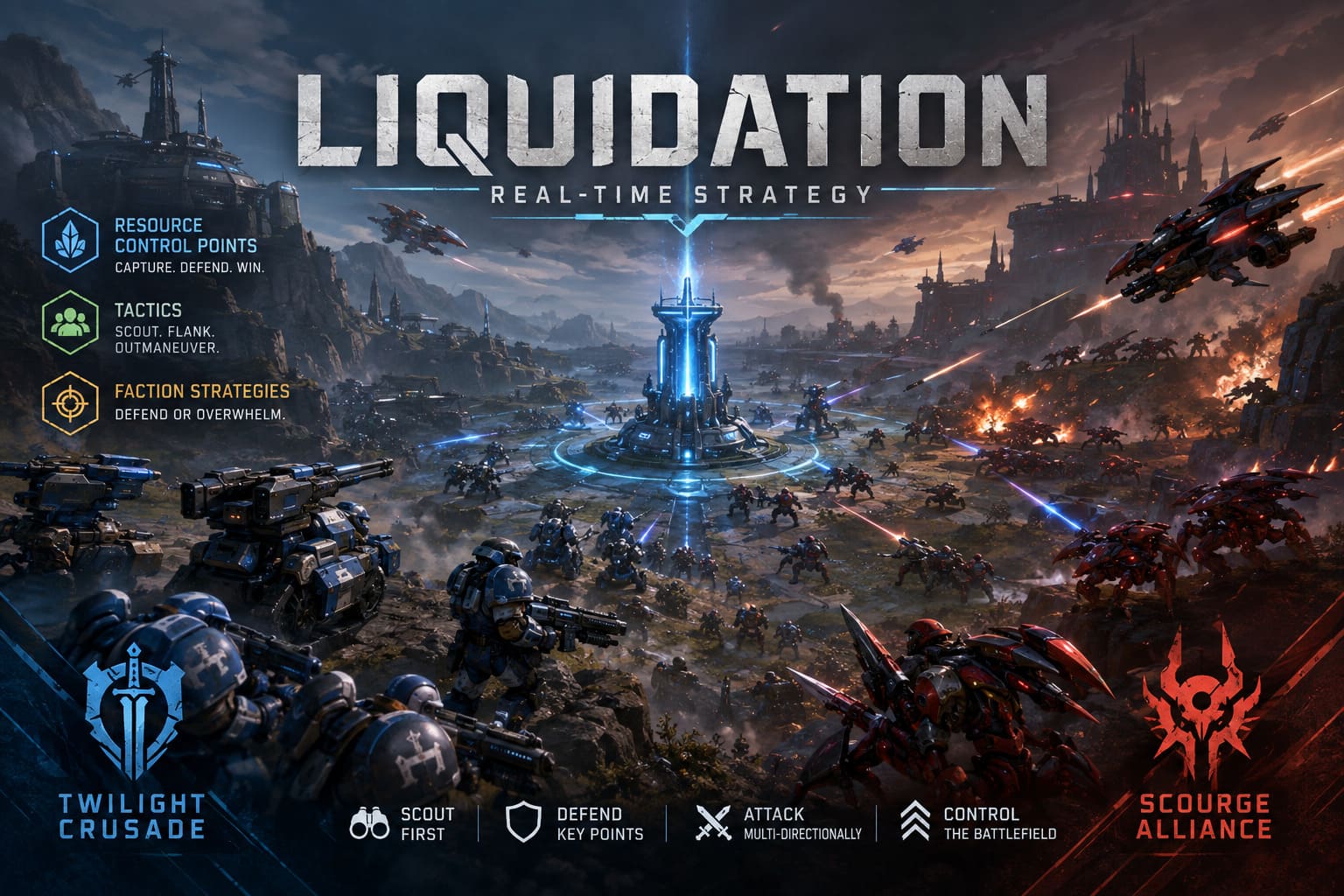
Most RTS games separate economy from combat.
Liquidation blends them together.
Instead of collecting resources safely from protected bases, you’re constantly competing for Resource Control Points, which generate the Quenrium needed to expand your military and unlock stronger technology.
That single design choice changes everything.
Every captured objective becomes another battlefield.
Every lost objective immediately hurts your economy.
I’ve found that matches rarely come down to one giant final battle. More often, they’re decided by dozens of smaller fights over these objectives until one player simply can’t keep up anymore.
Think of Resource Control Points as investments rather than checkpoints.
Capturing one is only half the job.
Keeping it alive is where the real strategy begins.
Stop Treating Control Points Like Free Income
One mistake I made early was capturing an objective and immediately moving my entire army somewhere else.
Bad idea.
A control point without protection is basically an invitation for your opponent.
Whenever I secure a new location now, I immediately ask myself three questions:
| Question | Why It Matters |
|---|---|
| Can the enemy attack from multiple directions? | Determines defensive positioning. |
| Do I have enough nearby units? | Prevents instant recapture. |
| Should I build defenses immediately? | Saves valuable reaction time later. |
Those few seconds spent reinforcing an objective often save several minutes of rebuilding afterward.
My Favorite Habit: Scout Before Every Fight
One thing Liquidation rewards surprisingly well is information.
Charging your full army into unexplored territory usually ends badly.
Instead, I almost always send faster units ahead to answer simple questions:
- Is the enemy defending heavily?
- Are they building production structures nearby?
- What unit composition are they using?
- Are there hidden approaches worth exploiting?
This tiny investment often tells me whether I should attack immediately or rotate somewhere else.
Sometimes avoiding a bad fight is actually the strongest move available.
Multi-Directional Attacks Win More Engagements
If there’s one tactical habit I wish I’d learned earlier, it’s avoiding narrow entrances.
It feels natural to move your whole army together.
Liquidation punishes that instinct.
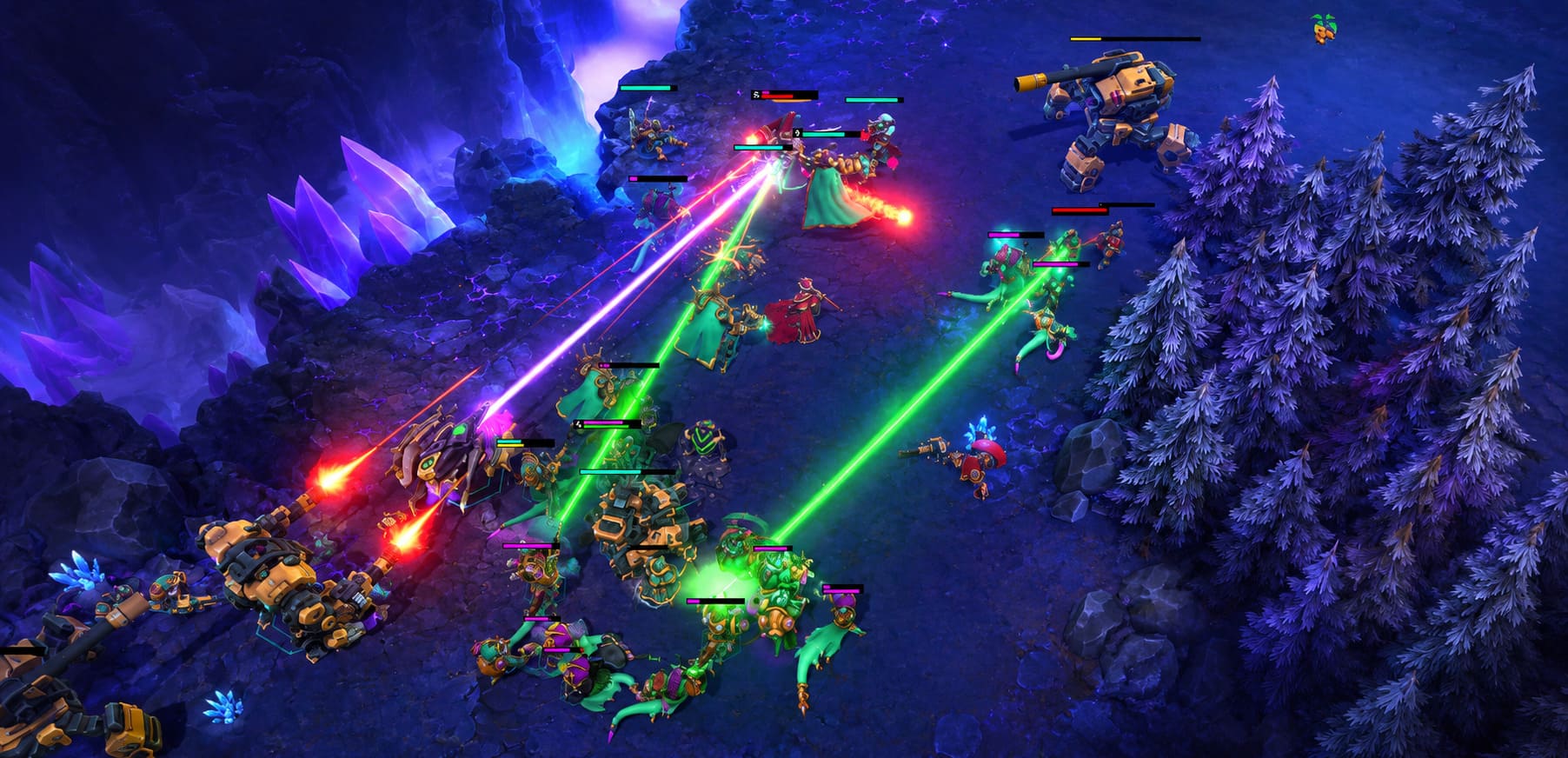
Large groups packed into choke points become perfect targets for splash damage and crowd-control abilities.
Whenever possible, I divide my force into two smaller groups.
One squad pressures the front.
The second attacks from another angle a few seconds later.
This creates confusion, splits enemy attention, and often exposes ranged units hiding behind the frontline.
It’s a simple adjustment that produces surprisingly consistent results.
Choosing a Faction That Matches Your Personality
One thing I genuinely appreciate is that the available factions don’t simply use different visual designs.
They encourage completely different ways of thinking.
| Faction | Best For | Personal Impression |
|---|---|---|
| Twilight Crusade | Defensive players | Excellent if you enjoy slow, methodical expansion and strong fortified positions. |
| Scourge Alliance | Aggressive players | Fast, chaotic, and constantly looking for opportunities to pressure the opponent. |
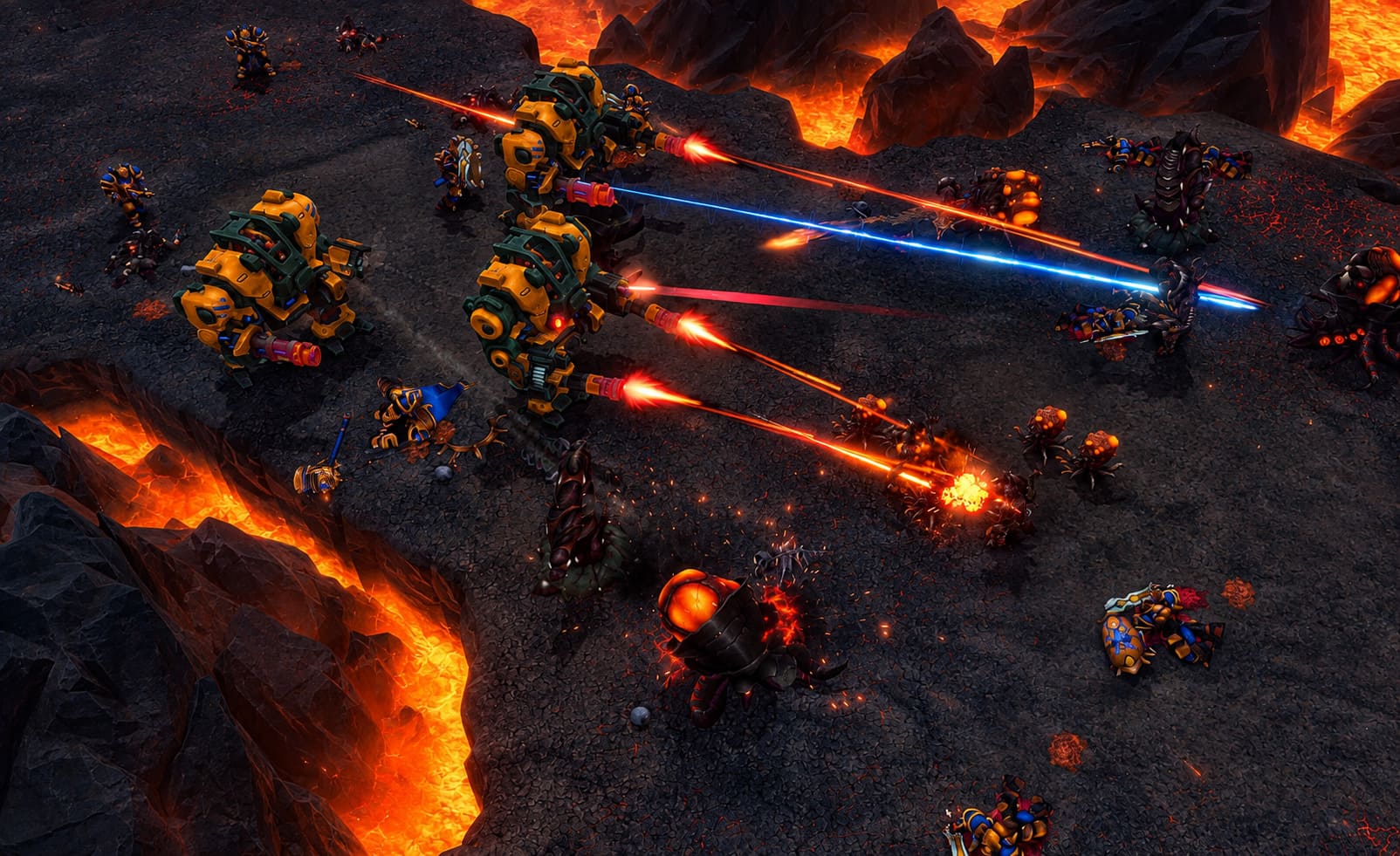
Twilight Crusade
This faction immediately reminded me of classic defensive RTS armies.
Their durable frontline makes them excellent at locking down important sections of the map.
I especially enjoyed pairing heavily armored infantry with long-range damage dealers.
Once your defensive line is established, forcing opponents to attack into it becomes incredibly satisfying.
This faction rewards patience.
Scourge Alliance
The complete opposite.
Everything feels faster.
Instead of waiting for perfect engagements, you’re encouraged to attack repeatedly before your opponent becomes comfortable.
Swarming isolated units, contesting objectives early, and constantly forcing reactions creates enormous pressure.
If you enjoy keeping opponents busy every second of the match, this faction is hard to ignore.
Small Micro Decisions Matter More Than Big Armies
One pleasant surprise was how valuable unit abilities feel.
Too many RTS games let players win simply by selecting everything and issuing one attack command.
Liquidation asks for more.
- A well-timed stun.
- A perfectly placed crowd-control spell.
- Pulling damaged units backward.
- Using healing abilities at the right moment.
These individual actions regularly decide engagements that would otherwise be evenly matched.
Whenever I lose a battle now, I usually realize afterward it wasn’t because my army was smaller.
It was because I used it less efficiently.
Terrain Is a Weapon
I underestimated elevation during my first matches.
That was another mistake.
High ground isn’t just visually interesting.
It creates real tactical advantages.
Ranged units positioned above the battlefield often enjoy better visibility and safer firing angles.
Meanwhile, ruins, cliffs, and natural obstacles can hide troop movements or delay pursuing enemies.
Whenever I start a new map, I spend a minute identifying:
- Elevated firing positions.
- Narrow defensive routes.
- Alternate attack paths.
- Hidden flanking opportunities.
That early map awareness pays dividends throughout the entire match.
Know When to Retreat
One of the hardest habits for RTS players to develop is accepting a lost battle.
I still catch myself trying to save impossible fights.
Liquidation rewards discipline.
If an objective becomes impossible to defend, retreat.
Fall back toward fortified territory.
Repair damaged units.
Rebuild your army.
Counterattack later.
Throwing away expensive forces just because you’ve already committed usually makes the next several minutes significantly harder.
Sometimes preserving your experienced army is worth more than keeping one control point.
Is Liquidation (Divio) a Multiplayer Co-Op Game? 2026 Release Details and Gameplay Modes Explained
Managing Resources Without Falling Behind
A healthy economy isn’t about accumulating thousands of unused resources.
It’s about keeping your production active.
Whenever I notice a large Quenrium stockpile sitting idle, I assume I’m making a mistake.
Usually that means I should be:
- Producing additional units.
- Researching technology upgrades.
- Expanding toward another Resource Control Point.
- Strengthening vulnerable defensive positions.
Unused resources contribute absolutely nothing while sitting in storage.
The strongest players seem to convert almost every resource into immediate battlefield value.
Adapt Instead of Following One Build Order
Many strategy games encourage memorizing one perfect opening.
Liquidation feels different.
Your opponent’s decisions should constantly influence your own.
If they’re investing heavily in durable armored forces, build units designed to break armor.
If they’re playing aggressively, prioritize defenses.
If they’re expanding across the map, punish their greed before those investments pay off.
The players who stay flexible generally outperform those who refuse to adjust.
Final Thoughts
After spending time with Liquidation, I think its greatest strength isn’t the setting or even the factions—it’s the constant pressure to make meaningful decisions.
Almost every objective matters.
Every movement across the map carries risk.
Every lost control point immediately affects your long-term chances.
That’s exactly the kind of RTS experience I’ve been hoping to see more often.
The Early Access version is already showing plenty of strategic depth, and I expect the competitive meta to keep evolving as balance updates introduce new possibilities.
If I could give only one piece of advice to new players, it would be this:
Don’t focus on building the biggest army—focus on controlling the map.
Once you understand that Resource Control Points are the true objective rather than simply another source of income, Liquidation starts to feel far more rewarding. Your armies become more efficient, your economy stays healthier, and every victory feels like the result of smart decision-making instead of brute force. That’s the moment the game really begins to shine.