How to Survive the Black Smoke: Tripod Weak Points & Weapon Locations in The War of the Worlds Siberia
I’ve played my fair share of survival and sci-fi horror games—everything from slow-burn exploration titles to outright chaos simulators where you’re lucky to last five minutes. But The War of the Worlds: Siberia hits differently. There’s something about being dropped into a frozen, collapsing Russian Empire while alien war machines roam the horizon that makes every decision feel heavier than usual.
Developed by 1C Game Studios, this game doesn’t just try to scare you—it forces you to think like a survivor. And then there’s the Black Smoke. It’s not just another enemy mechanic.
It’s a moving, suffocating boundary that changes how you approach entire encounters. After spending hours watching gameplay clips, reading community breakdowns, and testing different approaches in-game, I’ve come to the conclusion: the Black Smoke isn’t meant to be “fought.” It’s meant to be understood.
What the Black Smoke Actually Is (And Why It’s So Dangerous)
In the game’s lore, the Black Smoke is a secondary Martian weapon deployed alongside the infamous Heat-Ray. While the Heat-Ray is all about precision destruction, the Smoke is something far more unsettling—control. It behaves like a dense chemical cloud, released from Martian canisters, designed to suffocate and flush out human survivors.
What makes it especially dangerous in gameplay terms is how “alive” it feels: it rolls downhill instead of staying static, lingers in enclosed spaces like buildings and tunnels, reduces visibility instantly, and drains health in seconds without protection. Unlike typical poison mechanics in other games, this is not just damage over time—it is territory denial. Once it enters an area, that space effectively stops being safe.
The Best Spells in The Spell Brigade (2026): Guide to Meta builds, Infusions, and Team Synergies
My Early Mistake (And What I Learned Fast)
The first time I encountered it, I tried to outrun it on flat ground. That lasted maybe ten seconds. What I didn’t understand then—but do now—is that the Black Smoke is designed to punish horizontal thinking. You don’t run away from it. You out-position it. That realization completely changed how I approach the game.
Core Survival Strategies That Actually Work
1. Elevation Is Everything
The Black Smoke behaves like a heavy fluid. It spreads along terrain and sinks into low areas first. That means vertical positioning is your best defense. Rooftops, scaffolding, cliff edges, and broken towers become lifelines. If you hear the deployment hiss of a canister, your priority is climbing—not fleeing.
2. Water as a Disruption Tool
Water interactions add an interesting layer of survival potential. While not a guaranteed solution, water can disrupt smoke behavior and slow its spread in certain environments. Rivers, flooded basements, and shallow water zones sometimes create temporary safe windows. It’s unreliable, but in tight situations, it can buy precious seconds.
3. Gas Masks Are Not True Immunity
Many players overestimate the gas mask system. It helps, but it does not guarantee survival. Filters are limited, masks degrade, and combat damage can compromise protection instantly. Treat the mask as a buffer, not a solution.
| Gear Type | Effectiveness | Limitation |
|---|---|---|
| Basic Mask | Low | Short exposure only |
| Military Mask | Medium | Requires filters |
| Advanced Prototype | High | Extremely rare |
4. Wind Direction Changes Everything
The dynamic weather system isn’t just atmosphere—it’s tactical information. Smoke movement follows wind patterns, which means snow direction becomes a survival indicator. If you learn to read wind, you can predict danger zones before they form. Martians often deploy smoke upwind of player positions, making awareness critical.
Stealth vs Chaos: The Smoke Forces Movement
In most stealth games, patience is power. In Siberia, the Black Smoke disrupts that logic entirely. It forces exposure and breaks static playstyles. The key is controlled movement: never sprint blindly, always move between cover points, prioritize elevation changes over distance, and avoid committing to long open paths. The smoke essentially becomes a dynamic pressure system pushing you across the map.
Can You Fight It? Limited Counterplay Exists
You cannot destroy the Black Smoke itself, but you can interfere with its deployment systems. Some encounters suggest that tripod-mounted launchers can be disrupted or temporarily disabled. Explosives or precision shots may reduce their ability to deploy canisters, but these actions are high-risk and usually situational. If you’re fighting directly in smoke range, the situation has already deteriorated significantly.
Community Theories Worth Noting
The community has been actively analyzing mechanics and hidden systems. Several theories keep appearing across discussions and gameplay breakdowns:
- The smoke has a predictable expansion radius that experienced players can learn
- Industrial ventilation systems may temporarily clear pathways
- Certain chemical compounds could neutralize smoke later in the game
- Some missions are designed around environmental puzzle-solving rather than combat
Even if not all of these are confirmed, they highlight how the game encourages experimentation rather than brute force solutions.
Practical Survival Checklist
Before engaging or repositioning during smoke encounters, I now mentally check the following:
- Am I on the highest available ground?
- Do I know the wind direction?
- Is there a water source nearby?
- Is my mask intact and functional?
- Do I have a vertical escape route?
If even a couple of these are missing, I reposition immediately rather than risk commitment.
Why the Black Smoke Works So Well
The Black Smoke stands out because it fundamentally changes how space is understood in gameplay. Most games give you enemies to fight. Siberia gives you terrain that becomes unsafe over time. It transforms navigation into survival strategy and forces constant adaptation. You’re not clearing areas—you’re temporarily surviving in them.
That shift in mindset is what makes encounters memorable. Once you accept that the environment itself is part of the threat system, everything else becomes clearer. Survival stops being reactive and becomes strategic, and in The War of the Worlds: Siberia, that is the only way forward.
The War of the Worlds: Siberia (2026) – Tripod Weak Points, Weapon Locations & Survival Tips from a Player’s Perspective
SEO Title: The War of the Worlds: Siberia 2026 – Tripod Weak Points, Heavy Weapons & Survival Strategy Guide
I’ll be honest — when I first stepped into The War of the Worlds: Siberia, I didn’t expect to survive more than a few minutes. The game does a great job of making you feel completely powerless at the start. Those Martian tripods don’t feel like “enemies” in the usual sense. They feel like disasters walking on three legs. But after enough failed runs, frantic escapes through snow-covered ruins, and a few lucky discoveries, I started noticing patterns. And that’s when the game changed for me. This isn’t a perfect “win condition” guide — because that’s not what this game is. Instead, think of it as a survival breakdown from someone who got tired of being vaporized and started paying attention.
Tripods in Siberia: Not All Machines Are the Same
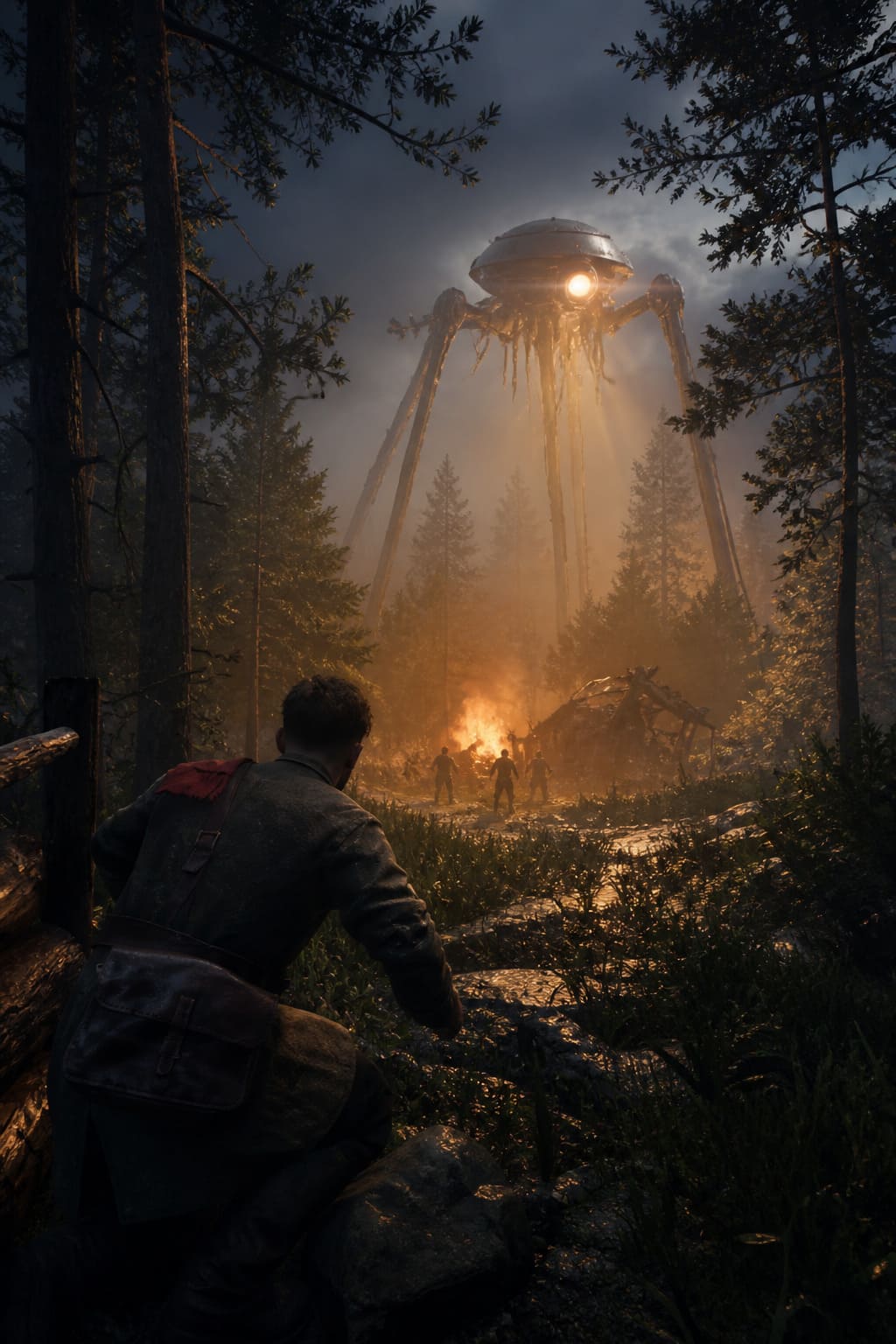
One thing I really like (and hate at the same time) is that the game doesn’t treat every tripod as identical. You can’t just memorize one strategy and repeat it. Warrior Units are fast, aggressive, and heavily armed with heat-based weapons. Harvester Units are slower but terrifying in their own way, focusing on capturing rather than pure destruction. Smoke Units act like support machines, spreading chemical chaos across the battlefield. Each type changes how you approach survival. Running straight in is basically a death wish.
What Actually Works: Weak Points That Saved My Life
After a lot of trial and error (and restarting missions more times than I want to admit), I started noticing consistent weak spots that actually matter in combat situations.
1. Mechanical Legs (The Real MVP Weakness)
If there’s one thing you should remember, it’s this: the legs matter more than anything else. The joints are complex but not invincible. A burst of heavy machine gun fire can destabilize movement, explosives near knee joints can force a stumble, and environmental hazards sometimes finish the job. Once a tripod loses balance, everything changes. Even a few seconds of disruption can mean escape or a counterattack opportunity.
2. Heat-Ray Charge Window
Right before firing, the heat-ray system visibly charges. That glow isn’t just visual — it’s a vulnerability window. If you land accurate shots during that brief moment, you can disable the weapon temporarily, interrupt cooldown cycles, and reduce pressure long enough to reposition. It won’t always destroy the unit, but it buys time, which is everything in this game.
3. Canopy Vent Exposure
The central cockpit area has thermal venting systems to keep Martian occupants functional in extreme cold. That also means structural weakness. Getting above a tripod is extremely risky, but if you manage it, dropping explosives into vents can result in instant kills. Stealth approaches are heavily rewarded here, and vertical positioning matters more than firepower.
4. Harvester Underbody Systems
Harvesters are the most unsettling units. Unlike Warriors, they don’t just destroy — they process. The underside of these machines is less armored than expected. If you end up underneath one, shotguns or explosives aimed at the processing hatch can cause catastrophic internal failure. It’s dangerous, but sometimes unavoidable when things go wrong.
Heavy Weapons That Actually Make a Difference
You can’t survive long against Martian machines with basic weapons. Eventually, you need heavier tools scattered across the world.
Weapon Breakdown
The Maxim Gun found in industrial rail zones is one of the earliest reliable tools. It’s stationary but extremely effective for sustained leg damage and suppression. Cossack Explosives hidden in Ural military outposts are ideal for traps and ambush setups, capable of taking out limbs if placed correctly.
Field Cannons in the St. Petersburg outskirts are high-risk, high-reward weapons capable of destroying a tripod with a single direct hit to the canopy. The incendiary Siberian Fire weapon found in hidden taiga labs is a late-game tool that bypasses armor and targets internal systems directly.
Maxim Gun (Early Game Lifesaver)
This is the first moment the game lets you feel slightly less helpless. It doesn’t move, but if positioned correctly, it shreds leg armor and forces tripods into slower, more predictable movement patterns.
Cossack Explosives (Environmental Control)
These explosives turn the environment into a weapon. Placing them along patrol paths creates opportunities for controlled ambushes, often forcing tripods into chain reactions of damage.
Field Artillery (Desperation Tool)
These cannons are unpredictable but powerful. A direct hit is devastating, but missing usually means you won’t get another chance. They reward precision and timing more than anything else.
Siberian Fire (Late Game Chaos Tool)
This incendiary weapon bypasses certain shielding behaviors and focuses on internal damage. It is unreliable but extremely effective when used correctly against heavily armored units.
Shield Behavior: The Hidden Rule Most Players Miss
The adaptive defense system is one of the most important mechanics in the game. Tripods respond differently depending on incoming threats. Fast projectiles are often blocked, while slower or environmental impacts sometimes bypass defenses entirely. This makes timing and attack type more important than raw damage output. Once I realized this, I stopped rushing fights and started setting traps instead.
What Survival Really Looks Like in Siberia
This game is not about winning fights. It’s about choosing when not to engage, using terrain intelligently, exploiting timing windows, and accepting that sometimes running is the correct decision. Some of my longest survival moments came from simply waiting and observing patrol routes instead of acting immediately. That patience usually meant survival.
Final Thoughts
The War of the Worlds: Siberia is designed to make you feel small. The tripods are overwhelming, the environment is hostile, and direct confrontation rarely works. But once you start understanding weak points, timing mechanics, and environmental interactions, the game shifts. Tripods stop feeling like invincible gods and start feeling like machines with exploitable systems. Still deadly, still terrifying, but no longer impossible. And that shift is what makes the experience memorable.