Forza Horizon 6 Touge Racing Guide: Best A-Class Cars and Tuning Setups
There’s something different about touge racing in Forza Horizon 6 compared to almost every other activity in the game. It’s not about flexing a 1,500-horsepower hypercar or farming speed traps on a highway. Touge racing is personal. It feels raw, tense, and honestly a little addictive once you start getting clean runs through tight mountain sections.
After spending dozens of hours experimenting with builds, testing suspension setups, and comparing lap consistency on technical downhill routes, I genuinely think A-Class is where the game feels the most alive. S1 and S2 cars are fun for chaos, but on narrow mountain roads they often become frustrating instead of rewarding. A-Class gives you enough speed to stay exciting while still forcing you to actually drive the car properly.
The best part? Every corner matters.
One small mistake entering a hairpin too aggressively can destroy your momentum for the next ten seconds. That’s exactly why touge racing has become one of the most satisfying experiences in Forza Horizon 6.
Why A-Class Feels Perfect for Touge
A-Class builds hit the sweet spot between grip, power, and control. You can push hard without constantly fighting wheelspin or insane oversteer on every corner exit.
The mountain roads in Horizon 6 are brutal in the best possible way. Elevation changes, uneven pavement, blind turns, and awkward camber shifts punish lazy tuning setups immediately. A proper touge build needs balance more than raw horsepower.
What I noticed after testing multiple cars is that lightweight chassis setups almost always outperform high-power builds on technical passes. Cars with responsive steering and stable suspension simply carry more momentum corner to corner.
A good touge car should feel predictable, not scary.

My Personal Favorite A-Class Touge Cars
Here are the cars that consistently felt the strongest during long mountain sessions.
| Car | Strength | Best Drivetrain | Difficulty |
|---|---|---|---|
| Mazda RX-7 Spirit R | Perfect balance and rotation | RWD | Medium |
| Honda NSX-R 1992 | Incredible downhill grip | MR | Hard |
| Mitsubishi Evo IX MR | Safe and consistent traction | AWD | Easy |
| Alpine A110 2017 | Lightweight corner monster | RWD | Medium |
| Nissan Silvia S15 Spec-R | Smooth and forgiving handling | RWD | Medium |
1. Mazda RX-7 Spirit R — The Touge King
The Mazda RX-7 Spirit R honestly feels like it was designed specifically for touge racing. The car rotates beautifully without becoming unstable, and the front-end response is ridiculous once properly tuned.
What makes the RX-7 special isn’t just speed. It’s how naturally the chassis flows between corners. Fast left-right transitions feel smooth instead of twitchy.
I strongly recommend keeping the rotary engine instead of swapping it immediately. The stock power delivery feels more connected and predictable on technical sections.
My Recommended RX-7 Setup Philosophy
- Prioritize weight reduction first
- Semi-slick tires work better than full slicks
- Slightly softer rear suspension improves downhill stability
- Keep horsepower moderate instead of chasing top speed
The RX-7 rewards clean driving more than aggressive driving.
2. Honda NSX-R 1992 — Precision Machine

The Honda NSX-R feels completely different from front-engine cars. Because of the mid-engine layout, the car has insane traction when exiting low-speed corners.
But there’s a catch.
If you panic-lift the throttle mid-corner, the rear can rotate aggressively. Beginners may struggle with that at first, especially on downhill sections where weight transfer becomes more dramatic.
Still, once you understand how to balance the throttle through corners, the NSX becomes one of the fastest touge cars in the game.
It feels sharp. Almost surgical.
3. Mitsubishi Evo IX MR — The Most Forgiving Option
Not everyone enjoys rear-wheel drive on mountain roads, and honestly that’s understandable. Touge racing can get frustrating fast if you constantly lose traction.
That’s why the Mitsubishi Lancer Evolution IX MR is such a strong choice.
The AWD system gives ridiculous confidence during corner exits, especially on wet roads or rough pavement sections. The car feels planted almost everywhere.
The biggest mistake people make with the Evo is leaving the differential too front-biased. That creates understeer and makes the car feel heavy entering corners.
I had much better results sending more power to the rear axle. Around 65% rear bias completely transformed the handling.
Why the Evo IX Works So Well
- Extremely stable over bumps
- Strong acceleration uphill
- Forgiving for newer players
- Easy to maintain consistency over long runs
It may not feel as “pure” as the RX-7, but it’s brutally effective.
4. Alpine A110 — The Unexpected Monster
The modern Alpine A110 surprised me more than any other car.
This thing feels tiny, light, and incredibly agile. On tighter mountain sectors, it honestly embarrassed some higher-power builds I tested.
The steering response feels immediate, almost like the car reads your inputs before you finish turning.
Its weakness is obvious though: long straights. The A110 won’t dominate top-speed runs. But touge racing isn’t about drag racing between corners anyway.
Momentum matters more.
And the Alpine carries momentum beautifully.
5. Nissan Silvia S15 Spec-R — The Best Learning Platform
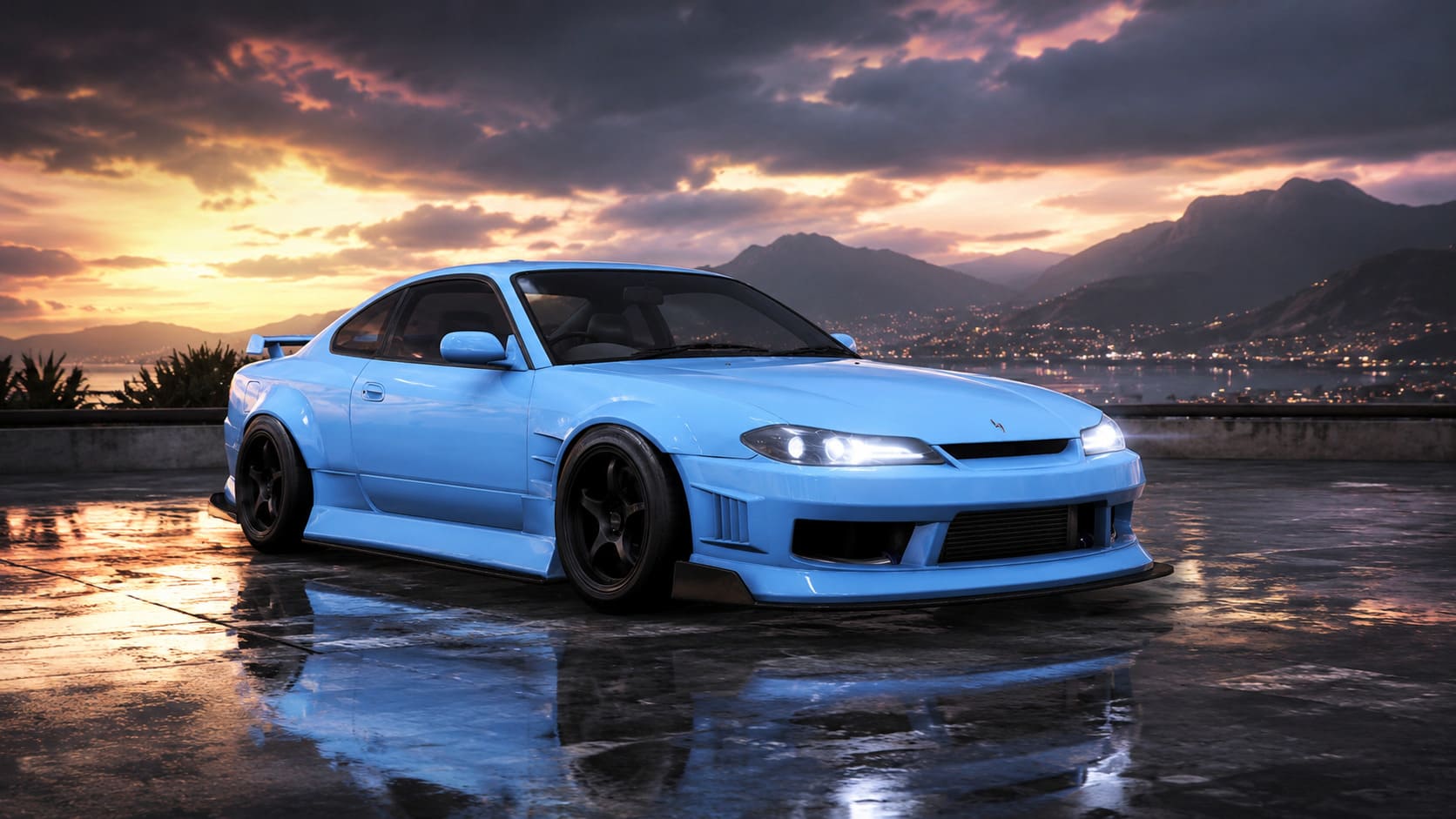
The Nissan Silvia S15 has a reputation as a drift car, but a proper grip build changes everything.
The chassis feels incredibly communicative. Weight transfer is smooth, steering is predictable, and the car reacts naturally to tuning changes.
For players transitioning away from AWD builds, I honestly think the S15 is the perfect stepping stone.
It teaches throttle discipline without instantly punishing every mistake.
My Favorite Touge Tuning Basics
A lot of players overcomplicate tuning in Horizon 6. You do not need some impossible spreadsheet setup to build a competitive mountain car.
Focus on these fundamentals first:
| Tuning Area | Recommended Direction |
|---|---|
| Tire Pressure | 28–29 PSI |
| Front Camber | Around -2.0 |
| Rear Camber | Around -1.2 |
| Ride Height | Slightly above minimum |
| Differential Lock | Moderate acceleration lock |
| Gearing | Short ratios for acceleration |
One thing I learned quickly: ultra-stiff suspension setups are terrible for mountain roads.
Touge surfaces are uneven. If your car is too stiff, it skips across bumps and loses grip constantly. Slightly softer damping keeps the tires connected to the road far more effectively.
Driving Technique Matters More Than Tuning
Even the best build won’t save sloppy driving.
The biggest improvement in my lap times came from learning proper trail braking and smoother throttle application.
Forza Horizon 6 Legend Island Guide: How to Unlock and Access Fast
A Few Habits That Helped Me Improve
- Brake early instead of aggressively late
- Feed throttle progressively on corner exit
- Use the full width of the road
- Focus on momentum instead of speedometer numbers
- Stay calm during downhill sections
Downhill touge is especially difficult because the car constantly wants to rotate under braking. Smooth inputs make a huge difference.
Final Thoughts
Touge racing in Forza Horizon 6 feels like one of the most rewarding ways to experience the game. It strips away the chaos and turns every run into a test of rhythm, precision, and confidence.
If I had to pick one overall favorite, I’d still choose the RX-7 Spirit R. It delivers the perfect balance between responsiveness, control, and personality. But honestly, every car on this list can dominate mountain passes with the right setup and enough seat time.
That’s the beauty of touge racing.
It’s not just about the fastest car. It’s about finding the car that feels right when the mountain road starts twisting beneath you.