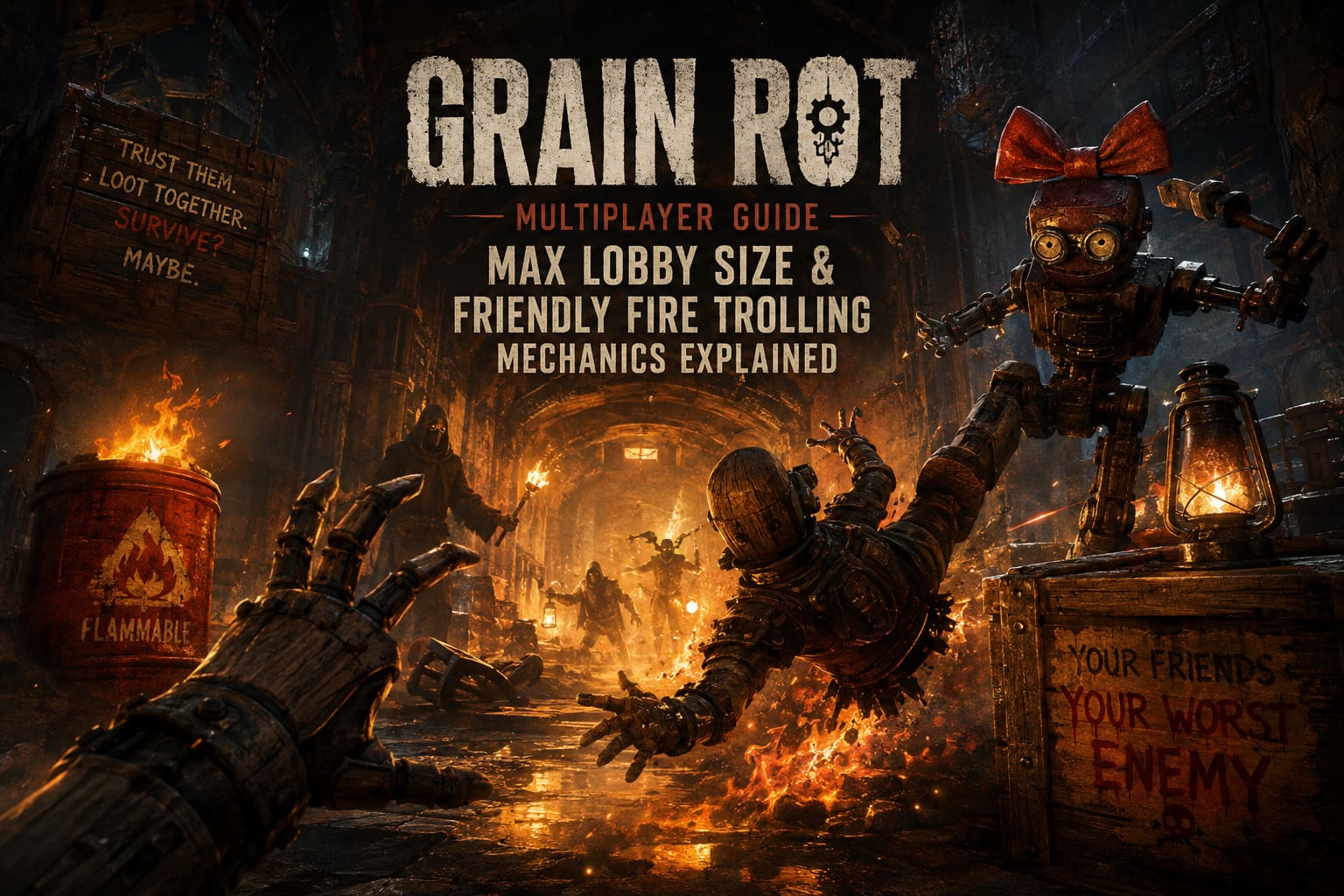
GRAIN ROT Multiplayer Guide: Max Lobby Size and Friendly Fire Trolling Mechanics Explained
When I first watched gameplay clips of GRAIN ROT, I expected another co-op horror game trying to ride the success of titles like Lethal Company. Instead, what I saw looked completely different. Sure, there are monsters hiding in dark underground ruins, valuable loot to collect, and plenty of reasons to panic—but the real entertainment comes from the people standing next to you.
I’ve played enough multiplayer horror games to know that every developer says, “Work together to survive.” GRAIN ROT almost feels like it’s saying the opposite: “Go ahead… trust your friends. See how that works out.”
That’s what immediately makes this game memorable.
Rather than relying only on jump scares or difficult enemies, Beck & Branch Games built a system where physics, fire, and player decisions naturally create hilarious disasters. Every expedition feels unpredictable, and even experienced squads can lose everything because someone thought it would be funny to give a teammate “just one little shove.”
If you’re wondering how multiplayer actually works before jumping in, here’s everything worth knowing—from lobby size to why friendly fire may become your greatest enemy.
Multiplayer Lobby Size: Four Players Feels Like the Sweet Spot
One question I’ve seen repeatedly is whether GRAIN ROT supports large groups.
The answer is simple.
| Feature | Details |
|---|---|
| Maximum Online Players | 4 |
| Solo Play | Yes |
| Online Co-op | Yes |
| Team-Based Extraction | Yes |
| Physics Interactions | Shared Between All Players |
Some players have already started asking for six-player or even eight-player lobbies, mostly because larger groups create even crazier moments. Personally, I understand the request, but after watching plenty of gameplay, I think four players is probably the ideal balance.
Here’s why.
With only one or two players, the experience leans much more toward traditional survival horror. Every decision matters because there are fewer hands available to carry loot or rescue teammates.
Once four people enter the ruins together, the atmosphere changes completely.
- Someone yelling about a monster behind the group.
- Another player accidentally breaking furniture at the wrong moment.
- Somebody catching on fire.
- One friend laughing because they’re definitely responsible.
It’s controlled chaos, and honestly, that’s where GRAIN ROT shines.
You’re Not Human—And That Changes Everything
One of my favorite design choices is the game’s concept of Living Sparks.
Instead of controlling ordinary survivors, players inhabit fragile wooden vessels powered by spiritual energy. These bodies aren’t exactly built for durability, and you’ll discover that very quickly.
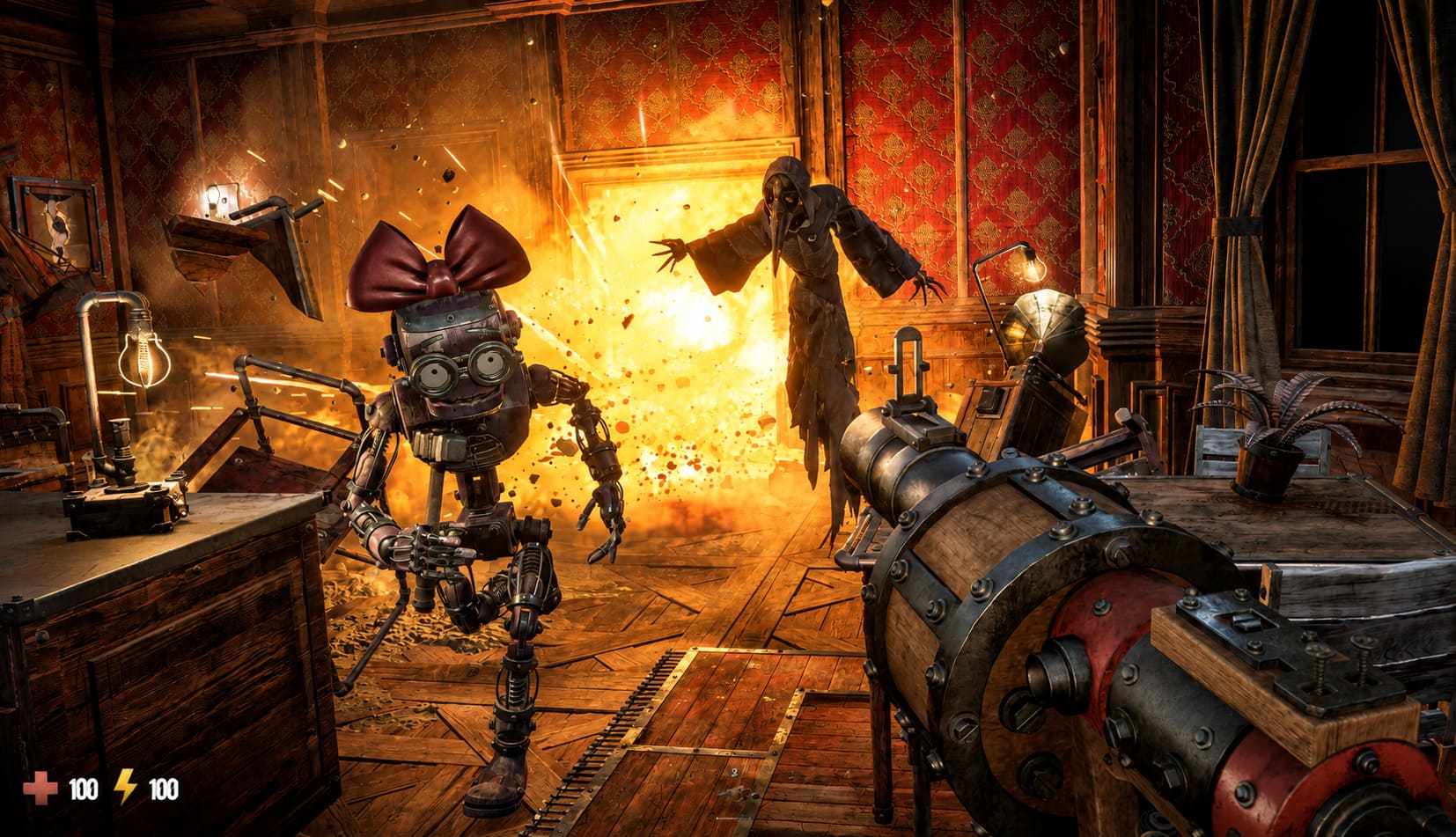
Fire is terrifying.
Heavy impacts are dangerous.
Even environmental hazards can reduce your carefully maintained vessel into a pile of burning splinters.
Normally, dying in an extraction game means waiting for your teammates or spectating until the next run.
Not here.
Death Isn’t Really Death
When your vessel is destroyed, your journey doesn’t immediately end.
Your Living Spark escapes from the broken body and continues floating through the ruins.
This mechanic keeps everyone involved instead of forcing eliminated players to simply watch.
As a Spark you can:
- Scout unexplored corridors.
- Warn teammates about incoming threats.
- Search for replacement vessels.
- Continue contributing to the team.
I genuinely wish more cooperative games experimented with systems like this.
Nothing kills the mood faster than dying ten minutes into a forty-minute mission and spending the rest of the session staring at someone else’s screen.
GRAIN ROT avoids that problem almost entirely.
Friendly Fire Is Basically a Feature
Let’s be honest.
Every cooperative game eventually turns into a comedy.
Whether it’s accidentally throwing a grenade at your own squad or closing a door in someone’s face, players always invent new ways to sabotage each other.
GRAIN ROT doesn’t fight that behavior.
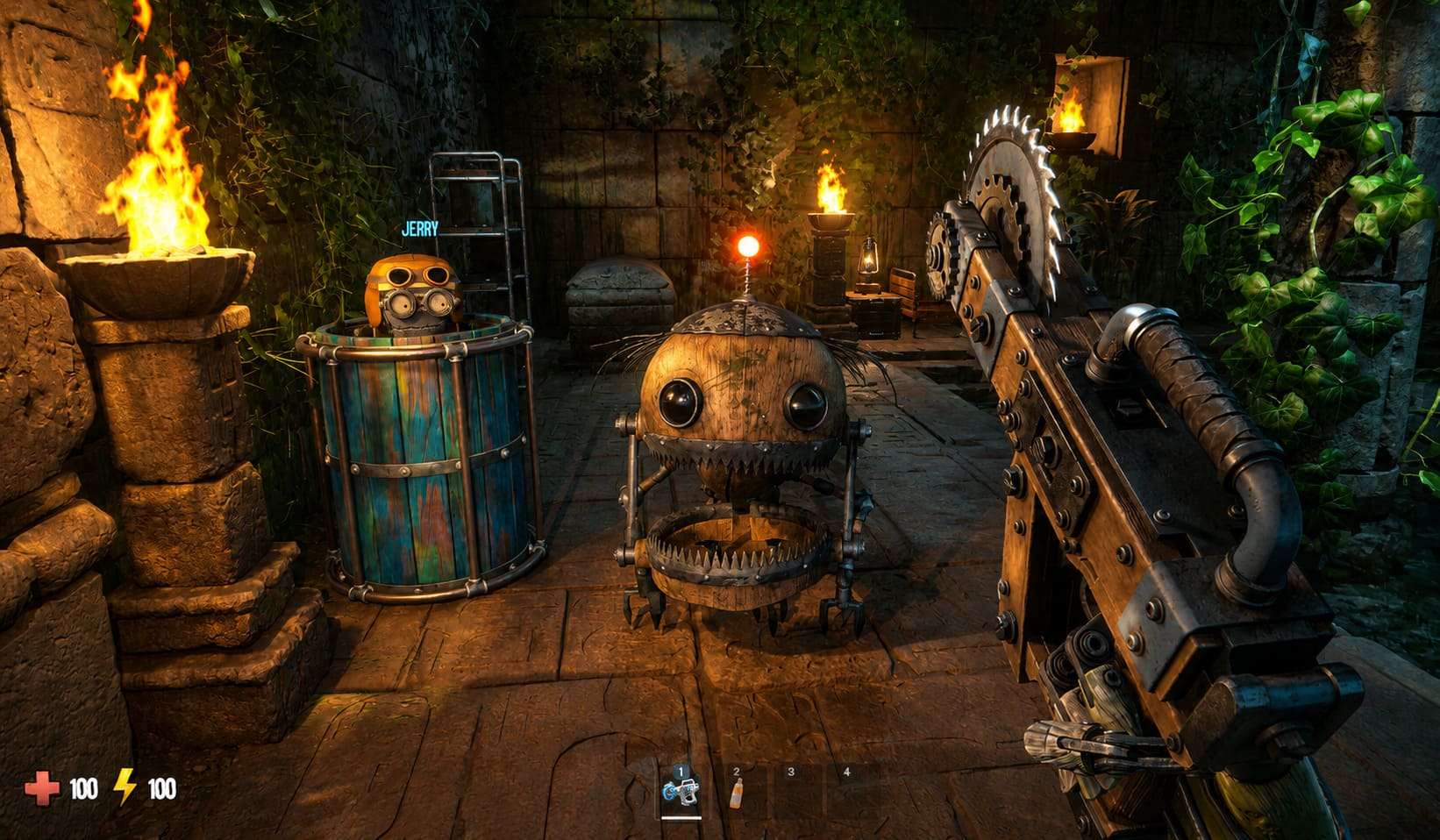
It embraces it.
The developers clearly understood something many studios try to avoid:
Funny failures often become the stories players remember most.
Stealing Someone’s Second Chance
Imagine your teammate loses their vessel.
Now they’re floating around as a Living Spark, desperately trying to find another wooden body before time runs out.
Sounds stressful already.
Now imagine another player reaches that replacement vessel first.
Or even worse…
Someone intentionally knocks the Spark away from safety.
It’s equal parts cruel and hilarious.
Moments like these almost guarantee arguments over voice chat, especially if the stolen vessel was particularly powerful or rare.
If your friend tells you, “I didn’t mean to,” there’s a decent chance they’re lying.
Physics Makes Every Betrayal Feel Personal
Physics systems are responsible for some of gaming’s funniest moments, and GRAIN ROT looks determined to continue that tradition.
Players aren’t just running around shooting monsters.
They’re constantly bumping into each other, pushing teammates, colliding with objects, and occasionally launching someone directly toward danger.
Dropkicks deserve special mention.
While they have practical uses during combat, everyone knows exactly what’s going to happen.
Someone is getting kicked into a bad situation.
- An enemy.
- A collapsing platform.
- A burning hallway.
Either way, someone in voice chat is about to scream.
Fire Is Everyone’s Problem
The wooden vessel concept also introduces another layer of multiplayer chaos.
Your body burns.
Very easily.
That means even small mistakes can become catastrophic.
- Throwing a torch carelessly.
- Igniting flammable surroundings.
- Spreading fire inside narrow corridors.
- Accidentally setting another player ablaze during combat.
Or…
Not accidentally.
The funniest part is that panic spreads almost as quickly as the flames.
One burning teammate usually becomes four panicking teammates within seconds.
Loot Greed Creates Its Own Horror
Like every extraction game, resources matter.
Furniture, debris, valuables, and other materials all contribute toward progression back at your base.
The catch?
Everyone wants to bring home as much as possible.
That naturally creates situations where players become just a little too greedy.
- Blocking elevators.
- Taking the shortest route.
- Ignoring teammates asking for help because they’re carrying expensive loot.
It’s amazing how quickly cooperation disappears when valuable resources are involved.
And honestly, that’s exactly why these moments feel authentic.
No scripted event could create the same level of tension.
Why Trolling Has Real Consequences
Here’s something I appreciate about GRAIN ROT.
The game encourages chaotic behavior—but it doesn’t reward mindless griefing.
There’s a huge difference.
If everyone dies before escaping, your collected resources disappear.
Everything.
Hours of progress can vanish because one player pushed a joke too far.
That creates an interesting balance.
You can prank your friends.
You probably will prank your friends.
But every risky decision carries consequences for the whole squad.
Eventually, everyone has to decide:
Is the joke worth losing today’s loot?
Most of the time…
Probably not.
Although I suspect plenty of players will learn that lesson the hard way.
What Makes GRAIN ROT Different?
After following previews and gameplay footage, I think the game succeeds because it mixes several genres without losing its identity.
Instead of copying existing horror games, it combines elements from each.
| Gameplay Element | Why It Works |
|---|---|
| Physics | Creates endless unpredictable moments. |
| Extraction Mechanics | Gives every expedition meaningful rewards. |
| Living Spark System | Reduces downtime after death. |
| Wooden Vessels | Makes environmental hazards genuinely threatening. |
| Friendly Fire | Encourages memorable player stories. |
| Procedural Ruins | Keeps exploration fresh every run. |
None of these mechanics are completely new on their own.
Combined together, though, they create something that feels surprisingly original.
Is GRAIN ROT Worth It? Review, Gameplay Walkthrough, and US Community Impressions (2026)
My Biggest Takeaway After Watching So Much Gameplay
The monsters aren’t what people will remember.
They’ll remember the friend who kicked them into danger.
The teammate who accidentally lit everyone on fire.
The person who stole the only available vessel.
Or the squad that somehow survived despite making every possible mistake.
Those are the moments that become clips on TikTok, highlights on YouTube, and stories shared months later.
Very few cooperative games manage to generate those moments naturally.
GRAIN ROT looks like one of them.
GRAIN ROT Multiplayer Guide: Dropkick Tutorial & Extraction Strategies
Final Thoughts
If you’re looking for a perfectly serious horror experience where everyone behaves professionally, GRAIN ROT probably isn’t the game for you.
If, however, you enjoy laughing one minute and desperately trying to survive the next, this might become one of the standout co-op releases of 2026.
The four-player limit feels intentional rather than restrictive, the Living Spark mechanic keeps everyone involved even after death, and the physics-based interactions constantly create situations that no scripted event ever could.
Most importantly, the game understands something that many multiplayer developers forget.
The funniest horror stories rarely come from the monsters.
They come from your friends.
And judging by everything we’ve seen so far, GRAIN ROT is going to produce plenty of unforgettable ones.