Echoes of Aincrad Health Guide: How to Regenerate Health and Survive the Death Game
If there’s one thing Echoes of Aincrad makes painfully clear from the very beginning, it’s this: survival matters more than style.
Bandai Namco’s upcoming Sword Art Online action RPG, launching on July 10, 2026 for PlayStation 5, Xbox Series X/S, and PC, isn’t trying to be another flashy anime power fantasy where you can face-tank damage and instantly bounce back. From everything shown so far — demo footage, preview breakdowns, and player impressions — Echoes of Aincrad looks far more interested in tension, preparation, and risk management than raw spectacle. And honestly, as someone who loves games that make healing, positioning, and resource planning feel meaningful, that’s exactly why this system already stands out.
The big reason players are paying so much attention to health management is, of course, Death Game Mode. This optional mode turns every mistake into a real threat by wiping your save after a single game over. No second chances. No “reload checkpoint.” No safety net. In a game built around Aincrad’s deadly setting, that’s not just a gimmick — it completely changes how you approach every dungeon, every boss, and every healing item in your bag.
So if you’re planning to jump into Echoes of Aincrad, here’s the truth: understanding how healing works is probably more important than learning your favorite combo route. Below is a full breakdown of how health recovery seems to work, how to use healing tools efficiently, and what I think will matter most once players start pushing deeper into Aincrad.
No Passive Healing Means Every Hit Actually Matters
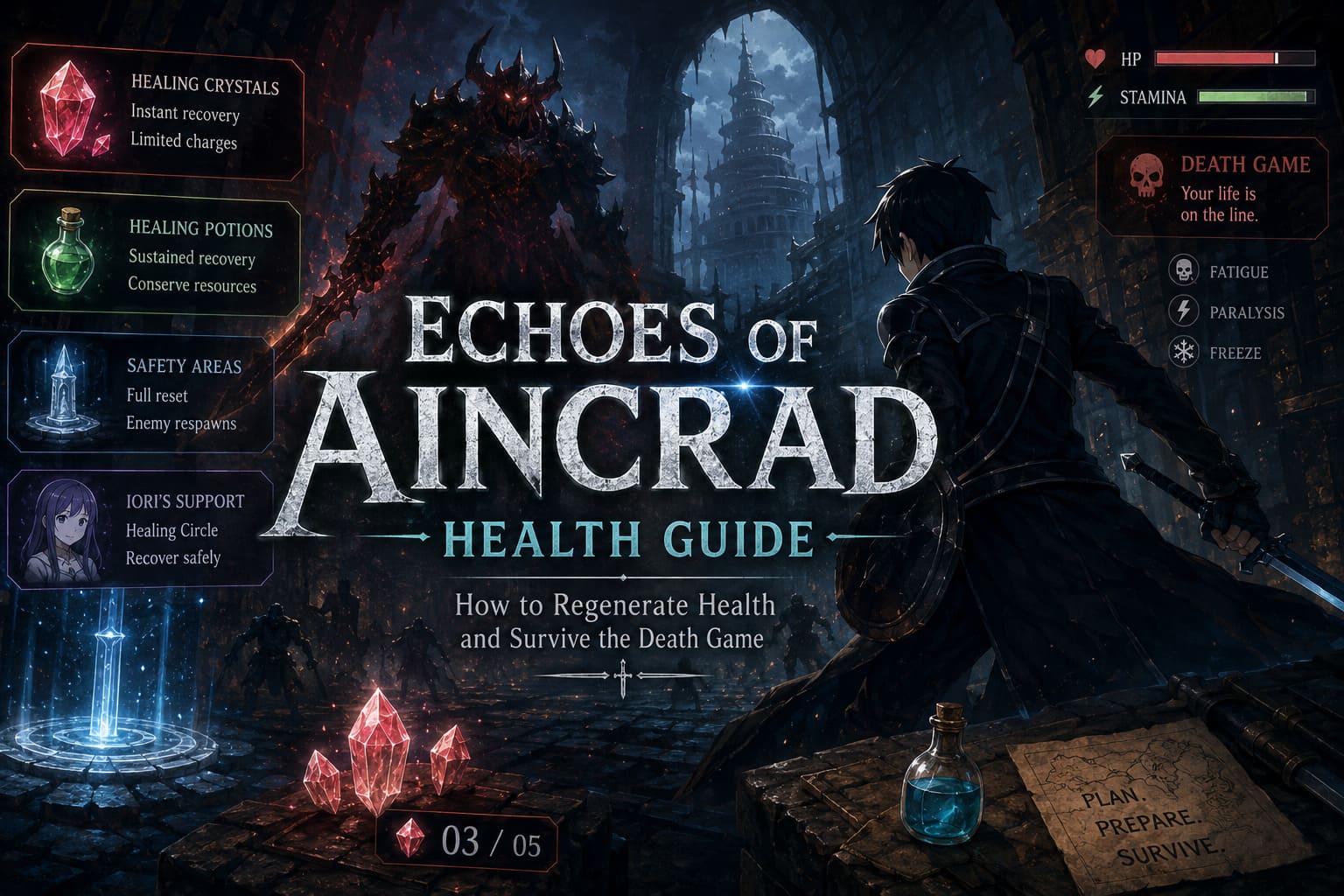
One of the most important things to understand about Echoes of Aincrad health regeneration is that the game appears to reject the modern “hide for five seconds and fully recover” formula. There’s no casual passive healing system waiting to rescue sloppy play. If you lose HP, that damage stays with you until you actively spend a resource to recover it.
That may sound harsh, but in practice it does something I really like: it makes combat feel more honest.
In a lot of modern action games, mistakes don’t carry much weight because health comes back for free. Here, taking damage seems to have a real cost. If you burn through your healing too early, that decision follows you deeper into the dungeon. If you enter a boss room half-prepared, the game doesn’t magically correct your bad planning. That creates a much stronger survival loop — and for a game set in Aincrad, it feels completely appropriate.
Healing Crystals Are Your Real Lifeline
From what’s been shown, the core of Echoes of Aincrad’s healing system is the Healing Crystal mechanic.
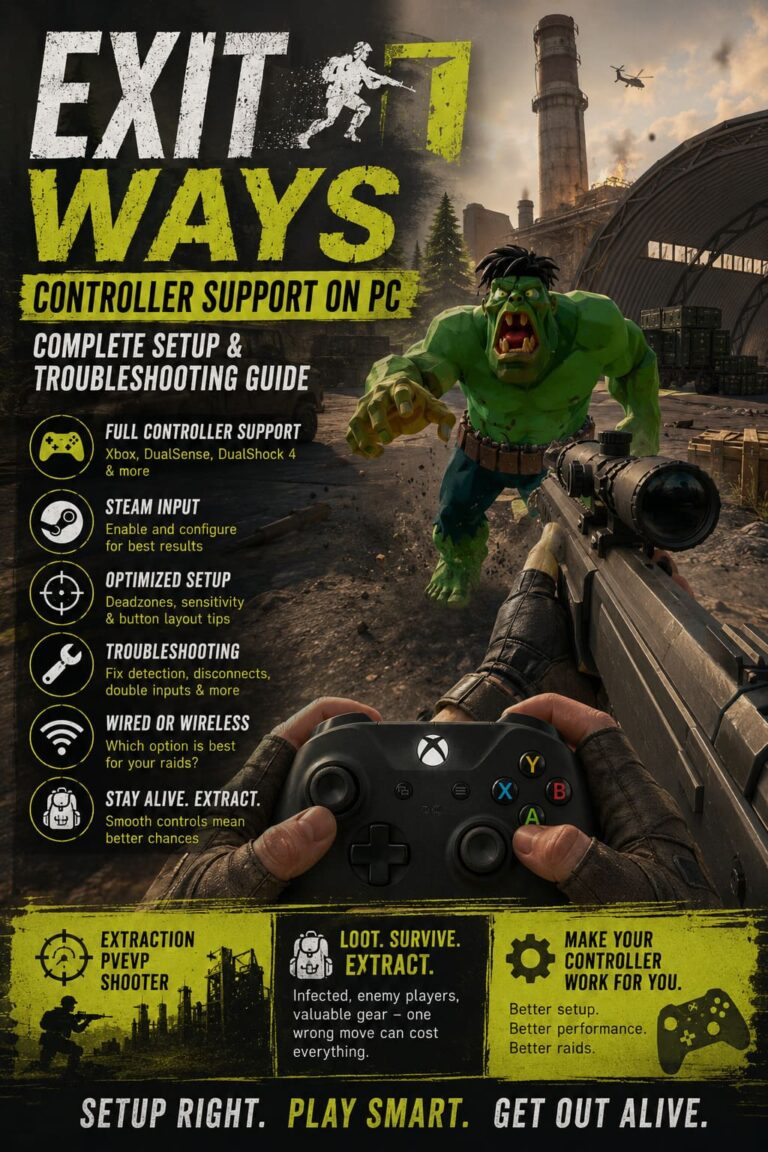
These crystals act as your primary emergency heal during combat. They sit in a dedicated part of the UI rather than functioning like ordinary consumables, which already tells you how central they are to the game’s design. Their biggest advantage is simple: they restore health instantly.
That makes them your panic button.
If a mini-boss clips you with a heavy attack, or a floor enemy catches you while your stamina is low, a Healing Crystal charge can stabilize the fight immediately. The tradeoff, of course, is that these charges are limited. You can’t spam them forever, and once they’re gone, you need to find a way to refill them.
Why Healing Crystals matter so much
- They provide fast, instant recovery during combat.
- They seem designed for emergency situations, not casual top-offs.
- Their limited charge count forces you to think ahead.
- In harder content, they’re likely the difference between recovering from one mistake and losing an entire run.
If you ask me, this is one of the smartest systems the game could have used. Instant healing always feels powerful, but tying it to a limited charge system stops it from becoming brainless. It also creates that classic survival tension: do I use a charge now to stay safe, or do I gamble and save it for the boss?
That kind of decision-making is exactly what a death-game-style RPG needs.
Safety Areas Are Basically Your Strategic Reset Points
To recharge those precious Healing Crystal charges, you’ll need to interact with Safety Areas.
These zones appear to function like rest points — the kind of checkpoint system that fans of punishing action RPGs will immediately recognize. Once activated, they restore your health and refill your Healing Crystal stock, giving you a clean reset before moving forward.
But, naturally, there’s a catch.
Resting at a Safety Area also appears to reset the environment, which means normal enemies can respawn. That single detail is going to shape how people route dungeons. You won’t just be asking “Do I need healing?” You’ll be asking whether it’s worth restoring now if it means fighting through respawned enemies again, whether you’re close enough to a boss to justify using the checkpoint, and whether you can survive the next section without spending a reset.
That’s where Echoes of Aincrad starts sounding less like a simple anime RPG and more like a proper resource-management action game. The best players won’t just be good at combat — they’ll be good at knowing when to reset, when to push, and when to turn back.
Potions Are for Sustain, Not Panic
If Healing Crystals are your emergency button, Healing Potions look like the tool for longer runs and controlled recovery.
Based on current info, potions won’t replace crystals in terms of speed. Instead, they seem better suited for sustained healing, gradual recovery, and general preparation before a dangerous push. That makes them extremely important for dungeon runs where you can’t afford to waste crystal charges on every minor mistake.
The way I see it, your healing setup should probably be split into roles:
| Healing Tool | Best Use | Main Advantage | Main Limitation |
|---|---|---|---|
| Healing Crystals | Emergency mid-fight healing | Instant recovery | Limited charges |
| Healing Potions | Sustained recovery during exploration | Conserves crystal charges | Likely slower than crystals |
| Safety Areas | Full reset before difficult sections | Restores HP and charges | Enemy respawns |
| Iori’s Healing Support | Efficient healing between exchanges | Saves consumables | Requires correct positioning and timing |
That distinction is going to matter a lot. A lot of players waste strong healing by using the wrong tool at the wrong time. If you pop instant heals for chip damage, you’ll regret it when a boss lands a heavy combo later. If you rely only on potions in the middle of a chaotic fight, you may not recover fast enough to survive.
Use crystals to survive mistakes. Use potions to preserve momentum. Use Safety Areas to reset intelligently.
That’s probably the healthiest way to think about the entire system.
Preparation in Town Might Be More Important Than Your Build
One of the most interesting details about Echoes of Aincrad is how restrictive it seems to be once you leave town. You apparently won’t have full freedom to change your progression flow mid-expedition. That means no casual gear swapping, no stress-free inventory refills, and no easy correction if you entered a dungeon underprepared.
And personally, I love that.
The Town of Beginnings sounds like it’s going to function as your real preparation hub. This is where you’ll likely buy recovery items, craft consumables, manage your resources, and make sure your pouch is actually ready for the next floor.
That creates a classic RPG loop that’s been missing from a lot of modern games:
- Plan your route
- Buy and craft your supplies
- Commit to the run
- Live with the consequences
That structure makes healing items feel more valuable because they aren’t just random loot — they’re part of your run planning. If High Healing Potions are hard to replace in the field, then every one you bring into a boss run becomes a strategic choice rather than just another disposable consumable.
Iori Might Secretly Be One of the Best Survival Tools in the Game
If the companion system works the way it currently looks, Iori could end up being one of the strongest partners for cautious or solo-focused players.
Her key value comes from a Healing Circle-style support skill that restores HP while you stand inside its area. In a game with limited healing resources and no passive regeneration, that’s huge. It effectively gives you a way to recover chip damage without immediately burning potions or crystal charges.
The catch is that you actually have to create space to use it.
This is where companion behavior settings become important. If you leave your partner in a fully aggressive mode, they’ll help pressure enemies, but that doesn’t always create a safe healing window. On the other hand, using Switch Mode sounds far more tactical. If a dodge can trigger your companion to pull aggro, then suddenly you have a much cleaner opening to back off, reset your footing, and step into Iori’s healing field.
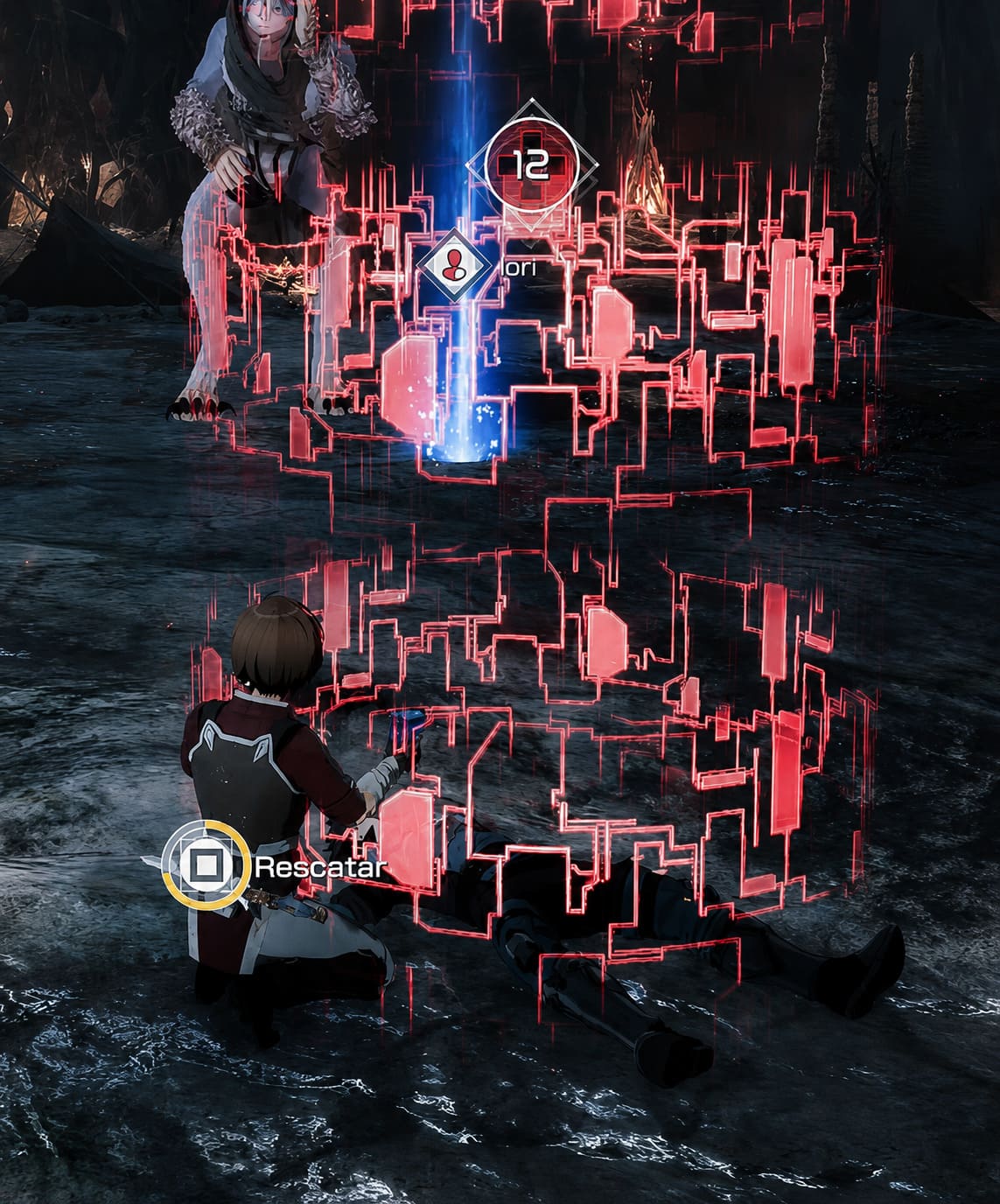
Why Iori could be a top-tier survival companion
- She helps reduce dependence on consumables.
- Her healing support is ideal for attrition-heavy dungeon runs.
- She synergizes with defensive, patient playstyles.
- She may be especially valuable in Death Game Mode, where preserving every item matters.
From a pure survival perspective, I wouldn’t be surprised if Iori becomes one of the most recommended partners in the game’s early meta.
Your Best Healing Strategy Is Still “Don’t Get Hit”
It sounds obvious, but in Echoes of Aincrad, the most efficient form of healing is going to be damage prevention.
Your weapon choice appears to have a massive impact on that. The One-Handed Sword seems especially appealing because it allows you to carry a Shield, giving you access to guarding and damage mitigation. That alone could make it one of the safest weapon styles in the game, especially for players who value consistency over flashy risk-heavy offense.
Meanwhile, weapons like the Two-Handed Axe look far more demanding. You gain raw offensive pressure, but you lose the safety of shield-based defense. That means your survival depends much more on dodge timing, spacing, and stamina control.
And stamina may end up being the hidden stat that determines whether you live or die.
Every major action drains it: attacks, dodges, and Sword Skills all feed into the same resource economy. If you burn through stamina recklessly, you can easily end up exhausted at the exact moment a boss launches a heavy telegraphed strike. At that point, it doesn’t matter how many potions you brought — if you can’t dodge, block, or reposition, your health bar is about to disappear.
The health-stamina connection is critical
- Low stamina means fewer defensive options.
- Overusing Sword Skills can leave you vulnerable.
- Fatigue effects make survival even harder.
- Good stamina discipline effectively reduces healing consumption.
This is why I think the game’s healing system can’t be viewed in isolation. It’s tied directly to weapon choice, stamina economy, positioning, and status management. Healing isn’t just about restoring lost HP — it’s about building a playstyle that loses less HP in the first place.
Status Effects Could Be the Real Run Killers
A lot of players focus only on raw damage, but I suspect status ailments are going to be what actually ruins many runs.
Effects like Fatigue, Paralysis, or Freeze sound especially dangerous because they attack the systems that keep you alive. If Fatigue wrecks stamina recovery, you lose your ability to dodge consistently. If Freeze applies ticking damage or slows your reaction window, your healing burden rises immediately.
That means recovery planning shouldn’t stop at HP restoration. You’ll probably want to carry status-curing items just as often as healing potions. In a normal action RPG, players often ignore utility consumables until the game punishes them for it. In a game with save deletion stakes, that’s a habit worth breaking early.
My Personal Take: This Is the Right Direction for an Aincrad Game
What I like most about Echoes of Aincrad’s health system is that it feels like it understands the setting.
Aincrad shouldn’t feel safe. It shouldn’t feel like a playground where mistakes vanish after five seconds behind a rock. If this game is really trying to sell the fantasy of surviving a death game, then healing has to be limited, deliberate, and tied to smart preparation. From everything shown so far, that seems to be exactly the direction the developers chose.
And honestly, I’m glad they did.
I’d much rather play an SAO game where every potion matters, every checkpoint decision has consequences, and every boss entrance feels tense than another anime RPG where survival mechanics are just there for decoration. If Echoes of Aincrad sticks the landing, health management won’t just be a background system — it’ll be one of the main reasons the game feels memorable.
How to Fix Echoes of Aincrad Stuttering and Lag on Xbox Series X (2026 Guide)
Final Survival Tips for Echoes of Aincrad
Before heading into a dangerous floor or committing to a boss fight, these are the habits I’d personally build from day one:
- Never waste Healing Crystal charges on tiny chip damage.
- Use potions for sustain and crystals for emergencies.
- Treat Safety Areas as tactical reset points, not automatic stops.
- Stock status-curing items alongside healing supplies.
- Respect stamina as much as HP.
- Consider defensive weapon setups if you’re playing Death Game Mode.
- If Iori is available, learn how to create safe healing windows around her support skill.
At the end of the day, Echoes of Aincrad looks like a game where survival won’t come from overleveling or button-mashing. It’ll come from discipline: knowing when to heal, when to defend, when to retreat, and when to commit.
And in a world where one bad run can erase everything, that’s exactly how it should be.