Deltarune Chapter 5 Easter Eggs: Secret Boss, Hidden Eggs, and Gaster Lore
Playing Deltarune Chapter 5 feels less like simply progressing through a story and more like trying to decode a living puzzle box. As someone who has spent years following Toby Fox’s games, I can honestly say this chapter pushes the boundary between gameplay and hidden narrative even further than before. The community on Reddit, Steam forums, and YouTube analysis channels has already been dissecting every frame, and it is obvious why: Chapter 5 is loaded with easter eggs that tie directly into Undertale lore, cryptic Gaster connections, and deeply layered world-building that rewards obsessive exploration.
What makes this chapter especially interesting is how it balances nostalgia with mystery. Long-time fans will immediately recognize familiar patterns, while newer players might assume these hidden elements are just flavor text. In reality, every secret feels intentional, as if the game is constantly whispering that there is always something just slightly out of reach.
Deltarune Chapter 5 Weird Route Guide: How to Complete the Festival Day Route
The Chapter 5 Secret Egg: A Ritual Hidden in Plain Sight
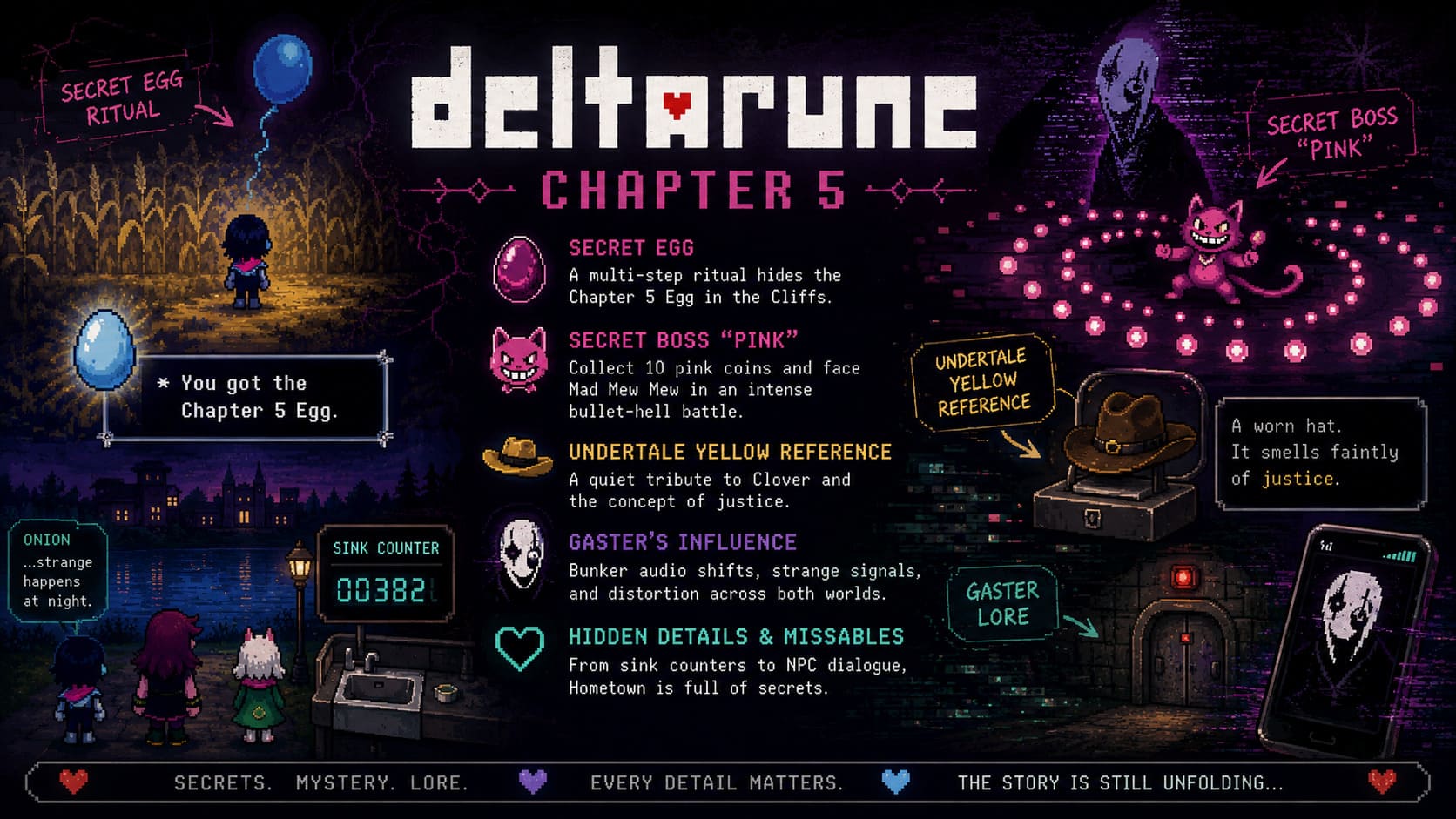
One of the most talked-about discoveries in Chapter 5 is the continuation of the infamous Secret Egg storyline. Anyone familiar with earlier chapters knows the Egg Man has always been one of the most bizarre recurring elements in the series. In this chapter, however, the process of obtaining the egg feels more like a ritual than a simple collectible hunt.
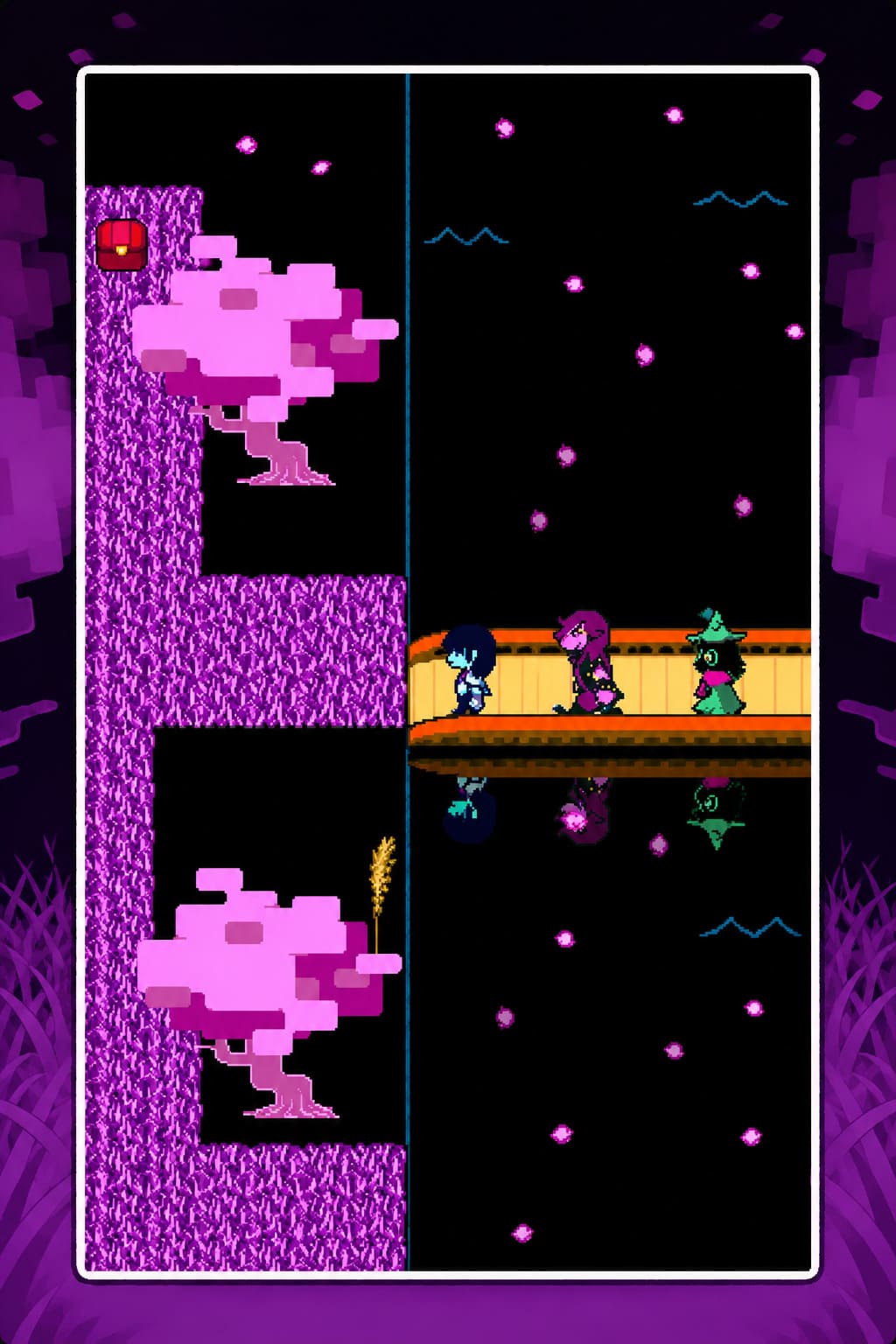
The search begins in the Cliffs region, where players must pass a wheat field that initially appears decorative. However, after careful observation, it becomes clear that the field is interactive in an unusual way. The player is required to systematically clear the entire field by repeatedly running through it. This alone feels like a strange design choice, but it is only the beginning.
Once the field is completely cleared, a single stubborn tile begins to respawn each time the screen transitions. Destroying it repeatedly triggers a visual anomaly: a floating blue balloon appears and begins drifting upward. Following this balloon leads into a hidden area occupied by a familiar presence that veteran players will immediately recognize. This room is not just a joke—it functions as a logic gate requiring precise interaction with environmental objects.
Only after completing this sequence does the hidden tree room become accessible. Behind it lies the now-iconic text-only interaction that grants the Chapter 5 Egg. It is a perfect example of how Deltarune continues to reward players who treat exploration as experimentation rather than simple progression.
Secret Boss “Pink” and the Return of Mad Mew Mew
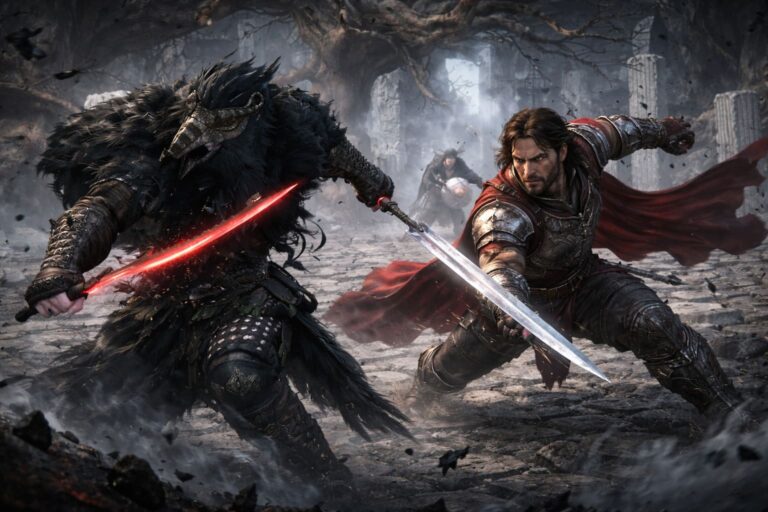
Every chapter of Deltarune seems to introduce a hidden boss tied to a Shadow Crystal, and Chapter 5 continues that tradition with one of the most challenging encounters yet. The community has dubbed this boss “Pink,” but its identity becomes clear during the fight: it is a reinterpretation of Mad Mew Mew, originally known from Undertale.
To access this encounter, players must collect ten hidden pink coins scattered throughout the chapter. These are not casually placed collectibles; many require solving environmental puzzles or surviving platforming segments that feel intentionally deceptive. Once all coins are collected, the player can purchase a mysterious key from the Cliff Shop, unlocking the path forward.
The final access point appears deceptively late in the chapter. Instead of proceeding toward the expected fountain location, the player must deliberately explore an alternate route to the far left of the castle. Even party member dialogue becomes part of the puzzle, as Ralsei attempts to warn the player away from this direction. Ignoring these warnings leads to a hidden drop point and a locked pink door.
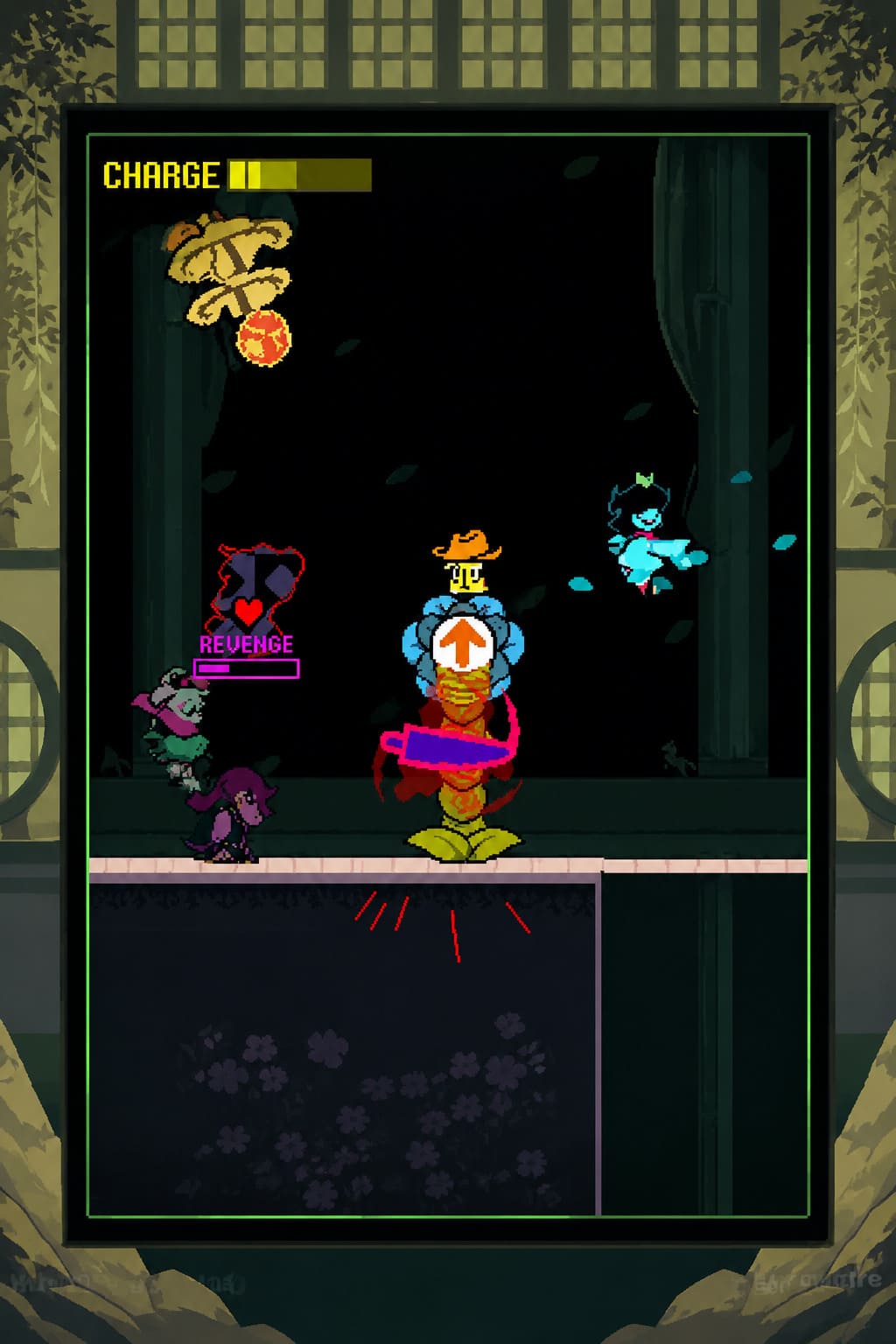
Inside, the boss fight begins, shifting into a fast-paced bullet-hell encounter that demands precision and pattern recognition. Defeating Pink rewards the player with the Chapter 5 Shadow Crystal, reinforcing the idea that optional encounters are deeply tied to the broader mystery structure of the game.
The Undertale Yellow Reference: A Quiet Tribute
Among the more subtle discoveries in Chapter 5 is a direct nod to the fan-made project Undertale Yellow. Hidden within a secondary Dark World path, players can find a cowboy hat placed on a display rack. At first glance, it appears decorative, but interaction reveals a short piece of flavor text referencing “justice.”
This moment is widely interpreted as a tribute to Clover, the protagonist associated with the yellow soul concept. While small in execution, it carries significant weight for fans, as it represents one of the rare instances where a fan-made interpretation is acknowledged within the official ecosystem of Toby Fox’s storytelling universe.
Gaster, the Bunker, and the Expanding Signal Distortion
No discussion of secrets in Deltarune would be complete without addressing W.D. Gaster. Chapter 5 continues to expand his presence in subtle but unsettling ways. Using the in-game cell phone within the Dark World still produces the familiar distorted audio effect associated with Gaster’s influence, suggesting that his presence remains embedded in the game’s underlying structure.
However, the more intriguing discovery comes from the Light World. Players returning to Hometown and revisiting the mysterious bunker report a noticeable change in ambient sound frequency. The shift is subtle, but consistent enough to fuel extensive community speculation. Some interpret it as evidence that the barrier between dimensions is weakening.
Additional dialogue from altered NPCs in the library supports this interpretation, referencing vague concepts such as “device instability” and “breach signals.” While nothing is explicitly confirmed, the implication is clear: Gaster’s influence may be expanding beyond background lore and into active narrative development.
Light World Details and Missable Interactions
Even after the main events conclude, Chapter 5 continues to reward careful observation in the Light World. One recurring joke involves the sink counter, which updates when interacting with hospital environments. In this chapter, the running tally continues its absurd progression, reinforcing the game’s long-standing habit of turning minor interactions into ongoing gags.
Additional missable content includes encounters with characters like Onion near the lake, who provides increasingly unsettling dialogue hints, as well as optional conversations at Napstablook’s house that reference external requests from Mettaton. These interactions may seem minor, but they contribute to the feeling that every NPC in Hometown exists within a larger interconnected narrative web.
Conclusion
Deltarune Chapter 5 is not just another continuation of the story—it is a dense network of secrets, references, and experimental design choices that actively encourage player investigation. From the multi-step Secret Egg sequence to the reimagined Mad Mew Mew boss fight and the expanding Gaster mystery, every layer feels intentionally constructed to reward curiosity.
For players who enjoy digging beneath the surface, this chapter is one of the richest yet. And if history is any indication, what we are seeing now is only a fraction of the full picture that will eventually connect everything together.