Deltarune Chapter 5 Weird Route Guide: How to Complete the Festival Day Route
When I first dove into the rumored Chapter 5 content of Deltarune, I expected the usual mix of quirky humor, emotional character moments, and clever RPG mechanics that Toby Fox is known for. Instead, the so-called Weird Route on Festival Day feels like the game is actively resisting the idea that you should even be playing it in a conventional way. As someone who has spent years digging through RPG mechanics and alternative endings, I can say this route doesn’t just change the story—it strips the entire experience down to something uncomfortable and deliberately empty.
What stands out immediately is how different this path feels compared to standard playthroughs. Instead of the usual Dark World exploration, party banter, and tactical battles, Chapter 5’s Festival Day sequence becomes a slow psychological descent into isolation and control. It is less about fighting enemies and more about observing how the game reacts when you refuse to engage with its intended emotional rhythm. From a player’s perspective, it feels like the systems themselves are watching your choices and quietly judging them.
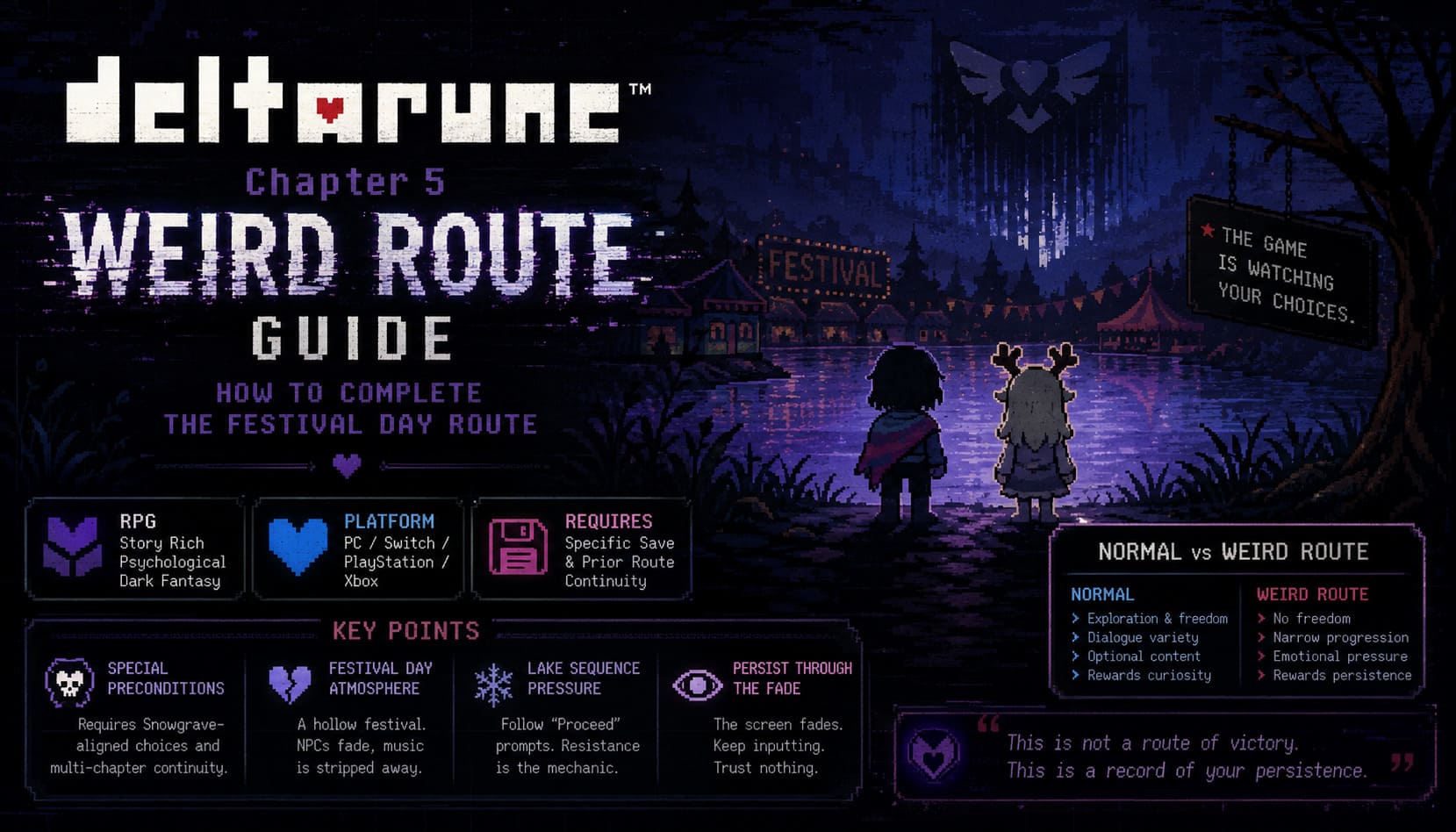
The Weird Route is not something you stumble into casually. It is designed as a continuation of highly specific prior decisions, most notably the Snowgrave-aligned choices from earlier chapters. The game tracks your behavior across saves, and if your prior actions do not align, the route simply refuses to open in the same way. This makes the experience feel less like a branching storyline and more like a locked psychological experiment that only activates under strict conditions.
Preconditions and Save State Requirements
From my experience, the most frustrating part of attempting this route is not the gameplay itself but the setup. The game demands continuity across multiple chapters, meaning your earlier decisions are permanently embedded into the logic of Chapter 5. If your save file does not carry the correct flags, the Weird Route simply collapses into a standard Festival Day sequence.
| Condition | Requirement | Effect |
|---|---|---|
| Chapter 2 Outcome | Snowgrave-aligned completion | Enables global route flag |
| Chapter 3 Continuity | No deviation in key interactions | Preserves narrative lock |
| Chapter 4 Behavior | Controlled dialogue with Noelle | Maintains psychological route state |
| Chapter 5 Entry | Correct save file selection | Unlocks Festival Day Weird Route |
What makes this system interesting is that it removes the illusion of freedom. Even though RPGs usually encourage experimentation, here experimentation outside the intended path actively shuts down the experience you are trying to access.
Festival Day Atmosphere and Early Progression
Once the route is active, Festival Day immediately feels wrong. The town is technically alive, but it lacks warmth or presence. NPCs either disappear entirely or behave like they are speaking through static. Even the usual upbeat festival music is replaced with something far more minimal and hollow.
From a player’s perspective, this is where the game starts to feel less like entertainment and more like observation. You are still controlling Kris, but the world does not respond with its usual charm or humor. Instead, it reacts with distance, almost as if it has already decided what kind of experience you are forcing it into.
At this stage, the route funnels you toward Noelle, and there is very little room for deviation. Optional festival activities exist, but engaging with them feels like a distraction the game actively discourages through subtle narrative pressure.
The Lake Sequence and Behavioral Pressure
The central moment of the Weird Route takes place near the lake area, where Noelle becomes the focal point of the entire sequence. This section is where the game shifts from atmospheric storytelling into direct psychological tension. Dialogue becomes restrictive, and choices feel increasingly one-directional.
Noelle’s behavior is especially important here. She is not just reacting as a character but also acting as a mirror to the player’s persistence. Her hesitation builds naturally, and the writing emphasizes discomfort rather than confrontation. As a player, you are no longer solving problems—you are pushing through resistance.
The key mechanic here is deceptively simple: continue selecting progression prompts labeled “Proceed.” However, the simplicity is intentional. The difficulty lies not in understanding what to do, but in continuing to do it despite escalating emotional and visual resistance from the game itself.
Screen Fade and Input Discipline
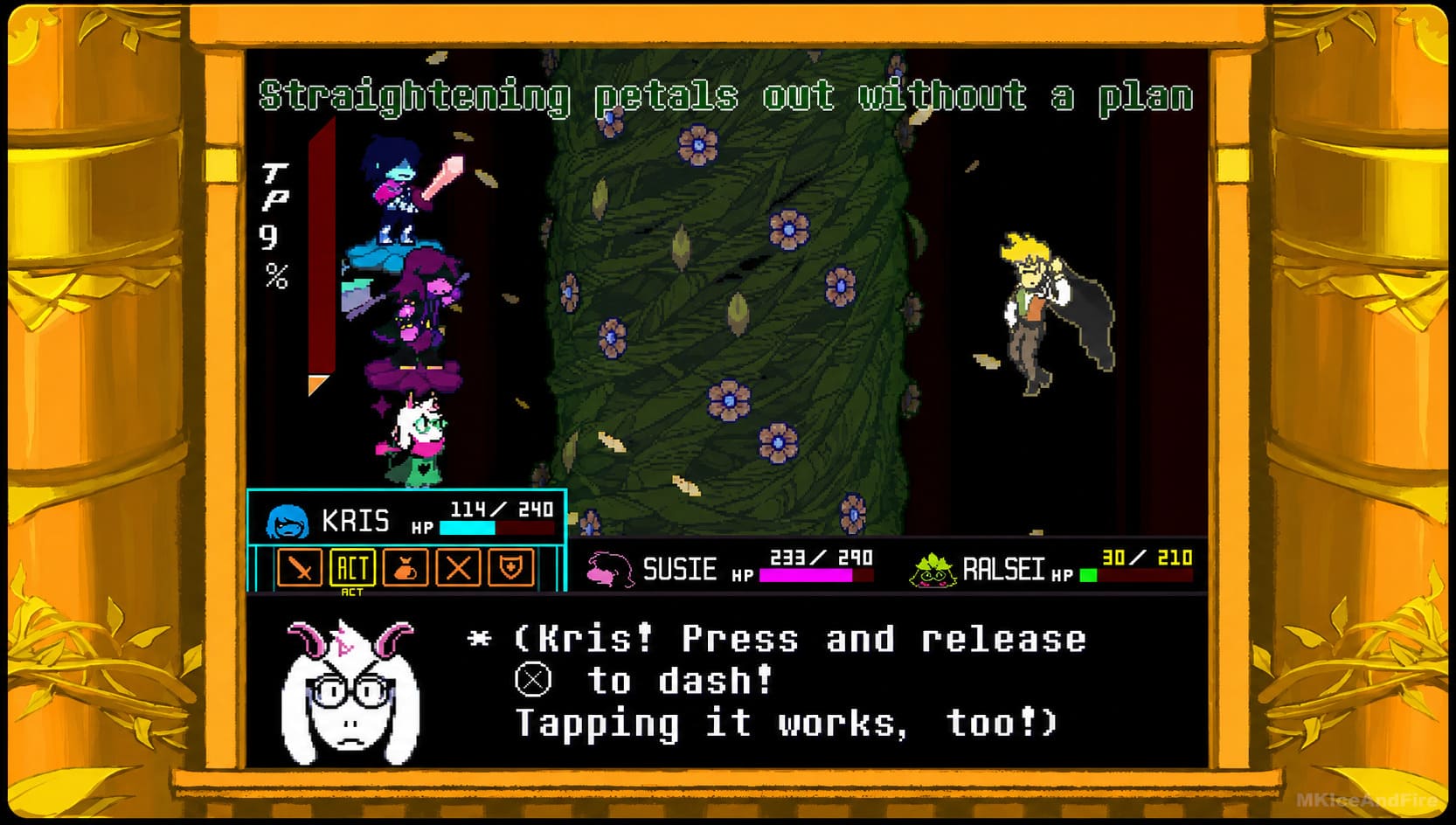
One of the most discussed aspects of this route in community spaces is the screen fade sequence. As the event progresses, visual clarity deteriorates until the screen becomes almost unusable. This is not just a stylistic choice—it directly interferes with player input recognition.
At this point, success depends on maintaining consistent interaction despite the lack of feedback. Many players fail here simply because they assume the sequence has ended or that the game has frozen. In reality, the system is still waiting for input, but it has intentionally removed the usual visual cues that guide player behavior.
From a design perspective, this is where the Weird Route becomes controversial. It intentionally breaks trust between player and interface, forcing you to act without confirmation that your actions are still meaningful.
Key Differences Between Normal and Weird Route
To understand how drastically the Festival Day Weird Route diverges from standard gameplay, it helps to compare them directly.
- Normal routes emphasize exploration, dialogue variety, and optional content.
- Weird Route removes most interactive freedom and funnels the player into a narrow sequence.
- Standard endings reward curiosity and completionism.
- Weird Route rewards persistence through discomfort and narrative constraint.
What makes this especially notable is how it flips traditional RPG design logic. Normally, games reward players for exploring systems. Here, exploration is punished, and restraint becomes the primary form of engagement.
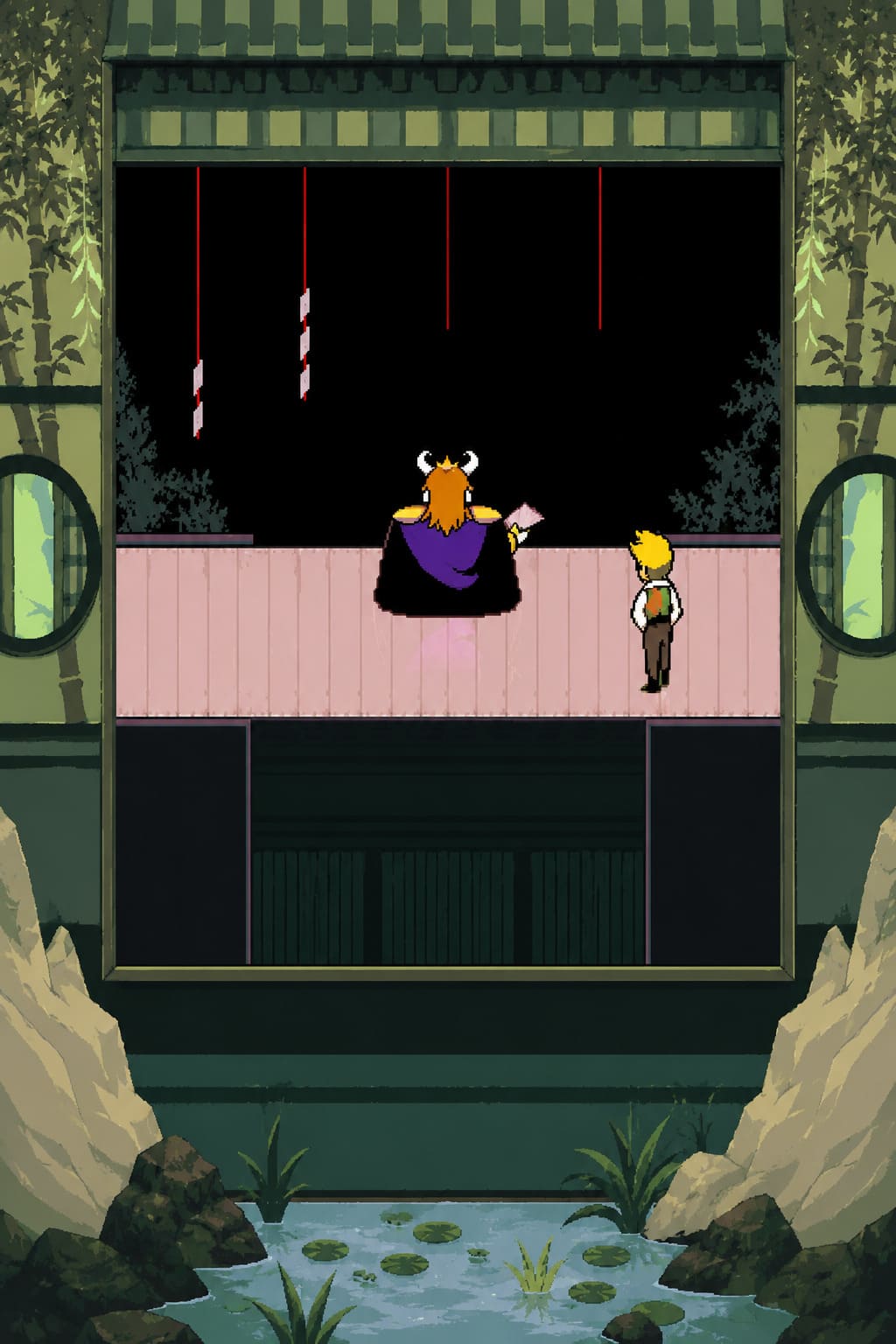
Community Interpretation and Design Impact
Across forums and discussion spaces, players have debated what this route actually represents. Some see it as a commentary on player control in RPGs, while others interpret it as a meta-narrative about forcing characters into roles they resist. Regardless of interpretation, the consensus is that it intentionally removes comfort from the experience.
As a long-time RPG player, I find this approach fascinating, even if it is uncomfortable. It is rare for a game to so directly challenge the player’s expectations of agency. Instead of offering power, it offers consequences that feel deliberately unfulfilling.
Final Thoughts and Save File Implications
Completing the Weird Route on Festival Day does not feel like a victory in the traditional sense. It feels like locking a world state into something irreversible, where characters and outcomes no longer behave according to standard RPG logic. The save file becomes less of a tool and more of a record of choices that cannot be undone without external resets.
For players considering this path, it is worth understanding that this is not just an alternate ending—it is a structural deviation from the game’s core identity. Once you commit, you are no longer playing for rewards or completion. You are observing what happens when the game stops trying to entertain you and starts responding to your persistence in a colder, more deliberate way.