Myrtana Lore Explained: The Penal Colony That Changed RPGs
When I first played Gothic back in the day, it didn’t feel like stepping into a typical fantasy RPG. It felt like being dropped into a world that didn’t care whether I survived or not.
After going through dozens of RPGs over the years—from The Elder Scrolls to The Witcher—I still think the Kingdom of Myrtana in Gothic 1 is one of the most brutal and believable fantasy settings ever made.
This isn’t a world built around the player. It’s a collapsing empire held together by war, desperation, and political decay. And honestly, that’s what makes it memorable.
Gothic Remake Swamp Camp Guide: Novices, Templars, and Gurus
The World of Gothic: Not Just Fantasy, But Pressure
What separates Gothic from most RPGs is how heavy its world feels. Myrtana isn’t a backdrop—it’s a pressure cooker.
You’ve got a losing war against Orcs, a collapsing political system, a king making morally questionable decisions just to survive, a magical resource everyone is addicted to, and a penal colony that becomes its own broken civilization.
After years of playing RPGs, I can say this confidently: Myrtana doesn’t feel designed. It feels inevitable, like every event is a reaction to something worse.
The Divine Framework: Innos, Adanos, and Beliar
One of the most interesting things about Gothic lore is how it explains conflict through gods—but not in a simple good vs evil way.
Instead, you get a fragile balance between three forces: Innos, Beliar, and Adanos.
Gothic Remake Faction Choice Guide: Old Camp vs. New Camp
Three Gods of Balance and Conflict
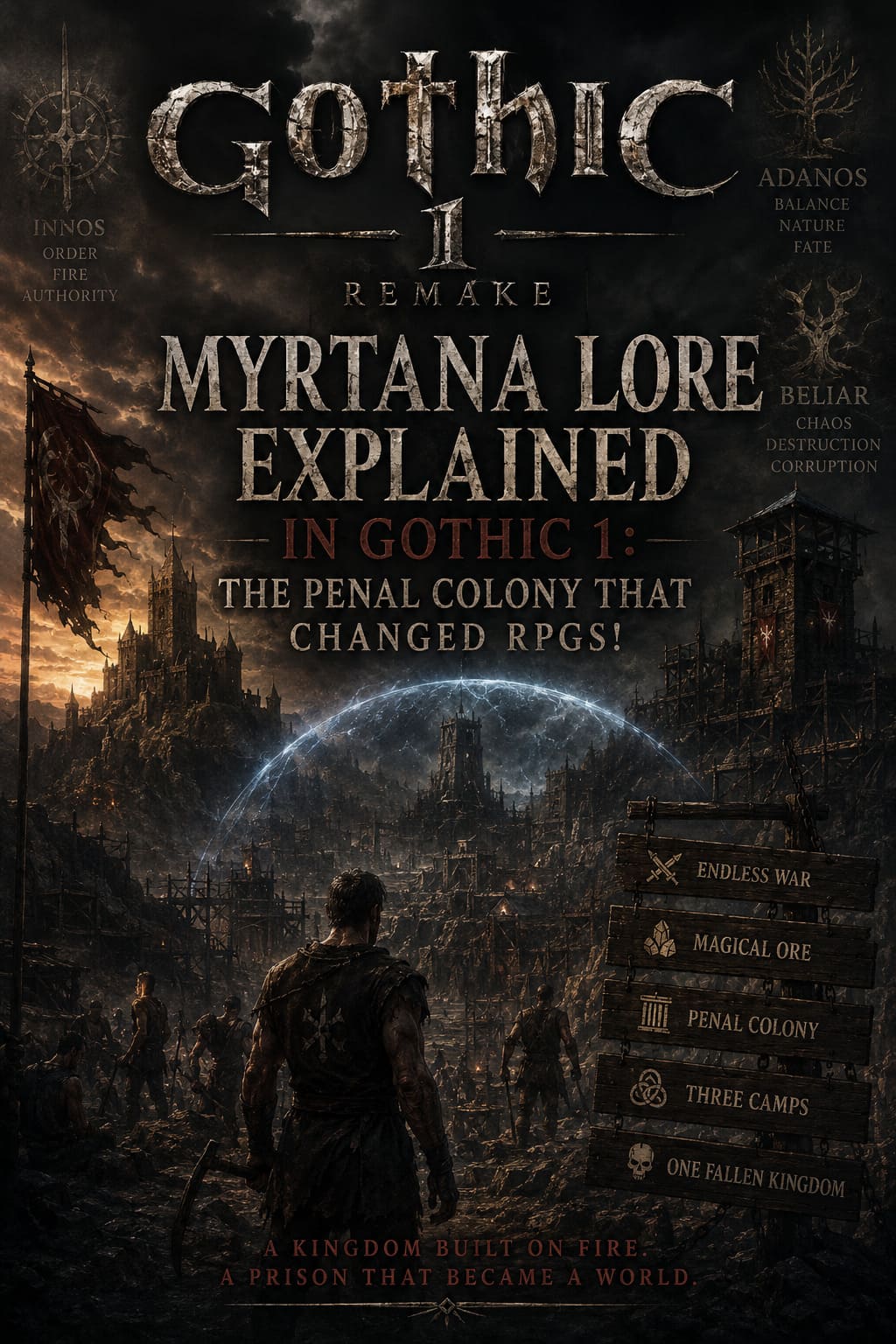
Innos represents order, fire, authority, and human civilization. Beliar represents chaos, destruction, corruption, and death. Adanos represents balance, nature, and the unwilling referee of reality.
What I always liked here is that none of them feel like “correct” choices. Innos supports humanity, yes—but also fuels authoritarian rule. Beliar is terrifying—but also necessary for narrative balance. Adanos feels like the only rational one, but also completely passive.
In gameplay terms, it reflects something deeper: every faction in Gothic is flawed because the world itself is flawed.
Rhobar I: The King Who Built an Empire on Fire and Iron
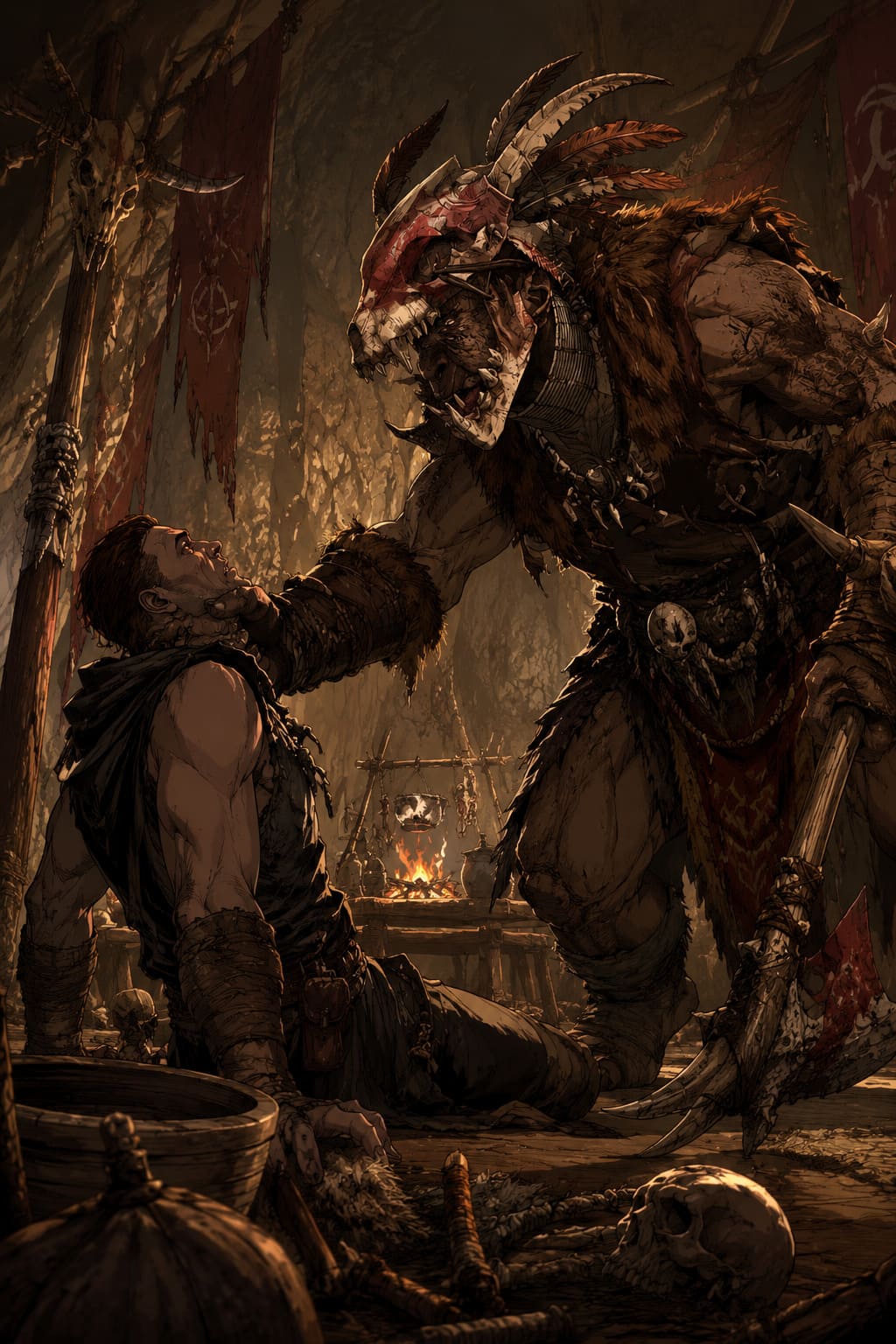
Rhobar I is one of those rulers who feels like he belongs in a myth more than a history book.
From what the game implies, he didn’t just found a kingdom—he carved it out through war. A wandering warrior, chosen by divine fire, becomes king and unites fractured tribes under one banner.
But the important part isn’t that he won—it’s what came after: endless expansion, constant war campaigns, over-reliance on magical ore, and growing internal instability.
By the time his empire reaches its peak, it’s already rotting underneath.
The Orc War: When Fantasy Stops Being Romantic
The Orcs in Gothic aren’t just random enemies. They’re a full-scale existential threat.
Under Rhobar II, the war becomes a slow collapse where border forts fall one by one and human armies get outmatched physically and tactically.
This is where Gothic starts to feel less like fantasy and more like survival fiction. There’s no “hero army saves the day” logic here. Just attrition.
Key War Characteristics
- Continuous territorial losses
- Superior Orcish physical strength
- Dependence on magical ore weapons
- Long-term economic exhaustion
And that’s what pushes the kingdom into its most desperate decision.
The Penal Colony of Khorinis: A System Built on Collapse
Here’s where Myrtana stops being just a kingdom and becomes something much darker.
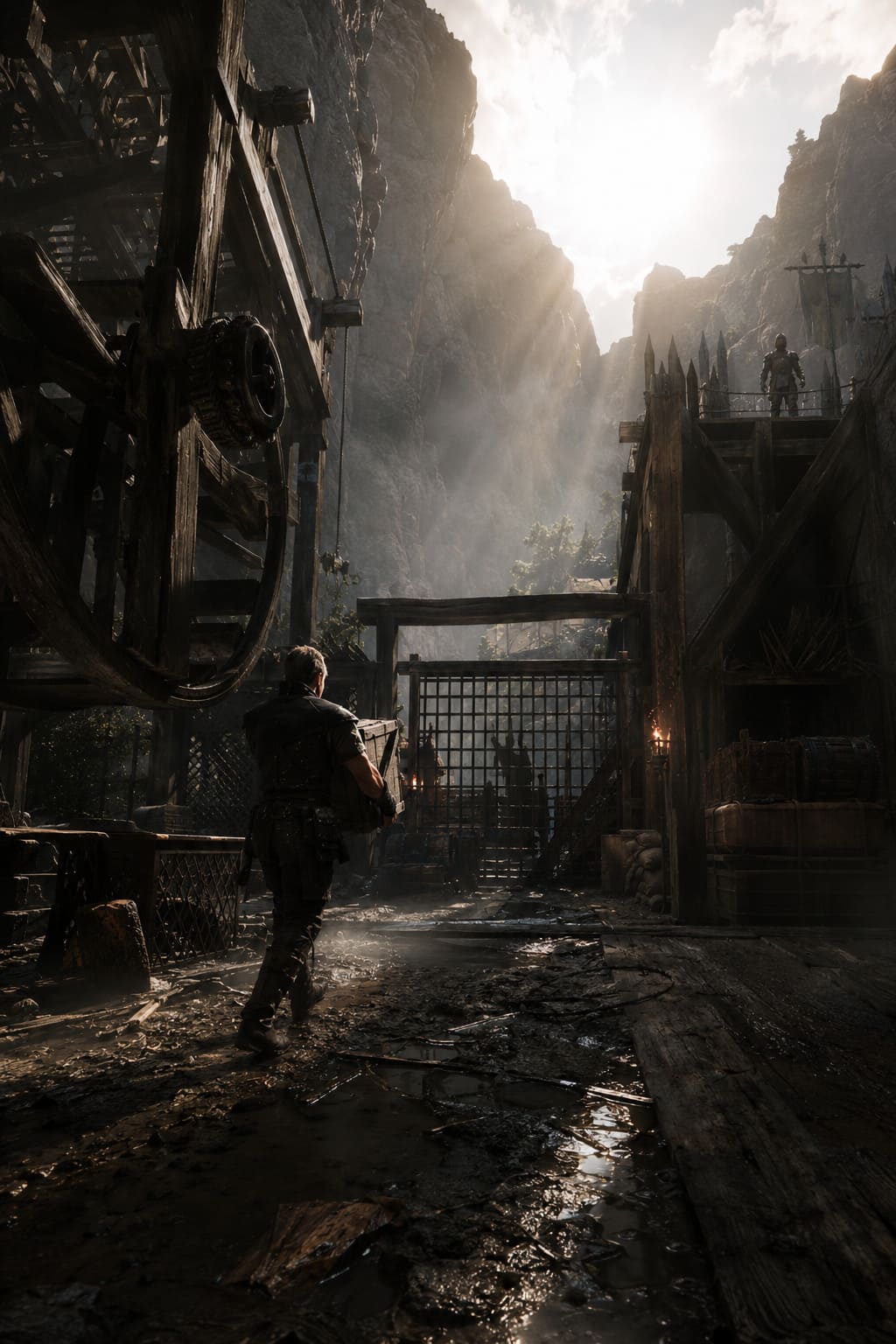
To keep the war going, Rhobar II turns the Valley of Mines into a massive penal colony. Anyone who breaks the law gets sent there without exception.
Instead of crime leading to punishment, crime leads to forced survival labor in a magical death zone.
Structural Reality of the Colony
| Element | Function | Consequence |
|---|---|---|
| Magical Ore | War resource | Empire-wide dependency |
| Prisoners | Labor force | Overpopulation and instability |
| Guards | Control system | Eventually overwhelmed |
| Trade Agreement | External survival link | Political corruption |
What starts as a prison quickly becomes a fully independent ecosystem. And the moment control fails, everything breaks.
The Barrier: The Empire’s Biggest Mistake
The magical barrier is one of those ideas that sounds smart on paper but collapses completely in practice.
The plan was simple: keep prisoners inside, allow supplies in, force mining output, and prevent escape.
But magic in Gothic rarely behaves like logic expects it to.
The barrier expands uncontrollably and traps everyone inside—guards, mages, prisoners, all together.
Unintended Consequences
- Loss of imperial control
- Formation of independent factions
- Breakdown of prison authority
- Rise of internal warfare
Instead of restoring order, the barrier creates a new society inside itself.
The Three Camps: Civilization Breaking Into Ideologies
Once the barrier forms, the colony splits into three major factions. It feels less like a prison and more like a failed society experiment.
The Old Camp: Control and Comfort
Led by Gomez, the Old Camp controls trade with the outside world and lives in the ruins of authority. They enjoy luxury goods from the king and maintain power through economic control.
The New Camp: Revolution and Science
Led by General Lee, the New Camp rejects Gomez’s rule and seeks to destroy the barrier using magical ore. They value freedom over stability and represent structured resistance.
The Swamp Camp: Faith and Escapism
Centered around worship of the Sleeper, the Swamp Camp abandons political logic entirely. They rely on swampweed rituals and spiritual belief in salvation through divine awakening.
My Personal Take: Why Myrtana Still Works Today
After playing modern RPGs with massive budgets and complex systems, I still think Gothic 1 gets something fundamental right.
Myrtana works because it never gives you full control. Every system feels fragile. Every faction feels morally compromised. Every victory feels temporary.
Most modern games try to empower the player. Gothic does the opposite—it makes you feel like you’re surviving inside someone else’s collapsing decisions.
Final Thoughts: A Kingdom Built to Fall
Myrtana is not a story about heroes or villains. It’s a story about systems breaking under pressure.
A war that never ends, a resource everyone depends on, a prison that becomes a society, and a kingdom slowly suffocating under its own survival strategy.
By the time the Nameless Hero arrives, everything important has already gone wrong. He’s not saving a stable world—he’s walking into the aftermath.
If you’ve played Gothic, you probably don’t remember it for its graphics or mechanics. You remember it because Myrtana feels real in the worst possible way.
And that’s exactly why it’s unforgettable.