Gothic 1 Remake Story Length & Faction Branches Explained
Having played a ridiculous number of RPGs over the last two decades—from old-school Eurojank classics to modern AAA open worlds—I always come back to Gothic as one of those rare games that actually understood world design through pressure, not freedom.
So when the Gothic 1 Remake started getting deeper previews, I was genuinely curious not just about visuals or combat, but about something more important: does the game still respect the structure of its faction-driven storytelling, and how long do those paths actually feel?
Because let’s be honest—length in RPGs is meaningless if it’s just padded. What matters is whether each faction route feels like a real identity shift, not just a different coat of paint.
After digging through previews, developer notes, and community breakdowns—and mentally comparing it to how the original Gothic felt—here’s a grounded, player-focused look at the story branches, faction paths, and overall playtime expectations in the remake.
Myrtana Lore Explained: The Penal Colony That Changed RPGs
The Core Structure: Still Gothic at Its Heart
The original Gothic (2001) had a very specific rhythm: early freedom, mid-game commitment, and late-game linear escalation. The remake does not try to reinvent that structure, but instead expands the middle layer where the original always felt slightly compressed.
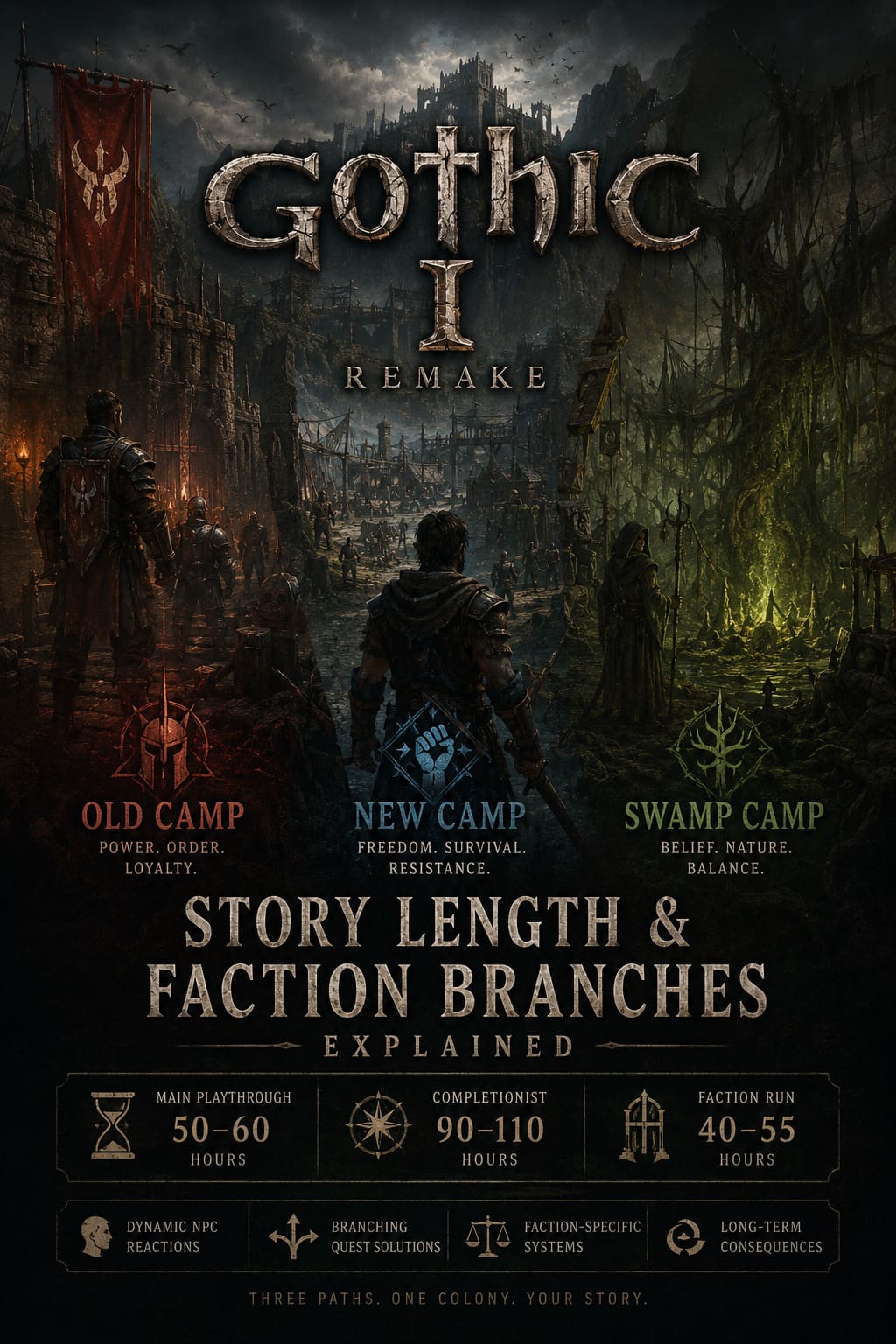
From a modern RPG perspective, the expected playtime structure now looks roughly like this: main playthrough around 50–60 hours, completionist runs over 90–110 hours, and faction-focused runs around 40–55 hours. The increase is not just padding—it comes from expanded systems and narrative branching.
Why this matters
The key improvement is not scale alone, but density. The game is trying to ensure that extra hours are tied to faction identity rather than generic filler content.
Faction Branching: What Actually Changes?
The remake still revolves around three core factions: Old Camp, New Camp, and Swamp Camp. However, the difference now lies in how deeply each faction affects gameplay systems, not just questlines.
Each faction now influences early progression difficulty, NPC behavior, mid-game quest structure, Focus Stone narrative handling, and access to crafting or companions.
Core systemic shifts
- Dynamic NPC reactions based on faction loyalty
- Branching quest solutions tied to political alignment
- Different resource access and trading ecosystems
- Longer faction relevance into late game chapters
Old Camp – Power, Control, and Political Tension
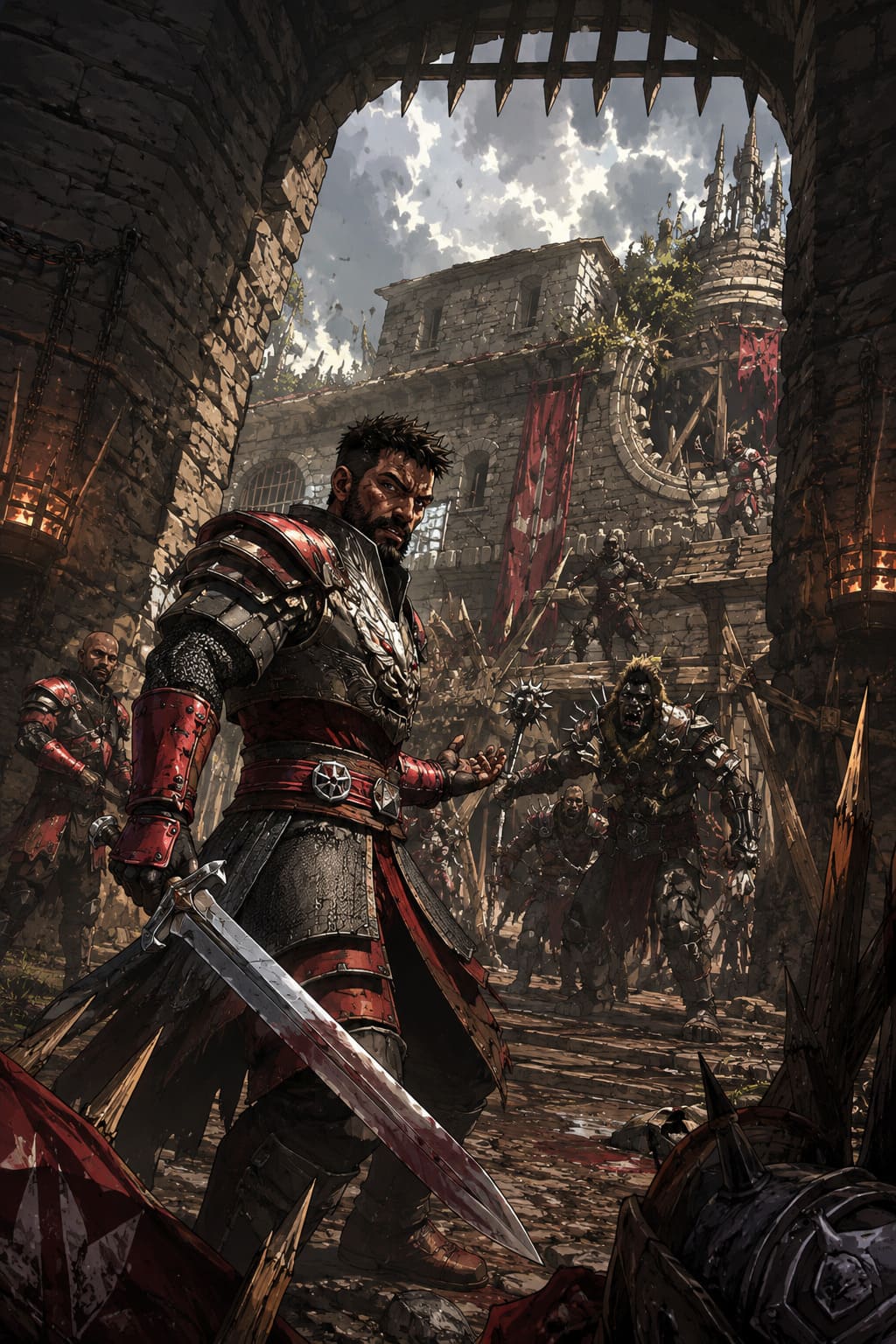
The Old Camp represents structure, authority, and controlled survival. In the remake, it feels more politically layered than in the original, with stronger emphasis on internal hierarchy and tension.
Early Game Experience
Progression is slow and reputation-heavy, focusing on loyalty and discipline. The player is gradually absorbed into the system through enforcement-style tasks and structured missions.
Mid Game Expansion
The remake adds deeper internal politics, expanded guard responsibilities, and corruption-driven questlines. This gives the Old Camp a more dynamic identity rather than a static power hub.
Player impression
The Old Camp feels less like a faction you join and more like a system you slowly become part of, which makes progression more psychologically interesting.
New Camp – Freedom That Actually Has Structure
The New Camp continues to represent rebellion and independence, but in the remake it evolves into a more system-driven faction focused on logistics, survival economics, and strategic resistance.
Early Game
Players engage in smuggling routes, resource negotiation, and alliance-building with key figures. The faction emphasizes flexibility and opportunism.
Mid Game Expansion
This is where the remake significantly expands content. Caravan defense missions, sabotage operations, Water Mage collaboration systems, and Focus Stone quest variations create a more tactical experience.
Player impression
The New Camp now feels like a survival strategy ecosystem rather than just a rebel faction. It is arguably the most systemically complex path.
Swamp Camp – The Spiritual Wild Card
The Swamp Camp remains the most unique faction, but the remake finally leans fully into its identity as a spiritual and ideological alternative rather than a side option.
Early Game
Progression is exploration-heavy, non-linear, and based on ritualistic or alchemy-driven tasks rather than combat dominance.
Mid Game Expansion
The remake introduces deeper internal ideological conflict, expanded Cor Kalom storyline arcs, improved swampweed systems, and more meaningful spiritual consequences tied to decisions.
Player impression
This path feels like a slow descent into belief systems rather than political alignment, making it the most thematically distinct route.
Playtime Comparison (Estimated)
The following table summarizes expected playtime differences between factions based on current previews and structural analysis.
| Faction | Early Game | Mid Game | Total Playtime | Replay Value |
|---|---|---|---|---|
| Old Camp | 10–12h | 15–20h | 45–55h | High |
| New Camp | 10–12h | 18–22h | 50–60h | Very High |
| Swamp Camp | 8–10h | 15–20h | 40–50h | High |
Do Choices Actually Matter?
One of the biggest questions in modern RPG design is whether branching systems actually change outcomes or simply reframe identical content. The remake appears to move closer to reactive world design rather than fully divergent storylines.
Choices influence NPC availability, merchant systems, quest solutions, and long-term character behavior. While the ending structure remains consistent, the journey feels more reactive and less scripted.
Important design note
The goal is not multiple endings, but multiple lived experiences within the same narrative framework.
The Real Improvement: Mid-Game Expansion
The most significant structural improvement in the remake is the expansion of mid-game content. The original Gothic became noticeably linear after early faction commitment, but the remake actively addresses this issue.
- Extended faction identity relevance in later chapters
- More branching quest resolution paths
- Improved NPC reactivity across chapters
- Increased environmental and economic simulation depth
Final Thoughts: Is the Longer Story Worth It?
As someone who values pacing and systemic depth more than raw content size, the answer is cautiously positive. The remake does not simply extend playtime—it extends identity, allowing faction choices to remain meaningful deeper into the game.
The original Gothic worked because it was tight and harsh. The remake risks softening some of that edge, but in exchange it offers more structured immersion and longer-lasting faction consequences.
What works
Faction identities are more distinct, mid-game is no longer linear, Swamp Camp finally feels fully realized, and replay value is significantly increased.
What remains uncertain
Whether the additional content will maintain density without becoming repetitive, and whether the expanded structure preserves the original’s brutal charm.
Conclusion
The Gothic 1 Remake does not just increase length—it increases narrative persistence. Your faction choice is no longer just an early decision but a long-term identity that shapes dozens of hours of gameplay.
If executed properly, this remake could stand not only as a modernization of a classic RPG, but as a deeper interpretation of what Gothic originally tried to achieve: a world where survival is not just about power, but about belonging.