Gothic Remake Swamp Camp Guide: Novices, Templars, and Gurus
After spending what feels like half my life cycling through RPG worlds—from grim survival sandboxes to overproduced AAA fantasy epics—it’s rare that a faction system actually feels memorable anymore.
Most modern games flatten factions into cosmetic choices with slightly different dialogue trees. But revisiting the Swamp Camp in the upcoming Gothic Remake reminded me why the original Gothic world still sticks with so many players.
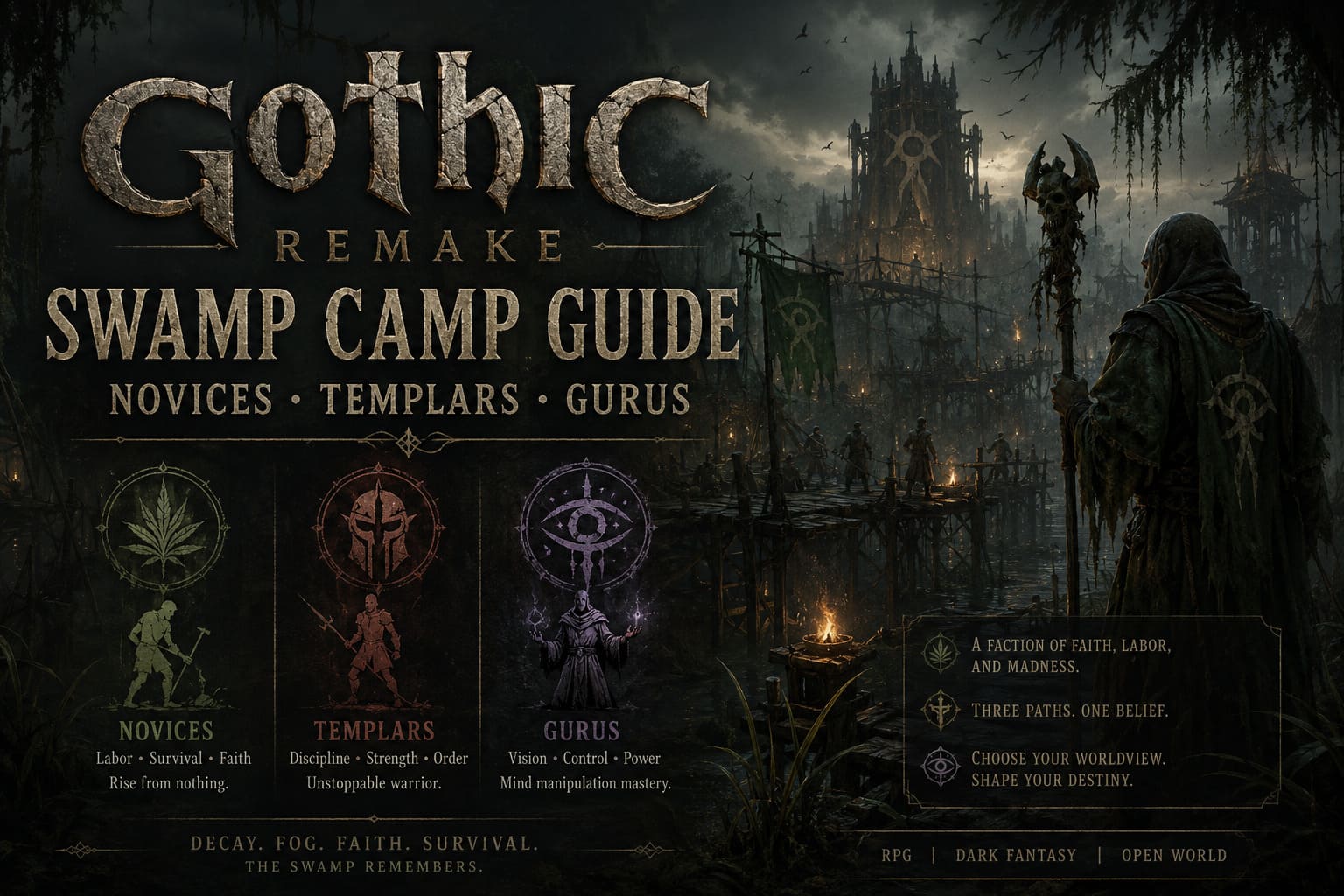
The Swamp Camp—also known as the Brotherhood of the Sleeper—isn’t just a faction. It feels like a full ecosystem built on belief, labor, and controlled madness. It sits somewhere between religious cult, military order, and self-sustaining commune powered by swampweed and absolute conviction.
Below is my personal breakdown of its three internal paths: Novices, Templars, and Gurus—not as a lore encyclopedia entry, but as someone who has seen enough RPG systems to know when something actually has depth.
Gothic Remake Faction Choice Guide: Old Camp vs. New Camp
First Impression: The Swamp Camp Still Feels Uncomfortable in the Best Way
What always stood out about the Swamp Camp is how deliberately unsettling it is. Compared to the structured hierarchy of the Old Camp or the rebellious chaos of the New Camp, the swamp faction exists in this strange liminal space where everything feels slightly unstable.
The marsh itself is not just scenery—it actively participates in the experience. It’s hostile, fog-drenched, and constantly threatening to kill you while its inhabitants calmly preach about a sleeping god buried somewhere beneath reality. That contrast defines the entire faction.
Even in a modern remake context with upgraded visuals and systems, the core identity remains unchanged: decay, fog, faith, and survival blended into one uncomfortable whole.
The Novices: The Grind That Actually Feels Like Belonging
Most RPGs treat starter factions as tutorial zones disguised as story content. The Novices in the Swamp Camp feel different because they aren’t just beginners—they are the foundation of the entire system.
They are workers, believers, and early-stage converts all at once. Their role is not temporary—it is structural.
What life as a Novice actually looks like
- – Harvesting swampweed in dangerous marshlands filled with predators
- – Processing and grinding herbs for trade and consumption
- – Delivering goods between rival camps
- – Enduring long spiritual sessions led by higher-ranking members
- – Slowly learning basic combat and utility magic
The interesting part is how labor and ideology are fused together. You are not just grinding resources—you are being slowly integrated into a belief system while doing it.
From a gameplay perspective, this makes early progression feel more meaningful than standard “kill ten rats” tutorials. The swamp itself becomes a classroom, and survival becomes part of initiation.
The Templars: Where Discipline Meets Brutality
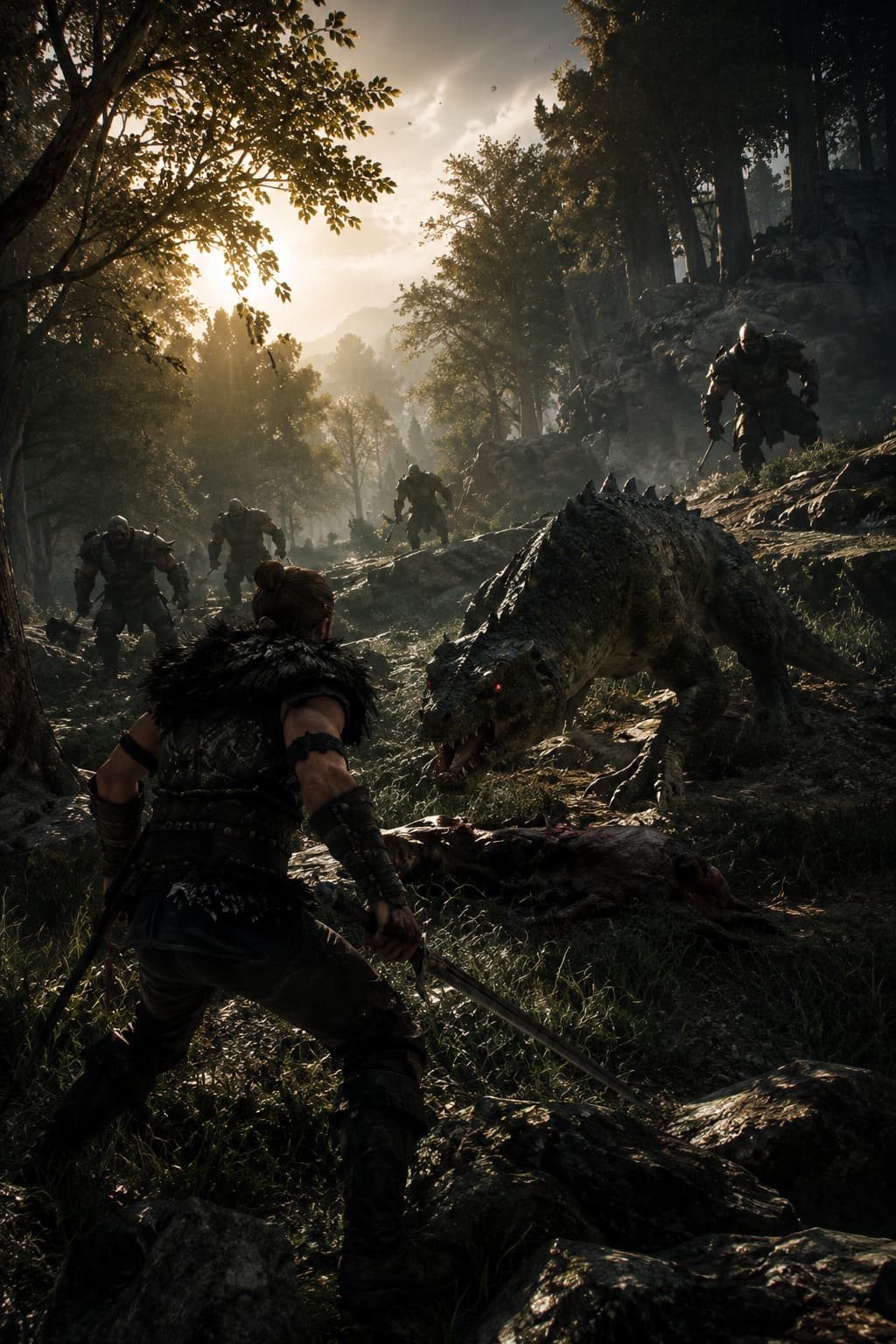
If Novices represent foundation, Templars represent enforcement. Every RPG has an elite warrior archetype, but here it feels more like a militarized belief structure than a traditional knight order.
They are not just fighters—they are guardians of ideology, trained to protect both the camp and its spiritual hierarchy.
Core responsibilities of Templars
- – Securing swamp platforms and trade routes
- – Hunting monsters in marshlands
- – Escorting and protecting Novice groups
- – Retrieving artifacts from dangerous ruins
- – Maintaining internal order through force
The key difference is tone. Templars don’t feel like heroic knights. They feel like disciplined enforcers who genuinely believe in the strange system they serve.
In a modern gameplay interpretation, they sit in the “heavy hybrid” category—melee-focused combatants with limited but impactful magical abilities that reinforce their battlefield dominance.
Combat identity in the remake vision
- – Heavy two-handed weapon specialization
- – Defensive armor progression with upgrades
- – Limited but meaningful combat magic integration
- – Battlefield control rather than pure damage output
This combination creates a playstyle that feels grounded but powerful, rewarding timing and positioning instead of raw speed or spam-heavy abilities.
The Gurus: The Most Unsettling Mage Archetype in RPG Design
Gurus are not typical spellcasters. They don’t feel like scholars or elemental mages. They feel like intermediaries for something deeply unnatural and incomprehensible.
They are detached from normal social interaction, existing in a constant state of altered perception fueled by ritualistic swampweed use and spiritual devotion.
What defines the Gurus
- – Absolute authority within the Swamp Camp hierarchy
- – Complete emotional and conversational detachment
- – Ritual use of swampweed for vision states
- – Psychic-style magical abilities
- – Influence over both Novices and Templars
One of the most memorable design ideas is their refusal to engage with outsiders under normal conditions. They simply ignore unworthy characters, which transforms them from NPCs into psychological barriers.
Expected magical identity in the remake
- – Mind control and fear manipulation
- – Sleep and paralysis effects
- – Telekinetic environmental interaction
- – Crowd control over direct damage
This makes them fundamentally different from traditional elemental mages. Instead of destruction, they specialize in control and disruption.
Faction Comparison: How the Swamp Camp Actually Stacks Up
Looking at all three roles together, the Swamp Camp stands out because it doesn’t flatten progression into a single archetype. Instead, it builds a layered identity system.
| Faction Role | Gameplay Style | Strength | Weakness | Player Fantasy |
|---|---|---|---|---|
| Novices | Survival, Economy, Light Combat | Strong early progression | Weak initial combat power | Rise from nothing |
| Templars | Melee, Tank, Hybrid Magic | High combat stability | Less flexibility | Unstoppable warrior |
| Gurus | Magic, Control, Utility | Extreme tactical influence | High complexity, fragility | Mind manipulation mastery |
What stands out is how the faction structure supports completely different player fantasies without breaking internal logic. You are not just choosing a class—you are choosing a worldview.
Why the Swamp Camp Still Works in Modern RPG Design
Most modern RPG factions fail because they try to appeal to everyone at once. The Swamp Camp succeeds because it commits fully to its identity.
It is weird, morally ambiguous, economically functional, and spiritually unstable—all at the same time.
Even in a modern engine with updated combat systems and expanded questlines, its core appeal remains unchanged: you are joining something that feels slightly wrong but undeniably alive.
Final Thoughts: Why I’d Still Choose the Swamp Camp
In most RPGs, I tend to gravitate toward magic-oriented factions. But the Swamp Camp is not just a “mage choice” or a “warrior path.” It is a full philosophical system disguised as gameplay progression.
Novices ground you in survival and labor. Templars give you structured power and combat identity. Gurus offer something closer to forbidden perception than traditional magic.
When all three layers combine, the result is one of the most memorable faction systems in RPG history.
In a landscape filled with safe, predictable design, the Swamp Camp remains refreshingly strange—and that alone makes it worth revisiting.