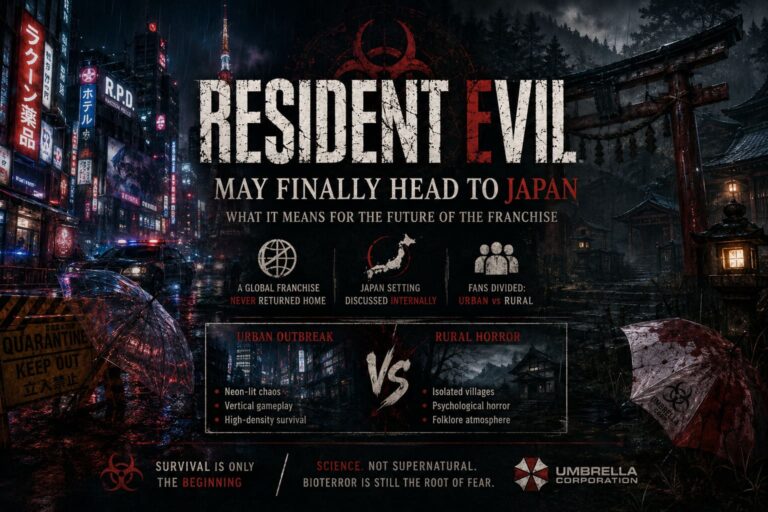
Total War Warhammer 3 Patch 9.0 Notes: Full Changelog & Performance Update
I’ll be honest: whenever Creative Assembly announces another huge Total War: Warhammer 3 update, my first reaction isn’t excitement anymore. It’s suspicion.
I’ve played enough Total War patches to know that a giant changelog can sound incredible on paper while barely changing the way the game actually feels. Sometimes a balance update fixes one annoying problem and creates two more. Sometimes a faction rework looks impressive until you’ve played it for three turns. And sometimes the performance improvements are technically real, but you still find yourself staring at the end-turn screen wondering whether the game has forgotten what year it is.
Patch 9.0 feels different.
This is not just another round of unit buffs, nerfs, and bug fixes. The update goes after some of the systems that have been quietly frustrating Warhammer 3 players for years, particularly campaign performance, AI behavior, recruitment logic, and late-game variety.
And then Creative Assembly decided to throw Neferata into the mix.
That combination makes Update 9.0 one of the more interesting moments for Immortal Empires in a long time.
Total War: Warhammer 3 Patch 9.0 at a Glance
Before getting into the details, here’s the short version of what actually matters.
| Update Area | What’s Changed |
|---|---|
| Campaign Performance | End-turn processing reduced by up to 30% |
| Free Content | Neferata and Lahmian-themed mechanics |
| Campaign AI | Recruitment and army-building behavior improved |
| Endgame | Three additional endgame scenarios |
| Faction Balance | Slaanesh, Empire, Tomb Kings and others adjusted |
| Battle Content | New maps and Dark Fortress locations |
That’s a pretty substantial package even before considering the changes arriving alongside the Lords of the End Times expansion.
The Performance Upgrade Is the Part I Care About Most
Let’s start with the least glamorous part of the patch, because it might actually be the most important.
End-turn times have reportedly been reduced by up to 30%.
That number immediately caught my attention.
Anyone who has spent dozens of hours in Immortal Empires knows that the end turn is one of those tiny annoyances that slowly becomes a major problem. One extra second doesn’t matter. Hundreds of them absolutely do.
And the problem becomes much more obvious in enormous campaigns.
By the time you’ve conquered half a continent, diplomatic relationships have become a tangled mess, dozens of factions are moving armies around the map, and the game has an enormous amount of information to process every time you press that innocent-looking End Turn button.
Patch 9.0 targets some of that workload by changing how the game handles commands through its visual effects systems. Creative Assembly has also reworked how settlement-related visual updates are processed, allowing multiple operations to be handled more efficiently rather than creating unnecessary CPU overhead.
That sounds extremely technical.
As a player, I don’t really care.
If my late-game Immortal Empires campaign spends less time making me watch the AI take its turn, I’m happy.
The other performance changes are aimed at map loading and campaign navigation, including improvements intended to reduce small stutters when moving around large territories and dealing with tactical path overlays.
These aren’t the kind of improvements that make for a flashy trailer, but they’re exactly the sort of changes that can make a 150-turn campaign feel considerably smoother.
Neferata Finally Gets Her Moment
Then there’s the big one.
Neferata is playable.
For Warhammer fans, this is hardly a minor addition. She’s one of those characters who has been hovering around the edges of the game’s roster discussion for what feels like forever.
Patch 9.0 brings her into the game as a Legendary Lord with a campaign built around manipulation, infiltration, and vampire politics rather than simply throwing another conventional army onto the map.
Her campaign revolves around Subterfuge, including the ability to establish hidden vampire lairs in settlements.
That idea immediately sounds more interesting to me than another faction whose primary strategy is simply “capture territory, build bigger army, destroy everything.”
These hidden lairs can be developed to provide different benefits, including opportunities to steal resources, interfere with enemies, assassinate targets, and disrupt rival empires from inside their own territory.
That’s exactly the sort of mechanic that can make a faction feel mechanically distinct instead of merely giving it a different color scheme and roster.
Neferata also brings Lahmian-themed units and heroes into the experience, with an emphasis on mobility and deceptive play.
Her starting position in the Darklands is another nice touch. Rather than handing her an easy route through familiar territory, the campaign pushes her toward the long-term objective of reclaiming Lahmia.
And honestly, that’s the sort of campaign premise I want from a Legendary Lord.
Give me a reason to keep playing beyond “paint the map.”
Three New Endgame Scenarios Could Fix Late-Game Fatigue
Another change that deserves more attention is the addition of three new Immortal Empires endgame scenarios:
- Chaos Invasion
- Vermintide
- Rise of Nagash
The late game has always been a strange problem for Total War: Warhammer 3.
Early turns can be fantastic because every decision matters. Your economy is fragile, enemies are close, your armies are limited, and a single bad battle can completely derail a campaign.
Then you become powerful.
And eventually you’re sitting on an empire with enough money to solve most problems by throwing another army at them.
That’s where endgame scenarios can help.
The purpose isn’t necessarily to make the entire campaign harder. It’s to create another reason to care when you’ve already established yourself as a major power.
The Rise of Nagash scenario is particularly interesting given the broader vampire-related content arriving with the update. It potentially changes the tone of the late campaign from routine conquest to genuine survival.
Whether these scenarios remain challenging after players figure out their patterns is something that will only become clear through extended campaigns, but at least Patch 9.0 is addressing one of Immortal Empires’ biggest structural weaknesses.
The AI Finally Gets Some Attention
If there’s one part of the patch that could have an enormous effect without immediately being obvious, it’s the campaign AI overhaul.
The recruitment changes are especially welcome.
Previously, AI factions could get themselves trapped in situations where they repeatedly tried to recruit units they couldn’t actually obtain. Instead of adapting, they could waste turns effectively doing nothing useful.
That kind of behavior is incredibly frustrating because it doesn’t feel like you’re defeating an intelligent opponent.
It feels like you’re watching a spreadsheet crash.
Patch 9.0 changes this behavior so AI factions can recognize failed recruitment attempts and look for alternatives. If the current province can’t provide what they need, the AI can prioritize other options or move elsewhere.
That should help factions recover from military defeats more naturally.
There’s also a change to army composition on higher difficulties. Hard, Very Hard, and Legendary AI factions receive revised army templates designed to increase the presence of elite and high-tier units during the mid and late game.
I’m cautiously optimistic about this one.
Better armies are only useful if the AI knows how to use them. A stack full of expensive units isn’t automatically dangerous. Still, improving the underlying recruitment logic is a much better foundation than simply handing the AI absurd economic bonuses.
Archaon Gets an Interesting New Interaction
Archaon the Everchosen also receives a new narrative system involving defeated Chaos Legendary Lords.
If a non-subjugated Chaos Legendary Lord is eliminated by another faction, Archaon can receive a dilemma several turns later.
The resulting event can lead to a confrontation with the fallen Lord’s rogue army. If Archaon wins, he can potentially bring that character back under his banner through confederation or resurrection.
This is a clever way of making Archaon’s campaign feel more connected to the wider Chaos ecosystem.
It also creates a strange situation where destroying another Chaos faction isn’t necessarily the end of that character’s story.
For players who enjoy narrative campaigns, those little unexpected developments can be far more memorable than another generic diplomatic event.
Tamurkhan’s Subjugation Has More Depth
Tamurkhan also receives a notable mechanical clarification.
When Tamurkhan is subjugated, the player receives the Chieftain heroes he has unlocked up to that point.
That creates an interesting strategic wrinkle.
Instead of immediately eliminating Tamurkhan at the first opportunity, players may have a reason to allow his campaign to develop before bringing him under control.
In other words, sometimes letting an enemy get stronger can actually benefit you later.
That’s a much more interesting strategic choice than simply asking whether you can defeat an enemy army right now.
Faction Balance Is Getting a Serious Shake-Up
Patch 9.0 isn’t just about flashy new content. A number of existing factions and progression systems have been adjusted.
Slaanesh
Slaanesh receives one of the more important progression changes.
Elite units such as Chosen of Slaanesh had become available relatively early, which could make some of the mid-tier roster feel pointless.
The new progression pushes those powerful units further down the building and technology chains.
I like this philosophy.
Not every faction needs to hand you its best toys immediately. Part of the fun in Total War is watching an army evolve from a scrappy early-game force into something genuinely terrifying.
Wound Recovery
Legendary Lords also get a major adjustment to wound recovery.
Previously, combinations of skills, traits, and equipment could reduce recovery times to the point where defeating an important enemy character barely mattered.
If a Legendary Lord is back almost immediately, killing them doesn’t create much strategic impact.
Patch 9.0 pulls some of those interactions back.
That should make successful assassinations and battlefield victories feel more meaningful without fundamentally changing the entire campaign system.
Empire
The Empire receives targeted changes to Arch Lector and Warrior Priest skill trees.
The goal is to make their prayers and utility abilities more valuable, giving these characters more of a defined battlefield role.
It’s not the biggest rework in the patch, but these smaller character adjustments can have a surprisingly noticeable effect once you’re several dozen turns into a campaign.
Tomb Kings
The Tomb Scorpion has been moved from Tier 3 to Tier 2.
That means Tomb Kings players can access the unit considerably earlier during their expansion.
It’s a relatively small change compared with the performance overhaul, but for Tomb Kings campaigns, timing matters enormously. Getting a powerful construct into your armies earlier can alter how you approach the opening and mid-game.
New Dark Fortresses and Battle Maps
The map itself isn’t being ignored.
Patch 9.0 adds new Dark Fortresses across northern areas of Immortal Empires, giving Warriors of Chaos additional defensive positions and expanding the environmental variety of the campaign.
There are also new land battle and choke-point maps entering the battle rotation.
This is another change that might sound minor until you’ve played the same battle layouts hundreds of times.
One of Total War’s biggest strengths is the feeling that battles happen in places rather than on generic tactical boards. More map variety helps preserve that feeling.
EA Sports FC 27 Steam Deck OLED Guide: Best Graphics Settings for Locked 60 FPS
Is Patch 9.0 Actually a Big Deal?
For me, the interesting thing about Patch 9.0 isn’t any individual feature.
It’s the combination.
You have faster campaign processing, smarter AI recruitment, revised high-difficulty armies, a new Legendary Lord, additional endgame scenarios, faction balance changes, new maps, and more strategic interactions.
None of these systems exists in isolation.
A faster campaign means you’ll reach the late game more quickly. Better AI recruitment means those later turns could contain stronger opponents. New endgame scenarios give those turns additional purpose. Neferata provides another completely different campaign structure to explore.
That’s the kind of update that can actually change how Warhammer 3 feels.
There are still plenty of questions, of course. Performance numbers can vary enormously depending on hardware and campaign size. AI improvements need thousands of player turns before we really know whether they solve the underlying problems. And new mechanics inevitably need time before the community discovers the exploits and unintended interactions.
But that’s part of the fun.
Total War: Warhammer 3 is at its best when a patch gives the community a reason to start another campaign just to see what happens.
Patch 9.0 looks like exactly that kind of update.
The biggest win may not be Neferata, the new endgames, or even the balance changes. It may simply be that Creative Assembly is finally putting serious attention into the machinery underneath Immortal Empires.
And after hundreds of turns spent watching that machinery work, I’m more than ready to see it run a little faster.