Allumeria Day and Night Cycle Guide: Complete Survival Rules and Strategy
Allumeria doesn’t treat its day and night cycle like a pretty background effect. The clock actually changes how you approach the world.
During the day, forests, surface structures, caves, and gathering routes can be explored with relatively little pressure. Once darkness arrives, the same terrain becomes a completely different problem. Monsters begin appearing on the surface, safe routes become dangerous, and a poorly designed base can turn into a death trap surprisingly fast.
That makes the Allumeria day and night cycle one of the first systems worth learning properly. If you’re playing the game like a traditional voxel sandbox and simply waiting for sunrise to do your thing again, you’re leaving a lot on the table.
I’ve broken down the important survival rules below, including surface spawning, lighting, dungeon hunting, underground combat, and the little quirks that can save a run.
Allumeria Day and Night Cycle: The Basics
The game’s clock follows a straightforward structure: 12 in-game hours of daylight followed by 12 hours of darkness.
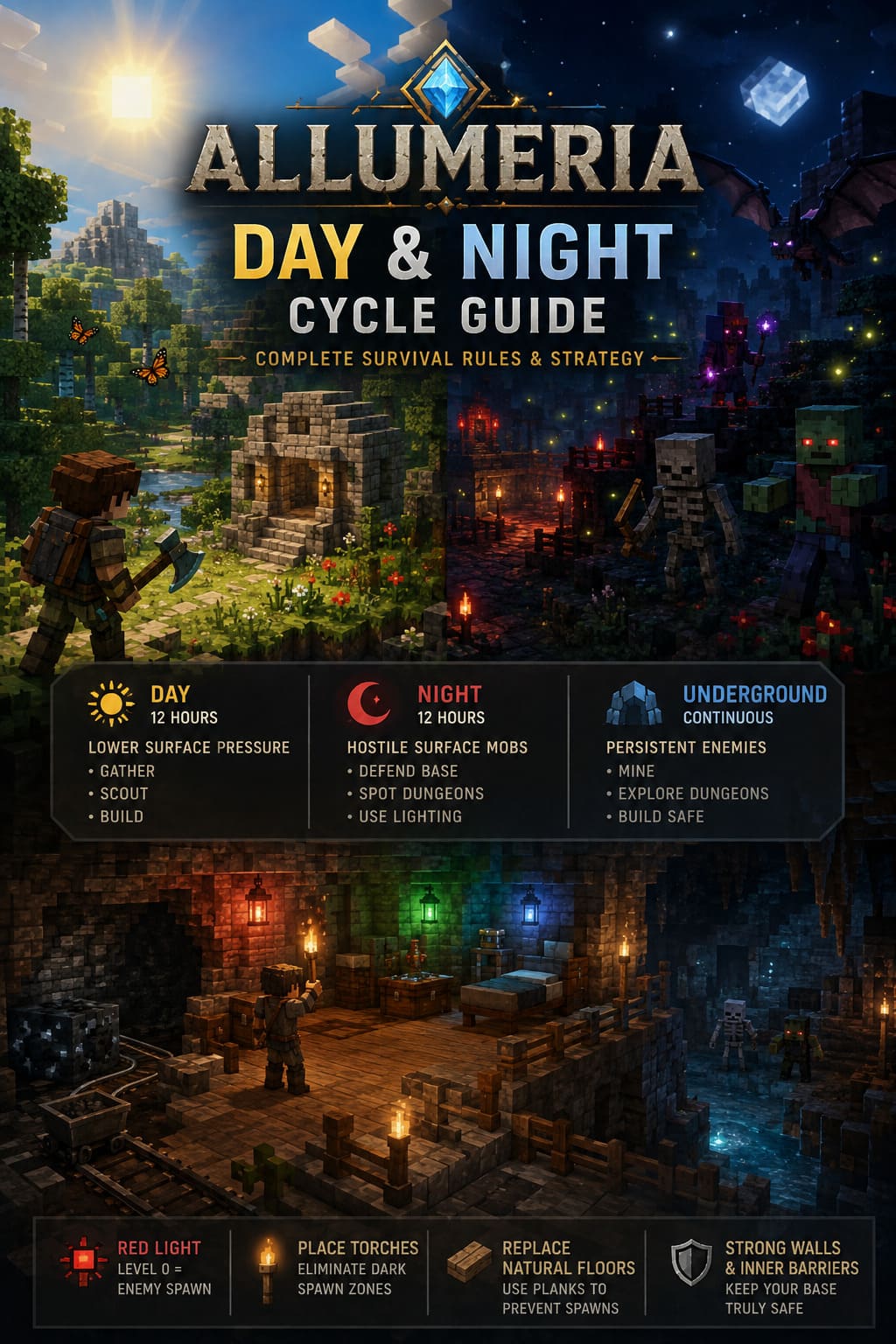
There isn’t a complicated seasonal calculation you need to memorize. The important part is understanding that the two major phases are deliberately balanced.
| Phase | Duration | Main Threat | Best Use |
|---|---|---|---|
| Day | 12 hours | Lower surface pressure | Gathering, scouting, building |
| Night | 12 hours | Hostile surface mobs | Defense, dungeon spotting |
| Underground | Continuous | Persistent enemies | Mining, dungeon exploration |
One particularly interesting Early Access feature is the temporary Numpad 6 debug shortcut, which can accelerate the passage of time. It’s basically a convenience button for players who don’t want to sit around waiting for darkness to disappear.
Don’t get too attached to it, though. The developer has indicated that this sort of time-skipping functionality is tied to the game’s current development state, with a more interactive sleeping and bed system planned to take over that role.
There’s also a neat visual detail that makes the transition surprisingly easy to notice. During daylight, butterflies can be seen around natural vegetation. When night takes over, those butterflies disappear and glowing fireflies become the more noticeable environmental effect.
Small detail, but it gives the world a much stronger sense of rhythm.
What You Should Actually Do During the Day
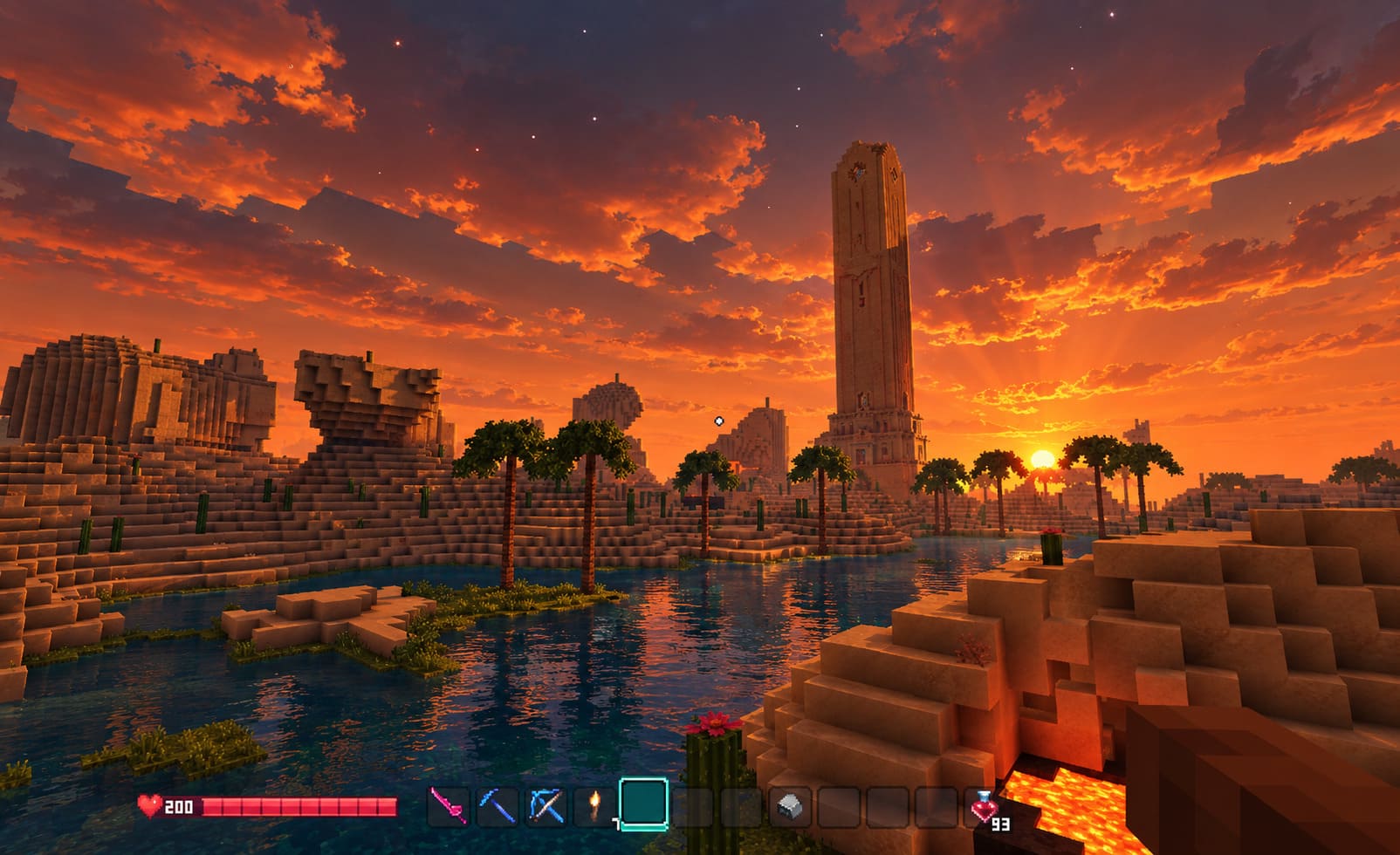
Daylight is your working shift.
This is when I would handle almost everything that involves moving around exposed terrain. The surface is considerably easier to manage before the hostile night population starts appearing, so wasting half the day standing inside your house is usually a bad trade.
Gather First, Organize Later
Use daylight to collect:
- Wood and surface plants
- Coal from large black rock deposits
- Building materials
- Crafting resources
- Anything else needed for your next progression step
Coal deserves special attention because it feeds directly into your defensive setup. Combine it with wooden Planks to produce Torches, which become one of your most important tools after sunset.
And yes, I’d stockpile more than you think you need. Running out of lighting materials after you’ve already committed to exploring at night is exactly the kind of avoidable mistake that turns a good session into corpse recovery.
Scout the Forest for Dungeon Structures
The Forest biome contains procedural surface structures that lead toward underground dungeons.
These locations matter because dungeon progression can unlock resources and equipment you won’t simply find by wandering around the surface. One important example is the Forest Pickaxe, which is required for breaking dungeon bricks.
The smart move is to use daylight to locate these structures, clear enough surrounding terrain to recognize them later, and mark their locations.
You don’t necessarily need to raid every dungeon immediately.
Sometimes the better play is simply:
Find it → mark it → prepare properly → come back ready.
That’s especially useful early in a run when your equipment is still garbage and you’re one bad encounter away from losing half your inventory.
Use the Daylight to Learn Your Recipes
Allumeria’s crafting interface gives you a useful shortcut that is easy to overlook.
Hover over an item and use the U or R keys to access recipe information. Depending on what you’re checking, this can show what an item is used for or what materials are required to produce it.
That makes daylight an excellent time for planning.
Instead of crafting random equipment and hoping it becomes useful, check the progression chain first. If you’re hunting for a particular tool, work backward through its ingredients and use the safe hours to gather everything you need.
It sounds basic, but sandbox RPGs love hiding progression behind one missing component. Knowing your recipes ahead of time saves a ridiculous amount of running around.
Night Changes the Surface Completely
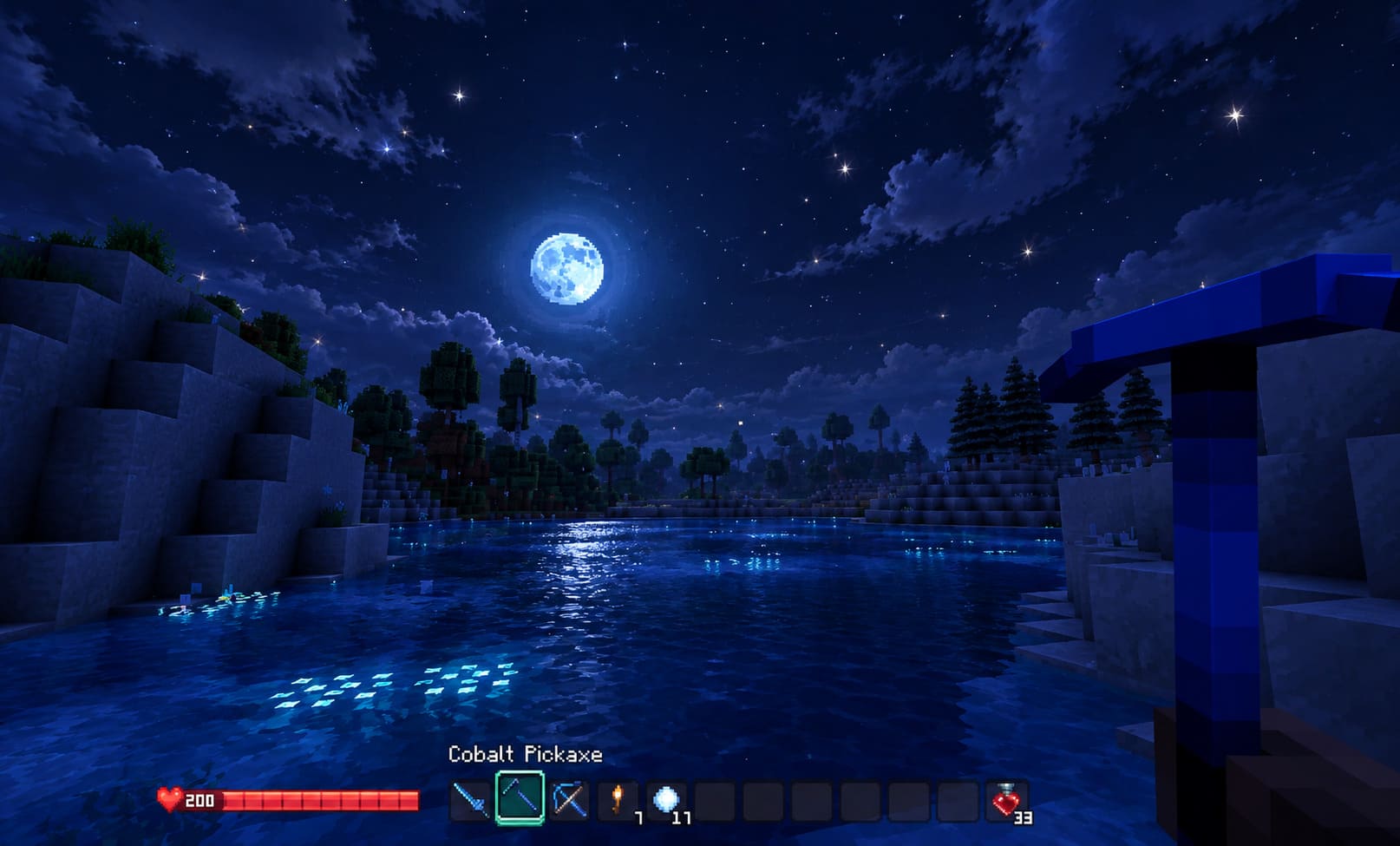
Once darkness arrives, the surface rules change.
Hostile entities such as Zombies, Skeletons, Mages, and the Night Flyer can begin appearing in areas that were relatively safe during the day.
This is the moment where lighting stops being decoration and becomes a survival mechanic.
The critical rule is simple:
Hostile night entities require a red light level of 0 to spawn on the surface.
That single mechanic explains why a beautifully built house can still be completely unsafe.
If you have a dark patch of natural terrain next to your base, you’re potentially giving enemies somewhere to appear.
The Most Important Rule: Kill Every Dark Spawn Zone
Your first defensive priority should be eliminating areas with a red light level of 0.
Torches are the obvious solution.
Mine the large black rock deposits found around the surface to obtain Coal, combine that with wooden Planks, and start covering the areas around your home with light.
The goal isn’t merely making your house look cozy.
You’re changing the conditions under which enemies can spawn.
This distinction matters because surface lighting and underground spawning aren’t identical systems. A torch can secure an exposed surface area, but sticking a few torches in a deep cave doesn’t magically shut down the entire cave’s spawning behavior.
That’s an important difference to remember.
Your House Can Still Spawn Monsters
This is probably one of the nastiest surprises for players coming from more traditional building games.
Walls alone don’t make a base safe.
Imagine building a perfectly enclosed wooden house, complete with a roof and door. Then you leave the original grass or dirt floor untouched.
Congratulations. You may have just built a monster hotel.
Natural blocks can provide the required spawning surface. To properly secure an indoor area, replace natural flooring with manufactured, player-created blocks, such as crafted wooden Planks.
The safest approach is to think about your base as two separate systems:
Walls stop enemies from reaching you.
Floor materials and lighting stop them from appearing inside in the first place.
That’s a much more useful way of thinking about Allumeria’s building mechanics.
Don’t Underestimate Mob Collision
There’s another problem that isn’t really a deliberate survival mechanic so much as a physics headache.
Large groups of hostile enemies can pile against the exterior of a structure while trying to reach you. When enough bodies get packed together, collision behavior can become unpredictable.
The Night Flyer is particularly worth watching.
Under the wrong circumstances, mob collision can push an enemy through what should be a solid wall.
And that’s the sort of bug that makes you stare at your screen for three seconds before asking, “How the hell did you get in here?”
A practical solution is to build your exterior walls at least two blocks thick or create an additional inner defensive barrier. Keeping important crafting stations away from the exterior wall also gives you a little more breathing room.
It’s not glamorous base design.
It’s effective base design.
Nighttime Has One Huge Advantage
There is actually a reason to go outside after dark.
Dungeon structures can become easier to spot.
The procedural structures leading toward underground dungeons can feature external Red and Blue Dungeon Lamps mounted on their roofs. During daylight, these structures can blend into the surrounding terrain surprisingly well.
At night, those colored lights become much easier to see.
If you’ve spent half a day searching for a dungeon without finding anything, climbing onto a high point after sunset can reveal distant colored lights that were practically invisible from ground level.
Obviously, this comes with a catch.
The same darkness making those lamps visible is also making the surface hostile.
So don’t wander into the wilderness at night wearing beginner gear just because you saw a pretty red light in the distance.
Use elevation.
Scout.
Remember the direction.
Then decide whether the trip is worth the risk.
Underground Is a Different World
One of the easiest mistakes to make is assuming the surface clock controls everything.
It doesn’t.
Allumeria’s cave networks remain dark regardless of whether it is daytime above ground.
More importantly, underground enemy spawning continues around the clock.
That means sunrise doesn’t suddenly make a cave safe.
You could spend six in-game hours underground, hear the world transition into daytime, and still have enemies actively spawning around you.
The cave system is effectively its own survival environment.
This is also why Allumeria’s interconnected underground spaces can be both incredibly rewarding and incredibly dangerous. You don’t have to waste hours strip-mining through every block to find interesting areas, but once you enter these networks, you need to stay alert.
Building an Underground Base Requires the Same Rules
Thinking about establishing a mining camp underground?
Treat it like a surface base.
Don’t simply throw down a crafting station and call the cave safe.
Natural floors can still create unwanted spawning conditions, so replace the relevant flooring with manufactured blocks such as Planks. Then use Torches or more advanced RGB lighting systems to illuminate the area and eliminate dangerous dark zones.
A proper underground base should feel less like a cave you’ve occupied and more like a controlled section of the cave you’ve converted into your own territory.
That distinction is important.
My Recommended Day/Night Routine
If you’re trying to make consistent progress instead of constantly scrambling after dark, I’d structure a normal cycle like this:
Daytime
Gather resources first. Get wood, coal, plants, and whatever materials your next crafting stage requires.
Scout the surface. Search Forest areas for dungeon structures and mark useful locations.
Prepare your inventory. Use the U/R recipe functions to figure out what you’re missing before heading out again.
Expand your base. Build during daylight rather than trying to construct defensive walls while Skeletons are shooting at you.
Before Nightfall
This is the part I wouldn’t skip.
Walk around your base and look for:
- Unlit natural terrain
- Grass or dirt remaining inside enclosed areas
- Weak exterior walls
- Gaps near crafting stations
- Routes enemies could use to crowd against your structure
Fix these problems before the sky goes dark.
At Night
If you’re properly equipped, use the darkness strategically.
Look for distant colored dungeon lamps from elevated positions. Otherwise, stay close to secured territory and work on crafting, organization, or controlled exploration.
How to Play Allumeria Online Multiplayer with Friends: 2026 Dedicated Server and Co-op Guide
Allumeria Day and Night Survival Checklist
Keep these rules in mind and the cycle becomes much easier to manage:
- Day: Gather wood, coal, plants, and other surface resources.
- Day: Search Forest biomes for dungeon structures and mark their locations.
- Day: Use the U/R recipe interface to plan crafting and progression.
- Night: Eliminate red light level 0 areas around your base.
- Night: Replace natural indoor floors with manufactured blocks.
- Night: Use high ground to search for glowing Red and Blue Dungeon Lamps.
- Always: Remember that caves remain dangerous regardless of the surface time.
- Always: Consider thicker walls or an inner barrier to reduce mob collision problems.
- Early Access: Keep in mind that the temporary Numpad 6 time acceleration may eventually disappear as sleeping mechanics evolve.
Allumeria Multiplayer Lag Fix: How to Stop Desync and Lag Spikes (2026 Guide)
Final Thoughts
The biggest mistake you can make with Allumeria’s clock is treating day and night as nothing more than a visual cycle.
They’re not.
Daylight is preparation time. Night is pressure. Underground is persistent danger.
Once you understand the relationship between light levels, natural blocks, manufactured flooring, and enemy spawning, the game becomes much more predictable. You stop reacting to every Zombie that wanders toward your house and start controlling where enemies can actually appear.
And that’s where Allumeria gets interesting.
The world may be procedurally generated, but your survival doesn’t have to feel random. Build smart, light the right areas, mark your dungeons, and use the clock instead of fighting against it.