The Witcher 3 Remastered Physical Steelbook Price vs Standard Edition (2026 Release)
There are some games you finish once and move on from, and then there are games like The Witcher 3: Wild Hunt. Even after all these years, Geralt’s journey still has a strange ability to pull me back into the Continent. I’ve played plenty of open-world RPGs since its original release, but very few have managed to combine exploration, memorable side quests, atmosphere, characters, and sheer scale in quite the same way.
That is why the idea of a major The Witcher 3 Remastered physical release in 2026 is interesting, especially for players who still prefer owning their favorite games on a shelf. The remastered version is positioned as a much more substantial technical update than a simple resolution patch, with modern visual improvements, refreshed systems, and a package that brings the original adventure together with its famous expansions.
For me, though, the most interesting question isn’t whether The Witcher 3 deserves another edition. Of course it does. The real question is whether you should spend more on the physical Steelbook edition or simply buy the standard copy and put the money toward another game.
Allumeria Day and Night Cycle Guide: Complete Survival Rules and Strategy
Why The Witcher 3 Still Deserves a Remaster
The original The Witcher 3 has aged remarkably well, but that doesn’t mean every part of it feels modern. Anyone who has played newer action RPGs can immediately notice areas where the game shows its age, particularly in animation, interface design, movement, combat responsiveness, and some visual details.
A serious remaster has the opportunity to address those weaknesses without destroying what made the game special in the first place. That’s the part I’m most interested in as a longtime RPG player. I don’t want The Witcher 3 to become a completely different game; I want the same adventure with fewer technical compromises.
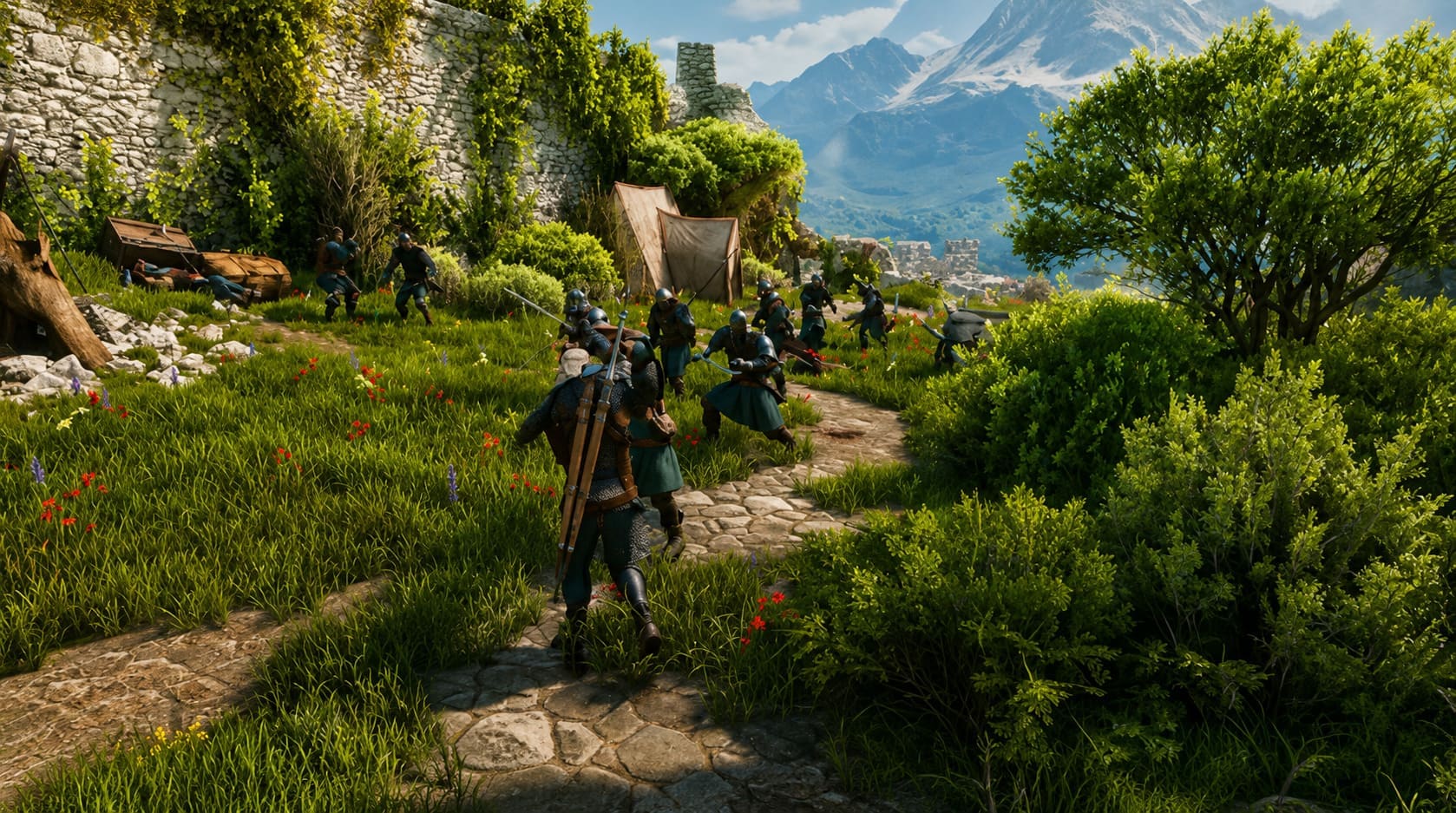
The reported work from CD PROJEKT RED alongside Fool’s Theory and Yigsoft makes the project particularly interesting. Improvements such as upgraded lighting and ray tracing, refreshed character models, modernized menus, improved combat, and additional customization options could make another playthrough feel surprisingly fresh.
And then there is the content itself. Having the main game alongside Hearts of Stone and Blood and Wine is still one of the best deals in RPG history. Those expansions aren’t disposable bonus content either. Blood and Wine in particular feels closer to a full standalone adventure than something simply tacked onto the end of a game.
The Standard Physical Edition Makes the Most Sense for Most Players
If you’re primarily interested in playing the remaster, the Standard Edition is the easy recommendation.
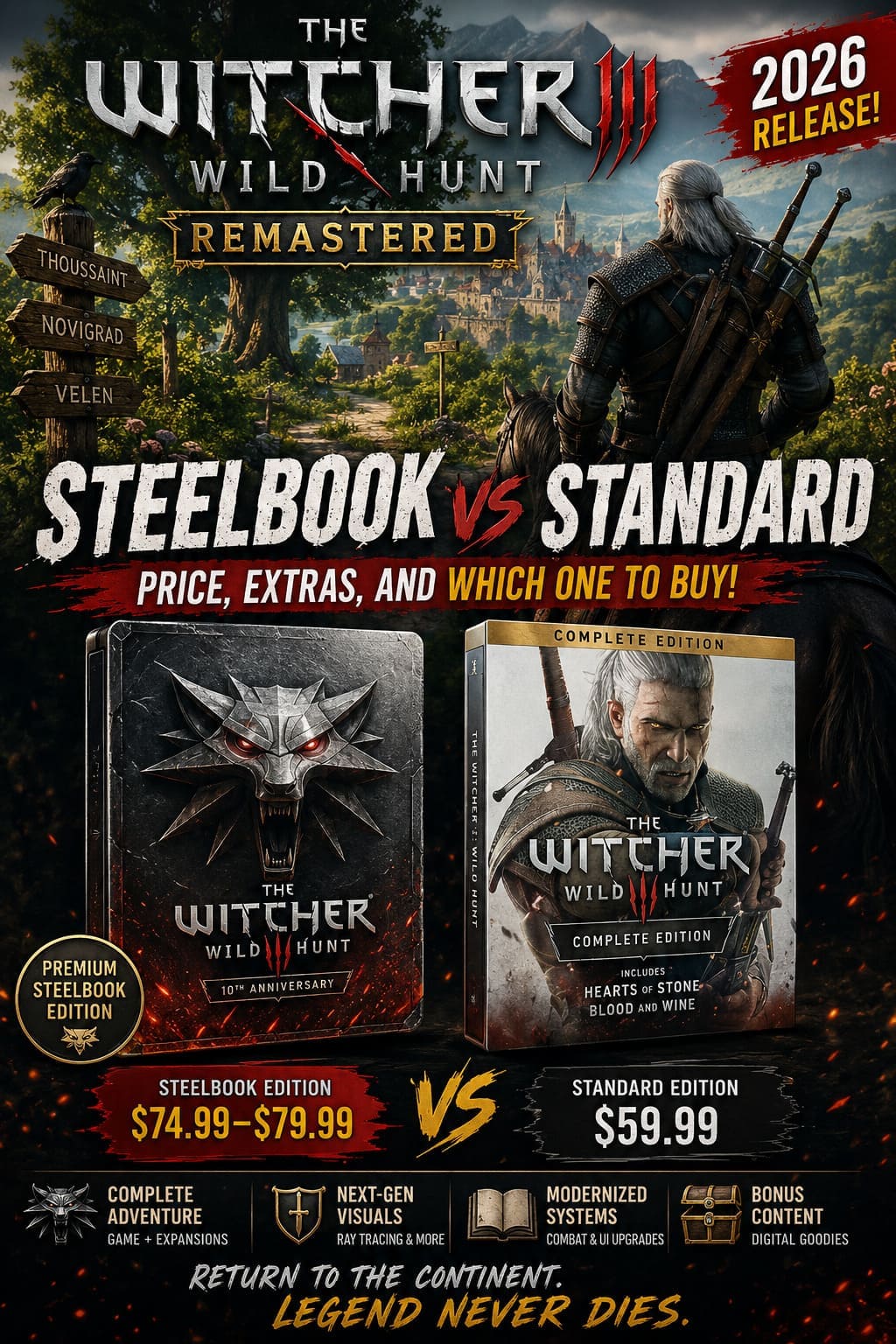
The reported MSRP is around $59.99, putting it right into the familiar price range for a major modern release. For someone who isn’t particularly interested in collecting physical editions, that’s difficult to argue against.
You get the actual game, the remastered experience, and access to an enormous amount of content without paying extra for packaging. Considering how many hours The Witcher 3 can provide, the cost-per-hour value is almost comically good.
The standard physical package is also the option I’d recommend to anyone who treats games as something to play rather than something to collect. If your shelf is already full and you’re not emotionally attached to special editions, there isn’t much reason to spend another $15 or $20 simply because the box looks nicer.
In practical terms, the Standard Edition gives you everything that actually matters while you’re sitting in front of the television:
- The complete remastered game
- Hearts of Stone and Blood and Wine
- Updated visuals and technical improvements
- Physical packaging without the collector premium
- A lower launch price
That’s a pretty convincing package.
The Steelbook Edition Is a Different Kind of Purchase
The Steelbook version appeals to a completely different part of the gaming audience. I’ve owned plenty of standard game cases over the years, and most of them eventually disappear into a shelf somewhere. A good Steelbook is different because it feels more like a piece of memorabilia.
The reported 10th Anniversary Complete Steelbook Edition is aimed directly at that audience. Instead of the usual plastic case, the game comes in a premium metal package featuring artwork associated with The Witcher 3 and its anniversary celebration.
For a fan of the series, that visual difference matters.
The appeal isn’t really about getting a better game. The disc or cartridge isn’t magically going to make Geralt’s sword swings more satisfying because the box is made from metal. You’re paying for the physical object itself, and that’s an important distinction when deciding whether the premium makes sense.
Depending on the final package, additional physical extras such as posters, art materials, or digital bonuses can make the Steelbook more attractive. But even without those extras, the metal case is the primary reason collectors will want this edition.
Steelbook vs Standard Edition: The Price Difference
Based on the pricing described for the 2026 release, the comparison looks roughly like this:
| Edition | Approx. Price | Best For | Main Advantage |
|---|---|---|---|
| Standard Edition | $59.99 | Regular players | Lowest entry price |
| Steelbook Edition | $74.99–$79.99 | Collectors and fans | Premium physical presentation |
That creates a difference of approximately $15 to $20.
Personally, I don’t think that is an outrageous premium for an officially produced Steelbook. I’ve seen collectors spend considerably more than that on separate cases, imported editions, or aftermarket artwork. When a publisher offers a proper Steelbook at the same time as the game, the additional cost can actually be fairly reasonable.
But there is a catch.
If you couldn’t care less about collecting games, even $15 is money that could be spent elsewhere. The Steelbook doesn’t improve performance, add dozens of hours to the campaign, or fundamentally change how you play. Its value is almost entirely emotional and aesthetic.
And honestly, that’s perfectly fine.
Not every purchase needs to be justified by gameplay hours.
Why I Would Consider the Steelbook
After playing hundreds of games over the years, I’ve become much more selective about physical editions. I don’t want a giant box full of cheap extras that I’ll never look at again. What catches my attention now is something that actually feels connected to the game.
The Witcher 3 is one of those games where I can understand wanting that.
A well-designed Steelbook featuring Geralt, the Wolf School symbol, or the darker visual identity of the Continent would look fantastic on a shelf. It represents a game that many players associate with an important period in modern RPG history.
There’s also something satisfying about owning a physical copy of a game that you’ve spent dozens or even hundreds of hours with.
For me, that’s where the Steelbook earns its premium.
It’s not necessarily a rational purchase, but gaming isn’t always about rational purchases. If you have fond memories of wandering through Velen, getting distracted by random quests in Novigrad, or eventually exploring Toussaint in Blood and Wine, a special physical edition can have genuine sentimental value.
The Bigger Problem Could Be Availability
The one thing I wouldn’t do is wait forever if the Steelbook is genuinely limited.
Special editions have a habit of disappearing surprisingly quickly. Standard copies can remain available for years, while collector-focused versions can become difficult to find shortly after launch. Once that happens, the price on the secondary market is no longer controlled by the original retailer.
That’s where things can get frustrating.
A Steelbook that costs around $75 at launch might suddenly appear online for dramatically more because someone bought several copies specifically to resell them. Paying a modest premium at retail is one thing; paying double because you missed the initial release is another.
I’m generally not a fan of buying into collector hype just because someone says an item might become rare. But if you’re already planning to buy The Witcher 3 Remastered physically and you genuinely like Steelbooks, getting the edition you actually want at its original price makes much more sense than gambling on the aftermarket.
Who Should Buy the Standard Edition?
I’d stick with the Standard Edition if you’re mainly here for the game itself.
It’s particularly appealing for players who:
- Care more about gameplay than physical collectibles
- Want the lowest reasonable launch price
- Don’t have much interest in Steelbooks
- Prefer spending the extra money on another game
- Simply want to replay Geralt’s story without building a collector’s shelf
There’s absolutely nothing ‘lesser’ about choosing the standard copy. In fact, it’s probably the smarter financial decision for most people.
The Witcher 3 doesn’t become a better RPG because its case is metallic.
Who Should Buy the Steelbook Edition?
The Steelbook makes more sense if you’re a dedicated Witcher fan or someone who genuinely enjoys collecting physical games.
I’d choose it if:
- The Witcher 3 is one of your favorite RPGs
- You display your games instead of storing them away
- You appreciate premium physical packaging
- The anniversary artwork appeals to you
- You don’t mind spending $15–$20 more
- You want a physical keepsake rather than just a game box
For this audience, the price difference is relatively small compared with the emotional value of having a special edition.
My Pick: Steelbook, But Only for the Right Player
If I were buying The Witcher 3 Remastered purely as a player, I’d take the Standard Edition. There’s no reason to pay extra for packaging when the actual game experience is identical.
But if I were buying it as a fan of RPGs and physical games, I’d probably go for the Steelbook.
The reason isn’t resale value or speculation about future prices. I wouldn’t buy it hoping to make money later. I’d buy it because The Witcher 3 is one of those games that deserves a spot on the shelf, and a good Steelbook makes that physical copy feel more meaningful.
That’s ultimately what this decision comes down to. The Standard Edition is the sensible choice, while the Steelbook is the emotional one. Neither is wrong, and considering the relatively modest reported price gap, fans don’t have to spend a fortune to get the more attractive package.
As the 2026 release approaches, I’d keep an eye on retailer listings if you’re specifically interested in the Steelbook. If it becomes difficult to find after launch, that $15–$20 premium could look like a very small price to pay compared with chasing one down later.
After playing so many RPGs over the years, I still think there’s something special about returning to The Witcher 3. If the remaster can modernize the rough edges without losing the atmosphere, writing, and personality that made the original so memorable, I’ll happily step onto the Path again. And this time, if the Steelbook looks as good as expected, I wouldn’t mind having Geralt staring back at me from the shelf when the journey is over.