EthrA Game 2026: The Ultimate Breakdown of StoneLab Games’ 2.5D Pixel Art RPG
After spending years playing everything from massive open-world RPGs to smaller experimental indie adventures, I have learned one thing: a game does not need a giant budget to create a memorable world. Sometimes the most interesting experiences come from small teams that focus on strong mechanics, unique visuals, and a clear creative identity. EthrA, the upcoming open-world action RPG from the two-person team at StoneLab Games, is exactly the type of project that immediately caught my attention.
In a gaming market filled with endless survival clones, live-service titles, and oversized worlds that often feel empty, EthrA takes a different approach. It combines classic RPG exploration, strategic real-time combat, farming, crafting, and a beautiful 2.5D pixel art style inside a fully 3D world. The result feels like a love letter to old-school adventures while still trying to introduce modern gameplay ideas.
For players who enjoy games like Octopath Traveler, classic Zelda-style exploration, and deep indie RPG systems, EthrA is shaping up to be one of the more interesting releases to watch in 2026.
EthrA Controller Support on Steam How to Play StoneLab Games’ 2026 RPG with a Gamepad
What Is EthrA? A Fantasy RPG Built Around Forgotten Secrets
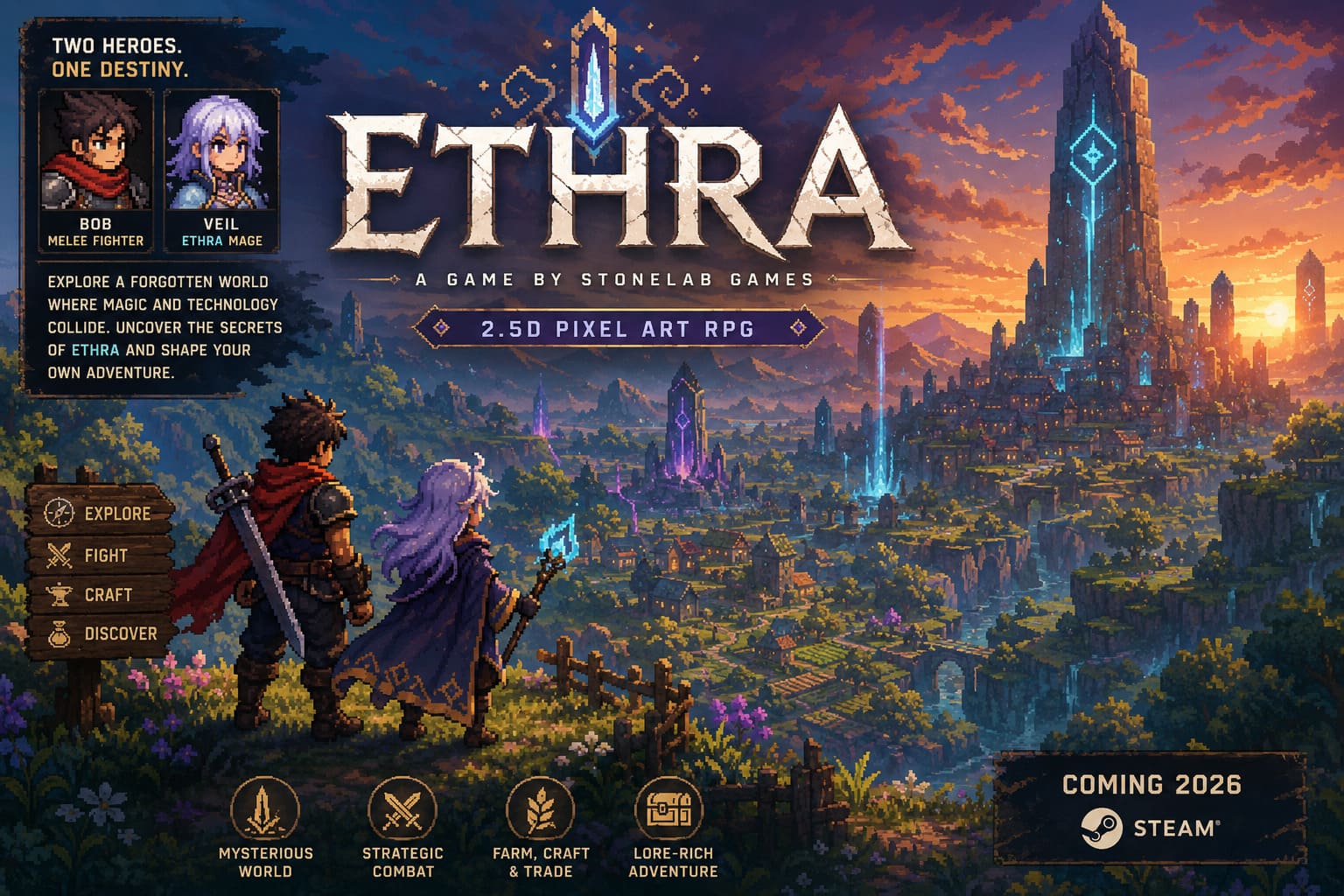
At its core, EthrA is an open-world action RPG focused on exploration, discovery, and uncovering a mystery that has remained hidden for over a thousand years. The story follows two main characters, Bob and Veil, as they travel across a dangerous continent filled with ancient ruins, forgotten technology, mysterious creatures, and powerful energy sources.
The world of EthrA was once far more advanced than the civilization that exists today. Long ago, ancient people created a society where magic and technology worked together, producing incredible inventions and structures that shaped the entire world. However, this civilization suddenly disappeared, leaving behind enormous glowing monoliths scattered across the land.
These monoliths produce a powerful energy known as EthrA, a mysterious force that became the foundation of modern kingdoms. Crystals formed around these structures and became valuable resources used for technology, magic experiments, and economic growth. Of course, whenever a resource becomes powerful enough, conflicts follow.
The current world is controlled by the Kingdom of the North, an empire created to manage these ancient ruins and protect people from their dangerous secrets. Unfortunately, generations of rulers ignored their responsibilities, causing the protective systems around these ruins to slowly collapse. Monsters, strange anomalies, and forgotten underground locations began returning, creating the perfect environment for adventurers to search for answers.
From what I have seen, the lore direction reminds me of classic fantasy RPG storytelling where the player slowly discovers that the world they know is built on forgotten history. That type of mystery-driven exploration is something many modern RPGs have lost.
Bob and Veil: A Different Kind of RPG Partnership
One of EthrA’s biggest gameplay ideas is its focus on two main characters who are always present during exploration and combat. Instead of controlling a single hero while party members simply follow behind, players actively manage both Bob and Veil as they fight together.
Bob represents the classic frontline warrior archetype. He starts as an ordinary farm boy who leaves his peaceful home because he wants something more exciting than everyday village life. His journey changes completely after meeting Veil, a mysterious child from a rare species that humans almost never encounter.
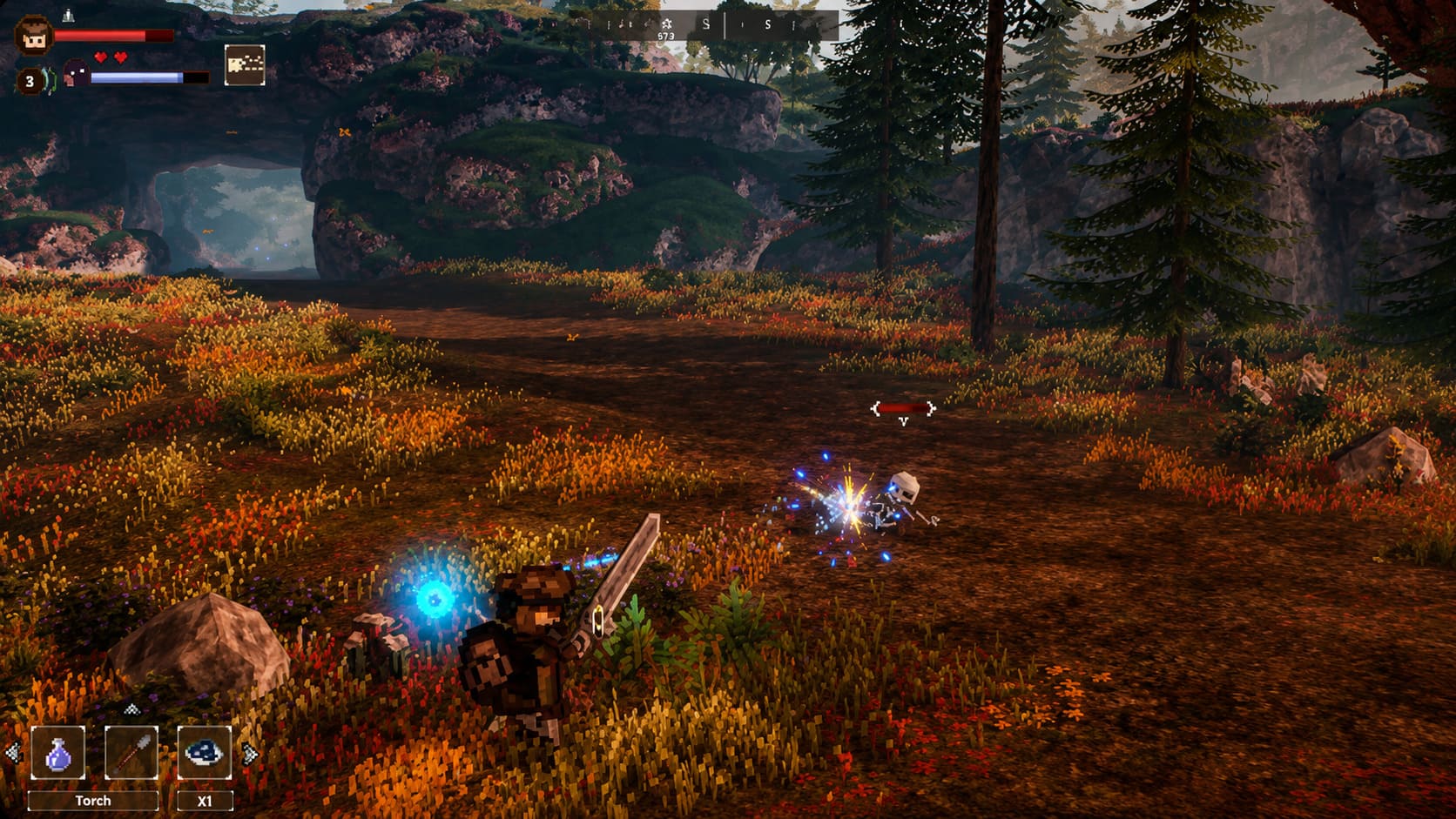
Bob’s role focuses on physical combat. He uses melee weapons, blocks attacks, performs defensive maneuvers, and controls enemy attention during battles. His job is not only dealing damage but also creating openings for Veil to use her abilities.
Veil brings a completely different style to the battlefield. Her species has a natural connection to EthrA energy and can manipulate ancient engravings found throughout the world. She specializes in magic attacks, support abilities, battlefield control, and elemental effects.
The relationship between these two characters could become one of EthrA’s strongest features. Many RPGs struggle to make companions feel important, but here the entire gameplay system is designed around their cooperation.
The Beautiful 2.5D Pixel Art Style Is One of EthrA’s Biggest Strengths
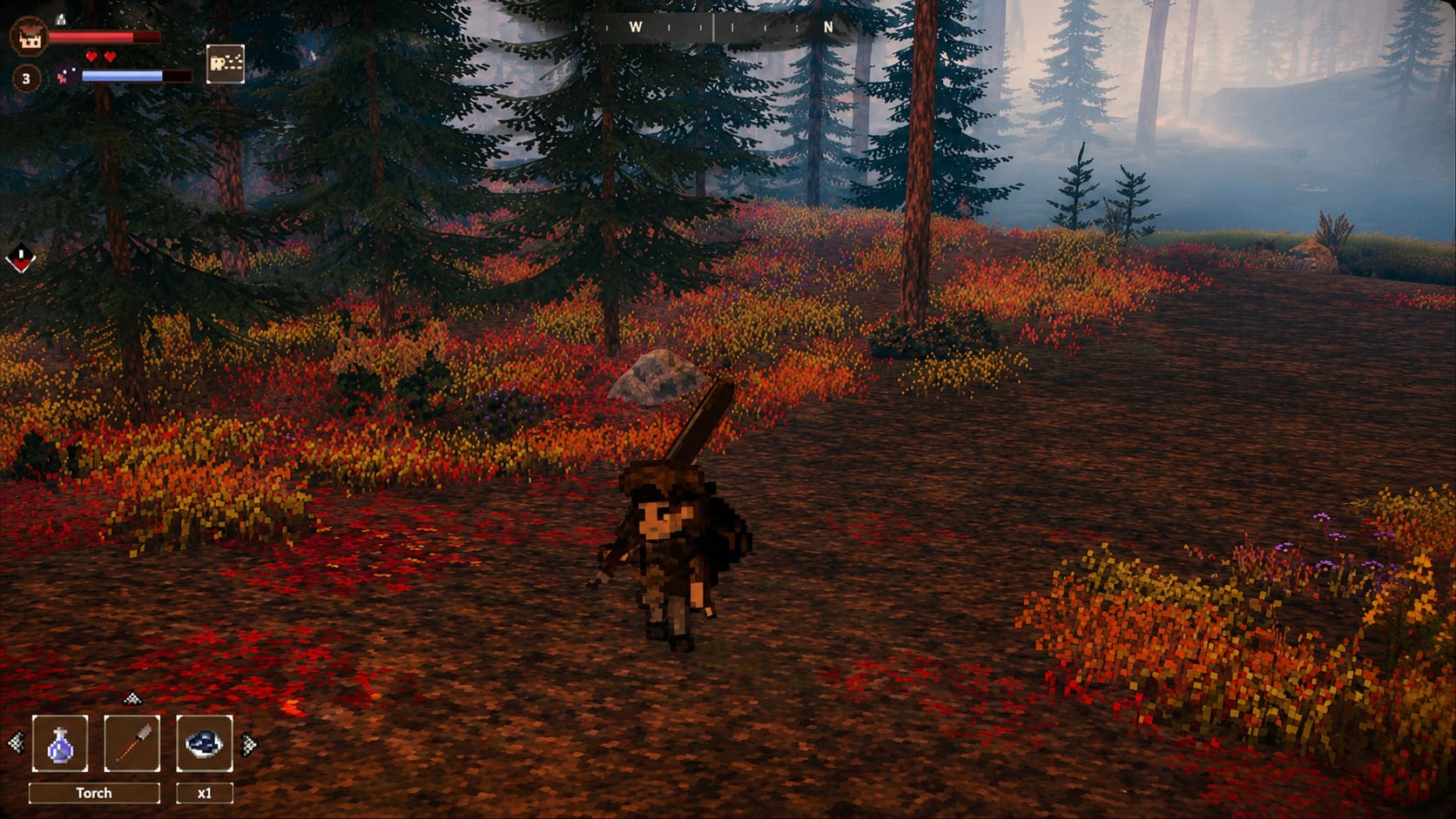
The first thing that stands out about EthrA is its visual presentation. StoneLab Games created a unique style by combining detailed 3D environments with animated 2D pixel characters. Instead of using traditional 3D models, characters appear as carefully designed pixel sprites placed inside a realistic three-dimensional world.
This approach immediately gives the game a distinctive identity. It reminds me of the visual philosophy behind games like Octopath Traveler, but EthrA appears rougher and more handcrafted, which fits the personality of an indie project.
The developers have spent significant time improving how the sprites interact with the environment. Lighting, shadows, textures, and camera effects help prevent characters from feeling disconnected from the world around them.
Exploration areas appear to have their own atmosphere. Ancient dungeons glow with mysterious crystal energy, cities feature changing lighting based on the time of day, and forgotten ruins create a sense of history rather than simply acting as combat arenas.
For me, this is exactly where indie games can compete with bigger studios. A unique art direction can make a game memorable long after technical graphics become outdated.
Combat System: Strategy Instead of Button Mashing
Many action RPGs rely heavily on fast attacks and flashy abilities, but EthrA seems focused on strategic decision-making. Players must constantly manage both characters and understand how their abilities work together.
The combat system is built around two different roles:
| Character | Combat Role | Main Abilities |
|---|---|---|
| Bob | Melee Fighter | Physical weapons, blocking, parrying, enemy control |
| Veil | Magic Support | Spells, healing, elemental attacks, battlefield control |
Bob can hold enemy attention while Veil attacks from a distance or prepares powerful magical abilities. Players can also switch between different weapon setups during battles, allowing for flexible builds depending on enemy types.
The progression system allows players to improve stats, customize equipment, and create different combat approaches. Whether someone prefers aggressive melee fighting or a more tactical magic-focused style, EthrA appears designed to support multiple playstyles.
The most interesting part is that bosses and stronger enemies will likely require actual planning instead of simply upgrading equipment and attacking harder. That is something I always appreciate in RPGs.
More Than Combat: Farming, Crafting, and Building Your Own Adventure
A major reason EthrA feels different from many action RPGs is that combat is only one part of the experience. The developers are building a full sandbox-style world where players can spend time outside of dangerous dungeons.
- Farm resources by growing crops and collecting materials for cooking or trading.
- Craft equipment using items gathered from exploration, monsters, and EthrA crystals.
- Trade goods across different towns to earn money and improve supplies.
- Discover rumors and quests through conversations with NPCs, tavern characters, and travelers.
This kind of freedom creates a stronger connection between the player and the world. Instead of simply moving from one story mission to another, players can create their own routine. Some days might involve exploring ancient ruins, while others might focus on upgrading equipment or collecting resources.
Development Progress and Community Expectations
One thing I respect about StoneLab Games is the ambition behind EthrA. Creating a large-scale RPG is already difficult, but doing it with only two developers requires incredible dedication.
The team has shared development progress through community channels, showing how the project has evolved from early prototypes into a much more polished experience. Their transparent approach has helped build interest among RPG fans who enjoy following indie development.
EthrA is planned for PC through Steam, with system requirements designed to remain accessible. Players with average gaming computers should be able to experience the game without needing expensive hardware upgrades.
The developers are also using community feedback through testing phases to improve mechanics, balance combat, and polish the overall experience before release.
Final Thoughts: Is EthrA Worth Watching in 2026?
After looking at what StoneLab Games is creating, EthrA feels like one of those indie projects that could surprise a lot of players. It is not trying to compete with giant AAA RPGs through size. Instead, it focuses on creativity, atmosphere, and meaningful gameplay systems.
The combination of 2.5D pixel visuals, dual-character combat, exploration, crafting, and mysterious fantasy lore gives EthrA a strong identity. Of course, the final success will depend on execution, balance, and how well all these systems work together at launch.
Still, based on the direction shown so far, EthrA deserves attention from anyone who enjoys unique RPG experiences. In a year filled with massive releases, this small indie adventure might become one of the games people remember most.