ReStory Gameplay Mechanics Explained: Cozy Tech Repair Guide 2026
When I first saw ReStory, I assumed it would be another relaxing simulator that I’d play for a few evenings before moving on. I couldn’t have been more wrong.
After spending dozens of in-game days repairing old mobile phones, reviving forgotten handheld consoles, and trying to keep a tiny electronics shop alive in a quiet corner of Tokyo, I realized this game is far more than a simple repair simulator. It’s one of those rare titles where even cleaning dust from an old motherboard somehow feels rewarding.
If you’ve played games like Unpacking, PowerWash Simulator, or PC Building Simulator, you’ll probably recognize some familiar ideas. But ReStory mixes those satisfying mechanics with business management and surprisingly emotional storytelling. Instead of rushing through objectives, I found myself slowing down, paying attention to every customer, and actually caring about whether their old gadget would work again.
This guide covers the gameplay systems that impressed me the most, along with a few beginner tips I wish I had known before opening my little repair shop.
Welcome to Mid-2000s Tokyo
One of ReStory’s biggest strengths isn’t its repair mechanics.
It’s the atmosphere.
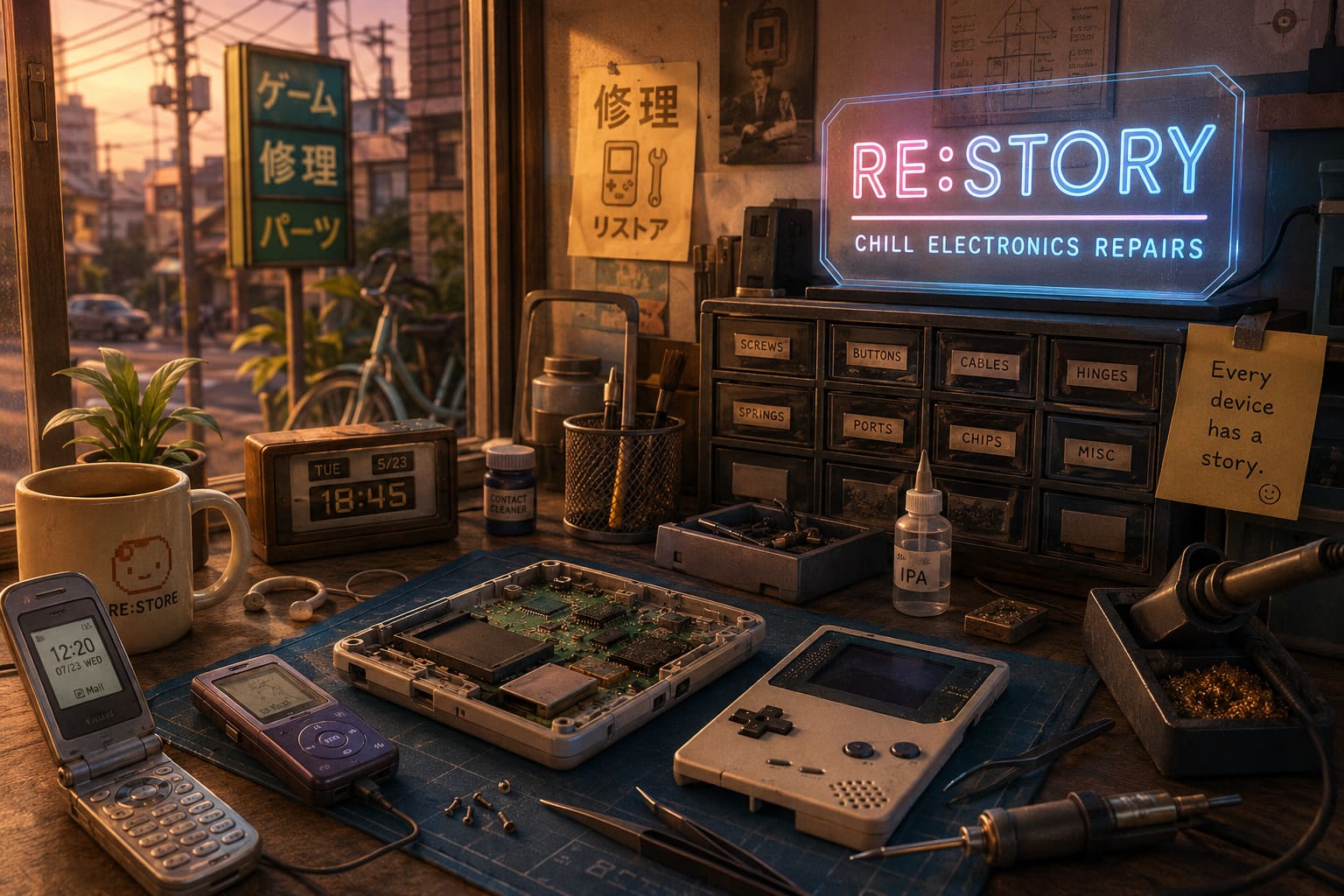
Everything feels like stepping back into the early 2000s. Flip phones, chunky MP3 players, digital pets, portable game systems, CRT-era technology—even the internet browser inside the game looks wonderfully outdated.
You’re not saving the world.
You’re simply trying to earn enough money to keep your small business running.
Oddly enough, that’s exactly what makes the experience so relaxing.
Instead of endless combat or giant open worlds, every day revolves around helping ordinary people fix the devices that matter to them.
Every Day Has a Comfortable Rhythm
The game follows a repeating daily schedule, but it never became repetitive for me because every customer brought something different.
A normal day usually looks something like this:
- Morning: Clean yesterday’s mess, organize parts, unlock the shop.
- Afternoon: Talk with customers and accept repair requests.
- Evening: Spend hours repairing electronics at your workbench.
- Night: Review expenses, profits, and prepare for tomorrow.
It sounds simple on paper.
In practice, I constantly had to decide whether I should finish another repair before closing or leave it until tomorrow without upsetting the customer.
Those little decisions slowly become the real challenge.
The Repair System Is Surprisingly Addictive
This is easily the best part of ReStory.
Every repair follows several logical stages, but no two jobs feel exactly the same.

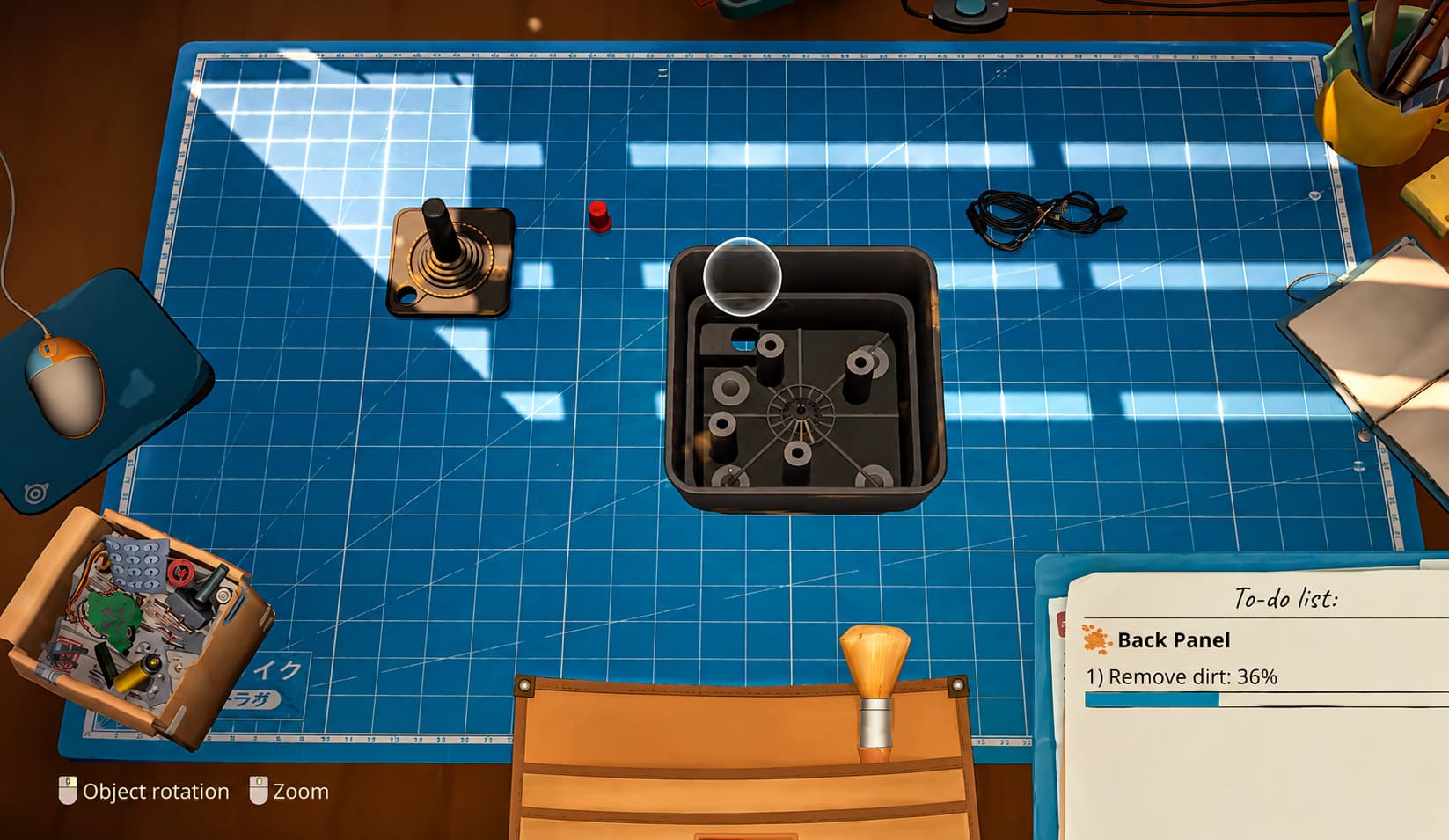
Taking Everything Apart
Before fixing anything, you have to dismantle the device piece by piece.
That means removing batteries, loosening screws, separating plastic shells, disconnecting ribbon cables, and carefully exposing the internal hardware.
The game keeps track of every screw.
Forget one, and nothing comes apart.
I learned that lesson during my very first phone repair.
Cleaning Makes a Huge Difference
Dust.
Rust.
Old sticky residue.
Years of neglect become immediately obvious once the case comes off.
Cleaning isn’t just cosmetic either.
Watching dirty circuit boards slowly become spotless is incredibly satisfying, and customers clearly appreciate properly restored devices.
It’s one of those mechanics that sounds boring until you actually try it.
Finding the Real Problem
Once everything is clean, the detective work begins.
Sometimes the issue is obvious.
A cracked screen.
A broken button.
A damaged wire.
Other repairs require closer inspection before replacing faulty components or carefully soldering new parts into place.
Early jobs are forgiving, but later consoles demand much steadier hands.
Putting It All Back Together
Reassembly can be even more stressful than taking everything apart.
One missing screw usually means taking half the device apart again.
Thankfully, upgrading to an electric screwdriver saves an enormous amount of time later in the campaign.
If I had one recommendation for every beginner, this would be it.
Running the Business Is Just as Important
Repairing gadgets earns money.
Keeping the shop alive is another story entirely.
Every week you’re dealing with expenses like:
| Expense | Why It Matters |
|---|---|
| Rent | Keeps your workshop open. |
| Utilities | Required for daily operations. |
| Internet | Unlocks online repair requests. |
| Shipping | Brings replacement components. |
| New Tools | Improves repair speed and efficiency. |
Ignore your finances for too long, and progress slows dramatically.
I liked that the game never lets you become rich too quickly.
Money always has somewhere useful to go.
Buying Parts vs. Salvaging Old Hardware
This became one of my favorite strategic choices.
There are basically two approaches.
Buy New Components
Ordering parts online guarantees reliable repairs.
Customers are happier.
Repairs are cleaner.
The downside?
Shipping costs quickly add up.
Strip Broken Devices
Instead of buying everything new, you can purchase damaged electronics and harvest usable parts.
- Screens
- Buttons
- Plastic shells
- Motherboards
Sometimes one broken phone provided enough replacement pieces for several future jobs.
It’s slower, but dramatically more profitable.
I eventually started treating old junk devices as valuable inventory instead of trash.
Unlocking Better Repairs Feels Earned
You won’t immediately start fixing expensive gaming hardware.
At first you’re mostly repairing simple electronics.
As your reputation grows, you’ll earn access to business licenses that unlock more advanced jobs.
That includes officially licensed classic Atari hardware and much more valuable customer requests.
The progression feels natural because you’re constantly learning alongside your character.
By the time difficult repairs appear, you’ll already understand the basics.
The Story Was Better Than I Expected
I honestly expected ReStory to focus entirely on repairs.
Instead, many customers arrive carrying personal stories.
Sometimes those stories become surprisingly complicated.
You may discover sensitive information hidden on someone’s phone.
You might help repair a treasured childhood console.
Other customers ask for modifications instead of simple repairs.
The interesting part is that your dialogue choices matter.
Helping one person may upset another.
Reporting suspicious information could protect the community—or permanently damage customer trust.
I appreciated that there usually wasn’t a clearly “correct” answer.
The game lets you decide what kind of shop owner you want to become.
ReStory: Chill Electronics Repairs Beginner’s Guide and Strategy Tips
My Best Beginner Tips
If you’re just starting, these habits saved me a lot of frustration:
- Always watch the screw counter before closing a device.
- Keep broken electronics instead of immediately selling them.
- Buy the electric screwdriver as soon as your budget allows.
- Read every conversation carefully because customers often reveal hidden clues.
- Accept easier online jobs early to build a reliable income stream.
- Order replacement parts before ending the day so deliveries arrive sooner.
None of these tips feel revolutionary, but together they make the early game much smoother.
First Days Walkthrough
The opening hours are fairly forgiving, but I still recommend following a simple routine.
Start by cleaning the workshop.
Throw away empty boxes.
Organize loose supplies.
Turn on your lights before opening for business.
Your first major repair is an old Pokia mobile phone.
Take your time.
Remove every screw.
Clean every internal component.
Replace the damaged parts using your starter inventory before carefully rebuilding the phone.
After finishing that repair, log onto your desktop computer and begin accepting easier online jobs.
Avoid expensive repairs until you’ve purchased better tools.
Ending the first few days with steady profits is far more valuable than chasing difficult contracts that could delay your progress.
Small Details That Made Me Smile
Some of my favorite moments weren’t connected to major story events.
Instead, they were tiny touches.
- Watching the boot screen appear after a successful repair.
- Hearing the satisfying click of a perfectly assembled flip phone.
- Browsing a fake early-2000s internet marketplace.
- Cycling home after a long day in the workshop.
Those moments create a relaxing atmosphere that many simulation games struggle to achieve.
Final Thoughts
ReStory surprised me more than almost any cozy game I’ve played this year.
On the surface it’s about fixing old electronics.
After spending enough time with it, though, it becomes a game about patience, craftsmanship, and the small connections people build through everyday objects.
Its repair mechanics are detailed without becoming overwhelming, the business management adds meaningful long-term progression, and the branching narrative gives every customer interaction a little extra weight.
If you enjoy simulation games where every successful repair genuinely feels earned, ReStory deserves a place on your wishlist. I came for the nostalgic gadgets, but I stayed because running that tiny Tokyo repair shop became strangely difficult to walk away from.